General General 3 min read

Big names for small creatures

Bird is the word: 10 American bird names explained
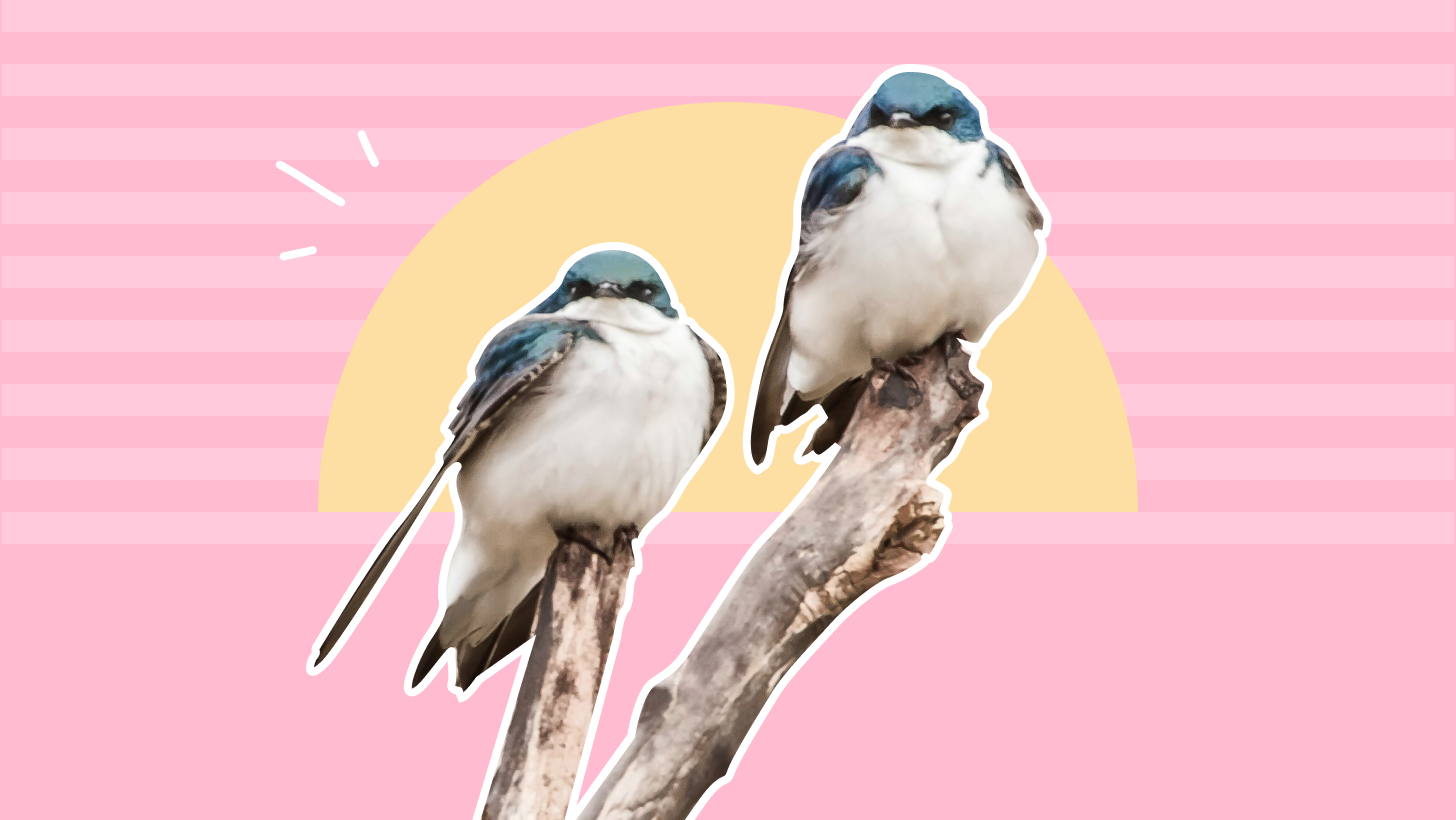
Image: Dulcey Lima

A world without birds would be a gloomy one, indeed. These feathered friends grace our skies and brighten our days with their songs, not to mention the important environmental roles they fulfill. The names we give them often showcase their characteristics or pay homage to the people who discovered them. Scroll on to learn about ten of the most common birds and their names. How many of these did you know?

1
Mourning Dove

Image: Anish Lakkapragada

The melancholic name of the mourning dove comes from its sad call , which the casual listener might mistake for an owl. Mourning Doves inhabit a wide range of open habitats, including suburbs and urban parks.

Their call is generally referred to as the "perch coo," a song sung by an unmated male from a perch. These birds have other well-known nicknames, such as "turtle doves" and "rain doves."

2
Northern Mockingbird

Image: Tyler Jamieson Moulton

More than just mockers, mockingbirds are expert singers, continuously adding new imitations of other birds' songs to their repertoires and sometimes mimicking unnatural sounds, such as car alarms. Northern mockingbirds may learn up to 200 different sounds.

These medium-sized, long-tailed gray songbirds prefer open habitats with a scattering of shrubs and small trees. They eat a wide variety of fruits, invertebrates, and even small vertebrates, such as lizards.

3
White-breasted Nuthatch

Image: Patrice Bouchard

You can recognize this bird by its white face and underside, bluish back and wings, dark crown, nasal "yank-yank" call, and its habit of creeping down tree trunks headfirst.

The name "nuthatch" is derived from "nut hacker," reflecting the bird's method of opening up nuts by jamming them into a crevice and then hammering at them.

4
Downy Woodpecker

Image: Joshua J. Cotten

The smallest woodpecker in North America, the Downy Woodpecker is a stubby-billed, black-and-white bird that inhabits deciduous woods and tree-filled urban and suburban parklands. It forages on trees, shrubs, and large weeds for insects and other arthropods.

The "downy" in this bird's common name refers to the soft, white feathers of its long, white back stripe . The "woodpecker" part refers to the fact that this bird pecks bark, looking for termites hidden underneath it.

5
House Finch

Image: Patrice Bouchard

Originally found only in the West, the House Finch was introduced to the eastern U.S. in 1939, when a few individuals were released from a pet store. The word "finch" comes from the German idiom fink , which refers to a lively or cheerful person —a description that certainly fits this active and gregarious songbird. The term "house" refers to the bird’s tendency to hang around human dwellings.

6
Song Sparrow

Image: Patrick Fobian

Song Sparrows, as their name suggests, sing a cheerful and recognizable song. Although these birds can be found in a wide range of habitats, their favorite spots are often close to streams and other sources of fresh water.

The English word "sparrow" derives from the Anglo-Saxon word spearwa . This term means "flutterer," an apt description for this active songbird.

7
Ruby-throated Hummingbird

Image: Joshua J. Cotten

The only hummingbird that regularly breeds in the eastern U.S. is the Ruby-throated Hummingbird. The male's metallic-looking red throat, or "gorget," explains the first part of the name. And the hummingbird part comes from the humming sound their wings make as they fly.

8
Blue Jay

Image: David Bridle

The "bullies" of the birdfeeder, Blue Jays' name comes from the bird's noisy, garrulous nature. This term has also been applied to other birds of the same family, which are generally gregarious as well.

Before approaching a feeder, Blue Jays often give harsh calls that sound like those of hawks, perhaps to scare off other birds that might compete for access to the bird seed.

9
Tufted Titmouse

Image: Paul Crook

These curiously named birds form longer-lasting family units than many other songbirds, with their younglings sometimes even hanging around for a second year to help raise younger siblings. The "titmouse" name has nothing to do with rodents, but instead comes from an Old English phrase meaning "small bird."

10
Spotted Towhee

Image: Anish Lakkapragada

Spotted Towhees are members of the sparrow family. These birds have dark heads and backs, white spots on their wings, rusty sides, and striking red eyes. Their song is a simple trill.

The name "towhee" is a simulation of the bird's call and it was coined in 1731 by the naturalist and bird artist, Mark Catesby.

General General 5 min read

Second look

Lost in history: 10 forgotten presidents who changed America

Image: Library of Congress

Be honest—how many U.S. Presidents can you name off the top of your head? Great leaders like Washington and Lincoln often steal the spotlight, and with legacies as groundbreaking as theirs, it's totally understandable. However, this also means the work of many lesser-known—but no less important—figures in American history is often overlooked. From controversial characters to underrated statesmen, join us as we unravel the stories of 10 forgotten U.S. presidents.

1
Martin Van Buren (1837-1841)

8th President

Image: Library of Congress

Van Buren, the first president born after the American Revolution, inherited an economic crisis shortly after taking office, known as the Panic of 1837 . The market crash, caused by speculative banking practices, led the country into a severe economic depression.

Van Buren’s quick response was to establish an independent treasury system, which effectively separated federal funds from private banks. This system helped stabilize the currency and laid the foundation for modern federal financial management. Furthermore, Van Buren was also a key figure in the development of the two-party system that continues to shape American politics today. Quite the legacy for an often-overlooked figure!

2
John Tyler (1841-1845)

10th President

Image: Library of Congress

John Tyler became president in 1841 following William Henry Harrison’s death, marking the first time a vice president succeeded a sitting president. Although this might seem unremarkable today, Tyler asserted the constitutional authority of the presidency by doing so, setting an important precedent for the peaceful transfer of power and solidifying the role of the vice presidency in American democracy.

However, Tyler is mostly remembered for championing westward expansion and overseeing the initial negotiations for the annexation of Texas—a move that literally reshaped the nation. Though this ultimately led to tensions with Mexico and the Mexican-American War, his efforts to settle a peaceful border treaty between the United States and Canada helped balance his legacy.

3
James K. Polk (1845-1849)

11th President

Image: Library of Congress

James K. Polk, the 11th president, is often called the "expansionist president" due to his aggressive territorial policies. Under his leadership, the United States expanded significantly, acquiring more than a million square miles of land through various treaties and the victory in the Mexican-American War.

His presidency fulfilled the concept of Manifest Destiny, extending the nation's reach to the Pacific Ocean. However, his legacy remains somewhat controversial, as many of his actions exacerbated the divide between the northern and southern states, setting the stage for the American Civil War.

4
Zachary Taylor (1849-1850)

12th President

Image: Library of Congress

Zachary Taylor, a hero of the Mexican-American War, became president in 1849 with little political experience. Despite being a Southern slave owner, he opposed the expansion of slavery into the newly acquired western territories, a stance that put him at odds with many in the South.

While Taylor's presidency was cut short by his sudden death in 1850, his role in opposing the spread of slavery into new states set the stage for future debates. Though brief, his actions as president are often praised for their conciliatory nature, as he sought compromises in an attempt to prevent the looming conflict.

5
Millard Fillmore (1850-1853)

13th President

Image: Library of Congress

Millard Fillmore took over after Zachary Taylor's untimely death in 1850, inheriting a fractured nation on the brink of civil war. His most controversial act was signing the Compromise of 1850, which included the Fugitive Slave Act, requiring the return of escaped slaves to their owners.

This somewhat ham-fisted attempt to maintain the fragile peace between the North and South only deepened the divisions that eventually led to the Civil War. On a lighter note, Fillmore was the first president to initiate trade relations with Japan, marking the start of Japan’s modernization and its integration into the global economy.

6
Franklin Pierce (1853-1857)

14th President

Image: Library of Congress

Franklin Pierce, elected in 1852, faced an increasingly divided nation over the issue of slavery. His signing of the Kansas-Nebraska Act in 1854 allowed new territories to decide for themselves whether to permit slavery, leading to violent confrontations between pro- and anti-slavery factions in what became known as "Bleeding Kansas."

Despite his troubled domestic policies, Pierce followed his predecessor's path of expanding U.S. influence abroad. He pushed for new trade routes and even attempted to negotiate the acquisition of Cuba from Spain, though his efforts ultimately failed.

7
James Buchanan (1857-1861)

15th President

Image: Library of Congress

James Buchanan’s inability to resolve the tensions between North and South is often criticized, but he faced a nearly impossible task. He sought to avert conflict through diplomacy but was hesitant to overstep states' rights, arguing that the Constitution did not grant him the authority to prevent secession.

Despite his efforts, South Carolina seceded in December 1860, just weeks after Abraham Lincoln’s election, setting the stage for war. In foreign policy, Buchanan strengthened U.S. relations abroad, securing trade agreements with China and managing tense relations with Great Britain.

8
Rutherford B. Hayes (1877-1881)

19th President

Image: Library of Congress

Rutherford B. Hayes is often remembered for his controversial election in 1876, which was decided by a congressional commission after a disputed vote count. His administration is also known for effectively ending the Reconstruction Era by withdrawing federal troops from the South.

While this helped bring stability to the South, it also allowed the rise of segregationist policies. On the other hand, Hayes was one of the first presidents to advocate for civil service reform, arguing that a merit-based government workforce was necessary to reduce corruption and ensure efficiency within the federal system.

9
Chester A. Arthur (1881-1885)

21st President

Image: Library of Congress

Initially seen as a product of the corrupt political machine system, Chester A. Arthur surprised many by becoming a champion of civil service reform. In 1883, he signed the Pendleton Civil Service Reform Act, which mandated that government jobs be awarded based on merit rather than political connections.

This act significantly reduced the influence of patronage in American politics, a practice that had long fueled corruption. Arthur also modernized the U.S. Navy, which had been neglected since the Civil War. His administration helped lay the foundation for the powerful naval force that would emerge in the 20th century.

10
Benjamin Harrison (1889-1893)

23rd President

Image: Library of Congress

Though almost forgotten today, Harrison’s administration was marked by significant legislative accomplishments. In particular, the Sherman Antitrust Act aimed at curbing the power of monopolies and promoting competition, and is considered the first major attempt by the federal government to regulate corporate power.

Harrison pushed to secure federal funding for education and voting rights for African Americans, but many of his efforts were blocked by Congress. Despite these setbacks, he remained a vocal advocate for African American civil rights, consistently addressing the issue in his speeches to Congress.

History History 5 min read

Nostalgia alert

Where do bell-bottoms really come from? Flashback to the '70s and '80s!

Image: Rachel Moore

Those of us who grew up during the 20th century know what we mean when we say that some decades had a lot to celebrate. From disco music to the early video game craze, the 1970s and 1980s left behind countless moments, objects, songs, and fads that we still remember today. If you're a true nostalgic like us, this article is for you. Join us as we explore the 10 things we miss most about the 1970s and 1980s. Let's get started!

1
Bell-Bottom Pants

Image: Annie Spratt

If you're attending a 1970s-themed costume party, what would you wear? Beyond your personal style, no '70s wardrobe could be complete without a good pair of bell-bottom pants.

These pants were everywhere back then. Available in all colors and styles, they were worn by young and old alike. While their stardom spanned from the late 1960s to the early 1980s, bell-bottoms actually emerged much earlier. When? In the 19th century!

The first to wear this style of pants were American sailors in the 1800s. But their purpose wasn't to look trendy. Sailors implemented them because the wide design made it easy to roll them up when it was time to get their feet in the water.

2
Polaroid Cameras

Image: Josh Carter

Your current cell phone camera is probably better than the analog cameras of the 20th century. But let's be honest—there's nothing quite like holding a physical photo you just took, right?

Okay, we admit it: nostalgia is kicking in. But still, who can deny that a picture is a beautiful memory that gives a sweet, homey touch to your house? Thanks to Polaroid cameras, those of us who grew up in the 1970s and 1980s know this all too well.

Although Polaroid cameras first emerged in the late 1940s , it wasn’t until 3 decades later that they reached their peak popularity, becoming an unmistakable symbol of the era.

3
Music videos

Image: Jakob Owens

While music videos existed before the 1980s, that decade turned them into a global sensation.

One song marked a major turning point in the world of music videos. You probably already guessed it: we’re talking about Michael Jackson’s "Thriller." Released in 1983, this was one of the first music videos to feature substantial production value and investment, making it worldwide famous and setting a trend that would influence the industry for decades. Other unforgettable examples from the era include the animated masterpiece "Take On Me" by A-ha (1985) and the vibrant aerobic-themed "Physical" by Olivia Newton-John (1981).

While music videos remain a key part of the music industry today, they’ve evolved to be shorter and more dynamic, often prioritizing quick impact over storytelling.

4
Synthesizer Sound

Image: Orkun Azap

One of the most iconic and recognizable features of '70s and '80s music is the use of synthesizers.

First introduced in the 1960s, synthesizers grew in popularity over the following decades, until they became part of nearly every sound of the era—from rock and funk to pop, disco, and electronic music.

A great '70s example is Stevie Wonder 's "Superstition," which showcases the innovative use of synthesizers. By the '80s, the synthesizer sound had reached new heights, thanks to bands like Depeche Mode and Duran Duran , who helped define the decade's musical identity.

5
Disco Balls

Image: Greyson Joralemon

If there's one thing that screams 1970s, that's undoubtedly disco music. With icons like the Bee Gees, KC The Sunshine Band, and Donna Summer, disco emerged in America and quickly got the whole world onto the dance floor.

In addition to platform shoes and satin shirts, one of the objects that went hand in hand with this type of music was the famous mirror ball, also called the disco ball. Discotheques often showcased spectacular disco balls, and famous artists included them in their music videos, making those shiny spheres the stars of the era.

6
Roller Skates

Image: Nick Fewings

Disco wasn’t the only sensation of the era—roller skates were a big deal, too. In fact, the two often combined: during the '70s and '80s, roller discos became a hit, where people danced on wheels!

Roller skates were so popular at the time that they made their way into films and music videos, including the 1980 cult classic Xanadu and Cher’s iconic 1979 music video for "Hell on Wheels."

Although roller skates were invented in the 18th century, it was the 20th century that catapulted them to the height of their fame. Were you lucky enough to strap on a pair and join the fun?

7
Arcade

Image: Carl Raw

If you were young in the '80s, you probably had a joystick or an arcade token in your hands, as arcades were the ultimate hangout spots for teenagers back then.

We bet you remember titles such as "Space Invaders," released in 1978, or the legendary "Pac-Man," which arrived to revolutionize the entire industry in 1980. Other unforgettable classics included "Donkey Kong" and "Frogger," both released in 1981.

So, what was your high score? Did you dominate the leaderboard or keep coming back for just one more game?

8
Atari 2600

Image: Senad Palic

What do you usually do when you're bored at home? For most of us, it's watching a movie or scrolling through our phone screens. But a few decades ago, the entertainment industry looked entirely different.

In 1977, home recreation changed forever with the arrival of the Atari 2600, one of the first home gaming consoles. From that moment on, gamers could enjoy their favorite games without ever leaving the comfort of their homes.

9
Slang

Image: Buse Doga Ay

But it wasn't just about fashion, music, and games. We can't forget the prominence of slang during these two emblematic decades.

One of the first terms that comes to mind is "groovy," remember that one? It was used to describe something cool or excellent. Maybe you remember a friend saying, "I love your outfit, super groovy!" Another memorable expression from the era was "Gag me with a spoon," used to convey disgust or displeasure, as in "That's so cheesy! Gag me with a spoon!"

Other unforgettable slang words included "bummer," "rad," "hip," and "tubular," each capturing the spirit of the '70s and '80s in its own unique way.

10
Cabbage Patch Dolls

Image: silvia trigo

If you didn't have one at home, you probably knew someone who did—or maybe even had more than one. We're referring to the famous Cabbage Patch Dolls, the toy that caused a sensation during the early 1980s.

Launched in 1982, the Cabbage Patch Dolls quickly made their way into most American homes. Their popularity was so massive and abrupt that they are remembered as one of the most iconic trend crazes of the 20th century. People would form long lines outside toy stores just to hug one of these dolls. In fact, the craze was so intense that the media dubbed it the "Cabbage Patch Kid Frenzy."

Explore more American facts

Choose your favorite category!

General
General

As American as apple pie—the very best America has to offer!

Culture
Culture

Delve into the astounding richness of American lore.

Geography
Geography

Hop in and explore vast and diverse American landscapes.

History
History

Discover the key moments that shaped the United States.