General General 3 min read

Stay safe!

Black bears in your area? 10 tips about what to do and what not to do

Image: Dre Erwin

Different species of bears have lived in America for much longer than humans and continue to do so, sometimes even near urban areas. People who live in areas where black bears can be found should know how to act to stay safe and avoid harming the bears, which are mostly just confused and hungry. Take a look at the following 10 tips and remember them. This is the kind of information that can save your life or, at the very least, save you some trouble.

1
Stand and face the bear

Image: Robert Thiemann

If a black bear approaches you, stand your ground and face it directly . Never run away from or approach it. The bear is most likely just as surprised as you are and will avoid getting into a fight. If the animal sees that you don’t flee, it will simply walk away looking for an easier, less crowded direction.

2
Appear big

Image: Tristan Frank

A trick often employed in nature by animals and insects that need to deter bigger creatures is to make themselves appear larger by any means necessary. The same tactic should be employed if you encounter a black bear. Make yourself look as big as possible by spreading your arms or, better yet, using a coat if you have one at hand.

3
Make some noise

Image: Isabel Lee

No other animal in nature can create noises like a human can. Either screaming at the top of your lungs or banging on a pan, the kind of noise you can produce is extremely startling for almost any animal, including bears, which will leave you alone as soon as they can.

4
Keep bear spray at hand

Image: Michael Anfang

Bear spray is a highly effective deterrent against black bears. If a bear approaches and you have bear spray, don't hesitate to use it . The animal will find the whole ordeal extremely unpleasant and will flee immediately.

5
Fight back
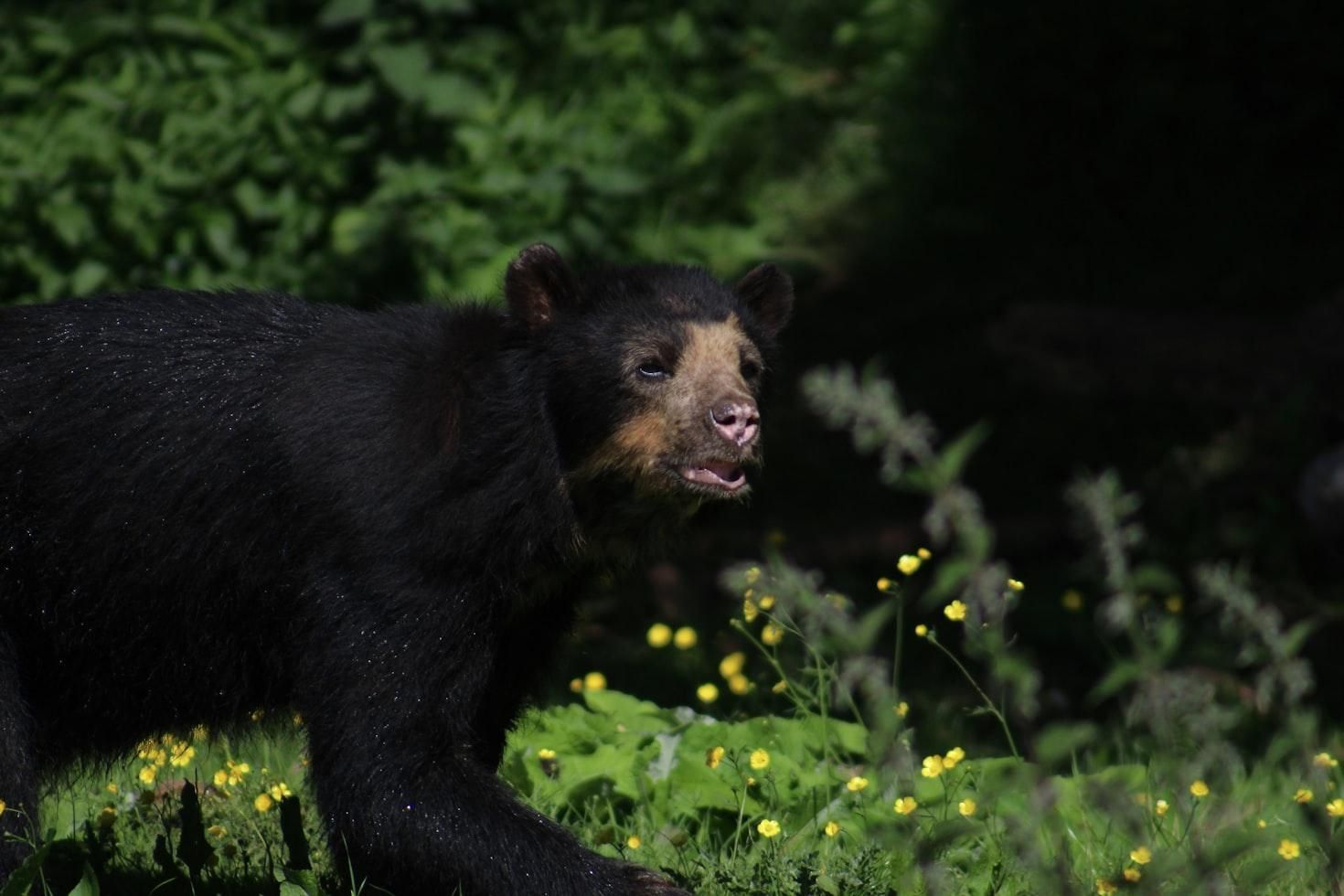
Image: Julia Fiander

In the extremely rare event of a black bear trying to attack you, attempt to escape to a secure location. If escape is not possible, fight back using any available object . Focus your blows on the bear's face and muzzle. Never play dead, as this can encourage the bear to continue its attack.

6
Remove what attracted the bear

Image: Susan Elizabeth Jones

If you have seen a bear near your home or the area where you are staying, be sure to remove whatever attracted them to the location . This could include a used barbecue grill with leftover grease or meat, a bird feeder, unattended pet food, or garbage.

7
Alert your neighbors

Image: Alla Kemelmakher

If you have seen bears or any signs of their presence in your area, alert your neighbors. Even if you have taken the necessary precautions to deter the presence of bears, your neighbors might be doing otherwise if they are not aware of the situation.

8
Keep your pet safe

Image: Camerauthor Photos

If you are in an area where black bears, or any bears, are known to exist, always check for their presence before letting your dog, cat, or any other pet go outside. If a bear is in the vicinity, create a safe, enclosed space where your pet can retreat. If possible, move your pet indoors quickly and calmly, keeping them away from windows or doors where they could attract the bear's attention.

9
Give the bear an escape route
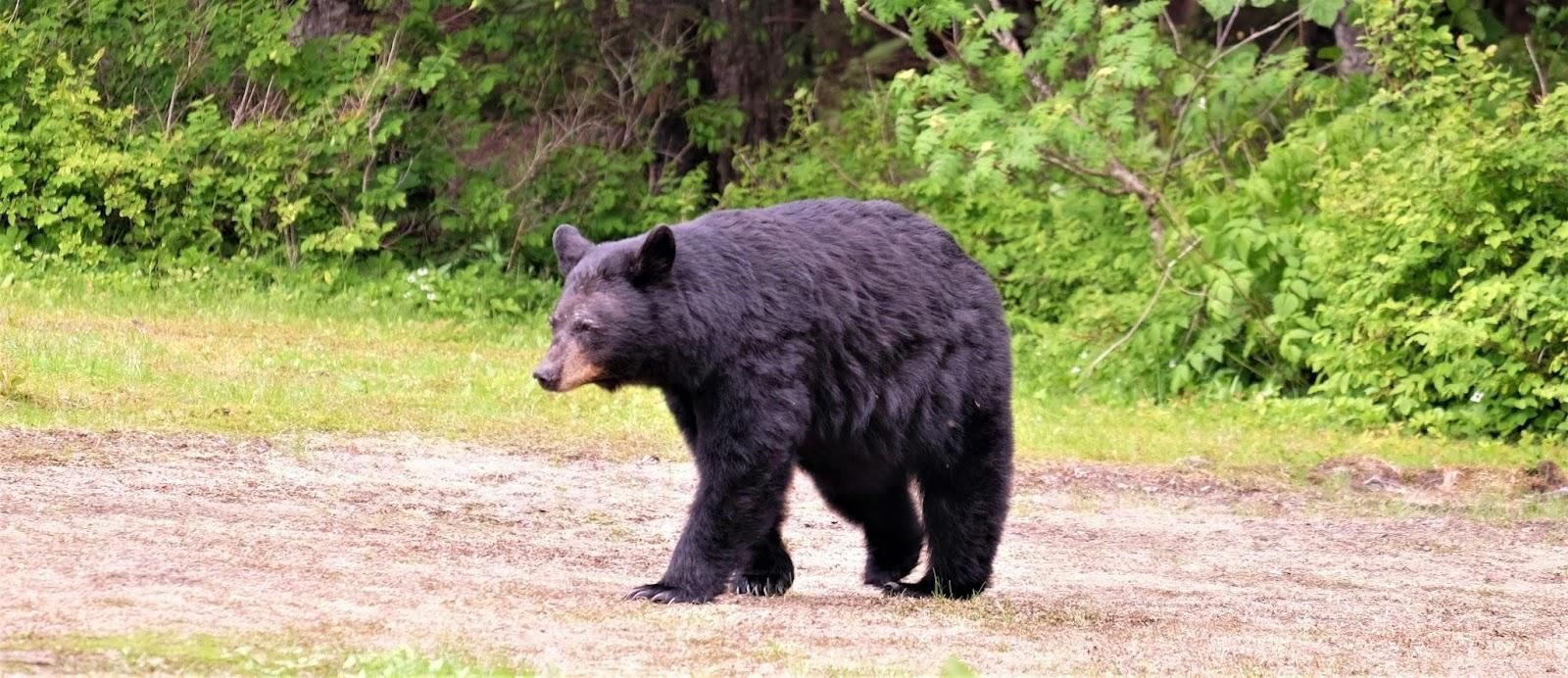
Image: Bruce Warrington

If you encounter a bear in your area, follow the advice mentioned earlier and always make sure to leave an escape route for the bear to leave easily. If the animal feels cornered, there is a much bigger chance of getting into an aggressive situation.

10
Airtight containers
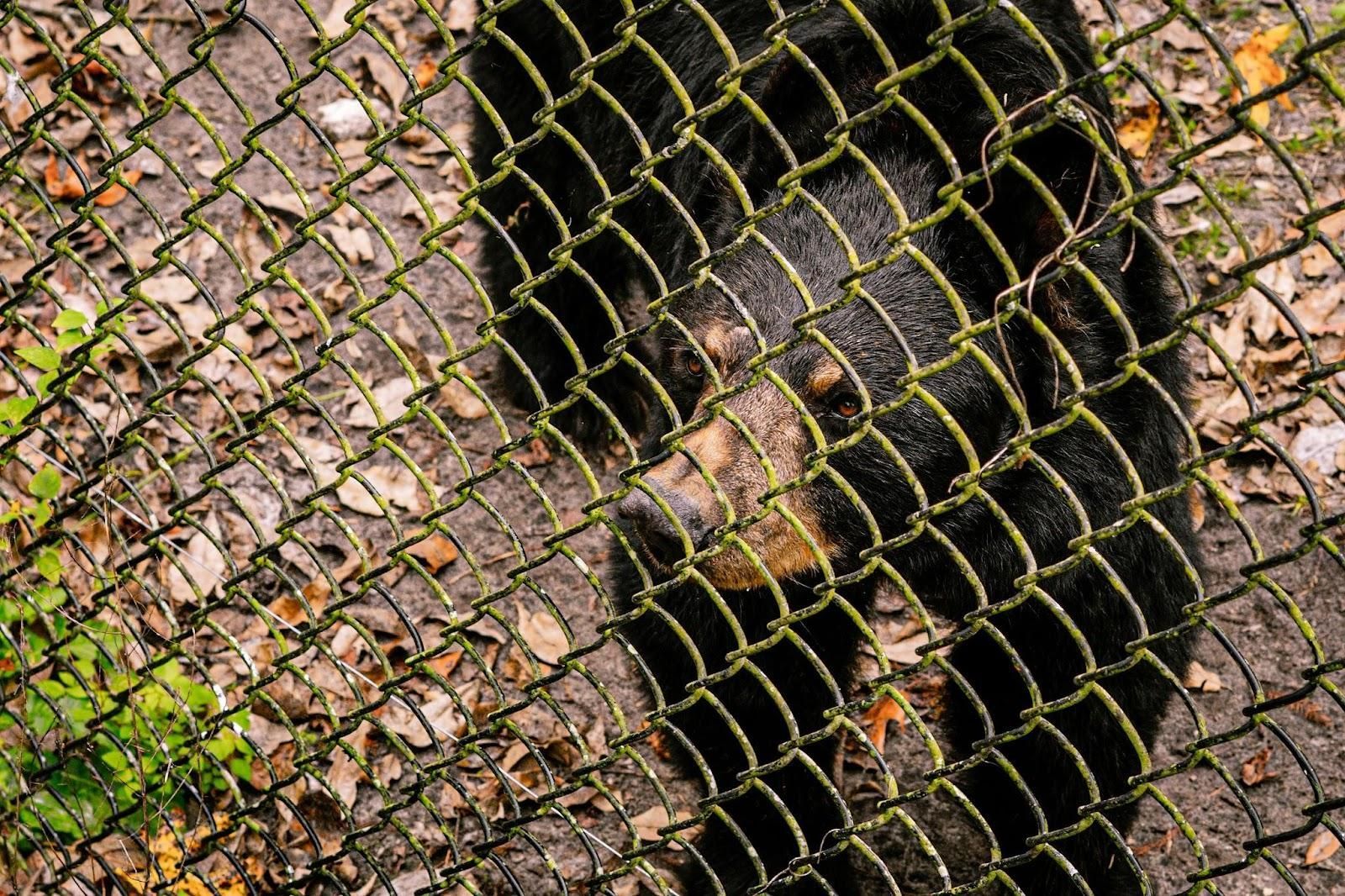
Image: Marcus Urbenz

Make sure to store garbage in secure, airtight containers inside a garage or other enclosed storage area. Adding ammonia to trash cans and bags will help reduce odors that attract bears. Also, clean garbage cans with ammonia at least once a week to eliminate residual odors.

Do not store recyclables on a porch or in a screened sunroom, as bears can smell these items and will rip through screens to get to them. Place garbage outside only on the morning of collection, not the night before.

Culture Culture 6 min read

Geniuses at work

We're here today because of them! Meet 10 Americans who changed history

Image: Quino Al

The United States is a land of progress and innovation, so it makes sense that many of the world's most important inventors and scientists are Americans. From breakthroughs like the lightning rod and the light bulb to advancements in the world of medicine, biology, and astronomy, there have been many men and women who, from different fields of study, have contributed to the scientific progress of our country and the entire world. Join us as we review these 10 American inventors and scientists who changed history!

1
Thomas Edison

Image: Call Me Fred

When it comes to inventors, we can't fail to mention the incredible Thomas Alva Edison.

Edison was born on February 11, 1847, in Milan, Ohio, and since he was a child, he showed his interest and talent in mechanics and electricity. At the age of 11, he set up his first laboratory in his parents' home, and by the age of 12, he ran his own business: a newspaper he designed, printed, and sold himself.

Creator of the phonograph (the first device capable of recording and reproducing sounds) and a fundamental part in the development and popularization of inventions such as the electric light bulb and the motion picture camera, Edison patented more than 1000 creations during his lifetime. Impressive!

2
Benjamin Franklin

Image: Dan Mall

Born in Boston, Benjamin Franklin was one of our Founding Fathers, the men whose principles, values, and ideas shaped America. But as if that weren't enough, Franklin was also a renowned scientist, inventor, and polymath.

A pioneer in the field of electricity, he's remembered for his famous kite experiment, which demonstrated the electrical nature of lightning and led to the invention of nothing less than the lightning rod. In addition, he's also credited with iconic inventions such as the first efficient wood-burning stove (later known as "the Franklin Stove"), the bifocal glasses, and the glass armonica.

3
Samuel Morse

Image: The New York Public Library

Unlike other scientists and inventors on this list, Samuel Morse began his journey in a completely different field: art.

Morse studied at Yale, where he completed his studies in 1810. He then embarked on a trip to Europe to continue his artistic education, but this trip awakened another peculiar interest in him. Frustrated by the communication methods of his time, Morse focused his creativity on finding ways to transmit information over long distances using electrical signals. Thus, the revolutionary telegraph was born, along with its way of communication, the Morse code.

4
The Wright Brothers

Image: Simon Fitall

The Wright Brothers were the famous siblings who, in the 20th century, achieved a goal long sought by humanity: flight.

Wilbur and Orville Wright are credited with inventing, building, and flying the world's first successful airplane. As you probably know, on December 17, 1903, they made the first sustained flight in history using the Wright Flyer, their iconic invention.

On that December morning, the brothers flipped a coin, letting fate decide who would be the first to test the aircraft. Although Wilbur won, that first attempt failed. So it was Orville who flew for 12 seconds, traveling 120 feet over Kitty Hawk, North Carolina.

5
George Washington Carver

Image: Tom Hermans

George Washington Carver was born in the 1860s in Diamond, Missouri. In the 1890s, his intelligence and hard work enabled him to enter Iowa State College (now Iowa State University), where he earned a master's degree in agricultural sciences. In 1896, he became the head of the agriculture department at Tuskegee Institute in Alabama, where his career as a professor and a researcher took off.

Thanks to his investigations and tests, George Washington Carver made major contributions to agriculture, including his innovative techniques for crop rotation . In addition, he developed many and varied peanut products, such as oil, flour, soap, and ink, helping to make this crop one of the key products of the country's economy.

6
Carl Sagan

Image: Vaibhaw Kumar

The stars and the mysteries of the universe captivated the famous Carl Sagan from an early age. Born in Brooklyn, New York, in 1934, Sagan studied at the University of Chicago, where he earned degrees in physics, astronomy, and astrophysics, eventually working and collaborating with NASA.

His contributions to the field of astronomy earned him a position in projects such as the Mariner, Viking, Voyager, and Galileo missions, thanks to which we have learned a lot about Venus, Mars, and Jupiter. The famous high temperatures of Venus, for example, were confirmed thanks to his work.

Additionally, his book and series Cosmos attracted the public's interest in astronomy, inspiring many others to follow in his footsteps.

7
Grace Hopper

Image: Museums Victoria

While computer programming may seem like a modern issue, the pioneers of this field were already working as early as the 1940s.

Grace Hopper graduated in mathematics and physics in 1928 and obtained a master's degree and a Ph.D in mathematics from Yale University in 1934. Famous as a pioneer in the world of programming, Hopper's work began during World War II when she joined the US Naval Reserve. There, she worked on the earliest electromechanical computers and developed extensive and complex manuals to operate them.

Her greatest contribution came from her work with mathematical codes, which she translated and adapted into innovative machine-readable language. That innovation led to the creation of the first high-level programming languages.

8
Jonas Salk

Image: Олег Мороз

Jonas Salk is none other than the mind behind a medical milestone: the polio vaccine.

In the 1940s, Salk was beginning his career in medical research. While working at the University of Michigan, his work was crucial in developing the first successful influenza vaccine for the military during WWII. This event marked his later study of the poliovirus.

Polio was devastating during the first decades of the 20th century, but that changed dramatically thanks to Salk's work. The scientist led a team that succeeded in developing the first safe and effective injectable inactivated poliovirus vaccine (IPV) in 1955, and the rest is history.

9
Barbara McClintock

Image: digitale.de

Although her name may not be as instantly recognizable as some others on this list, her work definitely is. Barbara McClintock has undoubtedly made one of the most significant contributions to medicine and genetics.

In the 1940s and 1950s, she worked with chromosomes, investigating their role in inheritance, which led to discoveries that forever changed our understanding of genes.

Before her, genes were believed to be fixed and immutable. But McClintock came to change that idea with her most famous contribution: the discovery of transposable elements, aka "jumping genes." She demonstrated that jumping genes are present in multiple organisms, including humans, and play an essential role in genetic evolution.

10
Alexander Graham Bell

Image: Misho Tektumanidze

Alexander Graham Bell became interested in sound and communication at a young age, something that led to his greatest and most remembered contribution: the telephone.

Although born in 1847 in Edinburgh, Scotland, Alexander Graham Bell settled in the United States in 1871 and became an American citizen years later. It was here that he developed most of his experiments and research.

After years of experimenting with methods to transmit sound through electrical currents, Bell finally spoke into his invention on March 10, 1876, saying to his assistant, "Mr. Watson, come here. I want to see you." That was the first successful telephone call in history.

General General 3 min read

About the Star-Spangled Banner

Did you know these 11 obscure facts about our National Anthem?

Image: RDNE Stock project

How much do you really know about "The Star-Spangled Banner" ? It’s the song that kicks off baseball games, gives stadiums goosebumps, and has been passionately performed—or completely butchered—by countless singers. Its colorful story starts by crossing a poem and the tune of a British drinking song, runs through an electric guitar at Woodstock in the 60s, and keeps going. Read on to discover some surprising facts about America’s most patriotic anthem!

1
It had a different name

Image: Luke Michael

Originally, the lyrics came from a poem titled "Defence of Fort M’Henry," written by Francis Scott Key in 1814 after he witnessed the bombardment of Fort McHenry during the War of 1812. The sight of the American flag still flying after the battle inspired him.

The poem was printed in newspapers and set to music, but it wasn’t until more than a century later that it officially became the national anthem we know today.

2
It has four verses

Image: Serena Koi

Most of us only belt out the first one, but did you know "The Star-Spangled Banner" actually has four verses? The other three are rarely heard .

Francis Scott Key wrote additional verses exploring themes of resilience and freedom, but most people have never read those stanzas.

3
Key wasn’t a musician

Image: Steve Johnson

Contrary to what you might expect from the author of the nation’s most patriotic song, Francis Scott Key wasn’t a musician .

He was a lawyer and an amateur poet. He didn’t collaborate with a composer or choose a melody to set his lyrics to, either. He simply wrote the poem, which was later published nationally by The Analectic Magazine .

4
The tune was actually borrowed

Image: Ylanite Koppens

So how did the anthem get its music, then? A relative of Key realized that the lyrics of his poem fit perfectly with the tune of an already popular song, "To Anacreon in Heaven."

That song was actually a British drinking tune frequently sung in 18th-century gentlemen’s clubs. The melody was catchy, but its origins were anything but patriotic.

5
It was first sung in a Baltimore tavern

Image: andrew welch

One account claims that the anthem’s first public performance wasn’t at a grand concert or a government event, but in a Baltimore tavern in 1814.

According to the story, just weeks after Key wrote the lyrics, a local actor sang them to the tune of "To Anacreon in Heaven." The crowd loved it, and the song quickly spread.

6
It wasn’t the first choice

Image: Wesley Tingey

Believe it or not, "The Star-Spangled Banner" wasn’t America’s first choice for a national anthem. For over a century, songs like "Hail, Columbia" and "My Country, ’Tis of Thee" filled the role. It wasn’t until 1931 that Congress, under President Herbert Hoover, officially designated Key’s anthem as the nation’s song.

7
The tradition of singing it before sports

Image: Frankie Lopez

The tradition of singing the anthem at sporting events began during the 1918 World Series . The crowd’s emotional response was so powerful that more and more baseball games adopted the practice.

Today, it’s hard to imagine a baseball game without it. Many other sports—including American football, hockey, and basketball—have since followed suit.

8
Aretha Franklin’s rendition is the longest

Image: Stas Knop

Aretha Franklin's rendition of "Star-Spangled Banner" is the longest recorded performance of the national anthem, lasting an impressive 4 minutes and 55 seconds . In contrast, most renditions take under two minutes!

She performed it in 2016 at an NFL game, breaking the previous record set by Alicia Keys three years earlier, whose version lasted 2 minutes and 36 seconds.

9
An unsuspected first recording voice

Image: Sudhith Xavier

The first known recording of "The Star-Spangled Banner" was made in 1915 by Margaret Woodrow Wilson . Yes, the daughter of President Woodrow Wilson.

Her rendition, though not as polished as modern versions, marked the anthem’s entry into the world of recorded music. Who would have thought the president’s daughter would be a trailblazer?

10
Jimi Hendrix’s Woodstock performance

Image: Xie lipton

Jimi Hendrix’s electric guitar rendition of "The Star-Spangled Banner" at Woodstock in 1969 remains one of the most famous—and controversial—performances of the anthem.

His distorted, soulful, and modern interpretation hypnotized the crowds and became a powerful cultural statement amid the turbulence of the 1960s. Some saw it as a protest; others, as a masterpiece. Either way, we still talk about it.

11
A song for all occasions

Image: frank mckenna

Originally, "The Star-Spangled Banner" wasn’t intended solely as a national anthem. It was a patriotic song for all occasions —political rallies, public celebrations, and more. The anthem is as popular as it is versatile, and so it has been played in endless scenarios—and in countless versions!

Explore more American facts

Choose your favorite category!

General
General

As American as apple pie—the very best America has to offer!

Culture
Culture

Delve into the astounding richness of American lore.

Geography
Geography

Hop in and explore vast and diverse American landscapes.

History
History

Discover the key moments that shaped the United States.