Culture Culture 5 min read

PAPER AND INK ICONS

Celebrate These Literary Giants With These 10 American Book Characters!

Image: Thought Catalog

America has produced its fair share of groundbreaking authors . With 15 Nobel Literature laureates so far, our country’s history is filled with a myriad of unforgettable characters and stories that have left their marks on the world.

We have chosen to select 10 of the most quintessential literary characters from American books. These characters have become symbols in their own right, and are almost as famous as the authors that created them.

1
Tom Sawyer

Image: Daniel Chekalov

We’ll start with an American classic . If Mark Twain is considered "the Father of American Literature" , then it would also be fair to consider Tom Sawyer as the father of many great literary characters. And while it is true that "The Adventures of Tom Sawyer" was heavily overshadowed by its sequel "Adventures of Huckleberry Finn", we have decided to choose Tom over Huck mostly because he was Mark Twain’s first and perhaps most iconic character.

Tom is introduced in the novel as an orphan boy who lives with his Aunt Polly in Missouri. Characterized by his penchant for avoiding work, Tom often uses his cunning and wits to skip school and chores. Perhaps his most famous feat is convincing the neighborhood kids that painting Polly’s fence was immense amounts of fun, and charging them for the privilege of doing his busy work.

2
Captain Ahab

Image: Austin Neill

Herman Melville tackled the issues of fanaticism and the battle between humankind and nature in his 1851 masterpiece "Moby Dick". In that sense, the character Melville chose as a vessel to portray these themes is definitively Captain Ahab, the frantic and monomaniacal captain of the whaling ship Pequod , hellbent on capturing the great white whale Moby-Dick.

While Ahab's obsession is fueled by revenge (since the whale bit off his leg), many critics observe how the captain’s mind doesn’t allow for any other feeling other than his mindless obsession with catching Moby-Dick. In the end, this hatred makes him forget to care for himself and his crew, and in their final battle, the whale drags Captain Ahab’s body beneath the sea.

3
Jack Torrance

Image: Luis Villasmil

Immortalized by Jack Nicholson’s superb performance in the 1980 film adaptation of "The Shining", Jack Torrance is arguably the tortured main character of this iconic horror masterpiece. Jack is a down-on-his-luck writer who gets hired as the winter caretaker of the fictional Overlook Hotel, a historical location in the Colorado Rockies.

Much like Captain Ahab, a big part of "The Shining" focuses on Jack’s fight against his own demons. However, where the Captain fails Torrance succeeds: While the dark presence that rules the Overlook possesses him and makes him attack his family, Jack overcomes these manipulations and sacrifices himself in order to save his wife and son.

4
Hester Prynne

Image: Debby Hudson

Hester Prynne might be the very first American heroin : The protagonist of Nathaniel Hawthorne’s "The Scarlet Letter" faces public humiliation and the disdain of her fellow residents of the Puritan Massachusetts Bay Colony, who force her to wear a red "A" on her clothes after committing the sin of adultery.

Yet, Hester always maintains her dignity and love for her daughter Pearl throughout the rest of her life. In the end, the red "A" that decorates her tombstone is not a reminder of her transgressions, but a monument to her determination.

5
Ignatius J. Reilly

Image: mana5280

Ignatius J. Reilly, the bumbling protagonist of "A Confederacy of Dunces", is no hero. He is more of a man-child, an unemployed and unpleasant buffoon whining about the lack of morality in his birthplace, the beautiful city of New Orleans. However, there’s no denying that Ignatius is a wonderfully crafted character and an essential part of what makes John Kennedy Toole’s novel so unforgettable.

"A Confederacy of Dunces" is, undeniably, a unique book: Its characters are as particular and hilarious as the bizarre situations in which they constantly find themselves. In that regard, Ignatius is the perfect protagonist for this unparalleled masterpiece.

6
Philip Marlowe

Image: Michelle Ding

What image comes to mind whenever you hear the phrase "private detective"? Do you picture a sullen man dressed in a beige overcoat and matching fedora , immersed in intense inner monologues about unsolved cases? Well, if that’s the case, you can thank iconic American author Raymond Chandler for creating the quintessential private detective, Philip Marlowe.

Immortalized by the great Humphrey Bogart in the film "The Big Sleep", this chainsmoking detective is one of pop culture’s most iconic characters and one that has endured as a symbol throughout its 90 years of history.

7
Atticus Finch

Image: David Veksler

Just like Philip Marlowe, many consider Atticus Finch to be the quintessential American lawyer : After all, his character is defined by his honesty and dedication to justice. However, the depth of this character from Harper Lee’s "To Kill a Mockingbird" is not only determined by his morality, but for the unconditional love he feels for his two children, Scout and Jem.

"To Kill a Mockingbird" tells the story of the Finch family, which is intertwined with the prejudice-filled trial of Tom Robinson. Atticus acts as Tom’s defense attorney, as he battles the hateful mob mentality of this 30’s Alabama town.

8
The March sisters

Image: micheile henderson

It would feel wrong to separate the four March sisters - Meg, Jo, Beth, and Amy - from Louisa May Alcott’s iconic novel "Little Women", so we have decided to include multiple characters in this entry. Alcott’s masterpiece describes the lives of these four sisters and focuses on their passage into womanhood.

Set in 19th century Massachusetts, "Little Women" is considered to this day to be one of the cornerstones of American literature . Not only that, many believe that the author was able to create a new form of sentimental literature with this book.

9
Blanche Dubois

Image: Lokesh Anand

Tennessee Williams's "A Streetcar Named Desire" proves itself to be a gemstone of American literature just by the genius in its title: While it might seem completely objective, referring to a real-life New Orleans streetcar line named "Desire", it also perfectly describes the unstoppable passion that involves the characters of this play.

In that regard, this play’s protagonist, Blanche Debois, is definitively unforgettable: A stunning yet down-on-its-luck Southern Belle who moves to her sister’s place in New Orleans. She is considered one of the most iconic characters in theater and was played on uncountable occasions.

10
Dorothy Gale

Image: ActionVance

We’ll end this article with one of the most popular American characters in our country’s history. Few characters are as iconic in pop culture as Dorothy Gale is: Immortalized by Judy Garland’s unforgettable performance, Dorothy’s trip to the wonderful land of Oz will forever be a part of American culture and history.

Perhaps the reason why this character is so memorable is the fact that, at the time when L. Frank Baum’s original book was published, Dorothy seemed to be just like every other American girl living on a farm. In a way, millions of American children were able to join Dorothy throughout her trip through the yellow brick road.
Culture Culture 4 min read

Which one’s your favorite?

From Gilligan to Alf: 10 great TV series from back in the day

Image: DS Stories

For decades now, television series have been a part of our culture. And while many have faded into oblivion, quite a few are fondly remembered by fans all over the world, even years after their endings. Maybe it has to do with nostalgia, or perhaps it is something else, but no one can deny that characters like MacGyver or Alf are very much alive in pop culture. The following 10 are just a handful of the ones deserving a spot on this list, but still, these are the ones we remembered the most. Which ones do you recall?

1
The Twilight Zone

Image: Artie_Navarre

The first show on our list was a fantasy science-fiction series created and presented by Rod Serling, which ran for five seasons from 1959 to 1964. Each episode presented a standalone story in which characters dealt with often disturbing or unusual events , an experience described as entering "the Twilight Zone", often with a surprise ending.

Since the show appeared, the phrase "Twilight Zone" has become a household term used to describe surreal experiences. The series featured both established stars and younger actors who would become much better known later.

2
Bewitched

Image: RDNE Stock project

America’s favorite witch, Samantha Stephens was the star of Bewitched , a sitcom series that aired from 1964 to 1972. The plot of the show revolves around a witch who marries an ordinary mortal man and leads the life of a typical suburban housewife.

The show was popular and starred Elizabeth Montgomery as Samantha Stephens, Dick York as Darrin Stephens, and Agnes Moorehead as Endora, Samantha’s mother.

3
Gilligan’s Island

Image: Michael

Its iconic soundtrack and Gilligan’s bucket hat remain a part of today’s pop culture. This sitcom aired from 1964 to 1967, and it followed the misadventures of seven castaways trying to survive on an island where they shipwrecked.

Most episodes revolve around the different castaways’ conflicts and their unsuccessful attempts to escape the island, with the ship’s first mate, Gilligan, usually being responsible for the failures.

4
M A S H

Image: The Australian War Memorial

This comedy-drama aired from 1972 to 1983 and was a spinoff of the 1970 film M A S H. The series follows a team of doctors and support staff stationed at the "4077th Mobile Army Surgical Hospital" (hence the name, M A S H) in South Korea during the Korean War.

The series included broad comedy and tragic drama and was one of the highest-rated shows in U.S. television history, regarded by many as one of the greatest television shows of all time. Its final episode remains both the most-watched finale of any television series and the most-watched episode of a scripted series.

5
Mister Rogers' Neighborhood

Image: Yannis H

Very few people in showbusiness, if any, are as widely appreciated as Fred Rogers, the host of Mister Rogers’ Neighborhood . Both his onstage and offstage persona were filled with a wholesome warmth that became an oasis in an increasingly loud and superficial medium as national television.

His half-hour educational children’s television show ran from 1968 to 2001. The series was aimed primarily at preschool children ages 2 to 5, but it was labeled by PBS as "appropriate for all ages".

6
Knight Rider

Image: Arthur Besnard

The television series that showcased a young David Hasselhoff helping people in distress with his talking car aired from 1982 to 1986. Michael Knight (Hasselhoff’s character) was a modern-day crime-fighter who used a technologically advanced, artificially intelligent automobile.

The car, named KITT, was virtually indestructible due to a high-tech coating applied to it. Knight Rider stories usually depicted either average citizens or ethical heads of corporations being bullied into subservience to an overbearing or ruthless criminal organization.

7
Cheers

Image: Alex Knight

A feelgood series, Cheers aired from 1982 to 1993. It was set in a bar of the same name in Boston, owned by former Red Sox pitcher Sam Malone, where a group of locals met to drink, relax, socialize, and escape from their daily routine.

During its run, Cheers became one of the most popular series in history, received critical acclaim from its start to its end, and is frequently cited as one of the greatest television shows of all time.

8
Sledge Hammer!

Image: kampfmonchichi

Its short lifespan (two seasons) didn’t prevent Sledge Hammer! from leaving a mark in pop culture. This satirical police sitcom aired from 1986 to 1988 and featured Inspector Sledge Hammer, a volatile agent of the law who solved crimes with outlandish methods. Hammer was accompanied by his partner, Dori Doreau, and the irascible police captain, Trunk.

9
MacGyver

Image: Nipun Haldar

MacGyver was the name of the show and the character who sold a million Swiss Army knives. It was an action-adventure television series starring Richard Dean Anderson as Angus MacGyver, a secret agent armed with remarkable scientific resourcefulness to solve any problem out in the field using any materials at hand.

The show aired from 1985 to 1992 and was a ratings success. While some reboots for the series appeared in the years after its ending, none of those managed to achieve its predecessor’s success.

10
Alf

Image: Erik Mclean

The extra-terrestrial being that crash-landed in the Tanner family garage, Alf, had a hit sitcom that aired from 1986 to 1990. The series starred Max Wright as the ather, Willie Tanner, Anne Schedeen as the mother, Kate Tanner, and Andrea Elson and Benji Gregory as their children, Lynn and Brian Tanner.

As in the case of MacGyver , a few years after the original series ended, some reboots were announced.

General General 4 min read

Historical documents

Did you find the grammar mistake in the US Constitution? We have!

Image: Tara Winstead

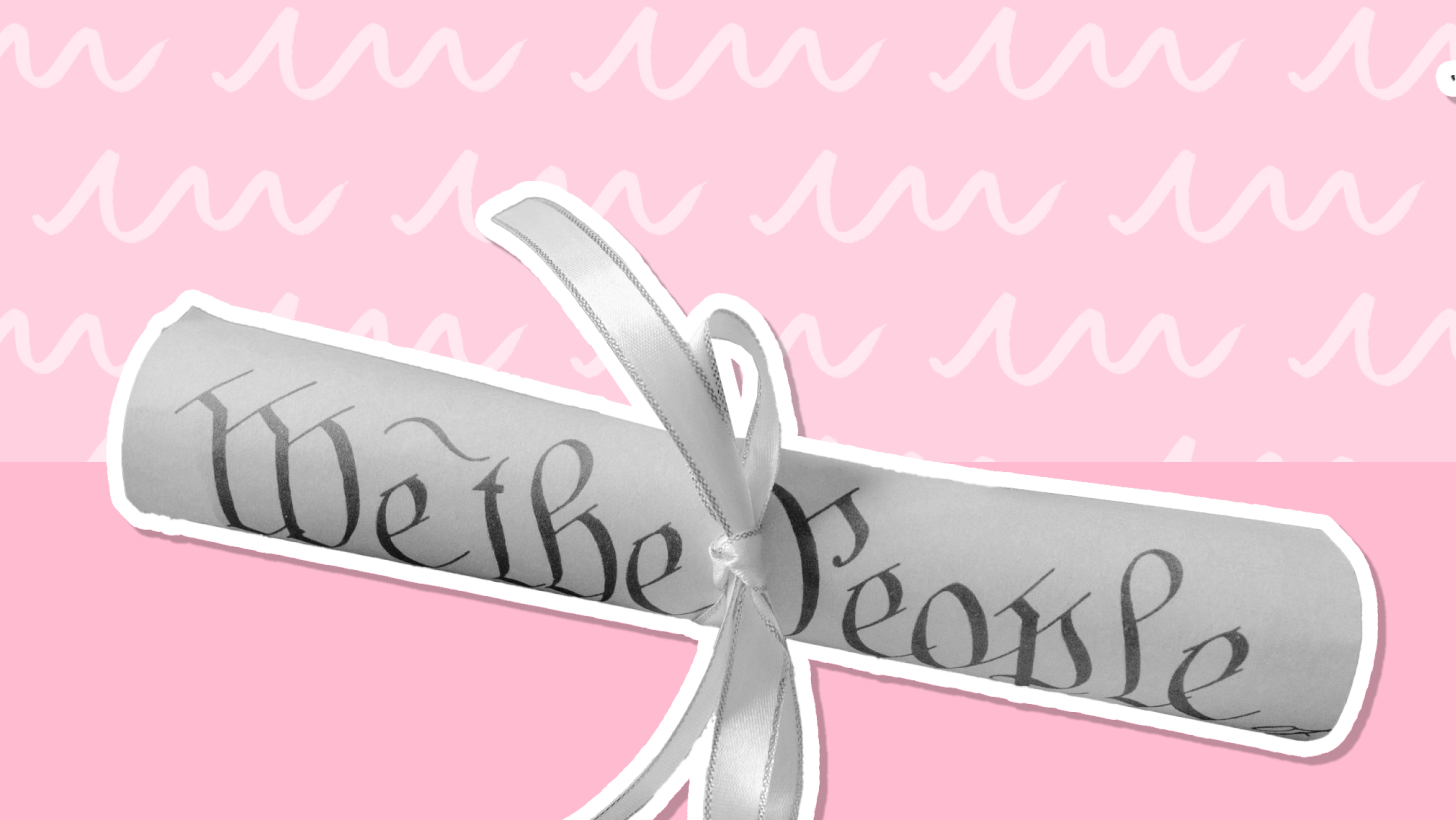
The US Constitution is one of the most important documents in American history, but even the most well-read citizens might not have noticed some mistakes and details. This document has its fair share of surprises, from typos and outdated spellings to missing signatures and common misconceptions. Did you know it contains grammar mistakes? Or that the document doesn’t establish a democracy? Let’s see how this goes!

1
Let’s start with a grammar mistake

Image: Shotkitimages

2

Even the nation’s most important document wasn’t immune to typos! Article I, Section 10 writes "it’s" instead of "its," mistakenly using the contraction instead of the possessive form.

The funny part? The correct spelling of "its" appears properly in other parts of the document. This suggests it was just a careless transcription mistake rather than a misunderstanding of grammar. Since rewriting historical documents isn’t exactly encouraged, the mistake remains to this day. Even the Founding Fathers weren’t perfect proofreaders, you know?

3
A republic, not a democracy

Image: Joshua Sukoff

One of the biggest misconceptions about the Constitution is that it established an American democracy. However, the US was founded as a republic , which differs in that it relies on elected representatives and a system of checks and balances.

When asked whether the Convention had created a monarchy or a republic, Benjamin Franklin famously replied: "A republic, if you can keep it." It was a warning that democracy requires active participation to survive.

4
The Constitution’s British roots

Image: Romain Vignes

Even though the U.S. had declared independence from Britain, the Constitution still used British spellings. Words like "defence," "labour," and "controul" (instead of defense, labor, and control) can be found in the original text.

These spellings were still common in American English at the time, though they would eventually fade away in favor of more distinctly American versions.

5
A comma that shouldn't be there

Image: Anemone123

Grammar nerds, brace yourselves: the Constitution contains a strange comma mistake. In Article III, Section 1, the sentence reads: "The judicial Power of the United States, shall be vested in one Supreme Court." That comma between "United States" and "shall" separates the subject from the verb, making it grammatically incorrect. While punctuation rules were more flexible back then, this particular comma sticks out as a clear mistake.

6
Who signed the Constitution? Not Jefferson or Adams!

Image: WikiImages

You might assume that Thomas Jefferson and John Adams signed the Constitution, but they didn’t. But that’s not because they didn’t stand by it, it was because they weren’t even in the country at the time!

In 1787, Jefferson was in France serving as the US Minister, while Adams was in Great Britain as the first US. Ambassador. Despite their absence, both men played major roles in shaping the early American government.

7
Not everyone signed both the Declaration and the Constitution

Image: sarina gr

Let’s focus on the ones who did sign both documents. Both the Declaration of Independence and the Constitution were signed by key American figures, but only six men signed both .

Those names? Benjamin Franklin, George Clymer, Robert Morris, George Read, James Wilson, and Roger Sherman. While many Founding Fathers contributed to both documents, the actual signatures overlap far less than one might expect. How surprising is this?

8
Rhode Island wanted no part in it

Image: Michael Denning

When the Founding Fathers met in Philadelphia in 1787 to draft the Constitution, all 13 states were invited, but Rhode Island refused to show up . The state feared that a strong federal government would overpower them, so they boycotted the entire process.

They even rejected the Constitution’s ratification in 1788 before finally agreeing two years later, by just two votes!

9
They "chuse" some interesting spellings

Image: Brett Jordan

If you were told our Constitution reads " The House of Representatives shall chuse their Speaker and other Officers; and shall have the sole Power of Impeachment," would you believe it?

You better do because this spelling mistake doesn’t happen only once, it appears multiple times throughout the document.

While it may seem like an error, "chuse" was actually a perfectly acceptable spelling at the time. Language evolves, and by the 19th century, "choose" had won out as the standard spelling.

10
The President cannot veto Constitutional Amendments

Image: David Everett Strickler

Presidents may have veto power over laws, but they have zero say when it comes to Constitutional amendments. Congress or a constitutional convention must propose and ratify them without requiring presidential approval.

While presidents can support or lobby for amendments, they can’t introduce or block them directly. Not many people knew this, what about you?

11
The Supreme Court’s most famous power isn’t in the Constitution

Image: Adam Michael Szuscik

Many people assume the Constitution explicitly gives the Supreme Court the power of judicial review, that is, the ability to declare laws unconstitutional. But guess what? It doesn’t.

Actually, judicial review became a standard practice after the famous Marbury v. Madison case in 1803. The Founding Fathers expected the courts to play this role, but the power isn’t actually written in the document itself. Even the Constitution has its unwritten rules!

Explore more American facts

Choose your favorite category!

General
General

As American as apple pie—the very best America has to offer!

Culture
Culture

Delve into the astounding richness of American lore.

Geography
Geography

Hop in and explore vast and diverse American landscapes.

History
History

Discover the key moments that shaped the United States.