History History 5 min read

WALT DISNEY WORLD UNCOVERED

Do You Know How Much A Ticket To Disney Originally Cost?
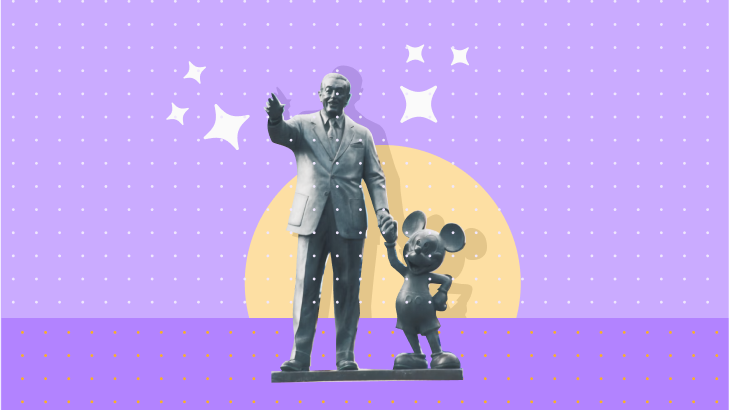
Image: Travis Gergen

In the heart of Florida, where dreams take shape and fairy tales come alive lies a realm called Walt Disney World . Beyond the glimmering castle spires and the bustling crowds, there exists a world of enchantment and mystery that has ship-shafted many times ever since their doors first opened. Join us as we unveil untold stories and hidden gems that may be surprising even to those who know every nook and cranny of this beloved destination!

1
Ticket Time Capsule

Image: taylor gregory

Transport yourself back to the very beginning of Walt Disney World, where a ticket to the Magic Kingdom was your golden ticket to a world of wonder. Back then, a mere $3.50 could whisk you away on a magical adventure , while kids could join the fun for just $1.50 – a steal even by today's standards!

Now, here's the kicker: those tickets didn't come with a free pass to ride every attraction. What a bummer, right? Guests had to snag ticket books, each packed with a variety of tickets labeled A through E.It wasn't until the early 1980s, with the debut of EPCOT, that this ticketing system was changed, paving the way for a more seamless experience for all visitors.

2
EPCOT Evolution

Image: Robert Horvick

EPCOT is the jewel in Disney's crown and a beacon of innovation. But did you know that its creation was a tale of two visions colliding? Imagineers found themselves torn between two grand ideas: one envisioned a futuristic utopia , a gleaming city of tomorrow (after all, this was what the acronym means: Experimental Prototype Community of Tomorrow); while the other dreamed of a global showcase, a melting pot of cultures from around the world.

Legend has it that one fateful day, these conflicting ideas collided like bumper cars giving birth to the unique EPCOT we know and love today: a harmonious blend of innovation and international flair , where the future meets the world.

3
Trash Talk

Image: Jilbert Ebrahimi

Now, let's talk trash: Disney-style, of course! Walt Disney himself was a stickler for cleanliness , and he knew that keeping the Magic Kingdom spotless was key to preserving its enchanting atmosphere. So, he came up with a genius solution: strategically placing trash cans every 30 feet throughout the park .

It was like sprinkling pixie dust, but instead of granting wishes, these magical bins encouraged guests to keep the park clean with every step they took. Imagine walking through the park, the scent of popcorn wafting through the air, the sound of laughter echoing all around you, and knowing that you're never more than a few feet away from a trashcan–it's the Disney difference in action!

4
Rare Closures

Image: Alyssa Eakin

With all the crowds one is used to seeing in this magical place, it may come as a surprise its doors haven't always been opened. Despite the unstoppable force of Disney World's enchantment, even the happiest place on earth has had to close its gates on occasion.

From the mighty fury of hurricanes to the somber echoes of 9/11, and most recently, the unprecedented challenges of the COVID-19 pandemic were the moments when the magic momentarily dimmed . However dark times could get, Disney World always found the strength to come back stronger, and ready to sprinkle a little extra magic into the lives of all who enter through its gates .

5
Tunnel Tales

Image: Kevin Noble

Disney World is not only magical above the ground, it can also be below it thanks to the utilidors of Magic Kingdom, underground passages that are the stuff of legend .

But here's the scoop: they're not really "underground" at all! That's right, contrary to popular belief, these tunnels were actually constructed at ground level, with the park built on a "second level" above them . It's like discovering a secret passage in a fairy tale castle – except instead of leading to hidden treasure, these tunnels connect the park's lands, allowing cast members to weave their magic behind the scenes without disrupting the enchantment above ground.

6
Hollywood of the East

Image: Yulissa Tagle

Walt Disney once said "Lights, camera, action!" and that was enough to open Disney's MGM Studios, where dreams are made and fantasies come to life.

Well, that might be a bit of a fantasy in itself, but did you know that when this iconic theme park first opened its doors in 1989, it wasn't just a playground for thrill-seekers and movie buffs? It was also a working film studio, a bustling hive of creativity where Hollywood magic was made right before your eyes.

Disney planned to establish a "Hollywood of the East" in sunny Florida. However, this ambitious vision faded over time, leaving behind a legacy of fantasy and imagination for all to enjoy.

7
Heightened Illusions

Image: Brian McGowan

From the majestic spires of Cinderella Castle to the creepy allure of the Tower of Terror , these architectural marvels stand as a testament to Disney's boundless creativity and imagination.

But here's a fun fact that might just blow your mind: none of these structures exceed 199 feet in height. Why is that? Well, according to federal aviation regulations, any structure that reaches a height of 200 feet must have a blinking red beacon–a real buzzkill when it comes to maintaining the immersive theming of the park. So, next time you find yourself gazing up at these towering titans, remember that even in the land of make-believe, there are rules to follow.

8
Hidden Mickey Mysteries

Image: steven lozano

While many Hidden Mickeys are intentionally incorporated into attractions , décor, and even landscaping, one particularly intriguing instance can be discovered in the architecture of Disney's Hollywood Studios itself.

From high above, the Chinese Theatre formed Mickey's mouth, while Echo Lake served as his right ear and the roof of the Brown Derby restaurant as his left ear. Trees and planters completed the picture, forming Mickey's eyes, eyebrows, and nose in perfect harmony. It was a playful tribute to Disney's most iconic character that could only be fully appreciated from the heavens above. Though time may have dulled it a bit, the spirit of the Hidden Mickey lives on.

9
Secret Scale Model

Image: Brian McGowan

As you glide along the tracks, soaking in the sights and sounds of Tomorrowland, keep your eyes open and you will catch sight of Walt Disney's original vision for the Experimental Prototype Community Of Tomorrow, a.k.a. EPCOT.

Yes, that's right, in the middle of Tomorrowland lies a scale model of Walt's ambitious dream, a miniature marvel that offers a captivating glimpse into the past and future of Disney's genius designs as a way to honor his boundless imagination and visionary spirit that continue to shape the world of Disney to this day.

10
Animal Kingdom’s Mythical Legacy

Image: Stephanie Klepacki

Within the confines of Disney's Animal Kingdom lies a silent tribute to a forgotten dream: the park's official logo , featuring a majestic dragon, serves as a reminder of what could have been. Originally, plans were to create Beastly Kingdom, a realm of mythical creatures and legendary beasts.

Unfortunately, due to budget constraints, Beastly Kingdom never materialized beyond conceptual stages, leaving its intended location to be occupied by Pandora: The World of Avatar . The dragon on Animal Kingdom's logo stands as a silent guard of the original idea.
Culture Culture 4 min read

Seudonyms for life

Behind made-up names: Stars who changed their original names and why

Image: Matt Botsford

Much like Bruce Wayne hid behind Batman, many celebrities whose careers we’ve followed through the years bear made-up names . Was it to protect their family names from stardom? Was it to wear the personas as costumes they could hang at the door? Let’s look into fake and real names of well-known icons and see, if known, why they chose to do it.

1
Stevie Wonder

Image: Osman Rana

The musical genius behind hits like "Superstition" and "Isn't She Lovely," Stevie Wonder, was born Stevland Hardaway Judkins.

Blind from infancy, he was a child prodigy, signed to Motown Records at just 11 years old. They decided to rebrand him as "Little Stevie Wonder." Isn’t that how a legend gets made?

2
Muhammad Ali

Image: engin akyurt

"The Greatest," Muhammad Ali, known for his legendary boxing career and his outspoken personality, was born Cassius Clay.

After converting to Islam, he refused to keep his birth name and rebranded himself as Muhammad Ali. He floated like a butterfly, stung like a bee, and certainly wasn't shy about making a statement!

3
Whoopi Goldberg

Image: asim alnamat

The hilarious and outspoken Whoopi Goldberg, known for her roles in films like The Color Purple and Ghost , was called Caryn Elaine Johnson at birth.

If her name reminds you of a Whoopee Cushion, here’s where you learn that that was intentional. Her friends called her that –Whoopi Cushion– and she wanted it to be her stage name, but her mom convinced her to take herself more seriously and use one of her family surnames, Goldberg.

4
Lady Gaga

Image: Hrayr Movsisyan

The queen of pop, Lady Gaga, known for her outrageous fashion style and catchy hits like "Bad Romance" and "Born This Way," was born Stefani Joanne Angelina Germanotta. Elegant, but still a mouthful when you are trying to become the next Madonna.

While designing her legendary persona, she was inspired by the Queen song "Radio Ga Ga," and she stuck with that name. It does fit her theatrical aesthetic much better than Stefani Germanotta, doesn't it?

5
Prince

Image: ROMBO

This one is less of a story than you might imagine —Prince’s first name was, indeed, Prince. The Purple One was born Prince Rogers Nelson, just like his father, a jazz musician who performed under the stage name "Prince Rogers." So, that name was taken.

He rose to fame as simply "Prince," although some remember him as "The Artist Formerly Known as Prince (TAFKAP)," which he established as his name after a dispute with Warner Bros Records.

6
Bob Dylan

Image: Samuel Ramos

The voice of a generation, Bob Dylan, known for his poetic lyrics and iconic songs like "Blowin' in the Wind," was born Robert Allen Zimmerman.

Did he choose the name after Dylan Thomas? No, the musician eventually confessed he’d never read much of the poet. Toying around with his first surname, Allen, Bob had been trying to decide whether to call himself "Bob Allen" or "Bob Allyn," until he realized "Dylan" was, in his words, stronger.

7
Meg Ryan

Image: Kit Suman

America's sweetheart, Meg Ryan, known for her roles in romantic comedies like Sleepless in Seattle and You've Got Mail , was born Margaret Mary Emily Anne Hyra.

When you have such a long name, you have to make some decisions. She first presented herself as "Margaret Hyra", but when registering for the Screen Actors Guild, Margaret became Meg, and her dad’s surname was replaced by the maiden name of her grandma, Ryan.

8
Demi Moore

Image: Bruno Mattos

Actress Demi Moore was born Demetria Gene Guynes. She shortened her first name to Demi when she began her acting career and adopted the surname Moore from her first husband, Freddy Moore.

The Moores eventually separated, but Demi decided to carry the surname on throughout her career.

9
Brad Pitt

Image: Amjith S

Did you know that Brad Pitt might easily have been known as "Bill Pitt"? Or "Willy Pitt"? We surely prefer Brad!

Hollywood’s heartthrob was born William Bradley Pitt. Early in his career, he presented himself with his full name, but eventually, he dropped the "William." He went on to become a multi-awarded and beloved movie star and producer.

10
Winona Ryder

Image: Elviss Railijs Bitāns

The quirky and talented Winona Ryder, known for her roles in films like Beetlejuice and Girl, Interrupted , was born Winona Laura Horowitz.

Why did she choose "Ryder" for her movie credits? She says that she picked the name out of a Mitch Ryder record her dad loved. Seems whimsical, but remember: She was only a teenager when she rose to fame!

11
Emma Stone

Image: Mirko Fabian

Academy Award-winning actress Emma Stone, known for her roles in films like La La Land and Easy A , was born Emily Jean Stone.

She would have signed up with her real name proudly, but when she went to register with the Screen Actors Guild, she found that Emily Stone was taken. She decided to go for the next best thing and name herself after her favorite Spice Girl, Emma Bunton.

History History 5 min read

A LESSON IN CULTURE HISTORY

Travel back in time to the fads and movements that defined America!

Image: Florida Memory

Do you remember the fads from your childhood and teenage years? Think back on those toys, objects, and clothing items that were once so dear to you: They might seem tacky or downright ridiculous now, but they surely hold a special place in our memories. America has gone through some rather spectacular fads and movements in the past century, so we have selected 10 of the most era-defying fads in our country’s history. We hope they bring back some good memories! Enjoy!

1
The Roaring Twenties

Image: Carrie Borden

We’ll begin with one of the first fads invented right here in America. The 1920s in America were characterized by a period of prosperity and well-being that resulted in a dynamic and distinct cultural rise in major American metropolises. There’s a reason why this period was known as "The Roaring 20s": It signified an upheaval in American music, arts, and fashion.

The 20s saw the birth of avant-garde art forms like jazz music, as well as groundbreaking novels by authors like F. Scott Fitzgerald and Ernest Hemingway. This era is also remembered for the surge of the "Flapper" subculture: Modern, young women with a more carefree attitude toward entertainment.

2
Pin-up models

Image: Florida Memory

Who do you think about whenever you think of the word "pin-up model"? Chances are your answer is Marilyn Monroe or Betty Grable : After all, they both got their start as pin-up models, portrayed in thousands of mass-produced photographs. However, these actresses helped cement the notion of what defines a pin-up model, now considered to be an essential icon in American pop culture history.

Pin-ups defined the aesthetic of an entire period, present in everything from movies to advertisements. Not only that, pin-up models were often depicted on the side of American fighter planes during World War 2, helping raise the morale of our troops.

3
Greasers

Image: Sümeyye Candan

Although the word "greaser" definitively got its start as a derogatory term for this subculture, it ended up being the name of one of America’s most beloved periods. The 1950s are still revered as a golden age by millions of Americans, particularly because of the surge of many icons that make our country so wonderful: Things like Cadillacs, Rock N’ Roll music, and soda fountains were all born in this era.

In that sense, the "Greaser" look was heavily influenced by musicians and actors like Elvis Presley and James Dean . Greasers would showcase their fast motorcycles, stylish hairstyles, and leather jackets wherever they went. By the 1970s, this style was so well-known that it provided the basis of one of America’s favorite TV characters: Fonzie, perhaps now considered the quintessential greaser.

4
The Hippie movement

Image: Jamie Street

The Hippie movement is synonymous with 1960s America: This subculture influenced almost every art form during this period, from music to television, film, and literature. While it is nowadays mostly looked at as an aesthetic or cultural movement, the influence of hippies in American politics and society shouldn’t be overlooked.

Perhaps the biggest representatives of the hippie movement are those groundbreaking bands and musicians aligned with this movement, like Jimi Hendrix, Janis Joplin, or Jefferson Airplane. Hippies were also characterized by their groundbreaking fashion, which featured bell-bottom jeans, sunglasses, and colorful shirts.

5
Beatnik movement

Image: Pereanu Sebastian

Speaking of hippies, let’s take a little detour and focus on an American artistic movement that laid the foundation from which the hippie movement emerged. Much like with "greaser," the term "beatnik" was first coined as an insult, aimed at followers of the "Beat Generation," a literary movement that included names like Jack Kerouac or William S. Burroughs.

The beatnik subculture had a defining image, often exaggerated by detractors: Think about the caricature of a modern poet, complete with a black turtleneck, beret, and bongos, and you’ll be thinking about a stereotypical beatnik. Regardless, historians believe that the term "hippie" comes from "hipsters," which is a term first used to describe the beatnik subculture.

6
The 80s

Image: Eric Nopanen

Fashion during the 1980s can be best summed up by this phrase from Charles Dickens's "A Tale of Two Cities": "It was the best of times, it was the worst of times." While it can’t be denied that this decade brought forward groundbreaking styles to music, films, and culture, it should also be noted that some of these changes were extreme, to say the least. At the end of the day, whether the 80s were good or bad will ultimately depend on who you are asking.

Personally, we would like to focus on those 80s things that we absolutely love: Things like synthesizer music, mullet hairstyles, and neon-bright clothing. This decade was also the birthplace of several subcultures, including the post-punk, preppy, and new-wave movements.

7
The 90s

Image: Panos Sakalakis

If the 70s and 80s were characterized by their loud and flamboyant styles, the 90s were defined by a more minimalist approach: Bands like Nirvana or Pearl Jam helped promote the "grunge" aesthetic, which featured simple items of clothing like jeans, flannel shirts or hoodies.

Although definitively minimalist, the 90s were also the birthplace of subcultures like the goth movement. During this era, numerous extreme sports like skateboarding gained popularity, in line with this decade’s alternative outlook on culture.

8
Disco

Image: Dustin Tramel

Ready to dance "The Hustle"? The late 60s and early 70s were determined by the emergence of one of America’s most remembered subcultures. While disco music first appeared in New York City and Philadelphia, it quickly swept over the nation: Think of a tornado filled with disco balls, roller skates, and nightclubs, and you might be able to paint a picture of how influential this subculture was.

Although disco got its start in iconic nightclubs like Studio 54, it soon expanded to other mediums like movies and television. Most notably, shows like "Soul Train" helped promote this genre’s appeal, while films like "Saturday Night Fever" cemented the ultimate aesthetic of the disco subculture.

9
Digital age

Image: Xiong Yan

We have now arrived at our modern times ! The advent of the internet represented such a groundbreaking innovation in our everyday lives that it stands to reason that the digital age also influenced many of our fads and movements. The late 2000s and early 2010s were determined by this new massive access to information, which completely changed the way we consume culture and entertainment.

In that sense, this new, instant way to share information immediately meant that culture was now not only limited to geographical locations: Your favorite band or fashion icon could easily live on the other side of the world. This cultural exchange resulted in a rich and diverse movement, which is still developing to this very day.

10
All those wonderful memories…

Image: COSMOH LOVE

We have reserved the final entry on this list for the many objects that defined each of these decades. It is sometimes easier to picture an era through a specific item: Think about the 50s and their timeless jukeboxes, or the 90s and the above-mentioned flannel shirts.

In that sense, we have selected a few of our top picks. Some, like the Hula Hoop or the Frisbee, have truly transcended time: Although they were created decades ago, they are still thoroughly enjoyed by children and adults alike. Time hasn’t been that kind with others, though, like with the now practically extinct Tamagotchi. This digital pet was all the rage during the late 90s and early 2000s, but it ultimately fell into obscurity thanks to other digital mediums.

Explore more American facts

Choose your favorite category!

General
General

As American as apple pie—the very best America has to offer!

Culture
Culture

Delve into the astounding richness of American lore.

Geography
Geography

Hop in and explore vast and diverse American landscapes.

History
History

Discover the key moments that shaped the United States.