General General 6 min read

MORE THAN WORDS

Do You Know The Meanings Behind These 10 Non-English State Mottos?

Mottos define the heart of our 50 states . Some states have only one, and others have several mottos, but they all have one thing in common: they reflect the ideals, values, and unique identity of each state. While some mottos in English -such as Alaska's "North to the Future'' or Kentucky's "United we stand, divided we fall''- are very popular, there are equally memorable state mottos in other languages. Today, we are going to explore the meanings, motivations, and stories behind these 10 non-English state mottos . If you are curious, read on!

1
Eureka

Image: Maarten van den Heuvel

The unmistakable Californian Eureka isn't English; it's Greek and translates to "I have found it!" This accurate expression is deeply connected to something that became a symbol of the state in the 19th century: gold.

It is said that the ancient Greek scientist Archimedes was doing experiments to define the density of pure gold when he decided to take a bath. Suddenly, a revelation came to his mind. According to legend, Archimedes forgot to get dressed and started to run through the streets to the joyous yell of "Eureka!"

The Gold Rush that occurred in California in the 19th century gave rise to the motto of this state. The story goes that, in 1848, James W. Marshall discovered gold in Coloma, and his scream of "Eureka!" was soon heard. While adopted informally much earlier, this expression became California's official motto in 1963.

2
Crescit Eundo

Image: Joseph Corl

Greek is not the only ancient language that shapes U.S. states' mottos. Latin also appears, seen in expressions like New Mexico's Crescit Eundo.

This motto in Latin translates to "It grows as it goes"and was chosen because it strongly represents the ideals and aspirations of this southwestern state. This meaningful expression was adopted as a hallmark of this region as early as the 19th century , reflected in early versions of the territorial seal long before New Mexico became one of the 50 states.

Thus, New Mexico demonstrates its belief that advancement and progress come with time and effort, a conviction held both historically and currently.

3
Ense petit placidam sub libertate quietem

Image: Pascal Bernardon

Latin is here again, this time giving life to the official state motto of Massachusetts.

The Bay State's lengthy motto, Ense petit placidam sub libertate quietem , has a beautiful meaning: "By the sword, we seek peace, but peace only under liberty." This expression represents the commitment the state of Massachusetts has always had, as one of the sites where the feeling of freedom and the demand for independence arose and grew.

This great motto was chosen in the late 18th century, during the tumultuous colonial era. With independence as its banner, Massachusetts has always defended the nation with strength and determination, something reflected in its motto from the earliest days of the Revolution to the present day.

4
Animis Opibusque Parati/ Dum Spiro Spero

Image: Terry Granger

South Carolina is one of the states that has more than one motto. This state has two, both incorporated in its state seal, both adopted during the Revolutionary years, and both in Latin .

Animis Opibusque Parati carries a powerful meaning: "Prepared in Mind and Resources." This expression reflects the mental, physical, and spiritual strength colonial men had to fight in the Revolutionary War and the importance of possessing the necessary resources when doing so.

For its part, Dum Spiro Spero brings a beautiful and poetic definition: "While I Breathe, I Hope." This message of hope , which emerged in the context of the Revolution, highlights the fight was always fueled by a desire for freedom and the hope of victory.

5
Ua Mau ke Ea o ka ʻĀina i ka Pono

Image: Pascal Debrunner

No one can deny the beauty and charm of Hawaii. Its lands, volcanoes, and beaches, everything there seems magical.

Their motto, Ua Mau ke Ea o ka ʻĀina i ka Pono , was officially adopted in 1959 when Hawaii became the 50th state of our country. It reflects the lifestyle of its inhabitants and their commitment to preserving their home, as we see it.

This Hawaiian expression translates to "The life of the land is perpetuated in righteousness." According to this powerful statement, the land is maintained by the right values and actions of the people who inhabit it. The people's goodness and morality are reflected in the land's health and virtue .

6
Ditat Deus

Image: Gautier Salles

Ditat Deus , Latin for "God enriches," has been with us for a long time: since Arizona became a territory in 1863. The expression was chosen during the period when the territorial seal was designed, reflecting the spiritual and religious values of the era.

In addition to that statement, the Arizona state seal also features a dam, irrigated fields, cattle grazing, a mill, and a miner. The idea of divine richness is associated with Arizona's plentiful natural resources, which have contributed to its growth and prosperity . Thus, when Arizona became one of the 50 states, this motto was chosen again, reaffirming its symbolic importance for the state.

7
Oro y Plata

Image: Steven Cordes

It's not all about Latin and Greek here; there is also room for Spanish . And that's the language the state of Montana chose for its official motto!

Montana is called "The Treasure State" for a good reason. As many know, Oro y Plata is Spanish for "Gold and Silver." Like Arizona, Montana chose to highlight the resources that made its development and growth possible, which is reflected in both its seal and its motto.

Thus, the state pays homage to its tradition of precious metal mining . Now you're probably wondering, "And why in Spanish?" Well, it turns out that Montana has a diverse cultural history, and the early Hispanic settlers played an essential role in Montana's mining industry during the 19th century. In fact, the state's name comes from the Spanish word montaña , which simply means "mountain."

8
Sic semper tyrannis

Image: Zachary Spears

Latin is back in this list, this time to embody the powerful motto of the state of Virginia.

Adopted in the 18th century along with its seal, the motto Sic Semper Tyrannis translates to "Thus Always to Tyrants." Some sources state that this phrase was used during the establishment of the Roman Republic in the 6th century BCE when the monarchs were overthrown and expelled.

The story goes that George Mason, one of the Founding Fathers of our country, was inspired by Roman history to coin this phrase and designate it to define Virginia's ideals. Yes, you guessed right, the defiant expression was adopted in the context of the Revolution , making it clear that America would never again accept oppressive rule over its shoulders.

9
Regnat populus

Image: Tommy Bond

Freedom and independence are fundamental values for our country and for each state in particular.

Thus, the state of Arkansas also plants its flag with its Latin official motto, Regnat Populus , meaning nothing less than "The People Rule." Arkansas affirms that the power belongs to the inhabitants of these lands, highlighting the importance of civil participation in the affairs of the state.

This motto, adopted in the 19th century,embodies the ideals of sovereign, democratic, consensual, and fair governance.

10
Labor omnia vincit

Image: Peter Kleinau

Oklahoma became the 46th state of our country in 1907 . It was in that same year that the state adopted its official motto, Labor omnia vincit , Latin for "Labor/Work Conquers All Things."

The phrase appears in the iconic '' Georgics'' by Roman poet Virgil , who expressed "Labor omnia vicit / improbus'' to support Augustus Caesar and advise Romans to work the land.

Oklahoma's motto honors the state's agricultural history and encourages perseverance in pursuing goals, reflecting the values of hard work and dedication.

Culture Culture 6 min read

ALL-TIME CLASSICS

Are you looking for the Great American Novel? Explore 10 contenders

Image: Laura Chouette

American literature is rich in stories and authors. Its best examples capture life in the big cities, luxury, and glamour, but also the small rural American towns, diving into their roots and history. Books like Francis Scott Fitzgerald's The Great Gatsby or John Steinbeck's The Grapes of Wrath are classics that have left a lasting mark on generations of readers . Today we have put together a bookshelf with 10 of the best American novels of the 20th century. This list will surely fall short, but we hope you enjoy our selection!

1
The Great Gatsby , F. Scott Fitzgerald (1925)

Image: Girl with red hat

Written by F. Scott Fitzgerald, one of the most iconic authors of the so-called "Lost Generation", The Great Gatsby portrays the dark side of the American dream . The protagonist, the mysterious and apparently frivolous millionaire Jay Gatsby, is obsessed with winning back a woman he loved in his youth. Set in the Jazz Age, Fitzgerald’s book raises the contradictions between the power of money and the most intimate individual aspirations.

Published in 1925, The Great Gatsby is one of the greatest masterpieces of American fiction . Since then, it has sold millions of copies all over the world, has had numerous theatrical and film adaptations, and was chosen as the best American novel of the 20th century on several occasions.

2
The Sound and the Fury , William Faulkner (1929)

Image: Brandi Redd

Published in 1929, The Sound and the Fury is William Faulkner's fourth novel and is considered the greatest opus of this Nobel Laureate . It chronicles the decadence of the Compsons, an aristocratic family in the American South, their secrets, and the relationships of love and hate that sustain and destroy them.

The Sound and the Fury is a profound and heartbreaking exploration of decay, despair, and loss . Faulkner's innovative narrative technique, while challenging, allows for an intimate and visceral portrayal of the characters. The novel also addresses issues of race, gender, and class with admirable narrative prowess.

3
The Old Man and the Sea , Ernest Hemingway (1952)

Image: MonicaVolpin

The Old Man and the Sea was the last novel published by Ernest Hemingway during his lifetime. For it, he won the Pulitzer Prize for Fiction in 1953 and it undoubtedly contributed to the Nobel Prize for Literature he was awarded in 1954.

The novel tells the story of Santiago, an old and experienced fisherman who embarks on a grueling three-day battle when he finally manages to catch a huge marlin. The Old Man and the Sea is considered one of the masterpieces of universal literature that has captivated readers around the world for decades . Its message about perseverance, dignity, and the search for life’s meaning is still relevant today. The novel is a must-read for anyone interested in literature and human nature.

4
In Cold Blood , Truman Capote (1965)

Image: Brandi Redd

On November 15, 1959, in a small Kansas town called Holcomb, the four members of the Clutter family, a married couple and their two teenage children, were savagely murdered by Dick Hickcock and Perry Smith.

Based on these gruesome events, the American novelist Truman Capote managed to turn around his career as a storyteller by writing In Cold Blood , the novel that definitively established him as one of the great authors of twentieth-century American literature. This book catapulted him as the pioneer of the New Journalism literary movement , a non-fiction genre that became popular in the 1960s for narrating stories based on real events.

5
The Catcher in the Rye , J. D. Salinger (1951)

Image: Gratisography

The Catcher in the Rye , written by the great J. D. Salinger, is a contemporary novel that has become a classic of modern literature. At the time of its publication in 1951, it provoked numerous controversies for its provocative language and its unabashed portrayal of teenage struggles, such as sexuality, the loss of innocence, and the transition to adulthood.

The Catcher in the Rye could be framed within the Bildungsroman —a literary genre that focuses on the psychological and moral growth of the protagonist. It follows Holden Caulfield, a teenager who, after being expelled from school, gets lost in New York trying to find his way in the world. The novel is rich in symbolism and themes , and the literary style and narrative technique are unique and exceptional.

6
American Pastoral , Philip Roth (1997)

Image: Arno Senoner

Published in 1997, American Pastoral is the novel that earned Philip Roth the Pulitzer Prize and is the first in the well-known "American Trilogy", a series of novels narrated by Nathan Zuckerman, the author's alter ego. With the Vietnam War as a backdrop, this book is a lucid tale that questions American values during the end of the happy sixties.

In American Pastoral we find Roth at his best: deep, intense, incisive, magnificent . His ability to build a universe of complex characters and dig into their psychologies is astounding and overwhelming. Few writers have managed to capture the contradictions of American society as he has done.

7
Beloved , Toni Morrison (1987)

Image: Artis Kančs

Beloved , published in 1987 by Nobel Prize winner Toni Morrison, takes place in the aftermath of the American Civil War . The novel tells the story of an African-American slave, Margaret Garner, who escapes from Kentucky to Ohio, a free state.

Magic realism runs throughout the entire book and manifests through the ghostly presence of Beloved's character. Morrison uses this technique to explore collective memory and the persistence of the past . The novel is considered a masterpiece of contemporary literature and has been acclaimed for its innovative writing style and its exploration of sensitive subjects such as slavery, freedom, identity, and memory.

8
On the Road , Jack Kerouac (1957)

Image: Daria Kraplak

On the Road is a semi-autobiographical novel in which Jack Kerouac recounts a series of trips he made across the United States and Mexico with his friend Neal Cassady. Inspired by his passion for jazz, Kerouac developed the idea of a book that would be a great improvised prose solo . He wrote it on his typewriter on a long, single roll of paper in just three weeks.

A cornerstone of the so-called "Beat Generation," On the Road was published in September 1957, after 6 years of delay due to the publisher's reservations about the explicit contents. At the time, this emblematic book had a major impact, especially on the younger readers of the 60s. Today, On the Road is still considered one of the great American novels of the 20th century for capturing the rebellious spirit of an entire generation.

9
The Heart is a Lonely Hunter , Carson McCullers (1940)

Image: Faith Enck

The Heart is a Lonely Hunter is a literary masterpiece that continues to resonate in the hearts of readers, even though it was published more than 60 years ago. Set in a small southern town, it tells the story of a group of people who have in common the rejection of a society that ignores them.

This is Carson McCullers' first novel, written when she was only twenty-three years old. She masterfully captures the essence of loneliness and the search for human connection in a way that transcends time. With a moving narrative and unforgettable characters, the novel has received critical acclaim and has earned a prominent place in literary history.

10
The Grapes of Wrath , John Steinbeck (1939)

Image: Sonder Quest

We couldn't leave The Grapes of Wrath, 1940 Pulitzer Prize winner , out of this list. In this harrowing book, Nobel laureate John Steinbeck narrates the difficult journey of a family of farmers who, beset by hunger and misery, leave the fields of Oklahoma to reach the golden shores of California, the promised land.

First published in 1939, The Grapes of Wrath is a seminal work in American literature that explores the conflict between the rich and the poor and reflects the horrors of the Great Depression with sensitivity and sharp insight. Steinbeck's chronicle of the shameful mistreatment of 1930s families is perhaps the most "American" of all American classics.

Culture Culture 3 min read

Powerful styles

How can a beard change history? 10 US presidents with iconic facial hair!

Image: Library of Congress

Can you guess how many US presidents have had beards? And how many grew a mustache? Which one comes to mind first? For some, it's Lincoln's unmistakable beard; for others, Roosevelt's distinguished mustache; and some will remember John Quincy Adams' sideburns. From the most classic mustaches to eccentric beards, today, we're taking a look at 10 unforgettable presidential styles!

1
Abraham Lincoln

Image: Library of Congress

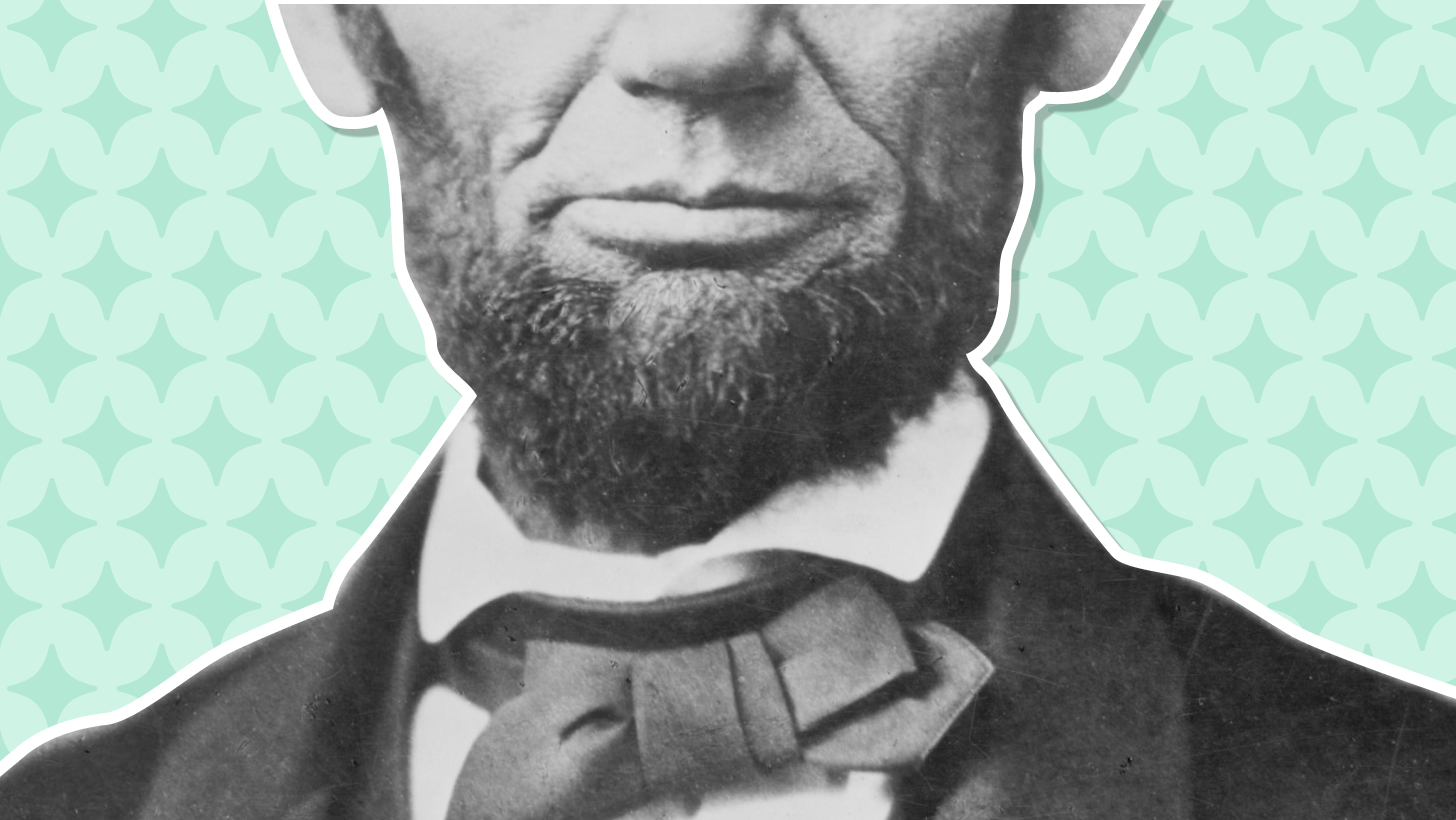
Probably one of the most remembered presidential beards is that of the 16th US President and author of the unforgettable Gettysburg Address, Abraham Lincoln. But, while his image is forever linked to his top hat and distinctive, mustache-free beard, he actually didn't always have it.

Before he was elected president, an 11-year-old girl wrote him a letter suggesting he grow a beard. Fortunately, Lincoln took her advice! Thus, he became the first president to grow a beard while in office.

2
Theodore Roosevelt

Image: Library of Congress

Another iconic style was that of Teddy Roosevelt. His handlebar mustache is not only seen in photos and portraits from his time in office but is also forever etched on the imposing Mount Rushmore. Many men of his era imitated his dramatic, thick, and bushy mustache, which perfectly matched the vigor and toughness that defined the 26th US president.

3
Ulysses S. Grant

Image: Sergei Starostin

Beard? Yes! Sideburns? Of course. Mustache? That too! That is the case with Ulysses S. Grant, a president with a full look, fitting for a Civil War hero.

Grant's beard and mustache were thick -though not long- covering his jawline and also much of his cheeks. Thus, the 18th US president set a fashion trend that would be followed by several other presidents of the 19th century.

4
Grover Cleveland

Image: Dave Sherrill

Another president with a well-remembered mustache was Grover Cleveland, the first US president to serve two non-consecutive terms.

Cleveland's mustache was fluffy and extended just past the edges of his mouth. Although this might have been a problem when dining with guests, his mustache always looked neatly trimmed.

5
William Howard Taft

Image: Ronaldo Guiraldelli

Now, it's time to talk about the only person in the history of the US to have served as both President and Chief Justice of the Supreme Court: William Howard Taft.

Taft sported a bushy mustache, like Teddy Roosevelt, who served right before him. But, unlike his predecessor, the tips of Taft's mustache didn't point downward; instead, they bent upward, making it much more theatrical.

6
John Quincy Adams

Image: Library of Congress

John Quincy Adams didn't need a mustache to stand out with his style. His hallmark was something quite original: sideburns.

Remembered for being bushy and always well and neatly groomed, the 6th president's memorable sideburns extended down the sides of his face, even connecting beneath his chin!

7
Rutherford B. Hayes

Image: Nikolaos Dimou

Rutherford B. Hayes was another 19th-century president known for sporting a full beard. In addition to being thick, his beard and mustache were quite long and even joined together, fully covering his lips, as seen in portraits from the time. While the 19th President looked really distinguished, we can't help but wonder how he handled summer with that style!

8
James A. Garfield

Image: Sean Foster

James A. Garfield had a look strikingly similar to that of his predecessor, Rutherford B. Hayes.

Also sporting a thick, long, full beard, Garfield's mustache was slightly shorter than Hayes', and his beard extended further onto his cheeks. It seems that you had to put some serious effort into perfecting your facial hair to be trendy in the late 19th century!

9
Martin Van Buren

Image: Jack Bulmer

"Mutton chops" is the term for the thick, bushy sideburns worn by Martin Van Buren, the 8th president of the United States, a style known more for its volume than its tidiness.

As seen in portraits from different moments of his life, Van Buren had sideburns from a young age, but they definitely stood out during his presidency. In fact, political cartoons of his time often emphasized that very feature, making his sideburns exaggeratedly large.

10
Zachary Taylor

Image: Josh Sorenson

Before Lincoln, the dominant fashion was a clean-shaven look. But Zachary Taylor -just like John Quincy Adams and Martin Van Buren- came to revolutionize things with his sideburns.

We have to admit Taylor's sideburns were far more modest than those of his predecessors, but he remains one of the few presidents to have worn any facial hair before Honest Abe made it a trend!

Explore more American facts

Choose your favorite category!

General
General

As American as apple pie—the very best America has to offer!

Culture
Culture

Delve into the astounding richness of American lore.

Geography
Geography

Hop in and explore vast and diverse American landscapes.

History
History

Discover the key moments that shaped the United States.