Geography Geography 3 min read

Want to go for a ride?

From epic exploration to lonely road trips: the Great American Road
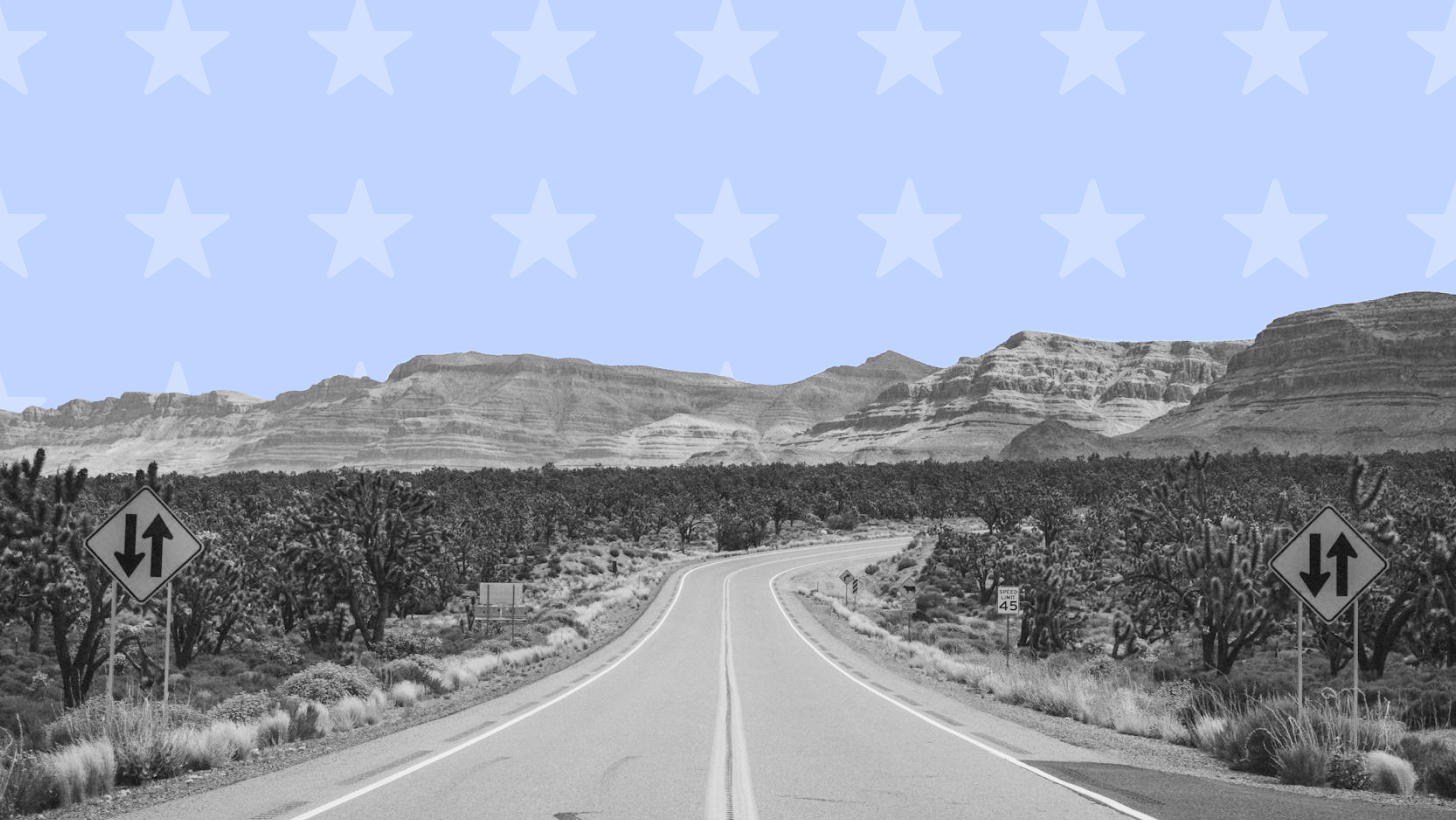
Image: Enric Cruz López

America has provided its majestic landscape for many different types of journeys, from the heroic to the touristic. Its infinite roads offer all kinds of experiences, and different personalities will find different adventures. The following ten journeys showcase these extremes and then some more. Which of these travelers do you identify yourself with the most?

1
Lewis & Clark

Image: James Lee

Also known as the Corps of Discovery Expedition, the Lewis and Clark Expedition crossed the newly acquired western portion of the country after the Louisiana Purchase . This group of U.S. Army and civilian volunteers under the command of Captain Meriwether Lewis and his close friend Second Lieutenant William Clark set out from Illinois, on May 14, 1804.

They crossed the Continental Divide of the Americas near the Lemhi Pass, eventually coming to the Columbia River, and the Pacific Ocean in 1805. The return voyage ended on September 23, 1806.

2
George Wheeler

Image: Alex Moliski

The leader of the Wheeler Survey, George Montague Wheeler, was an American pioneering explorer and cartographer who led one of the major geographical surveys of the western United States in the late 19th century.

In 1872, the US Congress planned to map the portion of the country west of the 100th meridian . This plan became known as the Wheeler Survey, which lasted until 1879 when the Wheeler, King, and Powell Surveys’ combined work was reorganized as the United States Geological Survey.

3
The Donner Party

Image: Naithen

The Donner Party was a group of pioneers who migrated to California in a wagon train from the Midwest. Delayed by a multitude of mishaps, they spent the winter of 1846-1847 snowbound in the Sierra Nevada .

While the journey west usually took between four and six months, the Donner Party chose to follow a new route called the Hastings Cutoff, which delayed them greatly.

4
Mark Twain

Image: Jim Strasma

Mark Twain was never one to shy away from adventure. Roughing It was published in 1872. It follows his travels through the American West from 1861 to 1867, when he joined his brother Orion Clemens, appointed Secretary of the Nevada Territory, on a stagecoach journey west.

5
John Muir

Image: Mathilda Khoo

The "Father of the National Parks" was a Scottish-born American explorer, naturalist, author, botanist, and early advocate for the conservation of the nation’s wilderness.

After spending much of his youth traveling across the country, Muir visited Yosemite and was enthralled by its natural beauty . Later on, he worked as a shepherd for a season in the valley, built a cabin, and began advocating for the creation of a national park to protect the area.

6
Jack Kerouac

Image: Ana Viegas

Probably one of the most famous entries on this list, Jack Kerouac’s 1947 cross-country hitchhiking round-trip became the basis for On the Road , a freeform travelogue that became the bible of the Beat Generation.

His roundtrip started and ended in New York, passing through Chicago on the way out to California, following the West Coast south before returning east.

7
John Steinbeck

Image: Jack Anstey

In 1960, John Steinbeck decided to travel across America setting out from his Long Island home aboard his camper van, dubbed Rocinante, and accompanied by his French poodle, Charley . In 1962, he published Travels with Charley: In Search of America .

Their 10,000-mile-long trip passed through New England, then via Niagara Falls along the Canadian border, hitting Chicago and continuing to Seattle before turning south towards the Salinas Valley, then to Texas, New Orleans, and a huge chunk of the Deep South.

8
Tom Wolfe

Image: Geio Tischler

Long before writing The Bonfire of Vanities , Tom Wolfe embarked on a trip across the country with a group of psychedelic enthusiasts known as the Merry Pranksters. The trip produced his 1968 nonfiction book, The Electric Kool-Aid Acid Test .

9
William Least Heat-Moon

Image: Aaron Huber

William Least Heat-Moon lost his wife and his job as a professor in a short period of time, which prompted him to embark on a soul-searching journey across the country . The result was 1982’s Blue Highways , a novel that describes the experiences he had during his travels, including conversations with colorful characters, the towns he visited, and his adventures on the road.

10
Michael Paterniti

Image: Tim Trad

Imagine driving across the country with the brain of one of the world’s most celebrated geniuses in the backseat . That is exactly what Michael Paterniti experienced and shared in his 2000’s Driving Mr. Albert: A Trip Across America with Einstein’s Brain .

The author started his quest in New Jersey, driving the doctor who performed Einstein’s autopsy and afterward refused to give up the brain which, eventually, was delivered to an Einstein heir in Berkeley.
Culture Culture 6 min read

FROM THE PAGES OF OUR CHILDHOODS

Boom! Kapow! Celebrate These 10 Iconic American Superheroes!

Image: Yulia Matvienko

Superhero stories are usually referred to as "modern mythology", and with good reason: After all, it’s easy to see the connection between heroes like Hercules or Gilgamesh with the wondrous tales of these men and women graced with powers and abilities beyond our comprehension. However, an argument could be made that modern superheroes teach us a substantially more important lesson: Through their desires to defend justice and defeat evil, these heroes teach us that we too can be better.

We have chosen ten of the most groundbreaking American superheroes that have inspired generations of Americans throughout history. Wondering if your favorite childhood hero made it to this list? Keep on reading and find out!

1
Superman

Image: Jon Tyson

It’s a bird! It’s a plane! No, it’s our first entry to this article! For many, the "Man of Steel" is the epitome of an American superhero : Not only is he one of the oldest superheroes still in circulation, but he is also a die-hard defender of truth, justice, and the American Dream.

Superman’s story has been told countless times, but here’s a quick summary just in case: Born in the far-away planet of Krypton, Kal-El was sent to Earth as a baby, where he was adopted and named Clark by Martha and Jonathan Kent. Young Clark discovered his amazing powers at an early age, and grew to become Superman, the "Man of Tomorrow".

2
Batman

Image: Obi - @pixel8propix

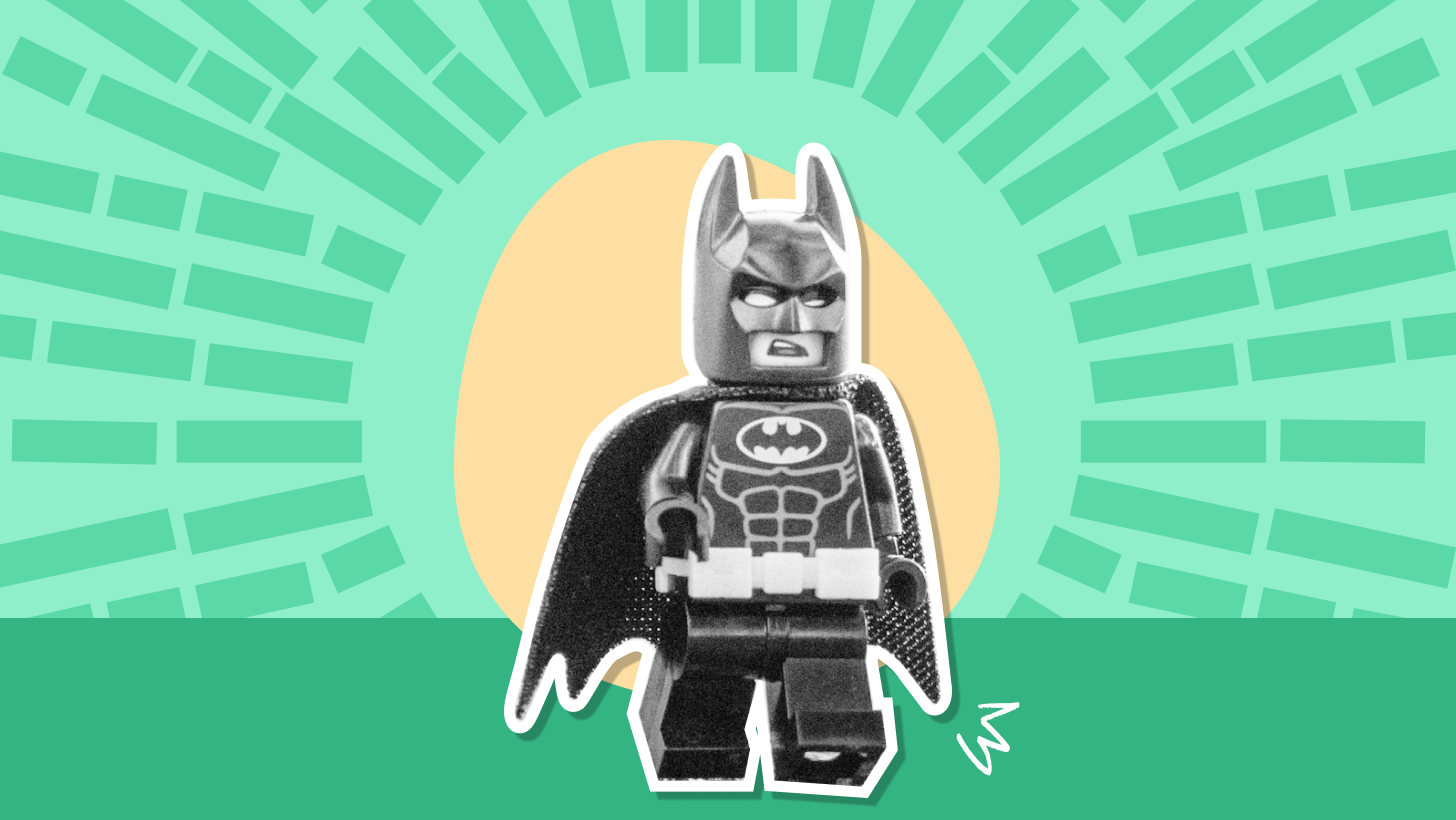
Right along with Superman, Batman is perhaps the world’s most famous superhero. What’s interesting is that, although both superheroes are equally iconic, they couldn’t be more different: While Superman is a superpowered public figure, who regularly engages with the American people in a friendly manner, Batman is a dark and mysterious figure , who fights evil-doers from the shadows and has no superpowers other than his superhuman determination (and his fair share of high-tech gadgets!).

Bruce Wayne, the man behind Batman, has a backstory that’s almost as dark as his alter ego: Born into the wealthy Wayne family, Bruce's parents Thomas and Martha were tragically murdered when he was eight years old. Determined to fight the evil that took his family away from him, Bruce spent his life and fortune to become Batman, Gotham City’s Dark Knight.

3
Spider-Man

Image: Jean-Philippe Delberghe

Up until the emergence of this beloved superhero, whatever our childhood heroes did for a living was not particularly important. For instance, Clark Kent is a Pulitzer-winning reporter, while Bruce Wayne comes from an extremely wealthy family. However, what separates Spider-Man from the rest (besides his groundbreaking arachnid powers ) is the fact that he had to juggle his superhero activities with his education and part-time photography job. In a sense, Peter Parker was the first to show us that superheroes could also come from struggling backgrounds.

When he was first published in 1962, Spider-man was also one of the youngest superheroes out there: At age 15, Peter Parker was bitten by a radioactive spider, which gave him his amazing and uncanny abilities . Spiderman can climb up walls, swing around skyscrapers, and sense danger with his trusted "Spider-sense".

4
Iron Man

Image: Igor Bumba

Even before being immortalized by actor Robert Downey Jr . in what’s probably the most lucrative film franchise in history, Iron Man was already one of Marvel’s most recognizable superheroes. Created by Stan Lee and Jack Kirby in 1962, this hero drew his abilities from machines’ raw power and mankind’s insurmountable ingenuity.

Unlike many superheroes, Tony Stark’s backstory is characterized by his search for redemption: Born into a wealthy family, he sought to dismantle his family’s lucrative arms-dealing business after he witnessed first-hand the horrors his products caused. Tony used his superior intellect to design and construct his iconic "Iron Man" suit , a metal exoskeleton armor that grants him flight, superhuman strength, and access to repulsor blasts and other high-tech gadgets.

5
Wonder Woman

Image: Dale de Vera

Comic books are usually considered a boys’ club, but the truth is that not all superheroes are male. We could have chosen from a myriad of iconic female heroes, but we finally settled on one of DC’s powerhouses : Wonder Woman. Though she recently saw a resurgence in popularity thanks to her 2017 jump to the big screen, this Amazonian warrior has always been a force to be reckoned with.

Princess Diana comes from the island of Themyscira, a fictional island home to the warrior race of the Amazons. Wonder Woman’s strength is almost unmeasurable, and she also possesses the gifts of flight, speed, and invulnerability. She is also armed with her indestructible bracelets and her iconic "Lasso of Truth" , which forces those trapped in it to reveal their secrets. Fun fact: Wonder Woman’s creator William Moulton Marston invented the lasso while working on his other groundbreaking invention, the modern lie detector.

6
The Hulk

Image: Hermes Rivera

When Robert Louis Stevenson published his 1886 novella Strange Case of Dr. Jekyll and Mr. Hyde , he wasn’t aware that he was also creating the basis of one of the world’s most iconic superheroes. While The Hulk is known mostly for his brutish strength and uncontrollable rage , this seemingly simple superhero also deals with mankind’s fear of its own dark side, and what happens when this more violent aspect of ourselves is let loose.

You are probably aware of the Hulk’s origin story: Dr. Bruce Banner, a brilliant scientist, was hit with a heavy dose of gamma rays after an experiment went wrong. This accident transformed Dr. Banner, turning him into the green-skinned, rampaging Hulk whenever his anger reaches a breaking point. While his powers are definitively destructive, over the years the Hulk has turned into a force of good, and a superhero in his own right.

7
X-Men

Image: Erik Mclean

The first superhero team to make it to this list, the X-Men introduced the world to "mutants", the next step of human evolution. Mutants displayed fantastical powers from an early age, although some of their mutations made them look threatening or off-putting to society. In the end, prejudice was one of the X-Men’s greatest foes, and a recurring theme throughout this series’ 60 years.

The X-Men saw a resurgence in popularity throughout the 90s and early 2000s, in part thanks to an amazing TV adaptation and a series of films produced by 20th Century Fox. Among the team’s most famous roster, we have the X-Men’s leader Cyclops (who can shoot energy beams from his eyes), Storm (a mutant that can control the weather), and Wolverine (who can heal almost instantly, and whose skeleton was reinforced with an unbreakable metal).

8
The Flash

Image: Joel Muniz

Superman might be "faster than a speeding bullet", but the Justice League’s undisputed speedster is definitively The Flash. While his superspeed power might seem simple, it is anything but: Flash is connected to an extradimensional energy source known as "the Speed Force", which allows him to move, think, and react at superhuman speed.

While the first character to take this name was Jay Garrick in 1939, the Flash most people are familiar with is Barry Allen, who was granted the powers of the Speed Force after an experiment gone wrong. His red suit and lightning-fast reflexes have made him one of the most recognizable heroes in history.

9
Thor

Image: Manuel Salinas

As we mentioned before, many believe superheroes to be our modern myths. However, what’s fascinating about this superhero is that it perfectly combines the standard characteristics of a comic book hero with the amazing feats of the most adventurous Nordic god . Thor Odinson, Marvel’s iconic otherwordly protector, is definitively the best of both worlds.

When Jack Kirby and Stan Lee created Thor in 1962, they kept many aspects of the Nordic deity: Marvel’s Thor has super-human strength, can control thunder, and is always aided by his enchanted hammer, Mjolnir . However, the modern adaptation added a new layer: Deemed too arrogant by his father Odin, Thor was banished to Earth, where he became our planet’s trusted guardian.

10
Captain America

Image: Marjan Blan

We’ll end this list with an American icon. In 1940, worried by the advancement of WW2, writer Joe Simon and artist Jack Kirby sought to create a superhero that would both encompass the values of American life and fight to preserve peace and justice in the free world. And with that, Captain America was born.

The Captain’s story has been told many times: Steve Rogers was a frail but brave American who was administered a "Super Soldier" serum that gave him super-human speed, strength, and reflexes. However, one of Cap’s superpowers that is usually overlooked is his tenacity, both in comics and in real life: After being canceled in the 1950s, this character was brought to life once again by Stan Lee, who designed the modern version of Captain America that we now know and love.

General General 4 min read

Embracing our multilingual nation

From Spanish to Chinese: The 12 most spoken languages in the U.S.

Image: Houcine Ncib

In the United States, the number of people who speak a language other than English at home has nearly tripled over the last three decades, increasing from 23.1 million to 67.8 million. According to the 2019 American Community Survey by the Census Bureau, more than 350 languages are spoken across the country , making it one of the world's most linguistically diverse nations. In this article, we’ll explore the 12 most spoken languages in the United States. Can you guess how the rankings go?

1
12. Portuguese

Image: Etienne Girardet

Today, there are over 845,000 Portuguese speakers in the United States, making it the 12th most spoken language after English.

The Portuguese-speaking community is composed of immigrants from both Portugal and Brazil. Since the 1960s, many Portuguese immigrants have settled along the coast of Massachusetts, where they could continue their traditional fishing activities. Besides Massachusetts, Portuguese is most commonly spoken in Connecticut, Rhode Island, and Utah.

2
11. Hindi

Image: Rohan Solankurkar

Hindi is the most widely spoken Indian language in the United States, with more than 890,000 people speaking it . Hindi belongs to the Indo-European language family and has been included on the U.S. State Department's list of critical languages due to strategic commercial interests in South Asia.

Hindi-speaking Indians began immigrating to North America in the early 19th century. The community has primarily settled in large cities such as New York City, Washington D.C., San Francisco, Los Angeles, and Chicago.

3
10. Russian

Image: Tessakay

There are currently almost 950,000 Russian speakers in the United States. Did you know that Russian is one of the two official languages aboard the International Space Station? NASA astronauts typically take Russian language courses to communicate with their Russian counterparts.

Another well-known Russian-speaking community is in New York's Brighton Beach neighborhood, often referred to as "Little Odessa." Cultural events, festivals, and markets featuring traditional Russian foods, music, and crafts are common sights here. Los Angeles is another city where Russian is regularly used.

4
9. Korean

Image: 昆 阿

Over the past few decades, the number of Korean speakers in the United States has grown significantly, with nearly 1,100,000 people now speaking Korean .

Los Angeles is home to the largest Koreatown in the country, and many residents in other major cities speak Korean at home, helping to maintain and promote the heritage of this Asian culture in the United States.

5
8. Arabic

Image: Rawan Yasser

With more than 1.2 million speakers, Arabic is the eighth most spoken language in our country.

Arabic is spoken in immigrant communities from countries such as Egypt, Lebanon, Syria, Iraq, and Yemen. These communities are most prominent in states like California, New York, and Michigan, where Arabic is commonly heard in homes and community centers.

6
7. German

Image: FotosFuerBlogger

German is widely spoken in states with high populations of German ancestry, such as Pennsylvania, Wisconsin, and Texas. When including Yiddish, Pennsylvania Dutch, and other West Germanic languages, there are over 1,450,000 German speakers in the United States.

Cities like Fredericksburg and New Braunfels, Texas, were founded by German immigrants and continue to celebrate their heritage with festivals such as Oktoberfest. In Pennsylvania, a large number of Pennsylvania Dutch speakers—predominantly among the Amish and Mennonite communities—speak this German dialect, which is not, as one might expect, Dutch.

7
6. Vietnamese

Image: Huynh Van

The number of Vietnamese speakers in the United States is similar to that of the previous language on this list, with more than 1.5 million people speaking the language of this Southeast Asian country.

In recent decades, the number of Vietnamese immigrants has been increasing exponentially. Most have settled in California, followed by Texas, Florida, Washington, and Georgia.

8
5. Tagalog

Image: Emmanuel Nicolas Jr.

Despite being the fifth most spoken language in the United States, Tagalog is often overlooked. For those who have never heard of it, Tagalog is one of the official languages of the Philippines.

A significant number of Filipino immigrants have settled in the United States since the early 19th century. According to the U.S. Census Bureau, there are currently more than 1.7 million Tagalog speakers . Thirty-eight percent of Filipinos in the United States live in California, with relatively large concentrations also in Hawaii and Texas.

9
4. French

Image: Erik Mclean

If we include Patois, Cajun, Haitian, and Louisiana Creole—a hybrid of French and various African languages—French is the fourth most widely spoken language in the United States.

The French influence, which dates back to the 17th century, is evident in a wide variety of American English words and phrases. Today, there are nearly 2.1 million French speakers in the country.

10
3. Chinese

Image: 五玄土 ORIENTO

The Chinese language, including its different variants such as Mandarin, Cantonese, and Hokkien, contributes significantly to the cultural diversity of the United States. Although the gap between the second and third most spoken languages in the country is considerable, the number of people who speak Chinese is still representative.

With approximately 3.5 million Chinese speakers across the country, the greatest influence of this culture can be found in states with the highest concentrations of Chinese immigrants, such as New York and California.

11
2. Spanish

Image: Leeloo The First

Spanish is the second most spoken language in the United States and one of the fastest-growing languages in the country. This is no surprise, as approximately 19% of the total population is of Hispanic origin.

According to the U.S. Census Bureau, more than 40 million people speak Spanish in addition to English in the United States. Hispanic communities are found throughout the nation, with the largest concentrations in California, Texas, Florida, and New York.

12
1. English

Image: Wilhelm Gunkel

Although it is not surprising that English is the most widely spoken language in the United States, it is still not recognized as an official language. However, more than half of the 50 states have passed laws granting it official language status.

English speakers make up a large percentage of the U.S. population, with approximately 78 percent speaking only English . American English is also incredibly rich, composed of dozens of regional dialects with distinct grammar, vocabulary, and pronunciation.

Explore more American facts

Choose your favorite category!

General
General

As American as apple pie—the very best America has to offer!

Culture
Culture

Delve into the astounding richness of American lore.

Geography
Geography

Hop in and explore vast and diverse American landscapes.

History
History

Discover the key moments that shaped the United States.