General General 3 min read

Lady Liberty enlightens the world with her torch

Image: Dudubangbang Travel

The Statue of Liberty stands proudly on Liberty Island in New York Harbor, raising her torch high above her head as a symbol of freedom and hope. This American icon has welcomed millions of immigrants and visitors, becoming one of the most recognizable landmarks across the globe. Let's dive into 12 fascinating facts about this beloved American monument!

1
Her torch has been replaced

Image: Mateus Maia

Lady Liberty is no longer holding her original torch. The first one, made out of copper and covered in gold leaf, was replaced in 1986 due to extensive damage. The current torch sports a 24-karat gold flame, which gleams in the sunlight by day and is illuminated by torchlights at night.

2
What happened to the original torch?

Image: Epicgenius, CC BY-SA 4.0 <https://creativecommons.org/licenses/by-sa/4.0>, via Wikimedia Commons

The original torch is on display in the Statue of Liberty Museum on Liberty Island. It was removed on July 4, 1984, after leaks from rain and corrosion from the elements damaged it beyond repair. It was replaced in 1986 with the current replica and inaugurated by First Lady Nancy Reagan.

3
The view from the top

Image: Lowe, Jet, creator, Public domain, via Wikimedia Commons

Visitors could originally climb up to a small observation deck inside the Statue of Liberty's torch. However, the structure was damaged in an explosion in 1916, and access to the torch has been closed ever since.

4
Lady Lighthouse

Image: Luke Stackpoole

From 1886 to 1902, the Statue of Liberty served as an official lighthouse, guiding ships and welcoming visitors into New York Harbor with 14 electric lamps housed inside the torch.

5
A gift from France

Image: Albert Fernique, Public domain, via Wikimedia Commons

To celebrate the centennial of American Independence and the friendship between the American and French nations, the people of France gifted the Statue of Liberty to the United States in 1886.

6
Gustave Eiffel

Image: Carol M. Highsmith, Public domain, via Wikimedia Commons

Gustave Eiffel, the very same engineer behind Paris' most famous tower, designed Lady Liberty's inner iron framework. His design allowed the statue to withstand the strong winds and harsh weather conditions in New York Harbor. The entire puddled iron structure was replaced by corrosion-resistant stainless steel in 1986.

7
She wasn't always green

Image: Maarten van den Heuvel

Lady Liberty's outer shell is made out of copper. It originally had a shiny brown color, but exposure to the elements over time caused the copper to oxidize, giving the statue the famous green patina it is known for.

8
The New Colossus

Image: Gautam Krishnan

Emma Lazarus, the famous American author and poet, was inspired by the Statue of Liberty to write a poem titled The New Colossus . Lines from the sonnet are now inscribed on a bronze plaque on the statue's pedestal.

9
A challenging trek

Image: Zoshua Colah

Visitors to the Statue of Liberty's famous crown observation deck must do so by climbing 354 narrow steps. The view from the top, however, sure is worth it!

10
Visitors from the Seven Seas

Image: Laurenz Heymann

Lady Liberty's crown has seven rays or spikes. The number was chosen to mirror the Seven Seas of ancient literature, as well as the seven continents of the world, meaning Asia, Africa, North America, South America, Antarctica, Europe, and Australia. Through this symbol, the Statue of Liberty extends her message of freedom across the globe.

11
Her left hand

Image: Ron Cogswell from Arlington, Virginia, USA, CC BY 2.0 <https://creativecommons.org/licenses/by/2.0>, via Wikimedia Commons

Besides the torch in her right hand, Lady Liberty is holding a tablet in her left hand. The tablet reads JULY IV MDCCLXXVI . In Roman numerals, that is July 4, 1776, the date of the American Declaration of Independence.

12
Broken chains

Image: Atsme, CC BY-SA 4.0 <https://creativecommons.org/licenses/by-sa/4.0>, via Wikimedia Commons

The Statue of Liberty stands 305 feet from the ground to the tip of her torch, making her one of the tallest statues in the world. At her feet lie broken shackles and chains, symbolizing the abolition of slavery, oppression, and tyranny.

Geography Geography 5 min read

INCREDIBLE AMERICA

Land of Freedom: 10 Striking Natural Landscapes Of The United States

Image: Robert Murray

Inspired by Thomas Jefferson's belief that America's wild beauty reflects our national spirit and heritage , in this article we want to celebrate the stunningly diverse and awe-inspiring landscapes that make the United States of America. We believe that the majesty of our nation’s natural wonders is as much part of our national heritage as our shared history of resilience and independence.

From the vast expanses of the Grand Canyon to the misty peaks of the Great Smoky Mountains, join us as we explore 10 breathtaking natural scenarios that embody the essence of our nation's spirit.

1
Grand Canyon, Arizona

Image: Tim Hart

A natural monument of unparalleled beauty, painstakingly carved over millions of years by the Colorado River , The Grand Canyon’s layered bands of red rock reveal more than just a part of the history of the land, but also offer a humbling window into deep time and Earth’s origins.

President Theodore Roosevelt himself was one of the foremost advocates for the preservation of the Grand Canyon area , frequently visiting to hunt and revel in its natural beauty. Before the arrival of Europeans, the area was continuously inhabited by various Native American groups, who often dug and carved their settlements directly into the ancient rock.

2
Yosemite Valley, California

Image: Robby McCullough

Located in the western Sierra Nevada mountains of Central California, Yosemite Valley’s granite cliffs, towering waterfalls, and ancient sequoias draw millions of visitors each year. Shaped by the action of glaciers during most of the last 30 million years , today its lush forests and incredibly diverse fauna are a living monument to our country’s biodiversity.

The towering granite peaks that encircle the valley, including Half Dome and El Capitan , are famed for their impressive rock walls and the breathtaking vistas they offer to hikers from above.

3
Yellowstone National Park, Wyoming

Image: Nicolasintravel

A geothermal wonderland, home to geysers, hot springs, and bubbling mud pots , Yellowstone is a wildlife haven where bison, grizzly bears, and wolves roam freely amidst its stunning natural features. Moreover, Yellowstone not only holds the distinction of being the first national park in the U.S. but also in the whole world, setting a precedent for conservation laws and standards that would be emulated worldwide.

Interestingly, the Yellowstone Caldera—the volcanic system responsible for the park’s intense geothermal activity—is the largest in North America and is considered a dormant "supervolcano." In the past, large eruptions from this region likely contributed to the extinction of many species, blanketing much of central North America in ash.

4
Denali National Park, Alaska

Image: Bryan Goff

At the heart of Alaska lies Denali, North America's tallest peak. Officially named Mount McKinley until 2015, the peak was renamed after the native word for the mountain, which fittingly means "the high one."

The region surrounding the legendary mountain became a National Park in 1917 , and since that time the rugged landscape of the park has been a haven for outdoor enthusiasts, offering unique opportunities for wildlife viewing. The pristine landscape features a diverse mix of forests, deciduous taiga, tundra, and glaciers , preserving a slice of untouched wilderness that highlights the raw, untamed beauty of Alaska.

5
Great Smoky Mountains, North Carolina/Tennessee

Image: Div Pithadia

With its mist-shrouded peaks and verdant forests, the Great Smoky Mountains are one of the most scenic and alluring landscapes of the United States.

A subrange of the Appalachian Mountains, the soothing vistas of lush forests growing above the ancient peaks are often veiled by a hazy blue-ish mist , which gives the name to the region. The mysterious fog is caused by various organic compounds emitted by the lush vegetation, which end up forming dense vapor columns.

6
Zion National Park, Utah

Image: Jamie Hagan

Zion's breathtaking sandstone formations are truly a sight to behold. The region is renowned for its towering cliffs, narrow slot canyons, expansive mesas, and captivating natural arches , each sculpted by the forces of time and nature into awe-inspiring works of art.

With a geological history that spans over 150 million years , Zion National Park is a testament to the immense geological forces that have shaped our land over millennia.

7
Niagara Falls, New York

Image: Kalen Emsley

One of the world's most famous waterfalls, Niagara Falls is an emblem of America’s diverse natural beauty. Straddling the international border between Canada and the United States, millions of gallons of water cascade over its cliffs every minute , drawing visitors from both nations to marvel at this awe-inspiring natural spectacle.

Formed by the Niagara River, which channels the waters from Lake Erie into Lake Ontario before ending up in the Atlantic, the falls experience a rate of erosion of almost a foot per year. If the erosion continues at this pace, in about 50,000 years the falls will completely erode the remaining 20 miles to Lake Erie and cease to exist.

8
Glacier National Park, Montana

Image: Justin Kauffman

One of the most pristine landscapes in the United States, Glacier National Park harbors ancient peaks and valleys that provide sanctuary to a diverse array of wildlife, home to thousands of unique species.

With more than one million acres, several glaciers, and over a hundred named lakes, this landscape offers a glimpse into the untouched beauty that greeted the first inhabitants of this land upon their arrival.

9
Acadia National Park, Maine

Image: Benjamin R.

Maine’s Atlantic coastline offers a stunning landscape of timeless beauty and rich history. From the towering Cadillac Mountain - the highest peak on the Atlantic coast - to the U-shaped valleys, and cobble beaches, Acadia's natural wonders are captivating.

Inhabited over 10,000 years ago by the Wabanaki people, Acadia's story is full of tales of exploration and resourcefulness. Amidst the harsh terrain, John D. Rockefeller Jr.'s historic carriage road system still meanders , a testament to human resilience amidst nature's raw beauty.

10
Hawaiʻi Volcanoes National Park, Hawaiʻi

Image: Cedric Letsch

If you are eager to witness the true raw power of nature in action, Hawaiʻi Volcanoes National Park is the place to go. Home to two of the world's most active volcanoes, Kilauea and Mauna Loa , the park is teeming with primeval scenes and dramatic contrasts. From lava tubes to lush rainforests and stunning beaches, the islands abound with natural wonders.

Acknowledging its unique natural attributes, the park earned the prestigious designation of International Biosphere Reserve in 1980, followed by World Heritage Site status in 1987.

Culture Culture 4 min read

Ominous Hollywood

Is your favorite on this list? 10 iconic apocalyptic movies

Image: Max Ovcharenko

Alien invasions, nuclear accidents, or major natural disasters… The end of the world has been depicted countless times in cinema. Whether for their spectacular visuals or their realistic portrayal of humanity’s demise, some of these films have become icons that most of us have likely seen and remember vividly. Join us as we explore the most popular American apocalyptic films.

1
Independence Day

Image: Jason W

Nothing beats a classic apocalyptic alien invasion, where extraterrestrials arrive to destroy the planet, but encounter a group of humans willing to give everything to save humanity. This is the premise of Independence Day (1996), one of the most famous disaster films. Starring Will Smith, the movie marked a turning point in science fiction, showcasing visual effects that, although they may not be as surprising today, set a new standard at the time.

2
Armageddon

Image: Javier Miranda

It’s hard to keep track of how many explosions light up the screen in Armageddon (1998), but rest assured, there are a lot of them. This film follows the classic natural disaster formula: a massive asteroid threatens Earth, and the only hope for survival is to destroy it. When the planet’s at risk, who better to call than Bruce Willis? Alongside Ben Affleck, he steps up to risk everything in a race against time.

Do you also remember this movie every time you hear Aerosmith's "I Don't Wanna Miss a Thing"? You are one of us!

3
The Day After Tomorrow

Image: Mason Mulcahy

A new Ice Age threatens humanity after a series of devastating storms strike the planet in The Day After Tomorrow (2004), a film that takes climate change and pushes its possible consequences to the extreme. With spectacular disaster sequences and visuals, the movie became a total box office success worldwide.

4
I Am Legend

Image: Natalya Letunova

Imagine waking up one day and realizing that you are, as far as you can tell, the last survivor in the city. This is what happens to scientist Robert Neville, played by Will Smith, in I Am Legend (2007). The now-classic apocalyptic theme is a deadly virus that has devastated humanity, and it is Dr. Robert Neville who appears to be the only one capable of doing something to reverse the effects of this.

5
Interstellar

Image: Guillaume Le Louarn

In 2014, we saw one of the most exciting movies to hit the big screen: Christopher Nolan's Interstellar . Acclaimed by audiences and critics alike for its visual effects and its complex and thrilling plot, this film is one of those you’ll find hard to forget. Set on an Earth that is becoming uninhabitable, Matthew McConaughey plays Cooper, a former NASA pilot who joins a mission to travel through a wormhole near Saturn in search of a new place for humanity.

Fun fact: It’s not surprising that it has been well received even by the scientific community, since a Nobel Prize–winning physicist collaborated on the script.

6
Planet of the Apes

Image: Mateusz Suski

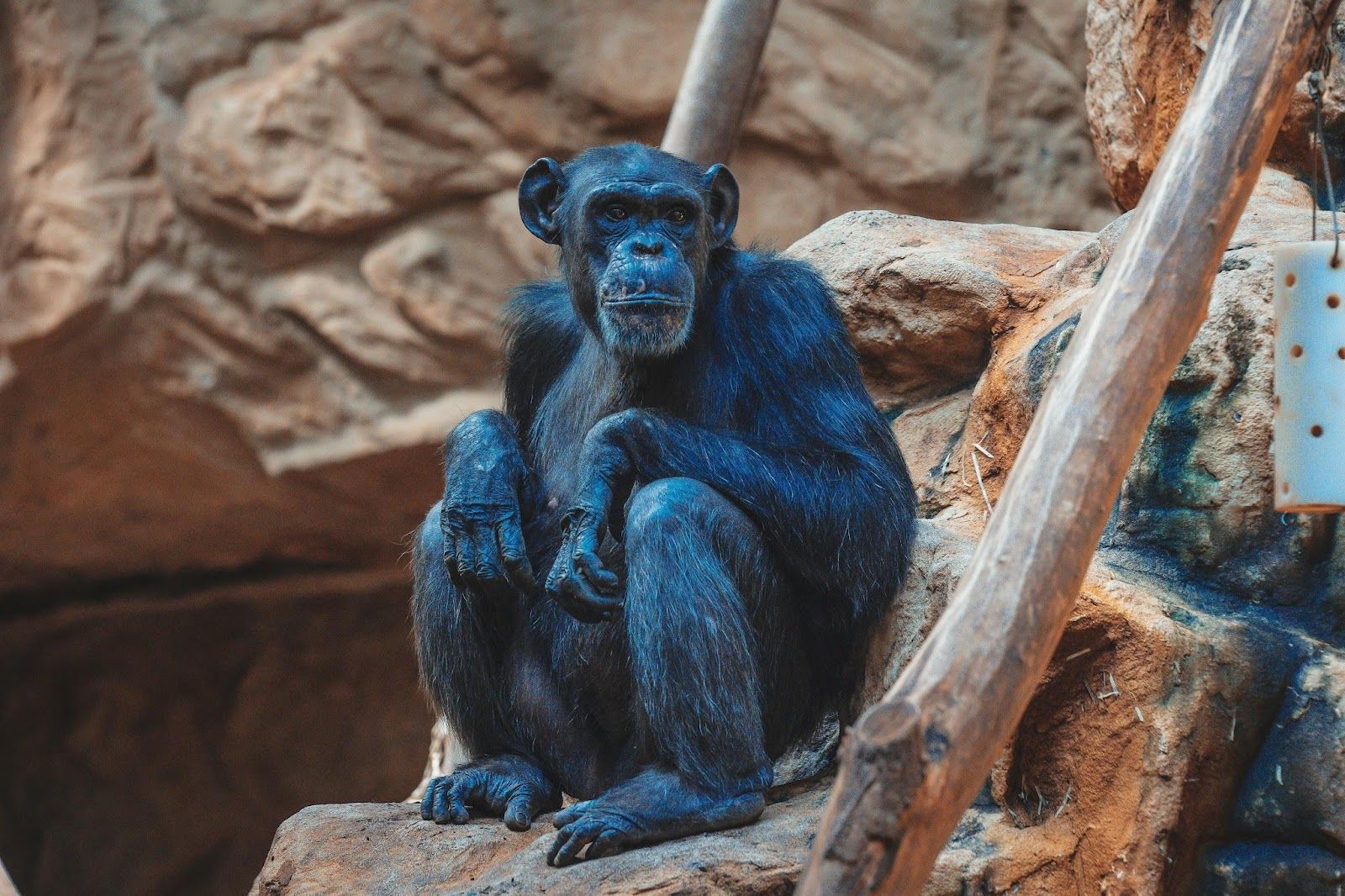
In the original Planet of the Apes (1968), the story takes us to a distant future planet where chimpanzees, gorillas, and orangutans have evolved to possess human-like intelligence and social structures, dominating that world while humans are reduced to an oppressed species. Featuring one of the most shocking and unforgettable plot twists in cinema history, the film stands as an essential classic of dystopian science fiction.

7
Night of the Living Dead

Image: Daniel Jensen

We couldn’t leave Night of the Living Dead off this list, the 1968 film that changed cinema forever. While the concept of "zombies" may feel familiar today, this George A. Romero’s film was the first to present the idea of the dead rising again and becoming a real threat to the living.

8
12 Monkeys

Image: Liam Andrew

Bruce Willis is once again called upon to help humanity (or what remains of it) in the 1995 film 12 Monkeys , this time alongside none other than Brad Pitt, who earned an Oscar nomination for this role. Set in a dark future, most of humanity has been wiped out by a deadly virus, and Willis’s character must travel back in time to gather information about its origins and help find a way to stop it.

9
Dawn of the Dead

Image: airci K

Of course, George A. Romero wasn’t going to appear just once on this list. In 1978, Dawn of the Dead was released, once again portraying the end of the world brought on by the return of the undead. A group of survivors takes refuge in a shopping mall, but human conflicts soon emerge as a threat equal to, or even greater than, that posed by the zombies themselves.

10
The Day the Earth Stood Still

Image: Michael Herren

The Day the Earth Stood Still (1951) is definitely a science fiction classic. Unlike the other films on this list, its catastrophe is not inevitable; disaster can still be avoided. Rather than centering on spectacular destruction, the film delivers a philosophical warning to humanity. An alien visitor arrives on Earth to deliver a stark message: abandon nuclear violence, or face devastating consequences.

Explore more American facts

Choose your favorite category!

General
General

As American as apple pie—the very best America has to offer!

Culture
Culture

Delve into the astounding richness of American lore.

Geography
Geography

Hop in and explore vast and diverse American landscapes.

History
History

Discover the key moments that shaped the United States.