Geography Geography 4 min read

New identities

Rebranded: 10 US cities that changed their names and the reasons why!

Image: Jon Tyson

Can you picture cheering for the New Amsterdam Giants or the Jernigan Magic ? We can’t either! Cities like New York, Orlando, and Los Angeles are staples of American identity—we can’t imagine the country without them. But believe it or not, some of these cities had different names in the past! Join us as we explore 10 US cities that once went by different names and discover the reasons behind their transformations.

1
Los Angeles, California

Image: Venti Views

The Spanish settlers who arrived in the area in the 18th century originally named it El Pueblo de Nuestra Señora la Reina de los Ángeles , which translates to "The Town of Our Lady the Queen of the Angels." Elegant, but kind of a mouthful for a town name! Over time, the Spanish name stuck, but it was shortened to the more practical "Los Angeles." The city officially adopted this name when it was incorporated in 1850, the same year California became a state.

2
New York City, New York

Image: Colton Duke

Before becoming the one and only New York we know today, the city went by a different name. In the 17th century, the Dutch settlers who arrived in the area called it New Amsterdam . However, when the English seized control in 1664, they renamed it New York in honor of the Duke of York.

3
Seattle, Washington

Image: Michael Discenza

Seattle is more than its iconic Space Needle; it has a long history that shaped the city we know today. When European settlers arrived in the area in 1851, they named their settlement New York and added the Chinook word Alki , meaning "by and by," "someday," or "later," suggesting it would one day become as big as New York City. However, in 1852, they changed the settlement’s name to Seattle in honor of Chief Sealth, a Duwamish and Suquamish leader.

4
Portland, Oregon

Image: Zack Spear

Early settlers referred to the area as The Clearing because it stood out from the dense forests typical of the Pacific Northwest. But in 1845, an event occurred that would change everything. Portland’s two founders, Asa Lovejoy from Boston, Massachusetts, and Francis W. Pettygrove from Portland , Maine, each wanted to name the new settlement after their hometown. So how did they decide? Simple: they flipped a coin . Of course, you know who won!

5
Kansas City, Missouri

Image: Farhodjon Chinberdiev

Kansas City was originally founded as the Town of Kansas in 1850, named for its location near the Kansas River. As it quickly grew, it was reincorporated just three years later as the City of Kansas . Finally, in 1889, it officially became Kansas City.

Fun fact: Kansas City, Missouri, was actually founded before the state of Kansas!

6
Charleston, South Carolina

Image: Tyrone Sanders

Before it became the city we know today, Charleston had another name, though not so different. When it was first settled in 1670, the English named it Charles Town in honor of King Charles II. However, over time, the name gradually evolved in pronunciation to Charleston. In 1783, after the Revolutionary War, the city was officially renamed Charleston.

7
San Diego, California

Image: Sean Mullowney

San Diego was the first site on the US West Coast settled by Europeans, which is why it's often called "the Birthplace of California." When Spanish explorers arrived in the area in 1542, they named the bay after a different saint: San Miguel . But years later, in 1602, explorer Sebastián Vizcaíno renamed it San Diego, in honor of San Diego de Alcalá (Saint Didacus of Alcalá).

8
Orlando, Florida

Image: Aditya Vyas

In 1840, the first settlers arrived in what we know today as Orlando. They were the Jernigan family, who named the place after themselves. A post office with that name was even established in 1850. However, about 6 years later, Jernigan officially changed to Orlando. Although the exact reason isn't entirely clear, there are several theories. A popular one claims it was named after Orlando Reeves, a soldier who may have died in the area during the Seminole Wars. Another well-known theory suggests the name came from Orlando , a character in Shakespeare’s As You Like It .

9
Cincinnati, Ohio

Image: Matt Koffel

In the 1780s, the first settlement in this area was called Losantiville , a name created from a mix of words meaning "The town opposite the mouth of the Licking River." But in 1790, the first governor of the Northwest Territory, who was also a member of the Society of the Cincinnati (named in honor of the Roman general Lucius Quinctius Cincinnatus), disliked Losantiville and decided to change it to its present name.

10
Atlanta, Georgia

Image: Christopher Alvarenga

Atlanta didn't just have one or two names; it had three! By the mid-19th century, the area where the city stands today had become a transportation hub where several railroad lines converged. Because of this, in 1837, the area was called Terminus , meaning "the end of the line." Then, in 1843, the name was changed to Marthasville , in honor of Martha, the daughter of Georgia Governor Wilson Lumpkin. Finally, just two years later, the city was renamed Atlanta. This name is believed to be a shortened form of "Atlantic," referring to the Western and Atlantic Railroad.
Culture Culture 5 min read

Multifaceted heroes

The King of Rock 'n' Roll himself? Celebrities who served in the military

Image: pasja1000

Did you know that Jimi Hendrix performed 26 parachute jumps or that Bea Arthur was a pioneer woman in the Marine Corps? The award-studded careers of these celebrities made some of us forget that they served in the U.S. military before becoming international stars. Let's explore their feats!

1
Elvis Presley

Image: Clem Onojeghuo

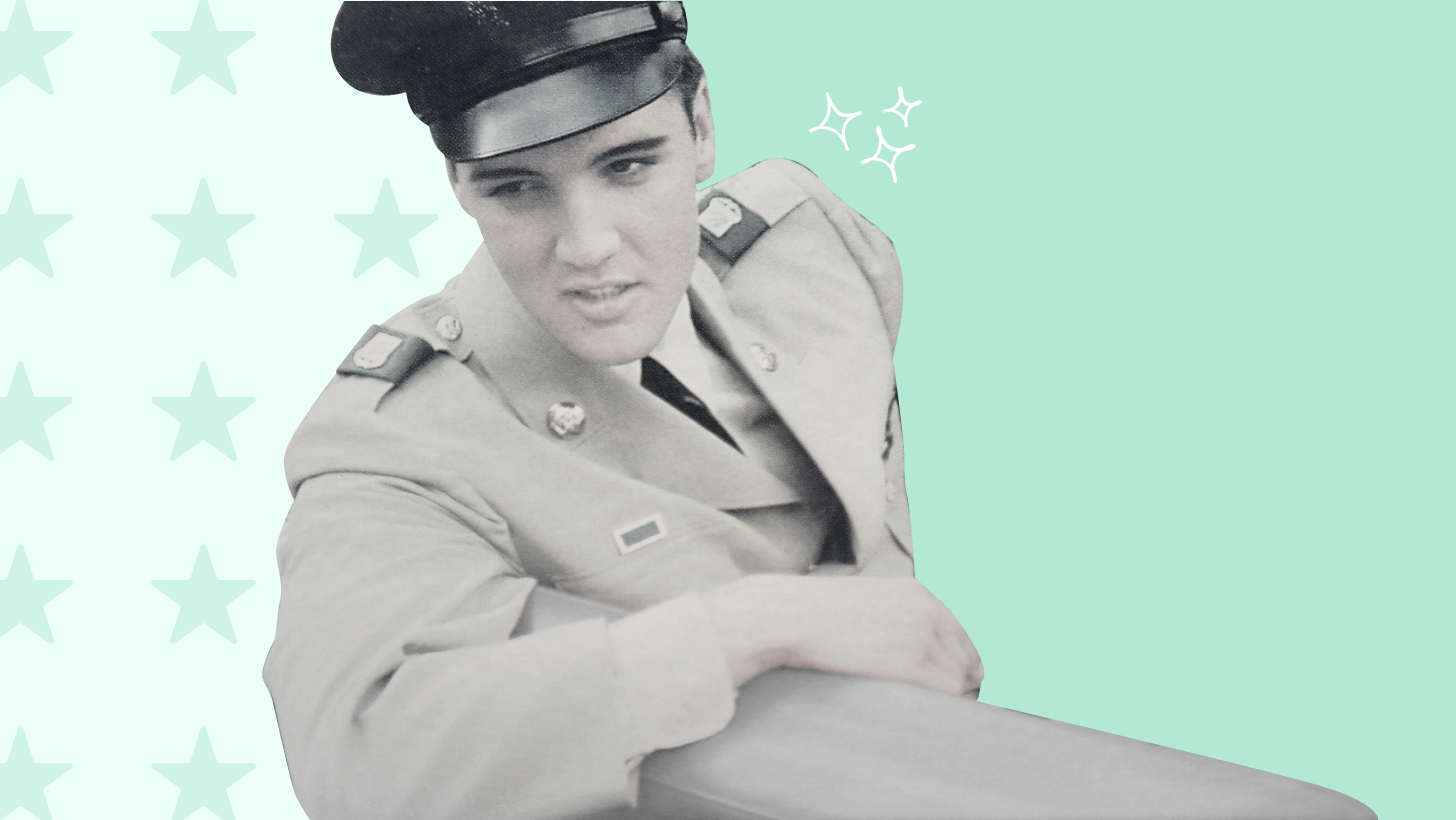
Yes, the King of Rock 'n' Roll, who revolutionized music with hits like "Hound Dog," was drafted into the U.S. Army. Presley was offered to serve in the Special Services entertaining troops but chose to serve as a regular soldier.

The most well-known name in entertainment at the time, he was stationed in Germany and earned the rank of Sergeant. There, he met his future wife , Priscilla Beaulieu.

2
Morgan Freeman

Image: Harald Müller

Morgan Freeman, the legendary actor revered for his deep, resonant voice and commanding presence, served as a radar technician in the U.S. Air Force before his acting career took off.

There, he harbored dreams of becoming a fighter pilot. Eventually, though, his time in the cockpit revealed that flying was not his true passion.

3
Humphrey Bogart

Image: Tomas Martinez

The iconic star of Casablanca served in the U.S. Navy during World War I. He worked as a coxswain aboard the USS Leviathan , transporting troops to Europe.

Some versions attribute his signature lip scar —and, by extension, his unique speech—to an injury during his service, though some claim it was from a brawl or childhood incident.

4
Jimi Hendrix

Image: Aditya Wardhana

Jimi Hendrix is widely regarded as one of the greatest guitarists in history. What’s less known about him is that he served as a paratrooper with the 101st Airborne Division back in the 60s.

Even less known is that he enlisted in the Army at age 19 as part of a deal to avoid jail time after being caught joyriding stolen cars. He completed 26 parachute jumps before being honorably discharged a year later due to injuries.

5
Bea Arthur

Image: Ajeet Mestry

Yes, Bea Arthur, one of the beloved Golden Girls , was also a trailblazer as one of the first women to serve in the U.S. Marine Corps during WWII.

Her sharp wit and memorable roles like Dorothy Zbornak earned her multiple awards and the hearts of many Americans. But before acting, she had worked as a typist and truck driver for the Marine Corps, eventually reaching the rank of Staff Sergeant.

6
Bob Ross

Image: https://images.unsplash.com/photo-1662796246357-36ffa59acbca?

Can you believe that the cherished, gentle-voiced host of The Joy of Painting served in the U.S. Air Force for 20 years?

Bob Ross, the soothing icon of creativity and positivity who taught millions how to paint in the famous PBS series, was once a Master Sergeant. He worked as a medical records technician stationed in Alaska. It is said that he once vowed never to yell again after retiring.

7
Mr. T

Image: Skitterphoto

Mr. T, born Laurence Tureaud, is recognized for his role in Rocky III and the hit television series The A-Team. Before his rise to fame, though, he was a military police officer in the 1970s.

There, he stood out in basic training, so much so that he was named the top trainee out of 6,000 recruits. An anecdote retells that he was ordered by his sergeant to chop trees down as a punishment. After one hour, he had chopped down 70 trees and was told to stop.

8
Adam Driver

Image: Venti Views

Actor Adam Driver is known for his roles in films like Marriage Story and the Star Wars trilogy . Few know that he enlisted in the U.S. Marine Corps after 2001 and served for nearly three years before being discharged for a mountain biking injury.

Driver served as a mortar in the 1st Battalion, 1st Marines. After being discharged, he co-founded Arts in the Armed Forces , a nonprofit that brought art programs to military personnel and families.

9
Chuck Norris

Image: Andrea De Santis

Chuck Norris, the action star legend, was once an Air Policeman in the U.S. Air Force. It was there, in fact, where he first began his training in martial arts.

A pop culture icon for his tough-guy image and humorously exaggerated abilities, he was deployed to an air base in South Korea in the late 50s. There, he earned black belts for multiple disciplines in martial arts , including Tang Soo Do and Taekwondo.

10
Johnny Cash

Image: Markus Spiske

Here's another musician who had a career in the military. Johnny Cash, the legendary country singer, was a radio operator in the U.S. Air Force.

The "Man in Black" was a Morse Code listener intercepting Soviet transmissions in West Germany during the Korean War. Allegedly, it was during this time that he bought his first guitar and began writing songs.

11
Paul Newman

Image: Keanu K

The blue-eyed actor from Butch Cassidy and the Sundance Kid also served as a radioman and gunner during World War II. He trained as a pilot but was reassigned as an operator and rear gunner due to colorblindness.

In fact, he avoided flying in the Okinawa campaign due to an ear infection his pilot had. This saved both their lives, and Newman lived on to become a Hollywood legend and philanthropist.

12
Clint Eastwood

Image: Brice Cooper

Clint Eastwood, the iconic actor and filmmaker, was drafted into the U.S. Army during the Korean War. He worked as a swimming instructor for the 35th Infantry Regiment.

He even survived the crash landing of a Navy torpedo bomber with engine problems. He and his pilot had to swim two miles to shore near Point Reyes, California.

13
James Earl Jones

Image: Piotr Makowski

Before lending his iconic voice to Darth Vader and Mufasa, James Earl Jones trained as an Army Ranger and served as a second lieutenant in the Korean War.

After graduating from college in the 50s, he was assigned to the Army's 2nd Infantry Division in Korea. He received an honorable discharge as a first lieutenant in 1955 and went on to pursue the same career his father had: acting.

Culture Culture 6 min read

Presidential companions

First Pets: Discover the strangest animals that lived in the White House

Image: RDNE Stock project / Aaron Kittredge

There’s a quote attributed to Harry Truman that says, "If you want a friend in Washington, get a dog." It seems U.S. presidents took this maxim to heart, as many of them brought not only dogs but also other types of animals—even exotic ones—to live with them in the White House. Some of these pets simply provided companionship to the presidential family; others gained fame for their role in shaping the president's public image or promoting important issues. Keep reading to discover the remarkable—and often amusing—pet stories of 10 former U.S. presidents.

1
Thomas Jefferson’s mockingbird

Image: Library of Congress

Did you know that one of the first animals to live at the White House was a bird? Dick was Thomas Jefferson's mockingbird and the president loved him so much that he let him roam freely in his office. Dick would sing in the Oval, perch on Jefferson's shoulder, sit on his desk, and even take food directly from the president’s lips.

But Dick wasn’t the only curious animal to inhabit the White House in the early 19th century. In fact, Thomas Jefferson had more than thirty pets, including two grizzly bear cubs. These cubs were a gift from the Lewis and Clark expedition, delivered by explorer Zebulon Pike. However, the bears didn’t stay at the White House for long, as Jefferson decided it was best to send them to a museum in Philadelphia.

2
John Quincy Adams’ alligator

Image: Library of Congress

Jefferson wasn't the only president to own fairly unusual pets during his presidency. According to lore, John Quincy Adams kept a pet alligator in the East Room of the White House. Although there’s no way to prove it, the story goes that the alligator would slither around and even chase visitors.

While the tale of the alligator may be a myth, one thing is certain: President Adams' wife, Louisa, kept silkworms. The worms lived in mulberry trees on the White House grounds, and Louisa used to harvest their silk to feed her sewing hobby.

3
Abraham Lincoln’s goats

Image: Mathew Benjamin Brady, Public domain, via Wikimedia Commons

The Lincolns had a variety of animals, including a couple of dogs, a rabbit, a horse, and a turkey. However, perhaps the most curious pets that lived in the White House during Abraham Lincoln’s presidency (1861–1865) were two goats named Nanny and Nanko .

Lincoln let their sons, Willie and Tad, keep their pet goats in their rooms, granting the animals total freedom to roam the Executive Mansion . The Lincoln family was so fond of Nanny and Nanko that the president would even send updates on the goats’ wellbeing when his wife and children were away. In one letter, he wrote: "Tell Tad the goats and father are very well—especially the goats."

4
Rutherford B. Hayes’ Siamese cat

Image: Mathew Benjamin Brady, Public domain, via Wikimedia Commons

Like the Jefferson family, the Hayes family also received some First Pets as gifts from well-wishers, friends, and foreign officials. It was publicly known that First Lady Lucy Hayes loved animals, so the U.S. Ambassador to Siam (now Thailand) gifted her a kitten. This cat became the pet of First Daughter Fanny Hayes and holds the distinction of being the first Siamese cat to live in the United States.

Another Siamese cat, named Miss Pussy, later joined the family, becoming part of a diverse collection of animals. This included two hunting dogs, Juno and Shep; Otis, the miniature schnauzer; Dot, the cocker spaniel; a goat; a mockingbird; pedigreed Jersey cows; four canaries; and several carriage horses.

5
Teddy Roosevelt’s hyena

Image: National Portrait Gallery, CC0, via Wikimedia Commons

Teddy Roosevelt's brood brought a proper zoo to the White House at the dawn of the 20th century. His large, young family and their pets often captured substantial public attention, frequently appearing in periodicals and newspapers of the time.

The Roosevelts cared for an eclectic collection of animals, including badgers, mice, raccoons, pigs, parrots, dogs, cats, baby bears, snakes, a one-legged rooster, a kangaroo rat, a macaw, and a Shetland pony named Algonquin—who once had the pleasure of riding the White House elevator. But the top prize goes to a spotted hyena named Bill. A gift from the emperor of Ethiopia, Bill was taught tricks by Roosevelt and was even allowed to beg for scraps at the dinner table.

6
Woodrow Wilson’s sheep

Image: National Portrait Gallery, CC0, via Wikimedia Commons

Some animals that spent time at 1600 Pennsylvania Avenue had a greater purpose than just being pets. For example, some presidents kept pets for a cause or to set an example. During World War I, President Woodrow Wilson allowed a flock of 48 sheep to live on the White House grounds. The sheep not only kept the lawn trimmed, reducing maintenance costs but their wool was also sold to benefit the Red Cross .

In addition to the sheep, Wilson had a cat named Puffins, chickens, a bull terrier named Bruce, a songbird, and a ram named Old Ike, who was known for his unusual habit of chewing tobacco.

7
Calvin Coolidge’s raccoon

Image: National Photo Company Collection, Public domain, via Wikimedia Commons

President Calvin Coolidge, who served from 1923 to 1929, kept several non-traditional pets at the White House . The Coolidges had a variety of animals, including dogs, canaries, Ebenezer the donkey, and Smoky the bobcat. Even more exotic animals were gifted to them by foreign dignitaries, such as Billy the pygmy hippo, two lion cubs named Tax Reduction and Budget Bureau, a wallaby, a small antelope, and a black bear.

However, First Lady Grace's most renowned pet was a raccoon. The raccoon was initially given to the Coolidges as a contribution to their Thanksgiving meal, but Grace managed to save it. She named it Rebecca and had a special tree house built for her.

8
Franklin D. Roosevelt’s Scottish terrier

Image: Franklin D. Roosevelt Library, Public domain, via Wikimedia Commons

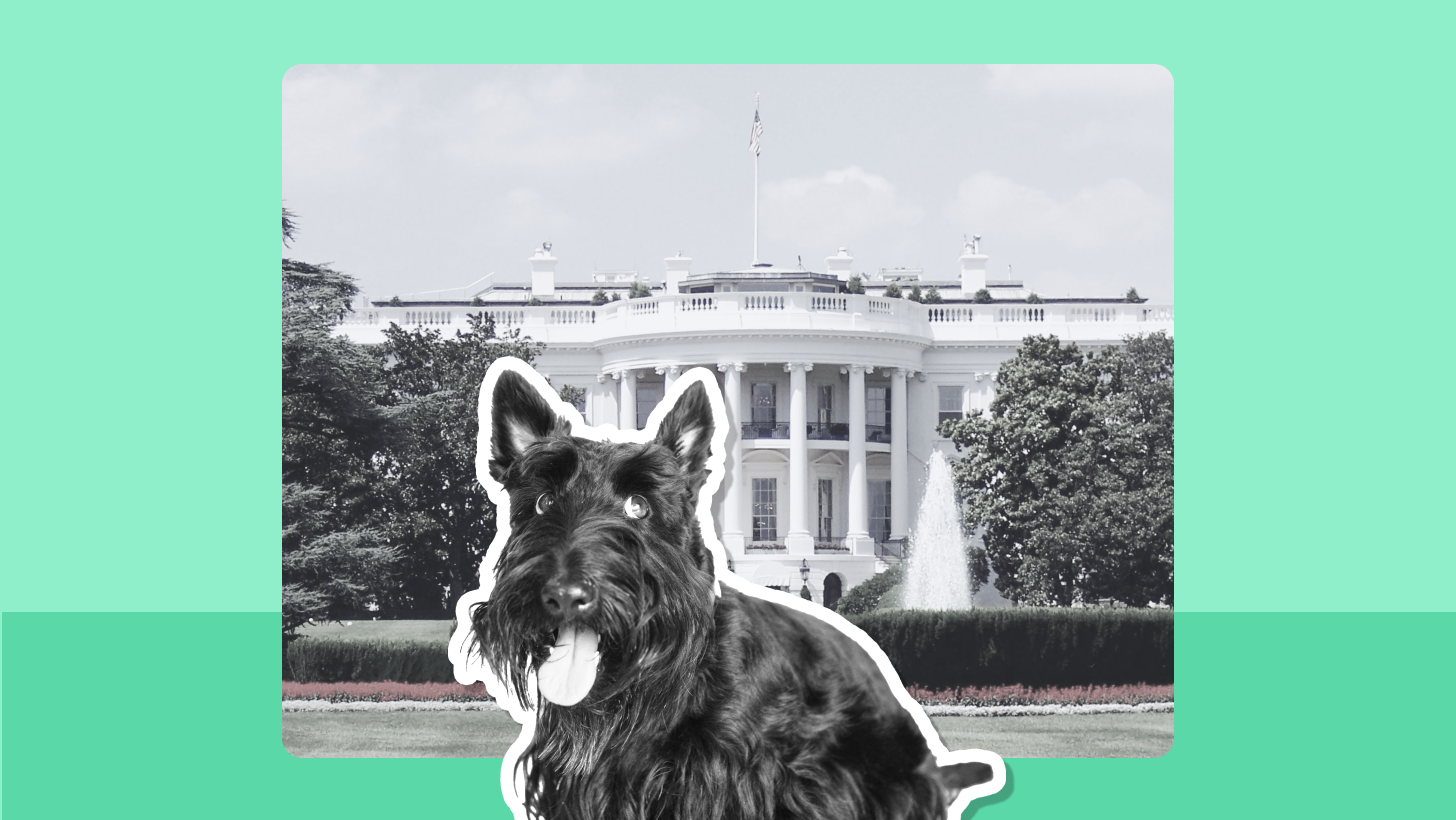
Perhaps one of the most famous pets to live in the White House was President Franklin D. Roosevelt's Scottish terrier, Fala. Roosevelt's presidency came during a very difficult time in history—World War II. For this reason, Fala became a faithful companion not only to the president but also to all the American people.

Fala’s original name was Big Boy, but Roosevelt renamed him "Murray the Outlaw of Falahill" after a Scottish ancestor. In the early 1940s, Fala participated in a campaign by donating his toys to promote scrap rubber collections for the war effort. He also starred in an MGM short-subject film about the war.

9
Warren G. Harding’s Airedale terrier

Image: National Photo Company Collection, Public domain, via Wikimedia Commons

Pets have played a significant role in humanizing presidents and shaping public perceptions, as seen with Franklin Roosevelt and his loyal Fala. The same holds true for Warren G. Harding’s presidency. Harding and his wife, Florence, were avid animal lovers, and during their time in the White House, they kept several canaries, dogs, and even a squirrel named Pete.

But the spotlight went to Laddie Boy, a photogenic Airedale terrier that was perceived by the public as an extension of Harding's campaign slogan, "Return to Normalcy." Laddie Boy had his own cabinet chair, attended meetings, greeted official delegations, and even participated in press conferences and news briefings. He also "hosted" the 1923 Easter Egg Roll while the Hardings were away, further endearing himself to the public.

10
George H. W. Bush’s English springer spaniel

Image: National Archives and Records Administration, Public domain, via Wikimedia Commons

As we have seen, some presidential pets were as famous as the leaders they accompanied during their time at the Executive Mansion. When George H. W. Bush was elected president in 1988, a springer spaniel named Millie became the new First Pet. The following year, Millie had six puppies and quickly won the hearts of Americans across the country.

Millie's popularity was so great that First Lady Barbara Bush appeared on the cover of Life magazine with the dog and her puppies. Barbara later published Millie's Book , a bestseller that narrates a day in the White House from Millie’s perspective. The book was a huge success, selling thousands of copies.

Explore more American facts

Choose your favorite category!

General
General

As American as apple pie—the very best America has to offer!

Culture
Culture

Delve into the astounding richness of American lore.

Geography
Geography

Hop in and explore vast and diverse American landscapes.

History
History

Discover the key moments that shaped the United States.