History History 3 min read

Everything has a secret to tell

Take a deep breath before reading these iconic landmarks’ untold stories
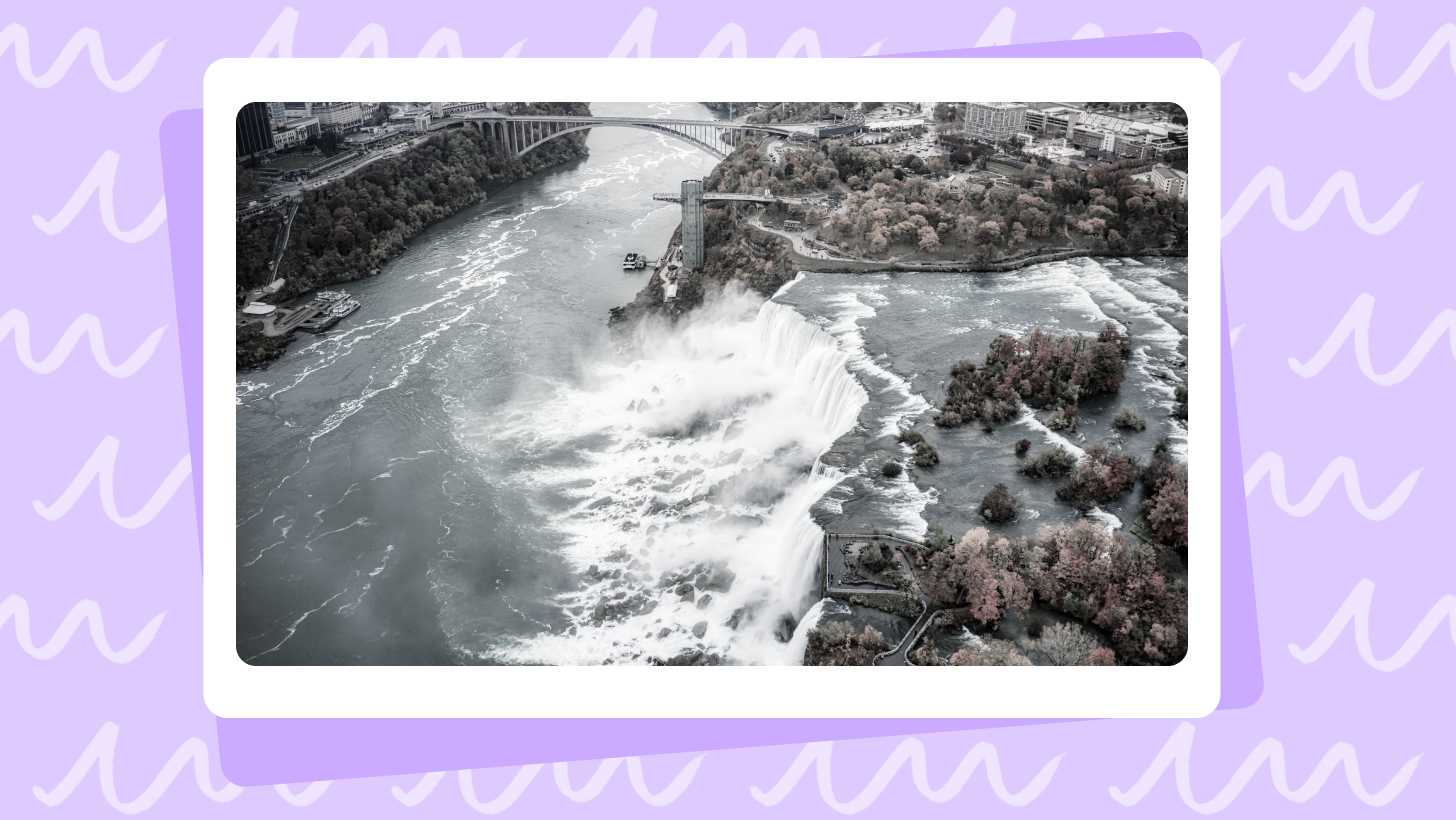
Image: Venti Views

America is filled with famous landmarks that everyone recognizes. But some of these places hold secrets known to only a few. For example, did you know that Niagara Falls can be turned off and on like a faucet? Or that a hidden social club exists inside New York’s Grand Central Station? Discover 12 of these incredible facts and impress your friends with your knowledge!

1
The Statue of Liberty’s color

Image: Pierre Blaché

We start our list with a moderately well-known fact: the Statue of Liberty’s beautiful emerald color is not original. Technically, it’s a sign of damage. While the statue's infrastructure is made of iron, its exterior is copper, which has turned green over time due to oxidation .

Fortunately, that same green coating now protects the statue from further damage and deterioration.

2
Grand Central Terminal’s hidden club

Image: David Vives

A busy train station may not seem like the ideal place for a social club, but that’s exactly the case with the Explorers Club. Operating for decades, this exclusive venue primarily serves locals, featuring a full gym, an indoor hard court, and even a smaller secondary court .

3
Gateway Arch’s time capsule

Image: Chris Hardy

This beloved St. Louis landmark holds a secret at its peak: a time capsule was placed inside the arch in 1965 , containing 762,000 signatures—many from students who attended St. Louis schools at the time.

The capsule is permanently welded inside the arch and will remain sealed for as long as the structure stands.

4
New York's High Court Building’s ball court

Image: Markus Spiske

New Yorkers seem to have a penchant for sports courts hidden on the top floors of iconic buildings—this one being the second on our list. The New York High Court Building is primarily a place for legal proceedings and bureaucratic work, but on its fifth floor, visitors will find a basketball court known as the "Highest Court in the Land."

5
The White House’s dentist

Image: Benyamin Bohlouli

It’s easy to imagine hallways and rooms filled with endless state secrets in the White House basement. But what most people won’t guess is that you can also find a dentist’s office, a carpenter’s shop, and even a bowling alley down there.

6
Niagara Falls is a huge faucet

Image: Tosab Photography

As strange as it sounds, this statement is true in a sense. The complex system of pumps and gates that administer the water of the Falls can be controlled by a central command.

In fact, part of Niagara Falls is even scheduled to be "turned off" in the coming years to replace some obsolete structures—just like a faucet.

7
Washington Monument’s Civil War graffiti

Image: Sonder Quest

Graffiti has been around all over the world, for a couple of centuries now. The Washington Monument was still under construction when the Civil War broke out, and Union soldiers stationed there carved their names and drew pictures onto the monument . These markings can still be seen today at its base.

8
Mount Rushmore’s hidden room

Image: Jéan Béller

One of America’s most famous landmarks hides a secret room known as the Hall of Records , which is filled with documents intended to preserve the nation’s history for future generations. This hidden chamber is accessed through a concealed door behind Abraham Lincoln’s ear.

9
Lincoln Memorial’s secret carvings

Image: Andy Feliciotti

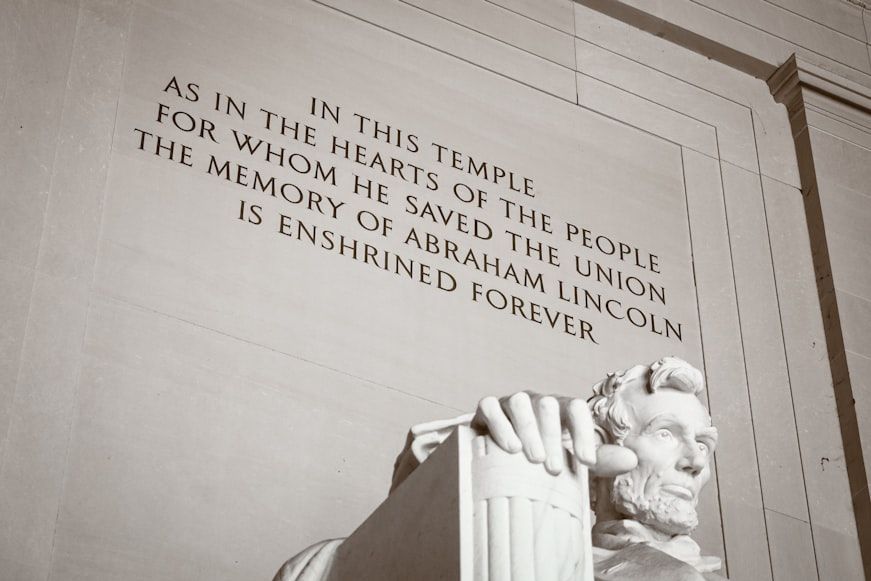
Speaking of Lincoln, you’ll need a flashlight to spot this one—but it’s there. On the north wall stone of the Lincoln Memorial, the letters "EBL" can be seen carved . These initials stand for Evelyn Beatrice Longman, the artist who sculpted the memorial’s ornamental border.

10
Empire State Building’s secret floor

Image: Kit Suman

As it turns out, the Empire State Building has one more floor than the famous 102. This extra floor was originally constructed for building maintenance but now serves as an exclusive hotspot for celebrities, complete with an ultra-thin, knee-high railing separating observers from the sky surrounding them.

11
Brooklyn Bridge’s wine cellars

Image: Partha Narasimhan

Wine cellars are cold and dark places—just like the basements at the Brooklyn Bridge’s bases. This connection, now quite obvious, was made by the bridge’s engineer, Washington Roebling, who incorporated two full wine cellars into the bridge’s bases on each side and then rented the space to local businesses who needed the extra storage.

12
Disneyland’s secret members-only club

Image: Travis Gergen

If a trip to Disneyland isn’t enough of a Disney experience for you, there’s an exclusive club on the premises called Club 33 . This exclusive joint boasts an invite-only guest list, where members must pay anywhere from $25,000 to $100,000 to join, with annual membership dues ranging from $12,500 to $30,000. Do you think it’s worth it?

Culture Culture 3 min read

Memorial facts

Why does the Lincoln Memorial have 87 steps? The real reason

Image: Kyaw Tun

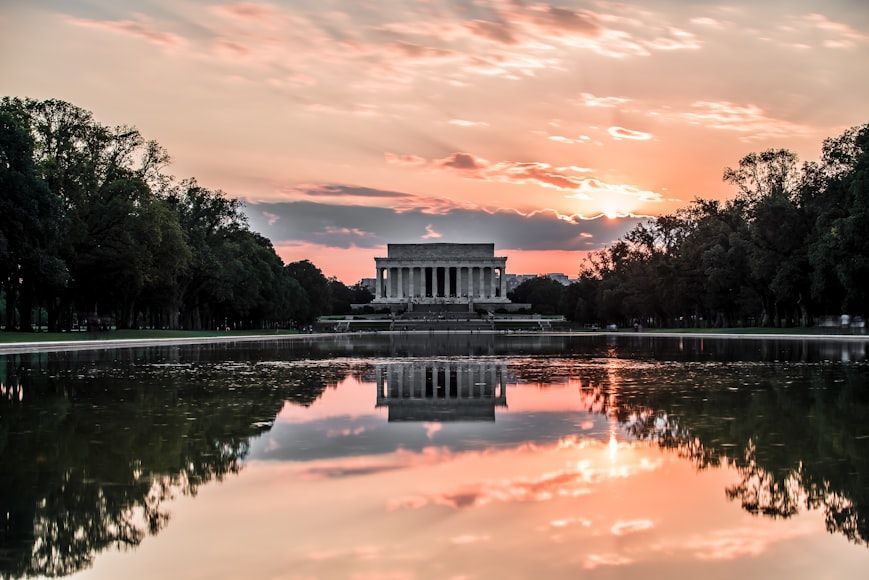
Washington, DC, is known for its many landmarks, but the Jefferson and Lincoln memorials stand out, drawing millions of visitors every year. And even though they’ve been part of the city for decades, there’s still a lot that most people don’t know about them. If you want to discover 10 facts you probably never learned in school, this article is for you!

1
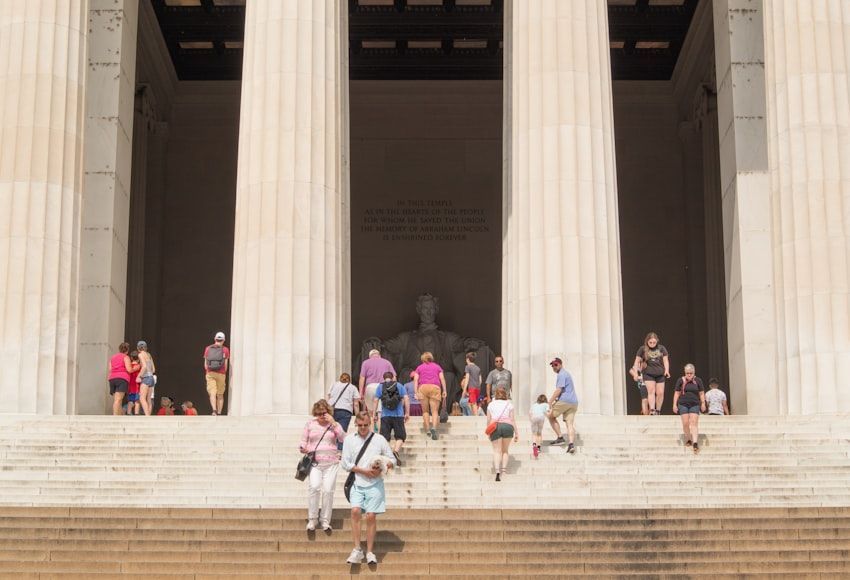
87 steps

Image: Ryan Stone

In case you haven't counted them, there are exactly 87 steps leading up to the Lincoln Memorial. But why does that number matter? Although the National Park Service says it wasn’t intentional, many people connect it to the opening line of Lincoln’s Gettysburg Address: "Four score and seven years ago..." Coincidentally, 87 is also the number of years between the moment he delivered the speech and the monument’s dedication. Pretty incredible, right?

2
Hidden underground chamber

Image: Kdwk Leung

The Lincoln Memorial is more than what you see at first glance; there’s an entire hidden world beneath it. That’s right! Underground lies a large chamber built as part of the monument’s foundation. Giant concrete columns support the structure above, and there are also narrow corridors where workers once walked. You can even find graffiti and markings left by those builders in the early 1900s. Although the public can’t visit this space yet, the National Park Service has said it hopes to open it in the future.

3
A pyramid?

Image: Andrew Backhouse

Can you imagine a giant pyramid rising over the landscape of Washington, DC? It’s hard to picture, but it could have happened. Among the many design proposals for the Lincoln Memorial were some extravagant ideas, including a huge pyramid. In the end, the Greek temple design we know today won out.

4
The typo

Image: Andre Schofield

To err is human, and the Lincoln Memorial is no exception. As you may know, Lincoln’s Gettysburg Address and his Second Inaugural Address are engraved on the interior walls. But the carver made a small mistake when transcribing the Second Inaugural Address, writing "euture" instead of "future" in the line "high hopes for the future." Although the error was corrected, people say that if you look closely enough, you can still see it.

5
Lincoln's friends made it happen

Image: Casey Horner

For years, several proposals to build a memorial to Abraham Lincoln failed in Congress. Fortunately, Senator Shelby Collum and Speaker of the House Joseph Cannon joined forces to get the final bill approved. These men had known Lincoln and felt that a memorial to Honest Abe was both fitting and necessary.

6
Who is Thomas Jefferson looking at?

Image: J. Amill Santiago

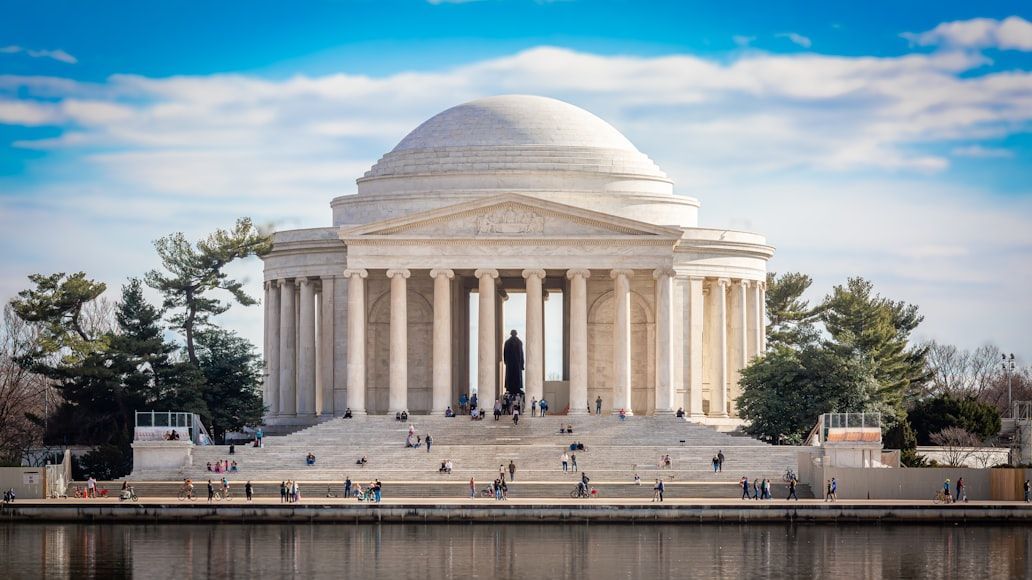
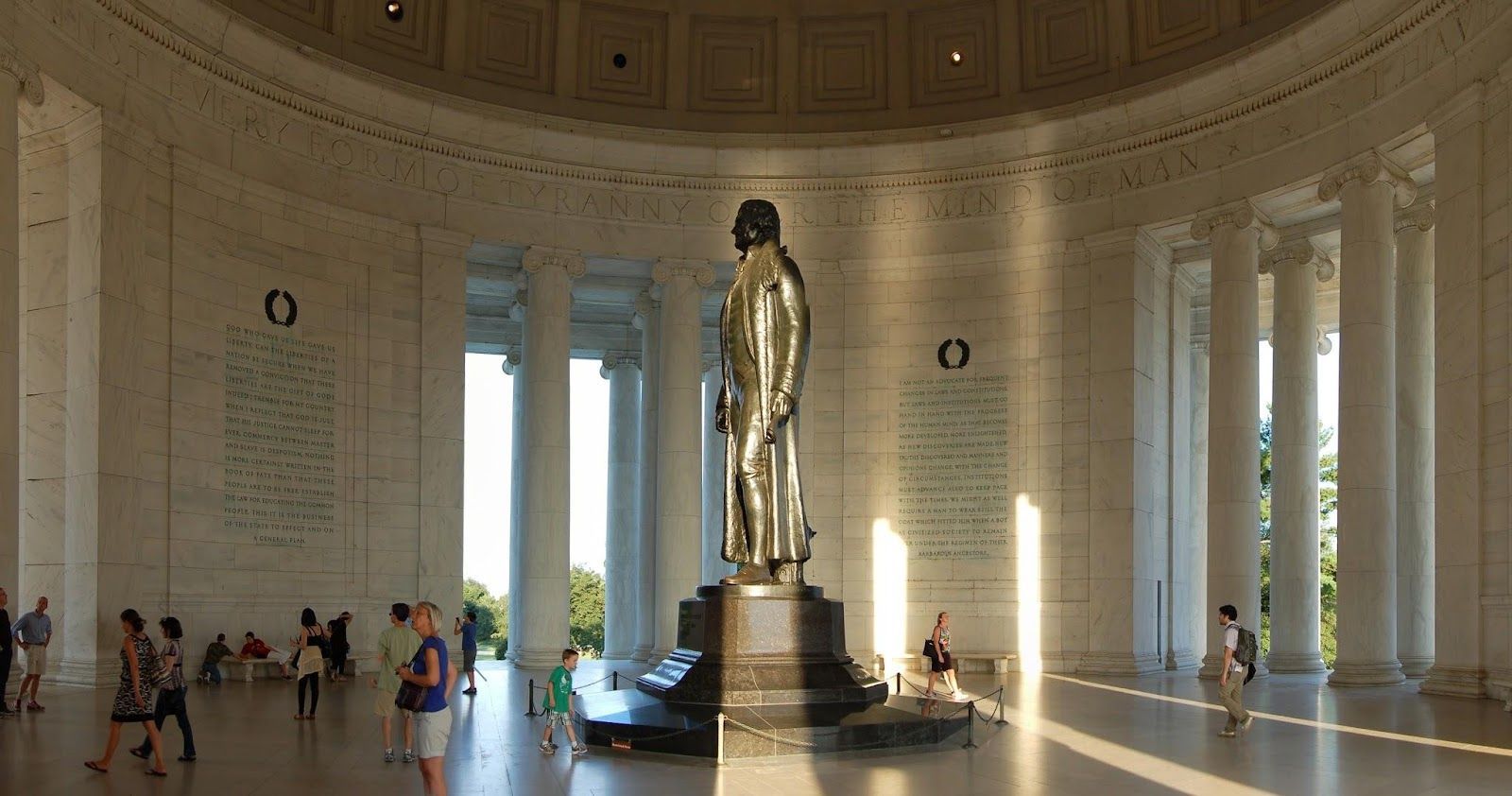
It’s well known that the statue of Thomas Jefferson inside his memorial faces north toward the White House and the Washington Monument. But there’s another interesting interpretation. Also to the north is the statue of Alexander Hamilton on the south side of the US Treasury Building. Since Jefferson and Hamilton were once colleagues who later became political rivals, some like to imagine that Jefferson’s bronze likeness is keeping a cautious, almost "watchful eye" on Hamilton.

7
FDR specifically requested the Jefferson Memorial

Image: Rafik

Since the early 20th century, there had been talk of building a memorial to honor Thomas Jefferson. But nothing moved forward until Franklin D. Roosevelt took office in 1933. An admirer of Jefferson, FDR pushed tirelessly for the project until Congress approved it. But he was not only the one who requested it; he even delivered the dedication speech when the memorial was completed in 1943.

8
10,000 pounds

Image: Michael Kranewitter, Public domain, via Wikimedia Commons

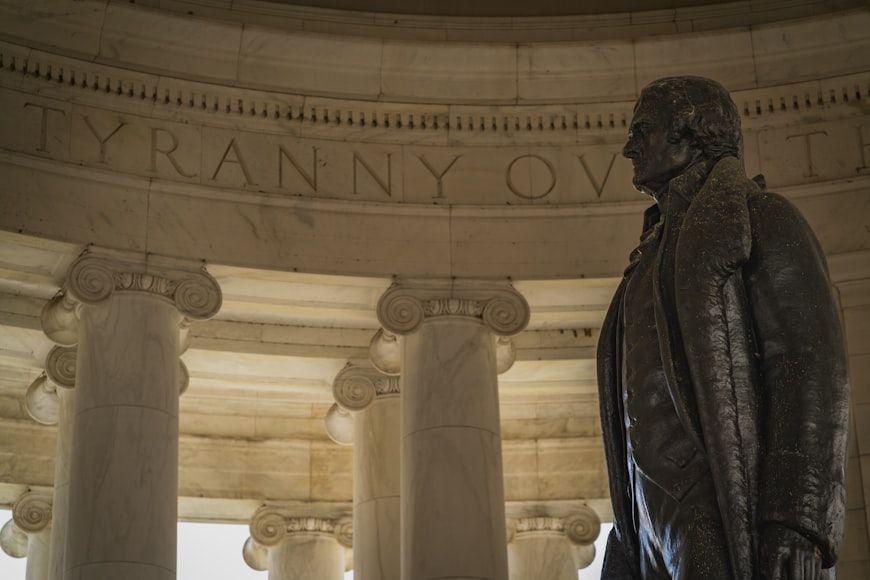
We all know Jefferson was a great man, but do you know how big his statue is? It stands around 19 feet tall and weighs an astonishing 10,000 pounds; that’s a lot of bronze! Originally, the statue was a painted plaster model because, when it was dedicated in 1943, metal shortages from World War II made bronze unavailable. Four years later, in 1947, the bronze statue we see today was installed.

9
Once a popular beach

Image: Amelia Cui

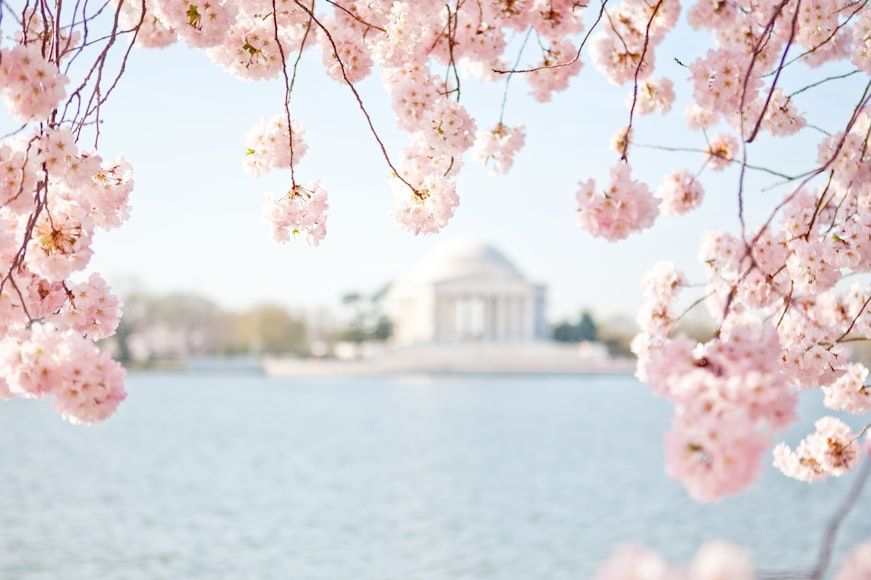
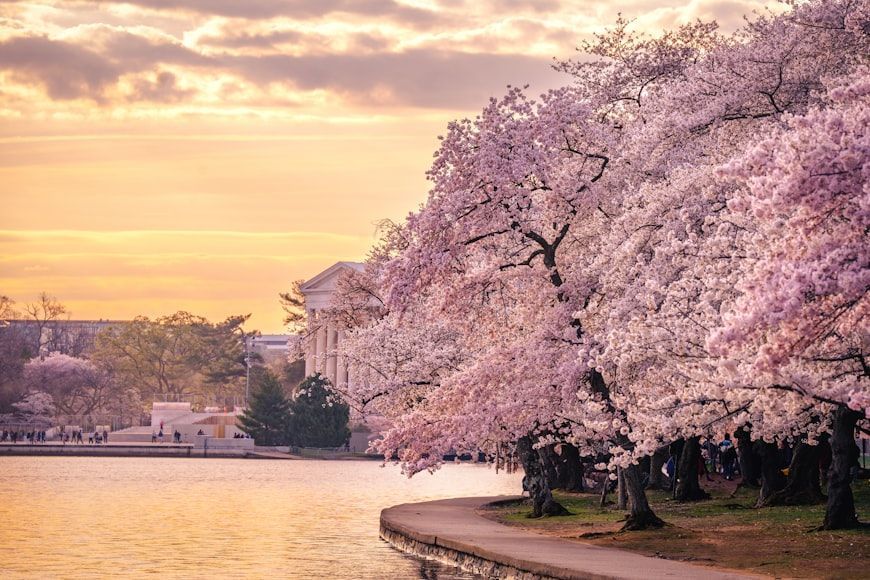
Before becoming the site of the Jefferson Memorial, the Tidal Basin Beach was a popular beach in Washington. That's right; at the beginning of the 20th century, the area was used for swimming, boating, and picnics. This, coupled with the need to cut down some cherry blossom trees for construction, sparked controversy and turned some people against the project.

10
Created by a landfill

Image: Sharosh Rajasekher

Before the Jefferson Memorial could be built, the area had to be transformed. The Tidal Basin was originally shallow and surrounded by marshland, so workers filled it with material dredged from the Potomac River to create a stable foundation. Definitely a big effort.

Geography Geography 3 min read

Pushing the limits

From deadly heat to brutal cold: 10 most extreme places in the U.S.

Image: Micaela Parente

The United States is home to some of the most extreme landscapes on Earth. From the hottest deserts to the coldest tundras, America’s diverse geography pushes the limits of nature. Each of these places holds a record for being the highest, lowest, or most intense in some way—whether by temperature, elevation, or sheer remoteness. Buckle up as we take you on a journey through the most extreme places in the U.S., listed in the order they were first explored or recorded.

1
Northern frontier

Image: UC Berkeley, Department of Geography

Location: Point Barrow, AK

Point Barrow, the northernmost point in the U.S., was first explored by Europeans in 1826. Sitting at 71°23′N, it endures long, brutal winters with near-constant darkness.

Winter temperatures drop below -50°F, and the sea remains frozen for much of the year. Despite the conditions, native Iñupiat communities have thrived here for centuries. Today, it remains a key site for Arctic research.

2
Lowest land

Image: Karsten Winegeart

Location: Badwater Basin, CA

First documented in the mid-1800s, Badwater Basin in Death Valley is the lowest point in North America at 282 feet below sea level. It was named after a surveyor’s horse that refused to drink the salty water.

The basin’s extreme location means temperatures here frequently top 130°F in summer. Salt flats stretch for miles, remnants of an ancient lake that dried up thousands of years ago.

3
Hottest spot

Image: Pablo García Saldaña

Location: Furnace Creek, CA

On July 10, 1913, Furnace Creek recorded 134°F, the highest temperature ever measured on Earth. This Death Valley outpost still holds the title for the hottest inhabited place in the U.S.

Despite the heat, Furnace Creek has a permanent population and even a golf course, making it one of the strangest places where people manage to live. The area’s extreme conditions attract researchers studying heat endurance.

4
Coldest cold

Location: Prospect Creek, AK

Alaska’s Prospect Creek hit -80°F in 1971, the lowest temperature ever recorded in the U.S. Originally an outpost for pipeline workers, it’s now abandoned due to its brutal winters.

At this temperature, exposed skin can freeze in seconds, and vehicles must run continuously to avoid freezing. The area sees only a few hours of daylight in winter, making survival nearly impossible without proper equipment.

5
Windiest place

Image: Dan Meyers

Location: Mount Washington, NH

Mount Washington holds the record for the fastest surface wind speed ever recorded outside a tornado: 231 mph, measured in 1934. This New Hampshire peak is notorious for its deadly weather.

Though just 6,288 feet tall, its location at the convergence of several storm systems makes it feel like the roof of the world. Hikers often face hurricane-force winds, whiteouts, and below-zero temperatures even in summer.

6
Wettest town

Image: Martin Zangerl

Location: Kukui, HI

Kukui, on the Hawaiian island of Kauai, receives an average of 460 inches of rain annually. In 1982, it saw a staggering 683 inches, making it one of the wettest places on Earth.

The rain feeds lush tropical forests and countless waterfalls, but the steep terrain means flash floods are a constant danger. Despite its beauty, the relentless downpours make long-term settlement nearly impossible.

7
Deepest cave

Image: Joshua Sortino

Location: Lechuguilla Cave, NM

Discovered in 1986, Lechuguilla Cave is the deepest in the U.S., plunging 1,604 feet below New Mexico’s surface. It remained hidden for centuries due to its small, concealed entrance.

Its vast chambers contain formations found nowhere else on Earth, including giant gypsum chandeliers. Access is restricted to scientists, as the cave’s unique ecosystem is still being studied.

8
Largest volcano

Image: Sherry Jiang

Location: Mauna Loa, HI

Mauna Loa is the world’s largest volcano, covering half of Hawaii’s Big Island. It last erupted in 2022, continuing a pattern of activity dating back over 700,000 years.

Rising 33,500 feet from the ocean floor, Mauna Loa dwarfs even Everest when measured from base to peak. Its slow-moving lava flows have repeatedly reshaped the island’s landscape.

9
Deepest lake

Image: Jeff Hopper

Location: Crater Lake, OR

Formed by a collapsed volcano 7,700 years ago, Crater Lake is the deepest in the U.S. at 1,949 feet. Its intense blue waters come from rain and snowmelt, with no rivers flowing in or out.

The lake’s purity allows sunlight to penetrate to great depths, creating an otherworldly glow. Among its many wonders, the submerged "Old Man of the Lake," a floating log, has been drifting in its waters for over a century.

10
Most remote

Image: Harrison Hargrave

Location: Yellowstone Thorofare, WY

The Yellowstone Thorofare, 32 miles from the nearest road, is the most remote place in the Lower 48. It remains nearly unchanged since its first mapping in the 19th century.

Even experienced hikers struggle here, as grizzly bears, sudden storms, and subzero temperatures make survival difficult. This untouched wilderness offers a rare glimpse of what America once was.

Explore more American facts

Choose your favorite category!

General
General

As American as apple pie—the very best America has to offer!

Culture
Culture

Delve into the astounding richness of American lore.

Geography
Geography

Hop in and explore vast and diverse American landscapes.

History
History

Discover the key moments that shaped the United States.