History History 6 min read

LOOK HOW FAR THEY CAME!

These 10 Hollywood Stars Got Their Start Working These Regular Jobs!
Image: Carol Highsmith's America

We all remember our very first job —whether it was a part-time gig or an odd job—that helped us learn about responsibility, and time management, while still allowing us to save up a few bucks for the future. These entry-level positions are usually very demanding and require hard work, but they ultimately help us develop our resilience in the promise of greater things. In fact, an argument could be made that these 10 Hollywood legends featured in this article were deeply shaped in some way or another through the skills they learned in these side jobs. We hope the stories of these actors and actresses inspire you as much as they inspired us. Enjoy!

1
Harrison Ford - Carpenter

Image: Hunter Haley

Before the world got to know him as Han Solo or Indiana Jones, Harrison Ford was a struggling actor dissatisfied with the roles being offered to him. To support his wife and his two young sons, Ford started learning carpentry and worked as a professional carpenter for several years.

Had history taken a different turn and Harrison not achieved the stardom he deserved, we are sure he would have still managed to build an extremely impressive business. Fortunately for us, casting director Fred Roos introduced him to George Lucas, and the rest is history.

2
Rachel McAdams - McDonald’s

Image: Jurij Kenda

There’s a slim chance that in 2004, someone went into a movie theater to watch that summer’s blockbuster The Notebook and yelled, "Hey! That girl sold me a Big Mac once!" And, as crazy as it sounds, they wouldn’t be wrong: after all, Rachel McAdams did work at her local McDonald’s while attending high school.

As it turns out, McAdams was quite an overachiever during her teenage years. Although she wasn’t particularly interested in her school subjects, she was remarkably active in student life, playing several sports and participating in her student council. Not only that, she was an exceptional figure skater, competing until she turned 18.

3
George Clooney - Insurance salesman

Image: Scott Graham

Surely, the insurance firm George Clooney worked for must have been sorry to see him go. Can you honestly think of a more charming door-to-door salesman than him? Before landing his first major role in 1984, Clooney worked many odd jobs that included selling women's shoes, cutting tobacco, and working in construction. Not only that, he even attempted to become a professional baseball player and tried out for the Cincinnati Reds, but didn’t make it past the first round of player cuts.

Clooney landed his first role in a CBS comedy named, of all things, E/R . This show shouldn’t be confused with the now iconic medical drama ER , on which Clooney played Dr. Doug Ross for five seasons. A few years after his debut on this show, he starred in his first breakthrough role, the 1996 film From Dusk Till Dawn .

4
Jennifer Anniston - Bike Messenger

Image: Florian Kurrasch

Do you think that, during her years as a bike messenger, Jennifer Anniston wore a special helmet to keep her soon-to-be world-famous "Rachel" haircut intact? Probably not, since this stint happened years before her big break starring as Rachel Green in the groundbreaking sitcom Friends . However, thinking that this struggling actor was aware of the great future ahead of her is still an encouraging thought we’d like to hold on to.

Much like her character in Friends , Aniston worked a number of part-time jobs before her big break. Besides her aforementioned job as a bike messenger, she worked as a telemarketer and a waitress. She also had several small roles before Friends , which included the 1993 horror film Leprechaun .

5
Christopher Walken - Circus

Image: Becky Phan

From his strange dancing to his magnetic presence, Christopher Walken is no stranger to eccentricity. This iconic actor is known for his strange yet captivating mannerisms, which have resulted in a myriad of nominations and an Oscar for Best Supporting Actor. In that sense, it stands to reason that such a unique actor landed his first job in an equally unique place.

As a teenager, Christopher Walken worked in a circus as a lion tamer trainee. Much like with Harrison Ford, should history have been different, we are confident that Walken would have made a superb lion tamer, dazzling big cats with his delightfully odd ways.

6
Steve Carell - Mailman

Image: Ethan Hoover

For many Americans, our mail carrier is almost another neighbor, that familiar face that always greets us with a big smile and often takes those extra 5 seconds to wish us a good day. For a brief period in the ‘90s, some lucky residents of Littleton, Massachusetts had actor Steve Carell delivering their mail. We can be sure that these citizens began their days with a big laugh from this all-around comedian.

Granted, Carell wasn’t particularly good at his job as a USPS mail carrier. He left after seven months, partly because his boss told him that he needed to be faster. Regardless, shortly after quitting, Carell got his TV start in the 1996 short-lived series The Dana Carvey Show.

7
Melissa McCarthy - Starbucks

Image: kevs

At age 20, Melissa McCarthy left her hometown of Plainfield, Illinois to pursue her dream of becoming an actress. After a few years in New York City, she moved to Los Angeles hoping to make it in "La La Land." What followed were years of resilience and casting calls for this struggling actor, which were supported by part-time jobs in the local YMCA and as a barista at Starbucks.

Thankfully, McCarthy’s efforts paid off, her first break came with a recurring role in the 2000 drama Gilmore Girls . Not only that but she was catapulted into stardom after her role in the 2011 comedy Bridesmaids, which eventually turned her into one of the highest-paid actresses in the world.

8
Ken Jeong - Doctor

Image: Online Marketing

If there’s one thing you’ll often see while flipping channels on your TV, is actors and actresses playing doctors, and for good reason. Medical dramas are extremely successful, in large part due to their compelling casts. However, seeing a doctor-turned actor playing a doctor is a rare sight (and a refreshing one at that), which is exactly what happened with Ken Jeong’s performance in the 2007 film Knocked Up .

Jeong is a fully licensed doctor, specializing in internal medicine, although he chose to stop practicing after becoming an actor. While working as a physician in Los Angeles, he began performing in comedy clubs, which led to some TV appearances. His big break occurred with the 2009 comedy The Hangover , which eventually led to a main role in the NBC sitcom Community .

9
Sandra Bullock - Bartender

Image: Daniel L

Can you imagine going to your local bar and being handed your drink by none other than Miss Congeniality herself? Well, if you lived in New York City in the late ‘80s then there’s a pretty good chance Sandra Bullock mixed your cocktails.

After receiving her BFA in Drama from East Carolina University in 1987, Bullock moved to the Big Apple, where she took on a number of part-time jobs while auditioning for roles, which included bartender, cocktail waitress, and coat checker. In 1989, Bullock was offered her first film role in the made-for-tv movie Bionic Showdown: The Six Million Dollar Man and the Bionic Woman .

10
Steve Buscemi - Firefighter

Image: Matt C

We’ll finish this article with a tale of heroism and selflessness. Years before playing his breakthrough role in Quentin Tarantino’s Reservoir Dogs , Steve Buscemi worked as a firefighter for the New York City Fire Department. During this time, he secretly took acting classes, which eventually led him to fully embrace an acting career in 1985 with his debut in the film The Way It Is .

However, Buscemi still looks proudly onto his firefighter days, often acting as a spokesperson and activist for firefighter rights. Not only that, after the September 11 attacks, he went back to New York and volunteered in his old firehouse to aid his fellow firefighters.


History History 4 min read

Do you practice any of these?

From RSVPs to sunglasses: 12 etiquette rules that deserve a comeback

Image: Artem Beliaikin

Etiquette may sometimes seem old-fashioned, but there are a few rules from the past that deserve a comeback. Little things like taking off your sunglasses indoors, standing up when greeting someone new, or writing a thank-you note after receiving a gift may feel a little dated, but they’ve got a charm that’s hard to ignore. Do you think these 12 small rules should be brought back?

1
Pulling out the good china

Image: Zoshua Colah

In the past, people often had a set of special dishes reserved for holidays or important guests to make meals feel more memorable.

Today, many people use just one set of dishes and often eat casually, sometimes even standing over the sink. Taking the time to create a pleasant dining experience can show respect not only for your guests but also for yourself .

2
Good table manners

Image: Noah Samuel Franz

Good table manners are often mistaken for being overly formal or pretentious, but that couldn’t be further from the truth.

The true purpose of practicing polite dining habits is to make sure everyone enjoys a relaxed and pleasant meal together , and it’s often easier to practice than most people realize.

3
Not taking off your shoes in public

Image: Beth Macdonald

Recently, there’s been a noticeable trend of people going shoeless in places like airplanes and restaurants. As society grows more casual, some even put their bare feet on seats, armrests, or tables.

However, it's best to keep your shoes on in public unless your host specifically asks you to remove them.

4
Standing when greeting someone new

Image: Musemind UX Agency

When meeting someone for the first time or welcoming someone into a group, it's polite to stand as a gesture of acknowledgment .

This simple act, expected of both men and women, conveys both warmth and respect.

5
Making introductions

Image: Elevate

Making introductions is becoming less common, yet it remains one of the most valuable social skills. Even if you forget someone’s name, it’s always better to ask than to risk letting them feel left out in a group.

Good manners are all about helping others feel at ease , and introductions don’t have to be uncomfortable or awkward when done with a little thought and effort.

6
Thank-you notes

Image: Kelly Sikkema

While everyone enjoys being thanked, it has become rare for people to express gratitude in a lasting way. Any form of thanks, including a text or email, is appreciated, but a handwritten thank-you card remains the most meaningful .

The personal touch of seeing your handwriting shows thoughtfulness, and many people cherish and keep these cards, something that’s much harder to do with digital messages.

7
Asking permission

Image: Dias ^

In a society where people often say, "It’s easier to apologize than to ask for permission," many act without asking, whether it’s hugging someone, posting their picture online, or taking a bite of their food.

However, it’s always more polite to ask before doing anything that involves or affects someone else . A simple question like "Are you okay with this?" can go a long way toward showing respect without taking up much time.

8
Opening doors for men and women

Image: Jan Tinneberg

Chivalry may have some outdated interpretations, but politeness is something everyone can practice, regardless of gender . Simple acts like holding the door open are easy to do and appreciated by everyone.

9
Holding the elevator

Image: Derrick Treadwell

In today’s world, many people are either too wary of strangers or adopt a "not my problem" attitude when seeing someone struggle in public. But as long as there’s no safety concern, it's important to continue practicing simple courtesies, like holding the elevator door for someone in a hurry .

10
Returning phone calls

Image: Hassan OUAJBIR

As society evolves, so does etiquette, especially with the rise of new technology, but some shifts aren't always for the better. A common example is responding to a phone call with a text message.

While some people may prefer texting over speaking on the phone, it’s still considered polite to return a call with another phone call , particularly when someone has taken the time to reach out to you.

11
No sunglasses indoors

Image: Lucas George Wendt

These days, it’s common to see people wearing sunglasses everywhere, even in places like movie theaters, but it raises a question: Are we avoiding others, or simply hiding behind our shades?

Eye contact is essential for effective communication, as it demonstrates respect and facilitates understanding. While it's fine to wear sunglasses outdoors, it’s best to take them off indoors to engage properly with others.

12
RSVP’ing promptly

Image: Artsy Vibes

With the rise of casual invites, often sent by email or social media, RSVPing has become increasingly rare. Failing to respond to an invitation is not only poor etiquette but also inconsiderate.

Hosts put significant time and effort into planning events, from buying food to organizing entertainment. Not RSVPing or waiting until the last minute only makes their job harder.

Geography Geography 5 min read

American landmarks

The sky is the limit: Do you know these 10 breathtaking skyscrapers?

Image: Frederik Sørensen

The noun "skyscraper" has a fantastical side to it, doesn’t it? It directly speaks to mankind’s eternal dream to touch the sky, to be able to reach previously insurmountable heights. Ever since the first skyscraper was built in Chicago, America has been synonymous with these breathtaking and humongous buildings. With that in mind, we have selected 10 of the most iconic buildings in American history. Celebrate these architectural wonders and how they represent everything that makes us so proud to be American. Enjoy!

1
Empire State Building

Image: Afif Ramdhasuma

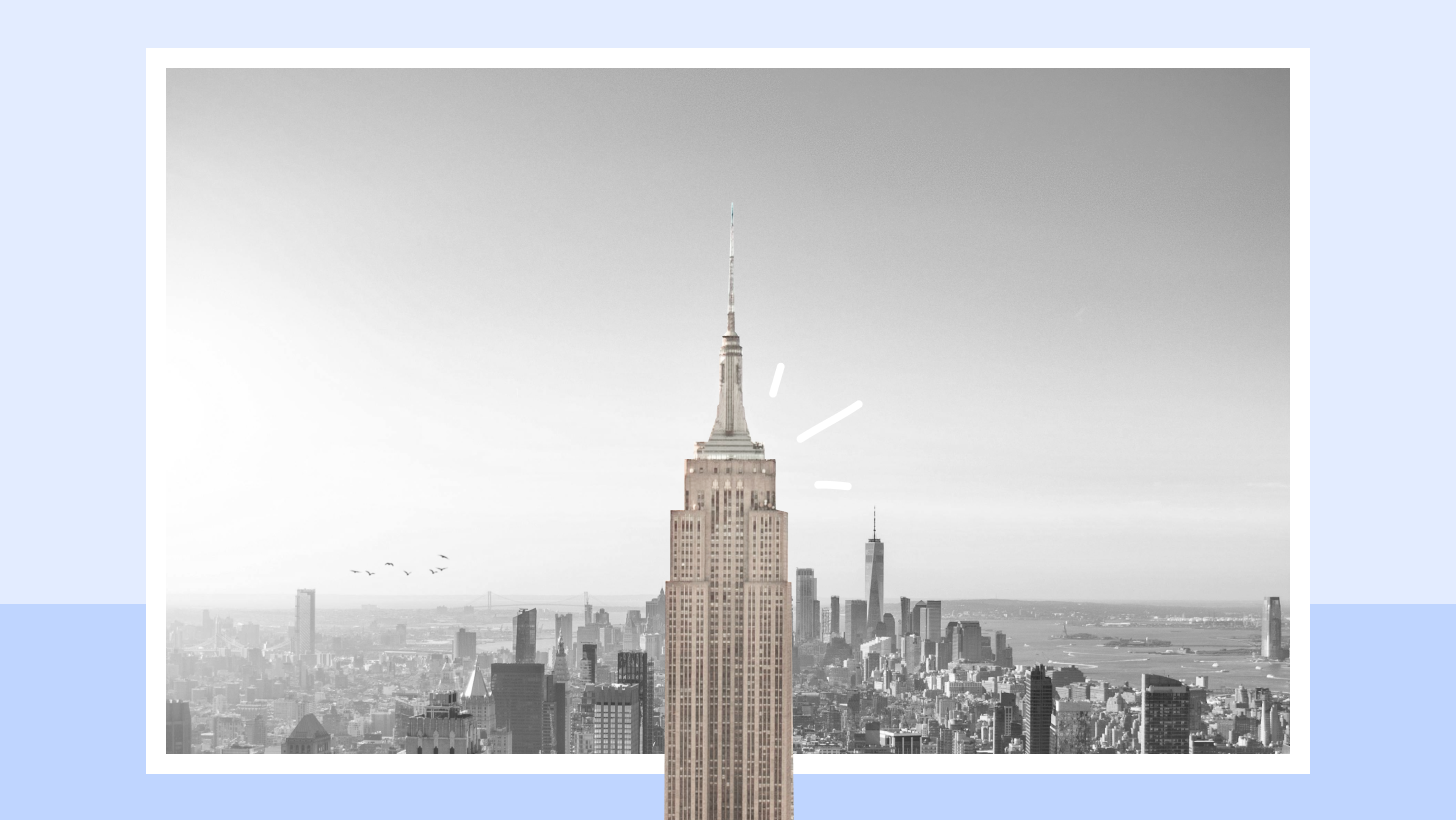
We’ll begin with what’s perhaps the most famous skyscraper in "The City That Never Sleeps". The Empire State Building speaks to the magnificence and grandeur of New York City: After all, it is named after the State of New York’s official nickname, "The Empire State".

At the time of its construction, the Empire State Building was the tallest building in the world, a title held for almost 40 years. Its exquisite Art Deco design and innovative architecture have turned it into an instantly recognizable icon. Perhaps more famously, it has been featured in unforgettable pictures like "Sleepless in Seattle" and "King Kong". Be honest: Whenever you see a picture of this building, can’t you almost see a humongous ape perched atop its antenna?

2
Flatiron Building

Image: Vidar Nordli-Mathisen

For many, the most remarkable feature of this iconic building is its unusual name, which comes from its also rather unusual shape. The Flatiron is considered a New York City institution, and its history is almost as inspiring as its groundbreaking design.

In its early years, the Flatiron was known by the derisive nickname "Burnham's Folly", since detractors believed that architect Daniel Burnham’s design was a laughable idea. History would prove Burnham right though, since the Flatiron is still one of the most instantly recognizable skyscrapers in the world.

3
Willis Tower

Image: Gardhy Granados

For any Chicagoan who might be reading this, we know that you probably still call this building the "Sears Tower", but we thought it would be appropriate to include the official new name of this iconic skyscraper. Located in the heart of the "Loop", the Willis Tower is a 110-story, 1,451-foot building that has truly earned its place in Chicago’s skyline.

Since its opening in 1973, Willis Tower has proudly held the title of the world’s tallest building for close to 25 years. Regardless, this juggernaut is still an American landmark and one of Chicago’s most visited tourist attractions.

4
Transamerica Pyramid

Image: Chris Leipelt

While most pictures of San Francisco’s skyline are usually dominated by the Golden Gate Bridge, visitors of "The City by the Bay" are frequently dazzled by this unusual yet breathtaking building. Completed in 1972, the Transamerica Pyramid was San Francisco’s tallest building until 2018, when it was surpassed by the Salesforce Tower.

Without a doubt, the most striking aspect of this building is its groundbreaking design: Just like San Francisco’s carefree spirit of independence, this building seems effortlessly innovative. It has been compared to other revolutionary designs, most notably to "the Shard" building in London.

5
Columbia Center

Image: Anthony Alexander

Formerly known as "the Bank of America Tower" (or BOAT for short), the Columbia Center was constructed in downtown Seattle in the early ‘80s: At the time, this imposing black skyscraper was the highest building on the West Coast. While most of this skyscraper is leased for private usage, it does house the highest public viewing area west of the Mississippi River.

The Columbia Center’s design produces a rather interesting effect: Since the building is composed of 3 separate segments joined by 2 setbacks, viewers from the street might believe the Columbia Center is made from 3 different towers set side to side.

6
The Chrysler Building

Image: Anthony Fomin

As you probably expected, many iconic skyscrapers from "The City That Never Sleeps" will be featured in this article. The Chrysler Building is an art-deco masterpiece located at the intersection of 42nd Street and Lexington Avenue, which holds the distinction of being the world’s very first supertall skyscraper.

This building was commissioned by (and named after) Walter Chrysler, head of the Chrysler Corporation, and its construction was marked by a friendly competition with the Empire State Building for the title of the world’s tallest building. In that sense, the Chrysler Building’s remarkable 1,046 feet height gave it this impressive title, albeit only for 11 months.

7
Wells Fargo Plaza

Image: Franky Magana

If you ever find yourself taking a stroll through Downtown Houston, you’ll definitely come across a gorgeous all-glass skyscraper. You can’t miss it: After all, the Wells Fargo Plaza is the tallest all-glass building in the entire Western Hemisphere, standing at an impressive 992 feet.

This skyscraper was formerly known as the Allied Bank Plaza and in, 1988, it was renamed to the First Interstate Bank Plaza. However, when in 1996 First Interstate Bancorp was bought by Wells Fargo, this skyscraper changed its name once again to the Wells Fargo Plaza we all know.

8
John Hancock Center

Image: Jonathan J. Castellon

Founding Father John Hancock truly deserves all the praise it can receive from the American people, so it stands to reason that he should have his name honored by a 1,128-foot supertall skyscraper. Located in the iconic "Magnificent Mile", the John Hancock Center was for a while the tallest building in Chicago, surpassed by the previously mentioned Willis Tower.

This skyscraper was completed in 1969 and it has remained a Chicago staple ever since. It houses several restaurants and offices, as well as approximately 700 condominiums. Interestingly, the John Hancock Center is the background on which the 1988 horror film "Poltergeist III" takes place: Posters for this film featured this skyscraper, with a menacing lighting bolt crossing the night sky behind it.

9
Bank of America Plaza

Image: Luis Negron

Just like the Empire State and the Chrysler buildings, the Bank of America Plaza is another wonderful example of Art Deco architecture located between Midtown and Downtown Atlanta. This gorgeous skyscraper is instantly recognizable thanks to its unusual color palette, and it holds the distinction of being the tallest building of any U.S. state capital.

If you are lucky enough to visit "the City in a Forest", try to visit the Bank of America Plaza at night. You’ll quickly notice that the stunning golden spire at the top of the building (which is actually shaped like the Plaza itself) glows alongside a gorgeous pyramid of girders, in a lovely orange hue that tries to resemble old street lights.

10
Home Insurance Building

Image: Александр Македонский

We’ll end this article by honoring an iconic skyscraper that, while it is not still standing, lives on in the proud history of our country. Standing at 138 feet, the Home Insurance Building might not seem remarkably tall by today's standards but, at the time of its construction in 1885, this Chicago historical landmark became the world’s very first skyscraper.

Due to a decrease in its occupancy, the Home Insurance Building was demolished in 1931, alongside 5 other buildings, to make way for the site on which the Field Building now stands. However, this landmark’s legacy still stands, earning its well-deserved place in history as the father of the skyscraper.

Explore more American facts

Choose your favorite category!

General
General

As American as apple pie—the very best America has to offer!

Culture
Culture

Delve into the astounding richness of American lore.

Geography
Geography

Hop in and explore vast and diverse American landscapes.

History
History

Discover the key moments that shaped the United States.