General General 4 min read

Quirky patriotism

Uncle Sam's funhouse: America’s oddest facts

Image: RDNE Stock project

America’s a big place, and let’s face it, a little quirky too. For example, did you know that squirrels have a special bridge to cross the street in one state? And that’s not all: from bourbon barrels to squirrel bridges, our country is full of surprises hiding in plain sight. Grab your reading glasses and settle in for a fun ride through some of the weirdest tidbits about the US that you’ve probably never heard before.

1
Kentucky's got more bourbon than people

Image: javier kober

If Kentucky’s barrels of bourbon had voting rights, they’d outnumber the citizens by over two million. Yep, the state has around 5 million people, but more than 7 million barrels. That’s over one barrel per person! Bourbon is big business down there, and the aging process means those barrels are just hanging out, soaking up the Kentucky air. Cheers to that!

2
Lake Superior could soak two continents

Image: Riley Crawford

Try this on for size: Lake Superior holds so much water that it could cover all of North and South America with a foot of water, that’s more than three quadrillion gallons. It’s not just "superior": it’s the largest freshwater lake by surface area in the world! No wonder it looks like an ocean when you stand on the shore.

3
New York City beats 40 states in population

Image: Thomas Habr

Think your state is crowded? New York City alone has more people than 40 of the 50 US states. That’s over 8 million people packed into five boroughs; more than the entire population of states like Nebraska, Idaho, or even Kentucky. It’s one bustling, never-sleeps kind of place, right?

4
Oregon talks the fastest, Mississippi takes it slow

Image: Marek Studzinski

According to a speech analysis study, Oregonians zip through their words quicker than anyone else in the country. On the other hand, people in Mississippi take their sweet time, probably because there's no need to rush when you’ve got good company and a rocking chair.

5
Washington squirrels have their own skywalks

Image: Ilnur Kalimullin

In Longview, Washington, squirrels cross the street using adorable little bridges built specially for them. Locals kept seeing critters get flattened, so they constructed a series of rope walkways in the trees. Now, that’s a whole network called the " Nutty Narrows ." Proof that even squirrels get special treatment in small-town America.

6
You can legally hunt unicorns in Michigan
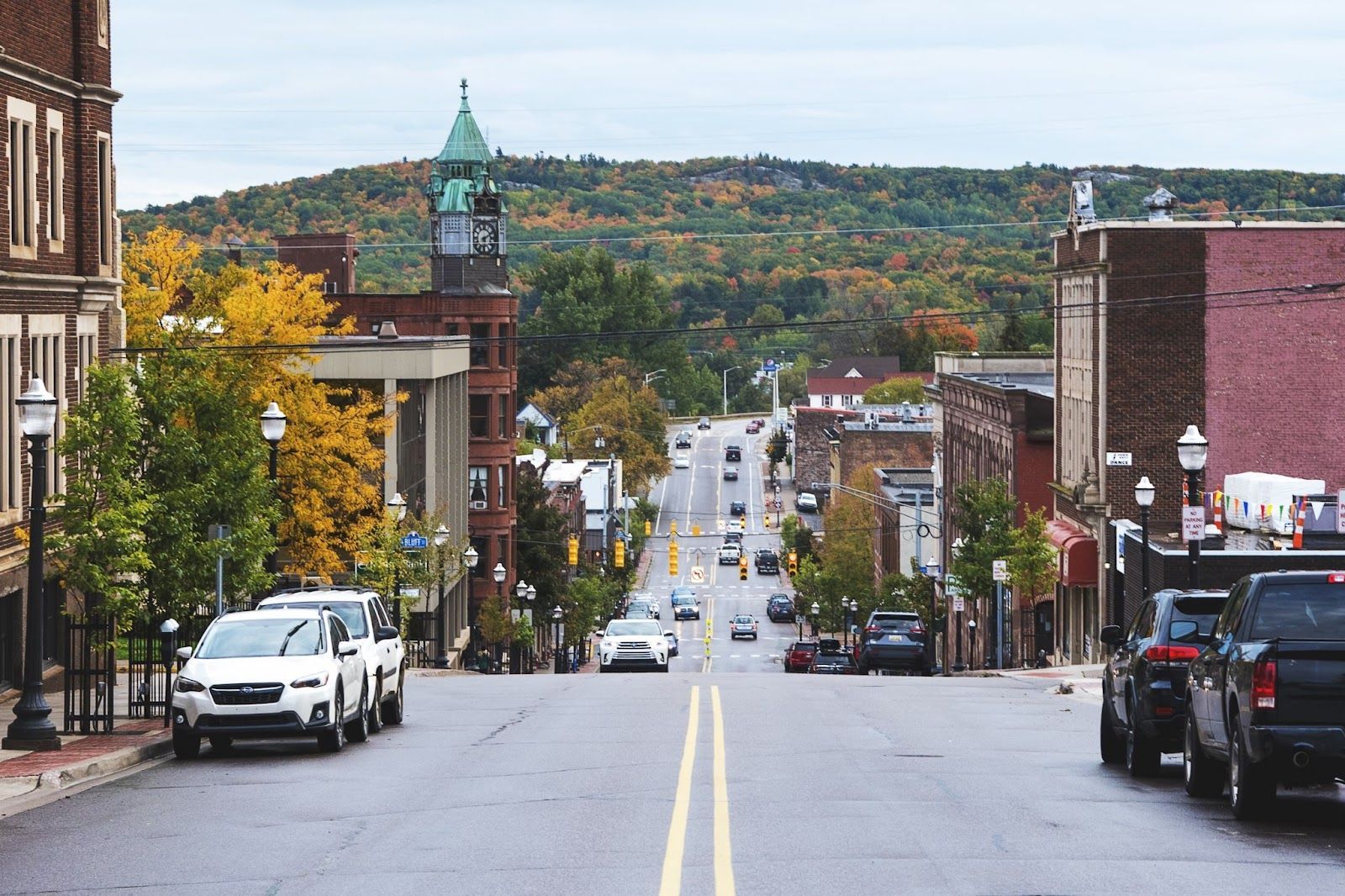
Image: Gary Meulemans

Well… sort of. Lake Superior State University in Michigan offers a whimsical "Unicorn Hunting License" as part of a long-running campus tradition. It’s all in good fun, of course, but the license is real; you can request one. Just don’t expect to catch anything other than smiles.

7
Las Vegas hotels could host you for four centuries

Image: David Lusvardi

If you stayed one night in every hotel room in Las Vegas, it would take you over 400 years to get through them all. That’s around 150,000 rooms, more than any city in the world. Sin City isn’t just flashy; it’s enormous. You could retire three times over before seeing them all.

8

9
Michigan's lavender maze is visible from space

Image: Léonard Cotte

In western Michigan, there’s a sprawling lavender labyrinth so big that it can be seen on Google Earth. Grown by Cherry Point Farm & Market, this fragrant puzzle isn’t just beautiful, it’s relaxing too. Imagine strolling through acres of blooming purple under a summer sky. Have you added it to your bucket list yet?

10
The Hoover Dam’s concrete could pave the nation

Image: Gerda

Here’s a mind-boggling fact: engineers poured enough concrete into the Hoover Dam to build a two-lane highway from San Francisco to New York. How much is that? That’s 4.4 million cubic yards, give or take. It’s a concrete colossus. And it's still standing strong after nearly a century.

11
Boston drivers are the worst, Kansas City’s the best

Image: todd kent

According to insurance data, Boston has more fender-benders and claims than any other large city. Drivers there can be a bit... spirited. Meanwhile, Kansas City drivers, apparently, are so courteous and careful, they top the charts for safety. Beep beep!

12
Kansas could feed the world at least once

Image: Samuel Myles

Each year, Kansas produces enough wheat to bake a whole lot of bread—enough to feed everyone on Earth for about two weeks. That’s nearly 300 million bushels annually. No wonder it’s called the Breadbasket of America. If bread ever becomes currency, Kansas would be rich.

13
Crater Lake is Statue-of-Liberty deep

Image: Jeff Hopper

Oregon’s Crater Lake is no shallow pond—it’s the deepest lake in the US, plunging down 1,943 feet. That’s enough depth to stack six Statues of Liberty, one on top of the other, with room to spare. Yes, you read that right! Formed in the crater of an ancient volcano, it’s as dramatic as it is stunning.

14
Atlanta is peachy... maybe a little too peachy

Image: Ronny Sison

If you’re driving through Atlanta and see Peachtree Street, don’t assume you’re close to your destination because there are over 70 roads with some form of "Peachtree" in the name. Peachtrees, Peachtree Circle, Peachtree Battle… It's a maze of fruity confusion. Now you know, so bring a map!
History History 4 min read

Nature’s wrath unleashed

The comet that sparked a wildfire and 9 more tales of nature's might

Image: Greg Johnson

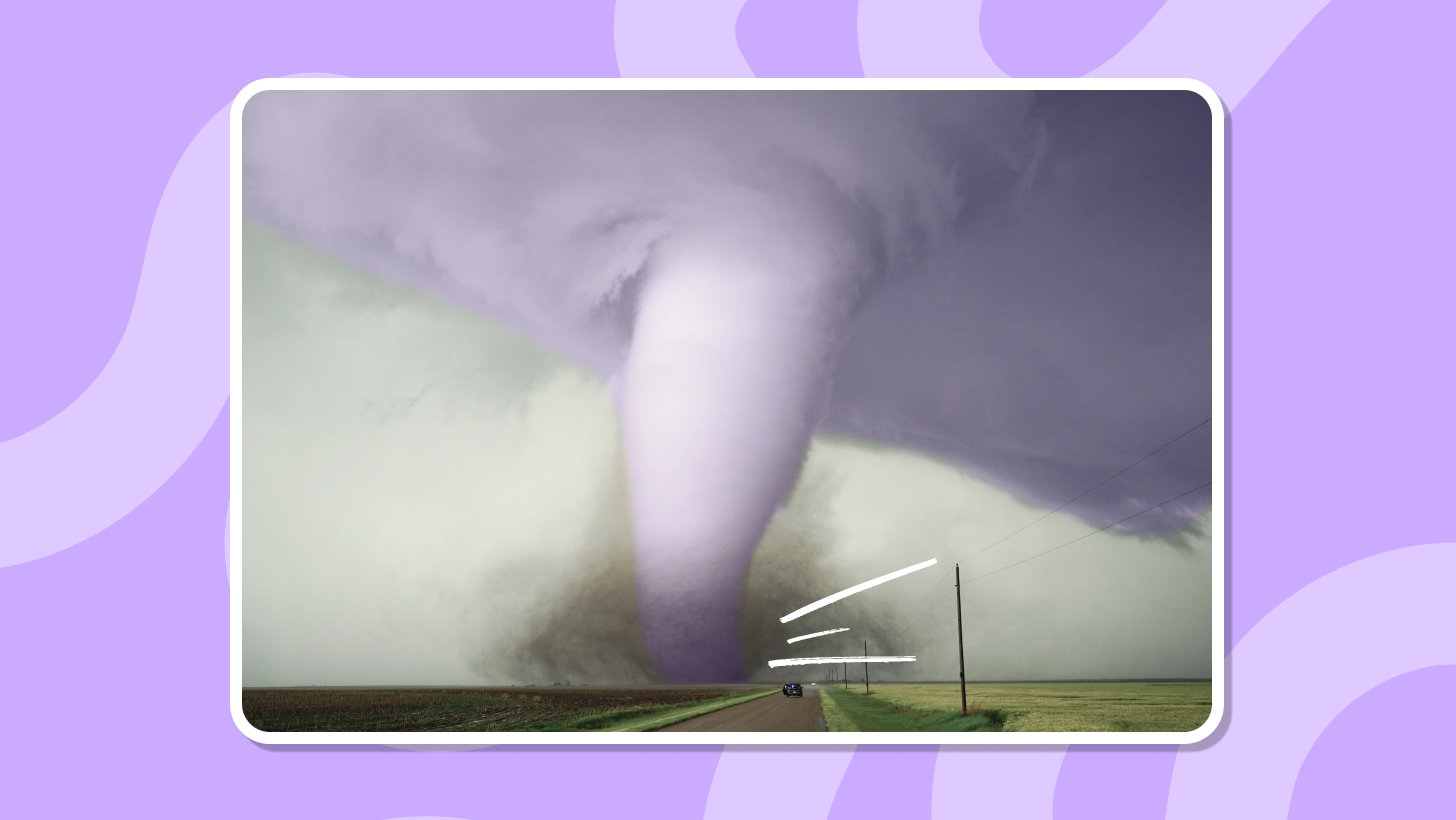
America’s vast territories and diverse landscapes make it a hotspot for some of the world’s most remarkable weather and natural phenomena . From raging tornadoes to volcanic eruptions, the U.S. is no stranger to extreme natural events. While some of these events have left deep scars on the nation’s collective memory, many have also driven significant advancements in prevention and disaster response protocols, helping to mitigate the impact of future occurrences. Here’s a look at 10 of the most powerful natural events in American history.

1
Tri-State tornado

Image: Greg Johnson

In 1925, the Tri-State Tornado carved a path of destruction across Missouri, Illinois, and Indiana. With winds exceeding 300 mph, it remains the deadliest tornado in U.S. history, claiming more than 700 lives and leaving thousands homeless.

This record-breaking F5 tornado—classified as such by modern standards—traveled over 200 miles in just three and a half hours, leveling entire towns. Its unprecedented speed and longevity exposed the limitations of early warning systems, prompting significant advancements in tornado research and forecasting.

2
The Dust Bowl

Image: Sophia Simoes

The 1930s Dust Bowl was a man-made disaster exacerbated by a severe drought across the Great Plains. Decades of over-plowing and unsustainable farming practices had left the farmland highly vulnerable to erosion.

When the drought struck, winds swept loose soil into colossal clouds that darkened cities and devastated remaining crops. These massive dust storms, known as "Black Blizzards," choked the skies and forced thousands of families to abandon their homes . Eventually, the disaster led to significant agricultural reforms under the New Deal.

3
Lake Michigan's seiche wave

Image: Silas Baisch

On the morning of June 26, 1954, a 10-foot-high seiche wave crashed onto the Chicago shoreline , sweeping away eight people and injuring many others. But what exactly is a "seiche wave"?

According to researchers, seiche waves are large, sudden standing waves that form in enclosed bodies of water due to extreme atmospheric changes, such as abrupt shifts in air pressure or strong winds. This rare event shocked the Midwest and prompted scientists to study lake oscillations and their connection to storm systems.

4
Great Alaska earthquake

Image: Joris Beugels

In 1964, Alaska was struck by a devastating earthquake with a magnitude of 9.2, making it the most powerful ever recorded in North America and the second most powerful worldwide. Lasting four minutes and thirty-eight seconds, the earthquake triggered massive tsunamis and landslides across the state, along with significant geographic changes —some coastlines sank while others rose dramatically.

The destruction it caused led to major updates in seismic safety protocols and infrastructure standards throughout the U.S. This event emphasized the need for better preparedness and stricter building codes , to handle similar future events, especially in earthquake-prone areas.

5
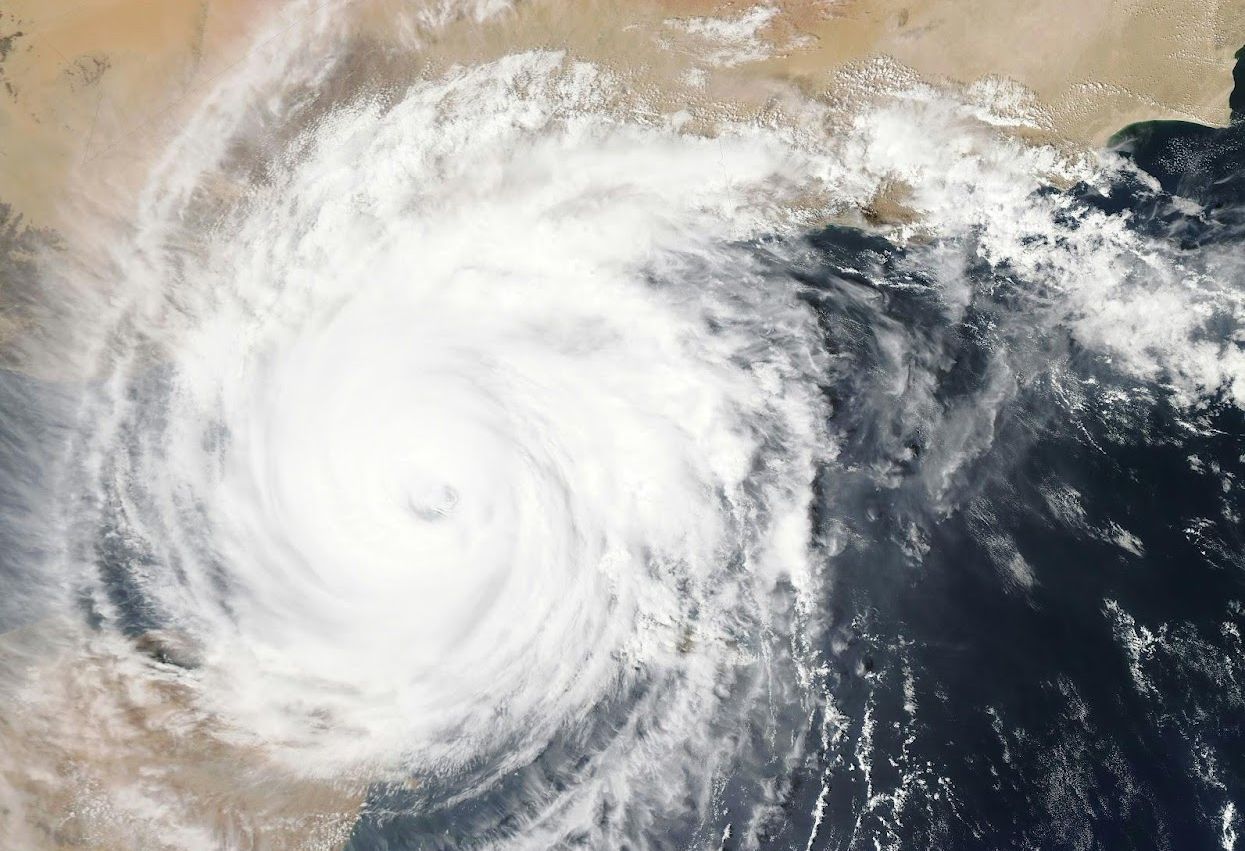
Hurricane Katrina

Image: NASA

In 2005, Hurricane Katrina ravaged New Orleans and the Gulf Coast, claiming more than 1,300 lives and leaving millions homeless, sparking an urgent humanitarian crisis. The storm caused an estimated $125 billion in damages, making it one of the costliest hurricanes in history , tied with Hurricane Harvey in the Atlantic basin.

Katrina exposed critical flaws in the region's levee systems and emergency response efforts, prompting widespread criticism and driving essential reforms in disaster preparedness and infrastructure.

6
The Peshtigo firestorm

Image: Tim Mossholder

On the same day as the Great Chicago Fire of 1871, a catastrophic firestorm near the small town of Peshtigo, Wisconsin, scorched approximately 1.2 million acres, making it the deadliest wildfire in recorded history . The uncontrolled blaze claimed over 1,500 lives, though the exact number of fatalities remains uncertain.

Since 1883, there has been speculation that the simultaneous outbreaks of major fires across Illinois, Michigan, and Wisconsin, including the Peshtigo and Chicago fires, were not coincidental but caused by burning fragments from Biela's Comet . However, this theory remains unproven.

7
Superstorm Sandy

Image: Matt Hardy

Nicknamed "Superstorm" by the media, Hurricane Sandy wreaked havoc on the Caribbean and the coastal Mid-Atlantic region of the United States in late October 2012. While it affected 24 states, the most severe damage was concentrated in New Jersey and New York .

The storm caused an estimated $70 billion in damages, flooding New York City's subway system and displacing thousands of residents. It also ignited a nationwide debate about the role of man-made climate change in amplifying the intensity of seasonal storms.

8
Death Valley heatwave

Image: Johannes Plenio

Death Valley recorded the world’s hottest temperature —134°F—in 1913. A testament to America’s climatic extremes, the region’s unique topography traps heat, effectively turning it into a natural furnace.

While the record remains a point of fascination for meteorologists and tourists alike, some recent researchers have challenged the accuracy of the 1913 measurement. Regardless, the region has come close to this temperature in recent years, indicating that a new record-breaking summer may be in the cards.

9
The Great Blizzard of 1888

Image: Jan Canty

The "White Hurricane" of 1888 buried the Northeast under as much as 55 inches of snow, crippling major cities and resulting in over 400 fatalities. Railroads were shut down, and many residents were confined to their homes for up to a week.

As one of the most severe blizzards in American history , the storm compelled New York City to bury power lines and redesign its transportation systems to better withstand future extreme weather events.

10
Mount St. Helens eruption

Image: Tetiana Grypachevska

On May 18, 1980, Mount St. Helens erupted in Washington, triggering massive landslides and pyroclastic flows, killing 57 people and causing over $1.1 billion in damages. The violent blast also reduced the mountain’s height by more than 1,300 feet and sent a plume of ash 80,000 feet into the atmosphere, disrupting air travel for weeks.

This volcanic event, the first in the contiguous United States since the much smaller 1915 eruption of Lassen Peak in California, is considered one of the most disastrous volcanic eruptions in U.S. history. Its aftermath raised awareness of volcanic hazards and underscored the importance of geological research in the country.

General General 3 min read

About the Star-Spangled Banner

Did you know these 11 obscure facts about our National Anthem?

Image: RDNE Stock project

How much do you really know about "The Star-Spangled Banner" ? It’s the song that kicks off baseball games, gives stadiums goosebumps, and has been passionately performed—or completely butchered—by countless singers. Its colorful story starts by crossing a poem and the tune of a British drinking song, runs through an electric guitar at Woodstock in the 60s, and keeps going. Read on to discover some surprising facts about America’s most patriotic anthem!

1
It had a different name

Image: Luke Michael

Originally, the lyrics came from a poem titled "Defence of Fort M’Henry," written by Francis Scott Key in 1814 after he witnessed the bombardment of Fort McHenry during the War of 1812. The sight of the American flag still flying after the battle inspired him.

The poem was printed in newspapers and set to music, but it wasn’t until more than a century later that it officially became the national anthem we know today.

2
It has four verses

Image: Serena Koi

Most of us only belt out the first one, but did you know "The Star-Spangled Banner" actually has four verses? The other three are rarely heard .

Francis Scott Key wrote additional verses exploring themes of resilience and freedom, but most people have never read those stanzas.

3
Key wasn’t a musician

Image: Steve Johnson

Contrary to what you might expect from the author of the nation’s most patriotic song, Francis Scott Key wasn’t a musician .

He was a lawyer and an amateur poet. He didn’t collaborate with a composer or choose a melody to set his lyrics to, either. He simply wrote the poem, which was later published nationally by The Analectic Magazine .

4
The tune was actually borrowed

Image: Ylanite Koppens

So how did the anthem get its music, then? A relative of Key realized that the lyrics of his poem fit perfectly with the tune of an already popular song, "To Anacreon in Heaven."

That song was actually a British drinking tune frequently sung in 18th-century gentlemen’s clubs. The melody was catchy, but its origins were anything but patriotic.

5
It was first sung in a Baltimore tavern

Image: andrew welch

One account claims that the anthem’s first public performance wasn’t at a grand concert or a government event, but in a Baltimore tavern in 1814.

According to the story, just weeks after Key wrote the lyrics, a local actor sang them to the tune of "To Anacreon in Heaven." The crowd loved it, and the song quickly spread.

6
It wasn’t the first choice

Image: Wesley Tingey

Believe it or not, "The Star-Spangled Banner" wasn’t America’s first choice for a national anthem. For over a century, songs like "Hail, Columbia" and "My Country, ’Tis of Thee" filled the role. It wasn’t until 1931 that Congress, under President Herbert Hoover, officially designated Key’s anthem as the nation’s song.

7
The tradition of singing it before sports

Image: Frankie Lopez

The tradition of singing the anthem at sporting events began during the 1918 World Series . The crowd’s emotional response was so powerful that more and more baseball games adopted the practice.

Today, it’s hard to imagine a baseball game without it. Many other sports—including American football, hockey, and basketball—have since followed suit.

8
Aretha Franklin’s rendition is the longest

Image: Stas Knop

Aretha Franklin's rendition of "Star-Spangled Banner" is the longest recorded performance of the national anthem, lasting an impressive 4 minutes and 55 seconds . In contrast, most renditions take under two minutes!

She performed it in 2016 at an NFL game, breaking the previous record set by Alicia Keys three years earlier, whose version lasted 2 minutes and 36 seconds.

9
An unsuspected first recording voice

Image: Sudhith Xavier

The first known recording of "The Star-Spangled Banner" was made in 1915 by Margaret Woodrow Wilson . Yes, the daughter of President Woodrow Wilson.

Her rendition, though not as polished as modern versions, marked the anthem’s entry into the world of recorded music. Who would have thought the president’s daughter would be a trailblazer?

10
Jimi Hendrix’s Woodstock performance

Image: Xie lipton

Jimi Hendrix’s electric guitar rendition of "The Star-Spangled Banner" at Woodstock in 1969 remains one of the most famous—and controversial—performances of the anthem.

His distorted, soulful, and modern interpretation hypnotized the crowds and became a powerful cultural statement amid the turbulence of the 1960s. Some saw it as a protest; others, as a masterpiece. Either way, we still talk about it.

11
A song for all occasions

Image: frank mckenna

Originally, "The Star-Spangled Banner" wasn’t intended solely as a national anthem. It was a patriotic song for all occasions —political rallies, public celebrations, and more. The anthem is as popular as it is versatile, and so it has been played in endless scenarios—and in countless versions!

Explore more American facts

Choose your favorite category!

General
General

As American as apple pie—the very best America has to offer!

Culture
Culture

Delve into the astounding richness of American lore.

Geography
Geography

Hop in and explore vast and diverse American landscapes.

History
History

Discover the key moments that shaped the United States.