General General 4 min read

Cash curiosities

What would you do with a $10,000 bill? 10 rare facts about US money!
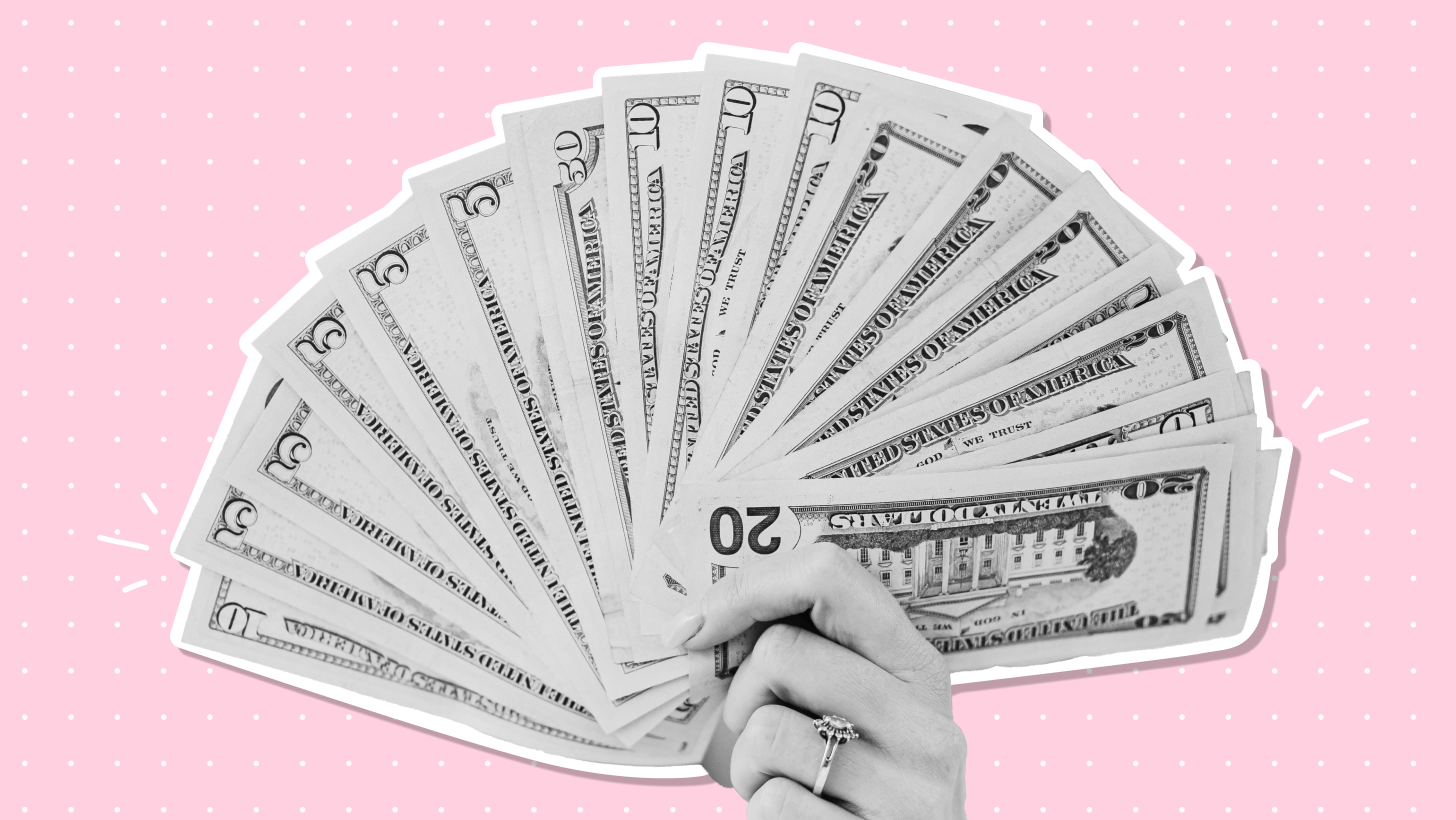
Image: Photo By: Kaboompics.com

While cash is becoming less common, there's no denying the economic and historical value of banknotes and coins. That's why so many people collect them! You might think you know a lot about the money we use every day, but there are plenty of hidden details and surprising facts that most people don't realize. From a $10,000 bill featuring Salmon P. Chase to coins with unexpected features, join us as we uncover 10 fun facts about US currency that just might surprise you!

1
$10,000!

Image: Eyestetix Studio

Did you know that, for a time, there was a $10,000 bill? That's right! The bill featured the portrait of Salmon P. Chase, President Lincoln's Secretary of the Treasury, and it was the highest denomination of US currency ever to be publicly circulated! While there was also a $100,000 bill, the latter was only used for large transactions between Federal Reserve Banks.

2
The first President on a coin

Image: Sebastian Enrique

We're totally used to seeing Abraham Lincoln's face on a penny, but that wasn't always the case.

Lincoln's image first appeared on the penny in 1909 to commemorate the 100th anniversary of his birth, making him the first US president to appear on a coin, an honor befitting our great Honest Abe! More than 115 years have passed since that addition, and his face is still featured on the iconic penny.

3
Silver pennies

Image: Josh Appel

In addition to featuring Abraham Lincoln's face, pennies are famous for their classic copper color. However, there was one year when the penny took on a different hue.

During WWII, a copper shortage occurred, hindering the usual production of pennies. For that reason, in 1943, pennies were made of steel coated in zinc, giving them a silver color and making them closely resemble dimes.

4
2 and 3 cents?

Image: Towfiqu barbhuiya

Did you know that, in the 19th century, the US had 2- and 3-cent coins? That's right! The 2-cent coin was minted from 1864 to 1873. On the front, it featured a shield symbolizing the Union during the Civil War . On the reverse, it bore the phrase "In God We Trust," making it the first coin to use the motto . The 3-cent coin had two versions: the silver 3-cent coin (1851–1873) and the nickel 3-cent coin (1865–1889).

5
Long lifespan
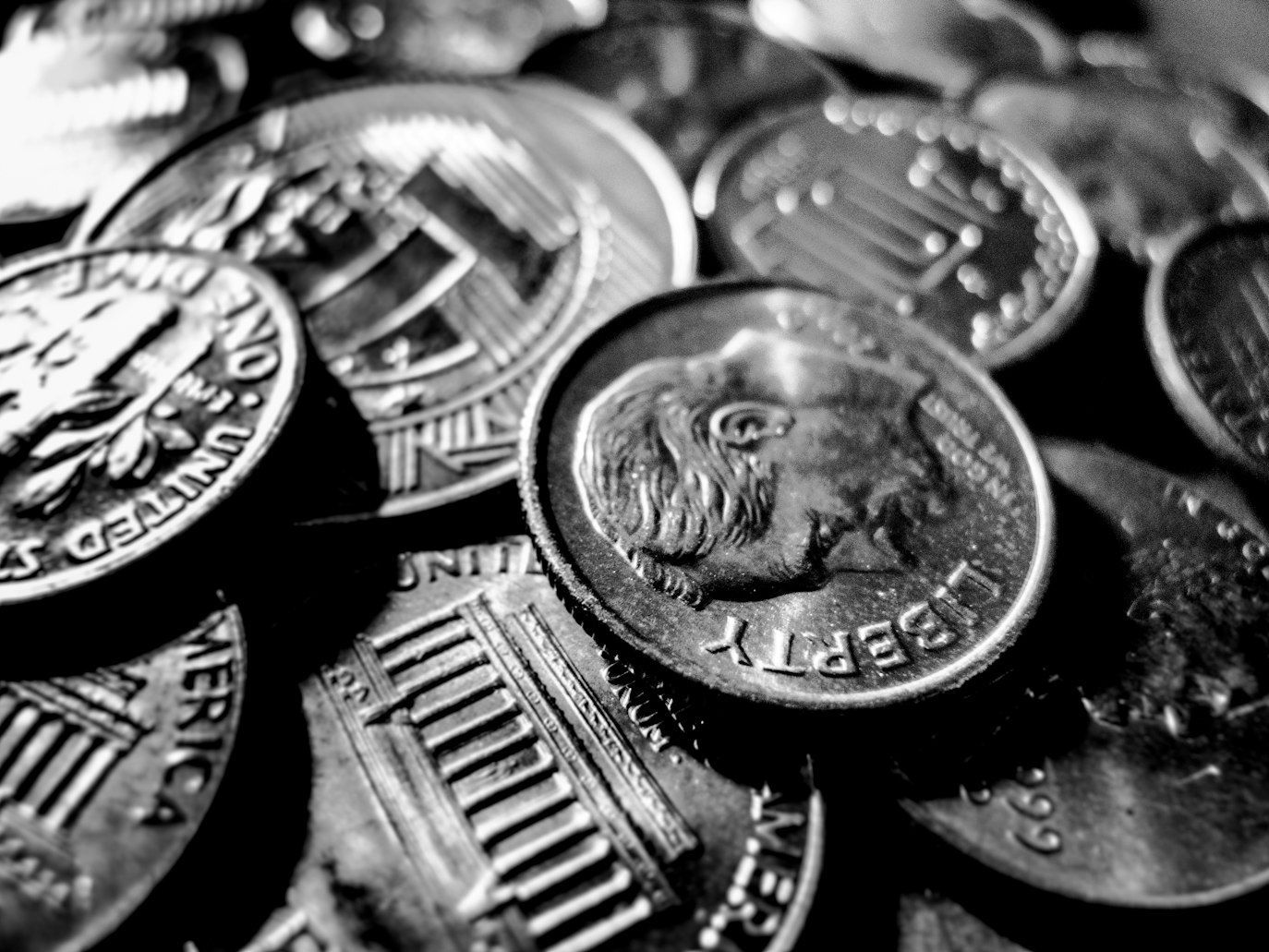
Image: Shot by Cerqueira

While each coin is used with a different frequency, the average lifespan of a coin can be as long as 40 years ! Just think about all the places and situations it might pass through during that time. Of course, the more a coin circulates, the quicker it will wear down. That’s why the penny has the shortest lifespan , lasting about 25 years on average.

6
In God We Trust

Image: Kelly Sikkema

"In God We Trust" is not only the official motto of the United States (and the state of Florida), but also the phrase that appears on all US currency currently in circulation. But how long has this phrase been there?

"In God We Trust" first appeared on some coins during the Civil War, starting with the aforementioned 2-cent piece. By 1938, the motto appeared on all US coins, but it wasn't until 1955 that President Eisenhower signed a law requiring "In God We Trust" to be included on all US coins and paper money.

7
Precious metals

Image: Jingming Pan

Today, US coins are primarily made of zinc, copper, and nickel. However, back in the early days of the US Mint, things were quite different. In the past, US coins were made not just of copper, but also of silver and even gold!

Over time, using those materials for coins became too expensive, and production shifted to more affordable metals such as zinc and nickel.

8
Safety edges

Image: Joshua Hoehne

When coins were made of precious metals like gold and silver , there was always the risk that someone might tamper with or shave the edges to extract the valuable material. Fortunately, the brilliant Isaac Newton came to the rescue. He introduced the clever idea of adding reeded edges to coins, which helped protect them from opportunistic tampering. With these marked edges, any shaving of the coin would be immediately noticeable. Pretty smart, right?

9
The most coins in the world

Image: Sarbasri Bhaumik

The US Mint manufactures billions of coins each year for circulation, and while that’s nothing new, there’s something about it that might surprise you: the United States is actually the world’s largest producer of coins . No other country makes more!

Pennies, nickels, dimes, and quarters are produced in large quantities every day. But that’s not all—dollar coins and special collectors’ coins are also minted, though in much smaller amounts.

10
"Paper" currency

Image: Adam Nir

Our paper money isn’t actually made of paper . It’s composed of 25% linen and 75% cotton. This blend gives US bills greater strength and flexibility, making them not only more durable but also more difficult to counterfeit. Plus, if you accidentally toss a buck in the washing machine, there’s a good chance it’ll come out just fine!

General General 4 min read

Cash curiosities

What would you do with a $10,000 bill? 10 rare facts about US money!

Image: Photo By: Kaboompics.com

While cash is becoming less common, there's no denying the economic and historical value of banknotes and coins. That's why so many people collect them! You might think you know a lot about the money we use every day, but there are plenty of hidden details and surprising facts that most people don't realize. From a $10,000 bill featuring Salmon P. Chase to coins with unexpected features, join us as we uncover 10 fun facts about US currency that just might surprise you!

1
$10,000!

Image: Eyestetix Studio

Did you know that, for a time, there was a $10,000 bill? That's right! The bill featured the portrait of Salmon P. Chase, President Lincoln's Secretary of the Treasury, and it was the highest denomination of US currency ever to be publicly circulated! While there was also a $100,000 bill, the latter was only used for large transactions between Federal Reserve Banks.

2
The first President on a coin

Image: Sebastian Enrique

We're totally used to seeing Abraham Lincoln's face on a penny, but that wasn't always the case.

Lincoln's image first appeared on the penny in 1909 to commemorate the 100th anniversary of his birth, making him the first US president to appear on a coin, an honor befitting our great Honest Abe! More than 115 years have passed since that addition, and his face is still featured on the iconic penny.

3
Silver pennies

Image: Josh Appel

In addition to featuring Abraham Lincoln's face, pennies are famous for their classic copper color. However, there was one year when the penny took on a different hue.

During WWII, a copper shortage occurred, hindering the usual production of pennies. For that reason, in 1943, pennies were made of steel coated in zinc, giving them a silver color and making them closely resemble dimes.

4
2 and 3 cents?

Image: Towfiqu barbhuiya

Did you know that, in the 19th century, the US had 2- and 3-cent coins? That's right! The 2-cent coin was minted from 1864 to 1873. On the front, it featured a shield symbolizing the Union during the Civil War . On the reverse, it bore the phrase "In God We Trust," making it the first coin to use the motto . The 3-cent coin had two versions: the silver 3-cent coin (1851–1873) and the nickel 3-cent coin (1865–1889).

5
Long lifespan

Image: Shot by Cerqueira

While each coin is used with a different frequency, the average lifespan of a coin can be as long as 40 years ! Just think about all the places and situations it might pass through during that time. Of course, the more a coin circulates, the quicker it will wear down. That’s why the penny has the shortest lifespan , lasting about 25 years on average.

6
In God We Trust

Image: Kelly Sikkema

"In God We Trust" is not only the official motto of the United States (and the state of Florida), but also the phrase that appears on all US currency currently in circulation. But how long has this phrase been there?

"In God We Trust" first appeared on some coins during the Civil War, starting with the aforementioned 2-cent piece. By 1938, the motto appeared on all US coins, but it wasn't until 1955 that President Eisenhower signed a law requiring "In God We Trust" to be included on all US coins and paper money.

7
Precious metals

Image: Jingming Pan

Today, US coins are primarily made of zinc, copper, and nickel. However, back in the early days of the US Mint, things were quite different. In the past, US coins were made not just of copper, but also of silver and even gold!

Over time, using those materials for coins became too expensive, and production shifted to more affordable metals such as zinc and nickel.

8
Safety edges

Image: Joshua Hoehne

When coins were made of precious metals like gold and silver , there was always the risk that someone might tamper with or shave the edges to extract the valuable material. Fortunately, the brilliant Isaac Newton came to the rescue. He introduced the clever idea of adding reeded edges to coins, which helped protect them from opportunistic tampering. With these marked edges, any shaving of the coin would be immediately noticeable. Pretty smart, right?

9
The most coins in the world

Image: Sarbasri Bhaumik

The US Mint manufactures billions of coins each year for circulation, and while that’s nothing new, there’s something about it that might surprise you: the United States is actually the world’s largest producer of coins . No other country makes more!

Pennies, nickels, dimes, and quarters are produced in large quantities every day. But that’s not all—dollar coins and special collectors’ coins are also minted, though in much smaller amounts.

10
"Paper" currency

Image: Adam Nir

Our paper money isn’t actually made of paper . It’s composed of 25% linen and 75% cotton. This blend gives US bills greater strength and flexibility, making them not only more durable but also more difficult to counterfeit. Plus, if you accidentally toss a buck in the washing machine, there’s a good chance it’ll come out just fine!
Geography Geography 4 min read

Road trip time

Off the beaten path: 12 bizarre roadside wonders across the U.S.

Image: RDNE Stock project

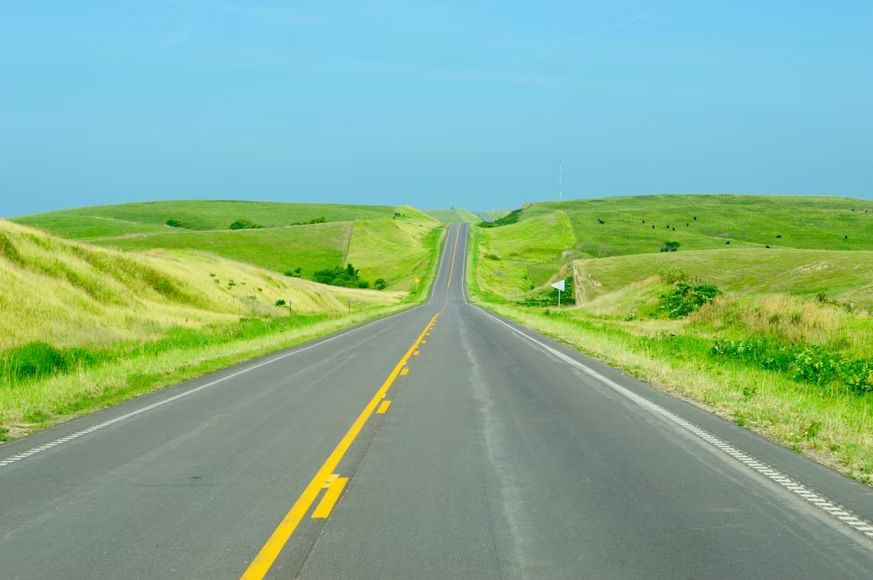
Picture this: You’re on a road trip and stumble across something so odd you have to pull over and snap a photo. Has that ever happened to you? It probably has—because that’s the magic of the American roadside attraction. It’s part charm, part mystery, and entirely unforgettable. Our highways are full of creative (and often head-scratching) stops that are well worth stretching your legs for. Here’s a look at some of the most bizarre places you’ll ever visit.

1
Carhenge – Alliance, Nebraska

Image: John Dame

Imagine driving through the Great Plains and stumbling across Stonehenge—only this version is made entirely of old cars. That’s Carhenge. Built in 1987 by artist Jim Reinders, this auto-art installation mirrors the original monument’s dimensions using vintage American cars, all painted gray. It’s history with a humorous twist, you know!

2
Salvation Mountain – Niland, California

Image: Megan Ellis

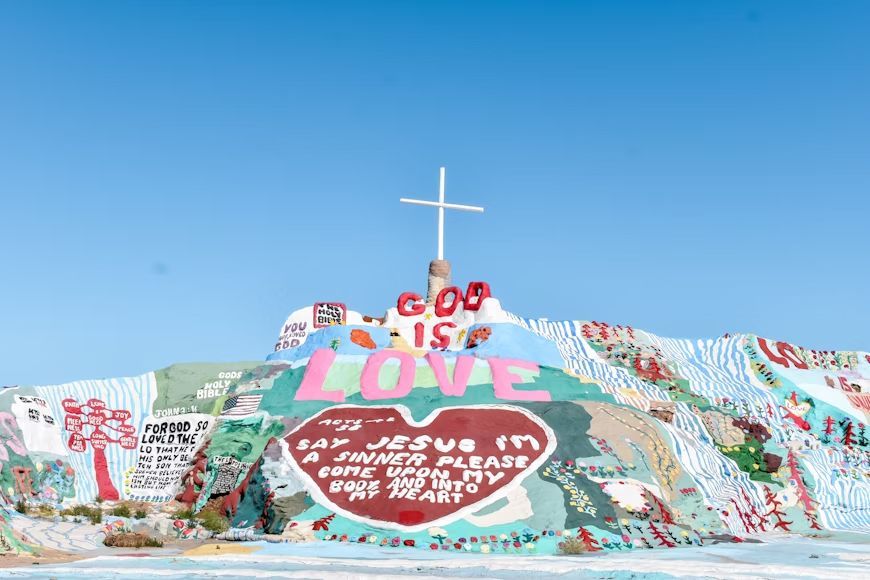
Located near the edge of the desert, Salvation Mountain is a wonder filled with color and faith. Leonard Knight spent decades slathering adobe and straw with thick coats of paint, spreading a message of love through hand-lettered Bible verses. You don’t have to be religious to appreciate the heart behind this monument—it’s pure passion on display.

3
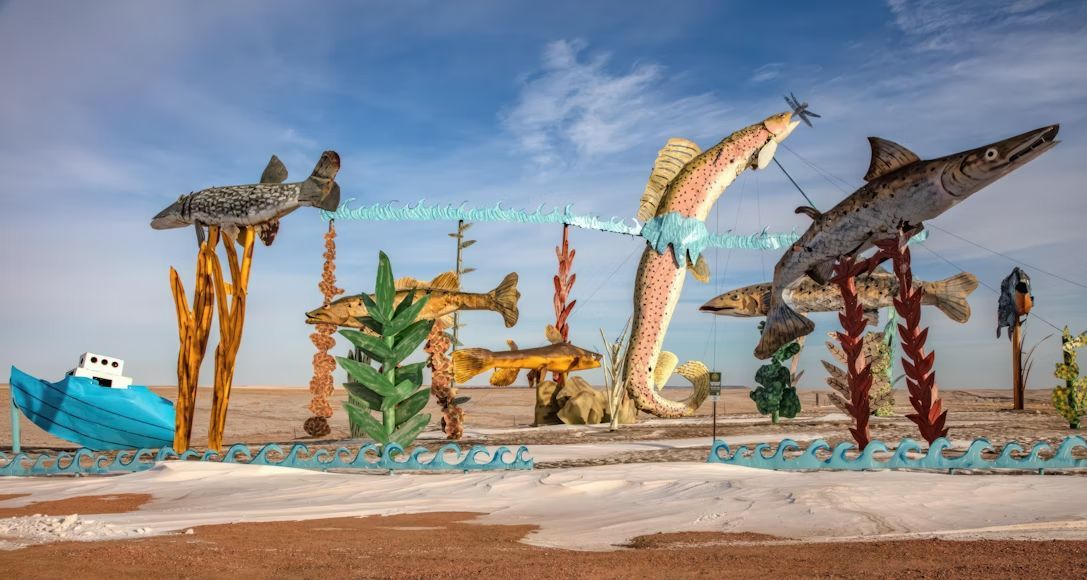
The Enchanted Highway – Regent, North Dakota

Image: Carol Highsmith's America

This isn’t your average country drive. The Enchanted Highway is a 32-mile stretch of open road lined with enormous metal sculptures—everything from geese in flight to grasshoppers the size of RVs. Created by Gary Greff, a small-town schoolteacher turned roadside visionary, this whimsical parade of artwork proves that a little welding—and a lot of heart—can turn even the quietest town into a road trip highlight.

4
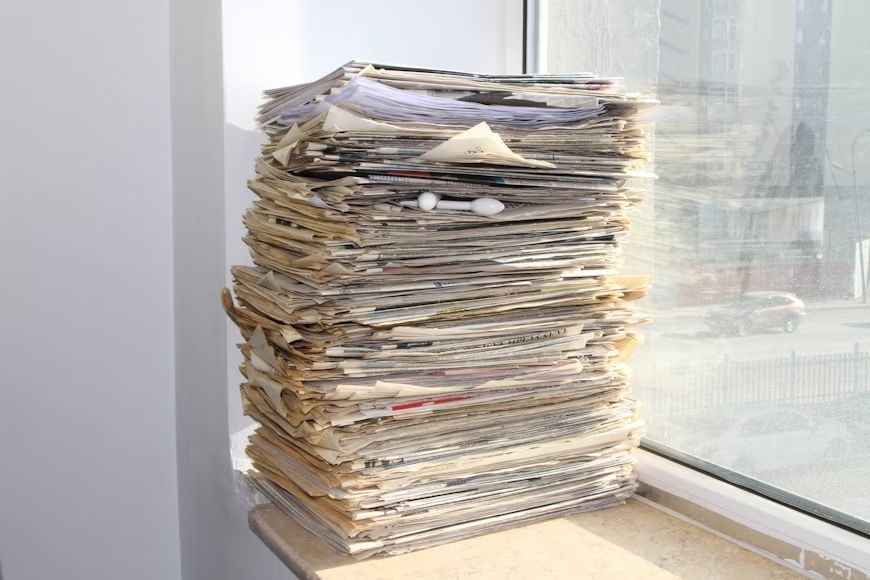
The Paper House – Rockport, Massachusetts

Image: Unlimited Access

If you’ve ever wondered what to do with old newspapers, how about building a house? In the 1920s, engineer Elis Stenman did just that. The walls, furniture—even the curtains—are made from varnished newspapers. It’s cozy, clever, and surprisingly sturdy. Part architecture, part recycling marvel, this little New England oddity is well worth the detour.

5
The Museum of Bad Art – Boston, Massachusetts

Image: Marishka Tsiklauri

Some artwork takes your breath away. Other pieces make you laugh out loud—and that’s exactly the goal at the Museum of Bad Art. This small but mighty gallery celebrates delightfully terrible creations. It’s not about mocking; quite the opposite. It’s about finding joy in the offbeat and honoring artists who dared to create something totally different. Trust us—you’ll leave smiling.

6
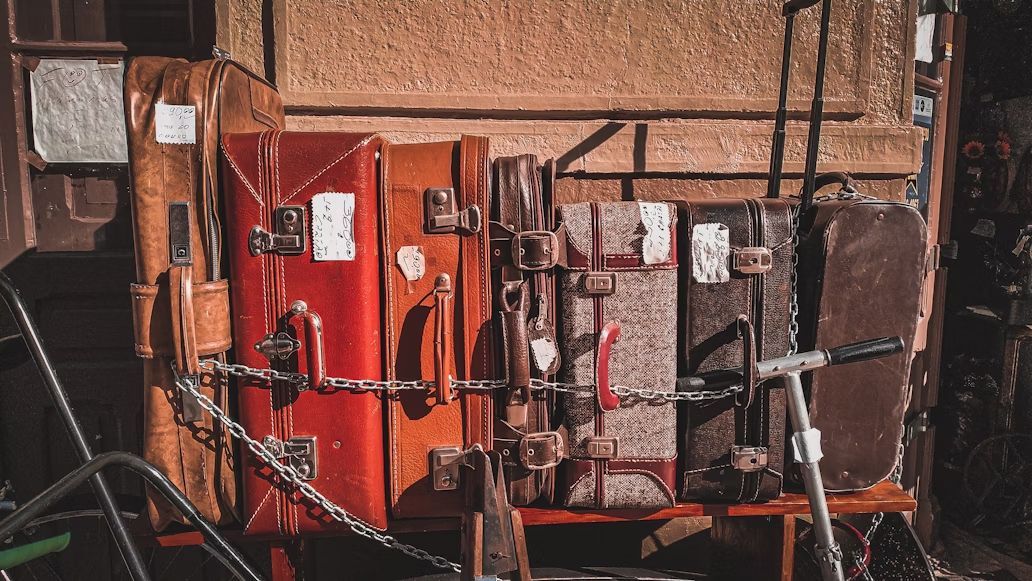
The Unclaimed Baggage Center – Scottsboro, Alabama

Image: Raquel Brepohl

Ever wonder where your missing suitcase ended up? Chances are, it’s here. The Unclaimed Baggage Center is part retail store, part treasure hunt. Spread across 40,000 square feet, it sells items left behind at airports—from clothes and gadgets to the occasional surprise oddity. If you enjoy thrifting, this is a must-stop on your trip.

7
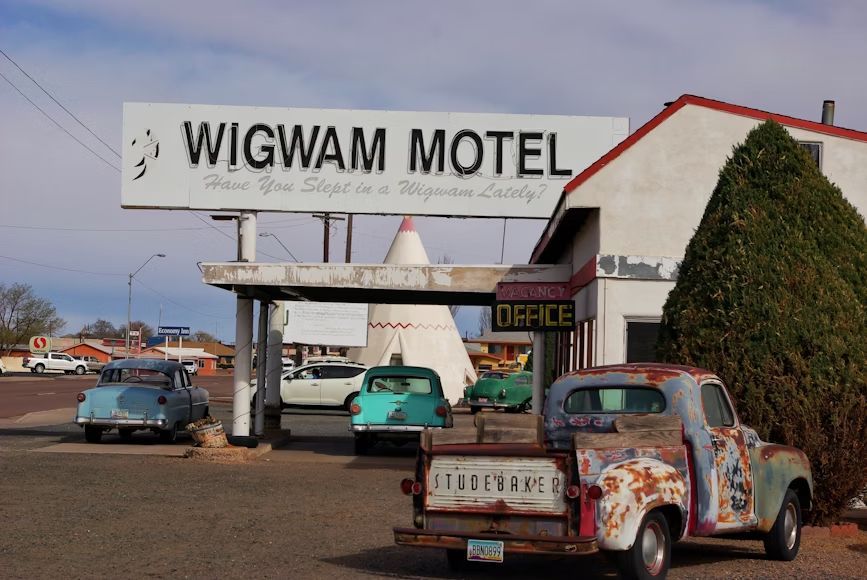
The Wigwam Motel – Holbrook, Arizona

Image: Johnathan Ciarrocca

Nothing screams classic Americana like Route 66, and the Wigwam Motel delivers. Here, you’ll sleep in your very own concrete teepee. It’s one of only three surviving "Wigwam Villages" from the 1950s. It’s kitschy, it’s cozy, and it’s a nostalgic nod to the road trips of yesteryear. Want a bonus? Check out the vintage cars parked out front.

8
The House on the Rock – Spring Green, Wisconsin

Image: Cristina Glebova

Imagine a mansion crossed with a carnival funhouse—that’s The House on the Rock. Started in the 1940s by Alex Jordan Jr., this labyrinth of rooms features bizarre collections, from a giant carousel to self-playing orchestras and a hall filled with model ships. It’s overwhelming, wonderful, and completely unforgettable—a place where your inner child will be wide-eyed the entire time.

9
The Grotto of the Redemption – West Bend, Iowa

Image: Mustafa akın

Part spiritual sanctuary, part geological marvel, the Grotto of the Redemption is made of millions of stones, gems, and fossils. Started by Father Paul Dobberstein in 1912, this labor of love took over 40 years to complete. The result? A jaw-dropping series of religious scenes and structures that glitter in the sunlight. Bring your sunglasses—you’re in for a dazzling experience.

10
The UFO Watchtower – Hooper, Colorado

Image: Gabriel Tovar

For those who believe in aliens—or just love a good alien yarn—the UFO Watchtower is a must-see. Located in the San Luis Valley, a hotspot for sightings, this quirky site offers 360-degree views of the sky, a garden filled with visitor trinkets, and plenty of stories. Try it out—what if you spot a flying saucer? Let’s face it, we’re all a little curious about what’s out there.

11
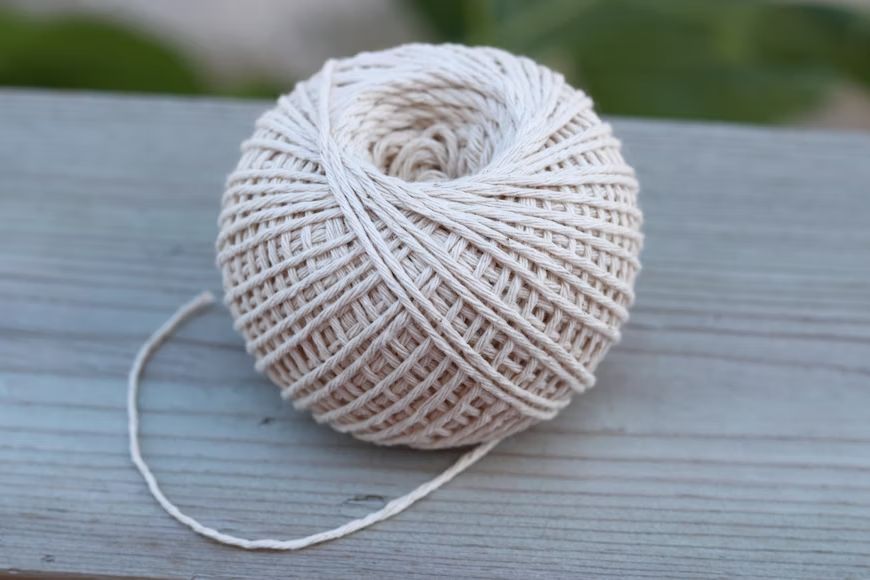
The World’s Largest Ball of Twine – Cawker City, Kansas

Image: Amie Bell

It started small. Then the neighbors added to it. Then visitors joined in. Now, it’s a Midwest legend. The World’s Largest Ball of Twine keeps growing, with a yearly "twine-a-thon" that invites everyone to contribute. It’s quirky, community-powered, and a great example of how something ordinary can become roadside-worthy.

12
The World’s Largest Collection of the World’s Smallest Versions of the World’s Largest Things – Lucas, Kansas

Image: Nik

Yes, that’s the real name. And yes, it’s every bit as whimsical as it sounds. Artist Erika Nelson created this traveling museum of tiny replicas, honoring America’s obsession with "world’s largest" attractions. It’s part satire, part celebration, and completely charming.

Explore more American facts

Choose your favorite category!

General
General

As American as apple pie—the very best America has to offer!

Culture
Culture

Delve into the astounding richness of American lore.

Geography
Geography

Hop in and explore vast and diverse American landscapes.

History
History

Discover the key moments that shaped the United States.