Geography Geography 5 min read

Exploring the underworld

Would you explore a cemetery's catacombs? 10 underground must-sees

Image: Blake Cheek

We sometimes forget there is a whole world going on beneath our feet. Hidden from view lie underground marvels like caves hosting weddings, crystal-clear freshwater pools, and sidewalks of cities that no longer exist. Here, we explore 10 must-see underground sites in the U.S. Grab your flashlight, and let’s venture below the surface!

1
Seattle Underground City

Did you know the remnants of Seattle's original streets are still accessible? Beneath the bustling streets of modern-day Seattle lies the Underground City , a network of subterranean passageways that formed the ground level in the 1800s.

By the end of the 19th century, after the Great Seattle Fire, it was decided to rebuild the city at a higher elevation to combat frequent flooding . So, these original streets, sidewalks, and storefronts were buried, and with it, much of their history.

Guided tours take people through tunnels and ladders and retell real and eerie stories about the history of the Underground City.

2
Luray Caverns

Image: Robert Thiemann

Have you ever heard of the underground Stalacpipe Organ ? Not only is it a one-of-a-kind interaction between keyboards and cavern stalactites, but it is also the largest musical instrument in the world, according to Guinness World Records.

This instrument lives in the Luray Caverns, Virginia. It consists of an electric console that taps on these ancient stalactites of varying sizes to produce musical tones. A subterranean wonder, these caverns are also known for their extraordinary size , housing towering stalactites and stalagmites, mirrored pools, and delicate drapery-like calcite formations.

3
The Underground Gardens of Baldassare Forestiere

Image: Adrian Botica

This stunning subterranean retreat was built entirely by hand. Tucked under the sun-scorched landscape of Fresno, California, lie the Underground Gardens of Baldassare Forestiere . They are the life’s work of Baldassare Forestiere, a Sicilian immigrant who started digging in the early 1900s to escape the Central Valley's oppressive heat.

Over 40 years, drawing inspiration from ancient Roman catacombs , Forestiere carved an elaborate network of underground rooms, passageways, grottoes, and courtyards that span 10 acres.

A unique masterpiece, the gardens are open with guided tours that lead guests through beautifully designed spaces featuring skylights, arches, and alcoves. This oasis also boasts an array of fruit trees, including citrus, figs, and olives.

4
Ruby Falls

Image: Goodfreephotos_com

Colorful and breathtaking, the Ruby Falls is a geological wonder located inside Lookout Mountain near Chattanooga, Tennessee.

Hidden over 1,000 feet below the mountain's surface, this waterfall cascades 145 feet into a pool , making it one of the tallest underground waterfalls open to the public.

Visitors enter the mountain and descend via elevator. Then, they walk through stunning cave formations such as stalactites, stalagmites, and flowstone. At the waterfall chamber, multicolored lights –powered by renewable energy– illuminate the falls. Lantern-lit tours are also offered as a chance to visit the marvel with a different charm.

5
The Catacombs of Green-Wood Cemetery

Image: Joy Ernst

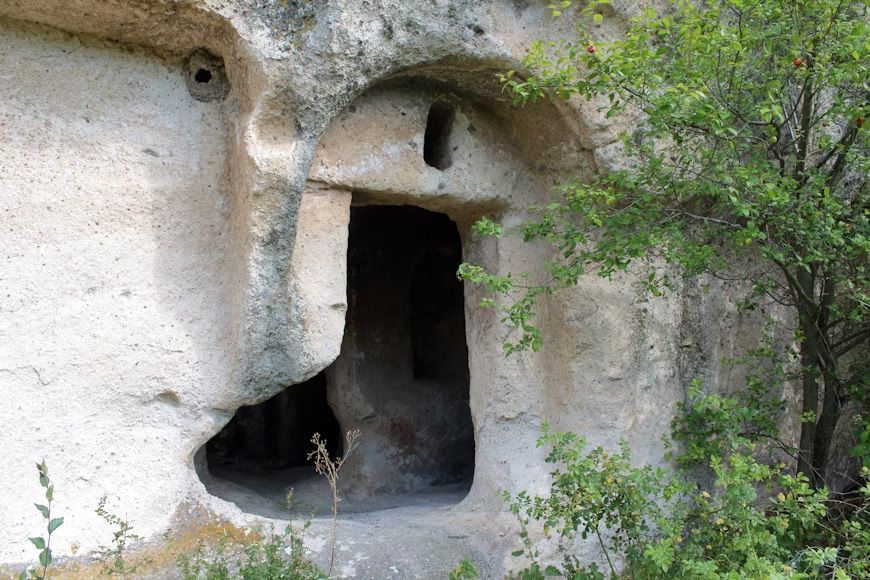
Arched tunnels of tranquil, sacred vaults lie beneath the Green-Wood Cemetery in Brooklyn, New York. Built in the mid-19th century, these catacombs were designed as a prestigious resting place for the city’s elite , prominent families.

While the catacombs are typically closed to the public, special events are sometimes organized to welcome visitors, such as art expositions, guided history tours, and candlelit tours seasoned with live music and storytelling.

Outside, where the sun does reach, await the serene landscapes and remarkable monuments of the cemetery, which is itself a National Historic Landmark .

6
The Lost Sea

Image: Roberto Nickson

The largest underground lake in America is in Tennessee. Hidden within the Craighead Caverns in Sweetwater, this enormous body of water lies in a cave system filled with fascinating formations, such as stalactites, stalagmites, and rare anthodites, also known as "cave flowers."

A National Natural Landmark, this lake marvels scientists, who are yet unaware of the exact extension of its waters. Those who visit can embark on a boat ride called "The Lost Sea Adventure," first walking inside the cavern before reaching a boat to navigate these ethereal sights.

7
Mammoth Cave National Park

Image: Sherin Jacob

The Mammoth Cave National Park is home to the longest cave system in the world . Located in central Kentucky, it extends over 420 miles of explored passages and many more likely undiscovered. Enormous chambers, underground rivers, a labyrinth of tunnels, and gypsum crystal formations can all be found at this site.

The park has been declared a UNESCO World Heritage Site and an International Biosphere Reserve. It also includes over 52,000 acres of protected land on the surface, renowned for its lush forests and diverse wildlife.

8
Carlsbad Caverns National Park

Image: Cason Asher

A large bat colony lives in the Carlsbad Caverns National Park in New Mexico, but that’s not its only charm. The park boasts over 100 caves, with its centerpiece being the immense Carlsbad Cavern.

The cavern includes the Big Room, one of the largest underground chambers in North America, spanning 8.2 acres. Visitors can descend via an emblematic natural entrance or by elevator, dropping 750 feet underground. Stalactite formations like the Giant Dome, the Hall of the White Giant, and the Chandelier are some of the caves' breathtaking highlights.

9
Indian Echo Caverns

Image: Magda Ehlers

The Indian Echo Caverns, which have been open to the public since the early 1920s, are carved into the limestone of the Appalachian Mountains. Located near Hummelstown, Pennsylvania, this site gets its name from the echoes heard within the cavern’s chambers , which were once believed to be mystical by Native American people in the area.

Unique, immersive sections of the caverns have names like the "Crystal Palace," the "Echo Room," and the "Wedding Room," where, yes, real weddings are sometimes held!

10
Wind Cave National Park

Image: Francesco Ungaro

Wind Cave National Park, located in the Black Hills of South Dakota, is one of the world’s largest caves, but that’s not what it’s most famous for. One signature sight here is the boxwork formation , a rare lattice-like pattern formed by calcite deposits.

The cave system stretches for over 140 miles, though much of it remains unexplored. Popular tours take guests through captivating features like the "Ribbon Room" and the "Crystal Palace."

Why is Wind Cave called that? Mainly due to the "wind" phenomenon that occurs at its entrance. The cave's air pressure causes the entrance to draw in or expel air, depending on atmospheric conditions.

General General 3 min read

Life finds a way

From raccoons to foxes: take a look at 12 types of "urban wildlife"

Image: jennifer uppendahl

For many Americans, seeing a black bear scratching its back on a pole in a city street is not that strange. Many mammals, birds, reptiles, and insects that eat a wide variety of foods are moving in and changing their behaviors as they learn urban survival skills.

1
Coyotes

Image: Ray Hennessy

Coyotes have a natural talent for survival, and they are built to thrive in any environment, including cities where food is readily available everywhere.

As it has been noticed multiple times, coyotes have deciphered how semaphors work and wait for the red light to cross the street.

2
Black bears

Image: Bruce Warrington

Studies have shown that female black bears living in urban areas aged one to one and a half years weighed nearly twice as much as their country counterparts. Some of those urban female bears produced cubs, while none of the rural bears of the same age reproduced.

Curiously, bears seem to know when it is trash day and will scavenge for food in trash cans on those dates specifically.

3
Raccoons

Image: Ralf Volkmer

Raccoons that live in urban environments are more exploratory than their country cousins, taking more time to investigate the squares. Some raccoons even figure out how to yank bungee cords off of trash cans .

These city animals are also more social, traveling in pairs more often than their rural relatives.

4
Bald eagles

Image: Alexas_Fotos

Believe it or not, in the 1960s, the bald eagle was on the verge of extinction due to the use of pesticides. But since those pesticides have been banned, their population has rebounded, and they're no longer on the list of endangered species.

City eagles need only a place to nest and a clean source of food, which can even be a trashcan, and they’ve figured out how to use city infrastructure like cellphone towers, bridges, and cranes along waterways .

5
Pigeons

Image: Dawood Javed

Possibly the most urban animal on the list, aside from rats, pigeons are uniquely suited to urban life. They can recognize human faces , so they know which people have fed them before.

These creatures have an incredible ability to distribute themselves, so there are never more pigeons than available food. A park with twice as much food as another park will also have twice as many pigeons.

6
Booklice

Image: Brett Jordan

Whether we see it or not, our homes are filled with insect life. One of them, booklice, has found that the starch in book bindings makes an ideal food source.

Booklice have adapted to suck the moisture directly out of the air and can live off that vapour for three weeks, avoiding dehydration.

7
Squirrels

Image: Mark Brennan

Squirrels and urban environments have gotten along for a long time now. There’s ample food and shelter, and few natural predators. They’ve learned to live in much greater densities in cities than they do in other environments, and they can tell which humans will feed them .

8
Sparrows

Image: Carlos Quintero

The sparrows that live in New York City have become night owls, staying out later to feed because the bright lights around buildings draw plenty of insects .

9
Rats

Image: Joshua J. Cotten

Almost no one would call a rat clean, but contrary to popular belief, city rats tend to carry fewer diseases and parasites than rural ones because they have less contact with livestock excrement from farms, and their human neighbors don’t harbor many parasites.

10
Ospreys

Image: KaroGraphix Photography

Ospreys have seen their numbers grow in North America partially because they have forsaken trees in favor of building their 250-pound nests on power poles, cell phone towers, channel markers , and other human-made structures.

11
Crows

Image: Veronica Dudarev

Crows are very smart creatures, and they have learned to use the city infrastructure to their advantage. These birds drop nuts and bones from great heights to crack the hard outer shells so that they can reach the food inside. City crows simply drop the previously impenetrable food into the street and let the cars crack it open .

12
Tomcods

Image: John Werner

Nature can adapt to almost anything, and tomcods are living proof of this. A very polluted segment of the Hudson River is home to these humble fish, who have adapted to its contaminated waters through genetic variations that allow them to thrive in such conditions.
Geography Geography 4 min read

Road trip time

Off the beaten path: 12 bizarre roadside wonders across the U.S.

Image: RDNE Stock project

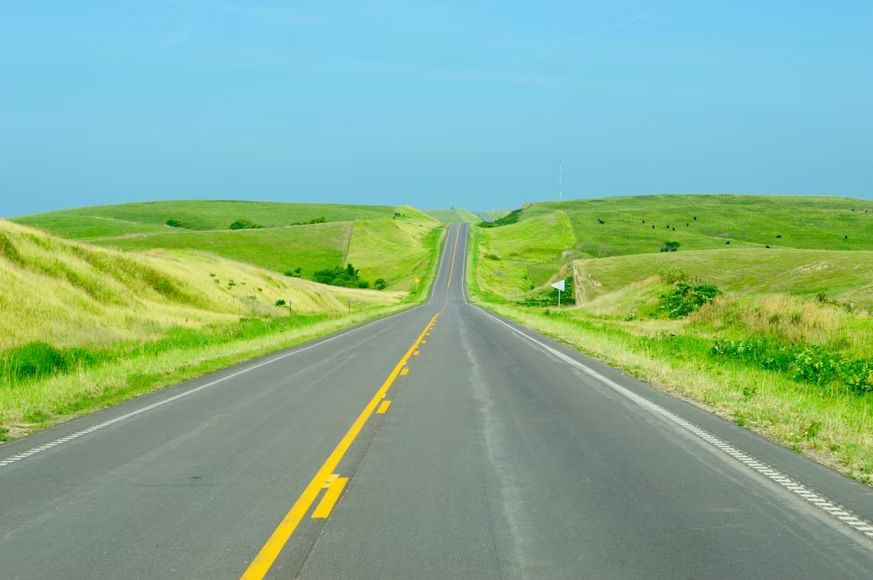
Picture this: You’re on a road trip and stumble across something so odd you have to pull over and snap a photo. Has that ever happened to you? It probably has—because that’s the magic of the American roadside attraction. It’s part charm, part mystery, and entirely unforgettable. Our highways are full of creative (and often head-scratching) stops that are well worth stretching your legs for. Here’s a look at some of the most bizarre places you’ll ever visit.

1
Carhenge – Alliance, Nebraska

Image: John Dame

Imagine driving through the Great Plains and stumbling across Stonehenge—only this version is made entirely of old cars. That’s Carhenge. Built in 1987 by artist Jim Reinders, this auto-art installation mirrors the original monument’s dimensions using vintage American cars, all painted gray. It’s history with a humorous twist, you know!

2
Salvation Mountain – Niland, California

Image: Megan Ellis

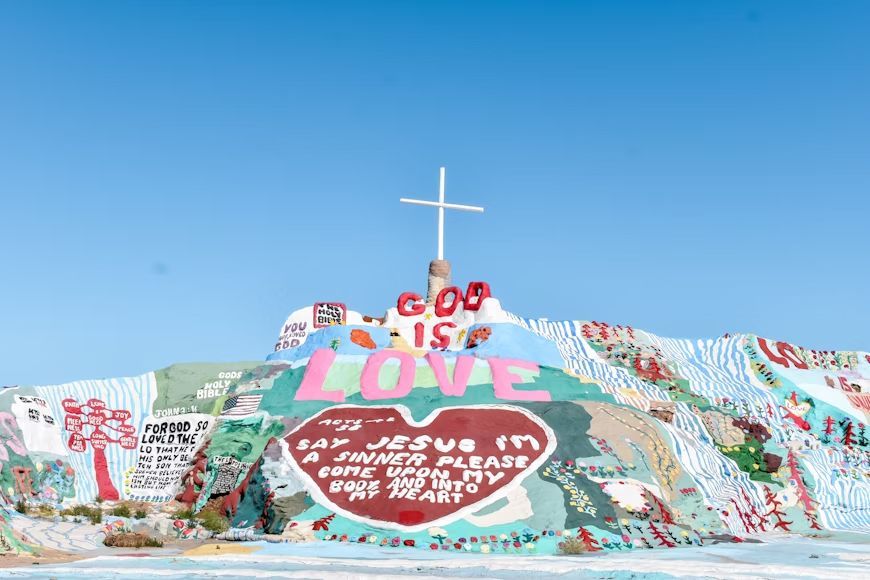
Located near the edge of the desert, Salvation Mountain is a wonder filled with color and faith. Leonard Knight spent decades slathering adobe and straw with thick coats of paint, spreading a message of love through hand-lettered Bible verses. You don’t have to be religious to appreciate the heart behind this monument—it’s pure passion on display.

3
The Enchanted Highway – Regent, North Dakota

Image: Carol Highsmith's America

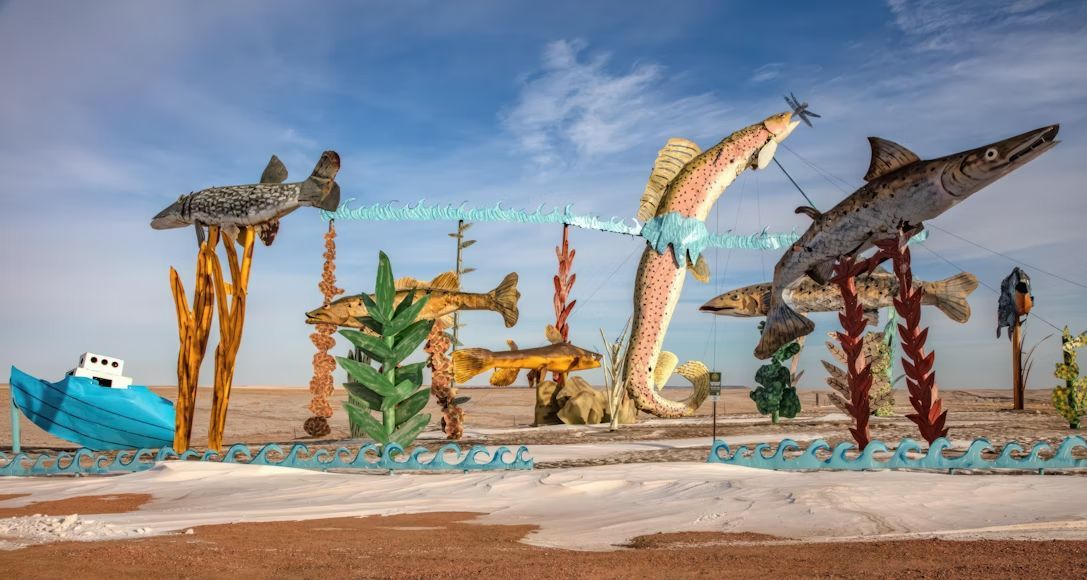
This isn’t your average country drive. The Enchanted Highway is a 32-mile stretch of open road lined with enormous metal sculptures—everything from geese in flight to grasshoppers the size of RVs. Created by Gary Greff, a small-town schoolteacher turned roadside visionary, this whimsical parade of artwork proves that a little welding—and a lot of heart—can turn even the quietest town into a road trip highlight.

4
The Paper House – Rockport, Massachusetts

Image: Unlimited Access

If you’ve ever wondered what to do with old newspapers, how about building a house? In the 1920s, engineer Elis Stenman did just that. The walls, furniture—even the curtains—are made from varnished newspapers. It’s cozy, clever, and surprisingly sturdy. Part architecture, part recycling marvel, this little New England oddity is well worth the detour.

5
The Museum of Bad Art – Boston, Massachusetts

Image: Marishka Tsiklauri

Some artwork takes your breath away. Other pieces make you laugh out loud—and that’s exactly the goal at the Museum of Bad Art. This small but mighty gallery celebrates delightfully terrible creations. It’s not about mocking; quite the opposite. It’s about finding joy in the offbeat and honoring artists who dared to create something totally different. Trust us—you’ll leave smiling.

6
The Unclaimed Baggage Center – Scottsboro, Alabama

Image: Raquel Brepohl

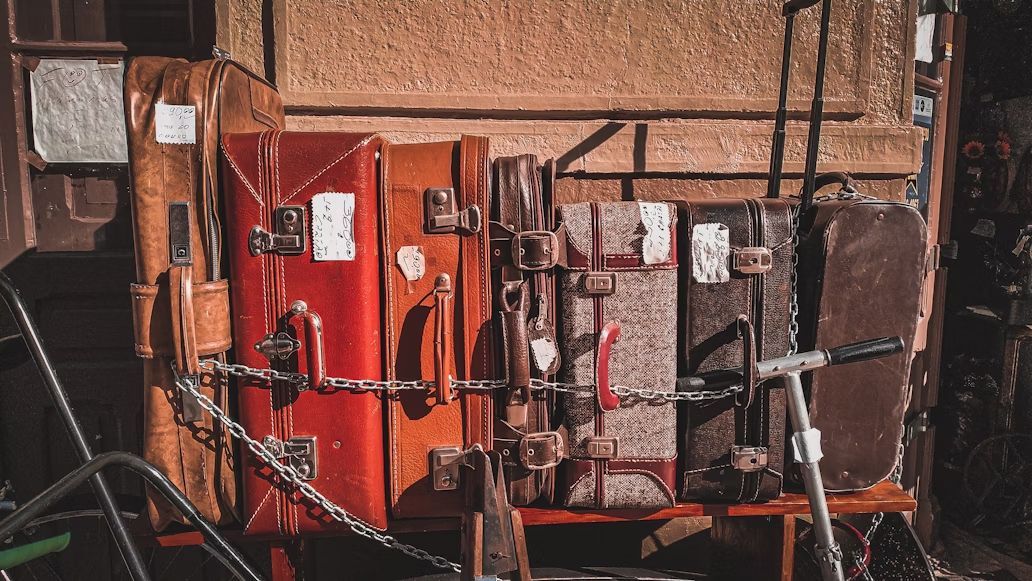
Ever wonder where your missing suitcase ended up? Chances are, it’s here. The Unclaimed Baggage Center is part retail store, part treasure hunt. Spread across 40,000 square feet, it sells items left behind at airports—from clothes and gadgets to the occasional surprise oddity. If you enjoy thrifting, this is a must-stop on your trip.

7
The Wigwam Motel – Holbrook, Arizona

Image: Johnathan Ciarrocca

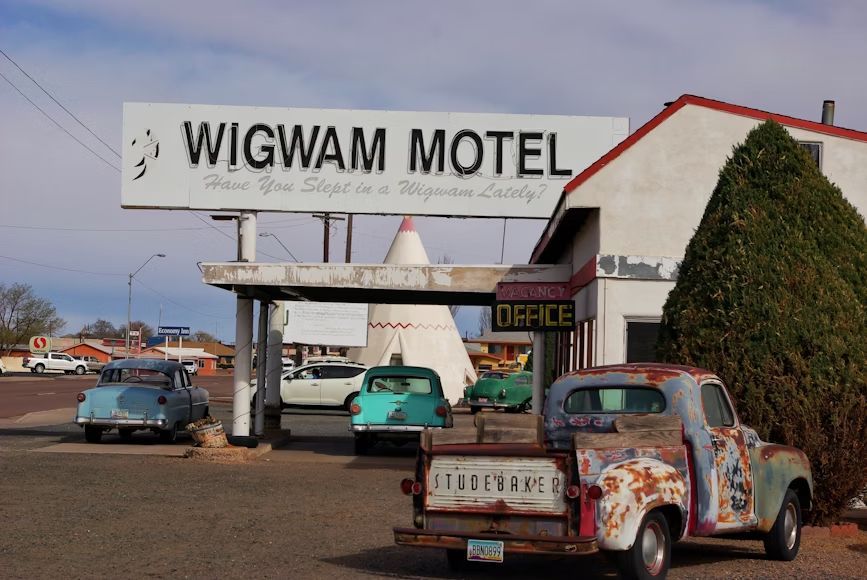
Nothing screams classic Americana like Route 66, and the Wigwam Motel delivers. Here, you’ll sleep in your very own concrete teepee. It’s one of only three surviving "Wigwam Villages" from the 1950s. It’s kitschy, it’s cozy, and it’s a nostalgic nod to the road trips of yesteryear. Want a bonus? Check out the vintage cars parked out front.

8
The House on the Rock – Spring Green, Wisconsin

Image: Cristina Glebova

Imagine a mansion crossed with a carnival funhouse—that’s The House on the Rock. Started in the 1940s by Alex Jordan Jr., this labyrinth of rooms features bizarre collections, from a giant carousel to self-playing orchestras and a hall filled with model ships. It’s overwhelming, wonderful, and completely unforgettable—a place where your inner child will be wide-eyed the entire time.

9
The Grotto of the Redemption – West Bend, Iowa

Image: Mustafa akın

Part spiritual sanctuary, part geological marvel, the Grotto of the Redemption is made of millions of stones, gems, and fossils. Started by Father Paul Dobberstein in 1912, this labor of love took over 40 years to complete. The result? A jaw-dropping series of religious scenes and structures that glitter in the sunlight. Bring your sunglasses—you’re in for a dazzling experience.

10
The UFO Watchtower – Hooper, Colorado

Image: Gabriel Tovar

For those who believe in aliens—or just love a good alien yarn—the UFO Watchtower is a must-see. Located in the San Luis Valley, a hotspot for sightings, this quirky site offers 360-degree views of the sky, a garden filled with visitor trinkets, and plenty of stories. Try it out—what if you spot a flying saucer? Let’s face it, we’re all a little curious about what’s out there.

11
The World’s Largest Ball of Twine – Cawker City, Kansas

Image: Amie Bell

It started small. Then the neighbors added to it. Then visitors joined in. Now, it’s a Midwest legend. The World’s Largest Ball of Twine keeps growing, with a yearly "twine-a-thon" that invites everyone to contribute. It’s quirky, community-powered, and a great example of how something ordinary can become roadside-worthy.

12
The World’s Largest Collection of the World’s Smallest Versions of the World’s Largest Things – Lucas, Kansas

Image: Nik

Yes, that’s the real name. And yes, it’s every bit as whimsical as it sounds. Artist Erika Nelson created this traveling museum of tiny replicas, honoring America’s obsession with "world’s largest" attractions. It’s part satire, part celebration, and completely charming.

Explore more American facts

Choose your favorite category!

General
General

As American as apple pie—the very best America has to offer!

Culture
Culture

Delve into the astounding richness of American lore.

Geography
Geography

Hop in and explore vast and diverse American landscapes.

History
History

Discover the key moments that shaped the United States.