History History 5 min read

MILLION DOLLAR ARTICLE

10 Fun Facts about American Currency

Image: Jp Valery

We bet you have never stopped to think about the dollar bills and coins you carry in your pocket, even if you do use them every day. The U.S. currency has purchasing power, of course, but it is also full of interesting facts and quirky details that are a testimony of the nation’s culture, history, and values.

Do you know how many folds it takes for a U.S. bill to tear? Do you know what the bills are made of? In this article, we’ll go through some of the most interesting facts about the history of our money. Read on and find them out!

1
Money Materials

Image: Jorge Salvador

We call them paper bills, but do they undergo the same process as any other paper? Naturally, they don’t. U.S. bills are mainly made of two materials: 75% of their composition is cotton and the 25% left is linen. Besides, they have randomly disbursed red and blue security fibers embedded in the paper.

This special blend is made by only one company in America and that is Crane & Co . The company, based in Massachusetts patented this special blend and it has been the sole provider of paper for currency since 1879.

2
Origin of the U.S. dollar symbol

Image: Paris Bilal

The dollar sign is a matter of debate. One line or two across a capital S, the symbol is today a worldwide sign for money, but where does it come from?

Even if there are several theories as to where the U.S. dollar symbol comes from, all of them agree that it was derived from the Spanish peso . When the time came, and the new nation needed its own currency, the basis was that of the Spanish coinage, which was the most common currency in the colonies before the country’s independence.

The adoption of the sign was made official in 1785, and today, the United States is not the only country that uses this symbol, Canada, Australia, and New Zealand do too!

3
Who appears on the bills?

Image: AR

Having your face forever stamped on the little piece of paper that rules the world should be a milestone in your career, right? However, there were certain rules as to who qualifies to be granted this honor .

Probably, the most surprising, yet the most logical one is that no living person can be portrayed in American currency. Since the Founding Fathers considered it unpatriotic to be portrayed while alive, this was first a tradition and then made official in an Act of Congress in 1866 .

However, contrary to popular belief, this honor is not only reserved for presidents! Anyone who contributes to the nation can be portrayed.

4
Folding Papers

Image: Emilio Takas

Bills come and go all the time. We take them out of our pockets and put them in our purses only to take them out again a few hours later and give them to the shop assistant. For a life that busy, we can only hope the paper is tough enough , right?

Well, as a matter of fact, it is. Compared to regular paper, which can only be folded 400 times before it breaks, money paper can be folded up to 8,000 times before it breaks .

It's not that you’re going to try it out and see, but you can rest assured: Fold your bills away, they can handle it!

5
Damaged Goods

Image: Jp Valery

Even if they can be folded that many times, the life of bills is limited, not to mention accidents happen. Who hasn’t sent a bill to the washing machine by chance?

So, what happens when a bill is damaged? Well, at least 50% of it has to be clearly identifiable for the bank to replace it , otherwise, you’ll just lose your money. You don’t feel like folding them much now, right?

On the other hand, and mainly due to time damage, at least 70% of the new bills are used to replace old bills . These bills, once taken out of circulation are shredded and sent to companies that can recycle them!

6
Security Features

Image: Colin Watts

Counterfeiting has been a problem ever since paper money was created and statistics about which countries counterfeited most of the money are simply shocking. But we won’t get into that.

What we will say is that thanks to technological advancement, the U.S. bill is getting harder and harder to counterfeit. In modern bills, there are at least six security features which are: UV security ribbon, raised printing, microprinting, 3D security ribbon, color-shifting ink, and traditional watermarks. Do you pay attention to them?

7
U.S. Coins

Image: Kenny Eliason

Coin production in America is in charge of the U.S. Mint and there are four production facilities across the country. They are located in Philadelphia, Denver, San Francisco, and West Point.

It is estimated that every year the Mint produces about 16 trillion coins which are valued at over $1.09 billion dollars. What is truly impressive is that Americans throw away an estimated 62 million dollars worth of coins every day!

They may not be worth much alone but don’t throw them away, all of them together can make you rich!

8
Green Ink

Image: maria pagan

Have you ever wondered why the U.S. dollar bills were green? It is not about design or aesthetics, even if we think they look pretty.

The decision to use green ink was a matter of security, in order to prevent counterfeiting. Back then, black and white ink made it easier to create photographic fakes. For that reason, green was the color of choice, and, when paper money was standardized in 1929, it had great acceptance due to the positive connotations of the color . Do you like it?

9
Andrew Jackson’s Take on Paper Money

Image: Elsa Olofsson

Every denomination has an important figure stamped on the front. In the case of the 20-dollar bill, Andrew Jackson was the chosen one.

Jackson was the seventh president of the United States and, even if it is not a rule that only presidents can be portrayed, his contributions gained him this honor.

Ironically, Jackson was not in favor of using paper money. For him, only gold and silver coins should have remained legal tender. After learning this, one can only assume he wouldn’t be so happy to be the face of the 20-dollar bill, right?

10
Facelifts and redesigns

Image: Kenny Eliason

One of the ways of keeping paper money safe and hard to counterfeit is by giving the bills new designs.

New faces were expected to appear in future bills, but, in the meantime, the changes always had to do with the proportions of the elements within each denomination. Bigger faces, rearrangement of the signatures, stuff like that.

Now, these changes and facelifts haven’t reached all the bills. 1-dollar bills haven’t been changed or redesigned ever since 1929. Why is that? Because it is not worth the trouble for criminals to counterfeit. One dollar won’t take them too far!

General General 5 min read

Justice curiosities

Have you heard these 10 fun facts about the US Supreme Court?

Image: Fine Photographics

The Supreme Court of the United States, or SCOTUS for short, is the head of Federal Justice in our country. Fancy, right? Officially created in 1789, the Supreme Court is composed of 1 Chief Justice and 8 Associate Justices who are chosen by none other than the U.S. President and confirmed by the Senate. While all this information might be well-known, there are many other interesting facts about the Court that you may never have heard before. If you want to learn these colorful details, don't miss these 10 fun facts about the highest court!

1
Double title

Image: Tingey Injury Law Firm

Holding an important office is a tremendous honor, but it can also be a stressful experience, right? Well, imagine not only serving as the President of the United States but also becoming the Chief Justice of the Supreme Court! There has only been one person in the entire history of our country who has held both positions.

We are talking about William H. Taft, who was elected as Theodore Roosevelt's successor and served as President of the United States from 1909 to 1913. But another achievement awaited him a couple of years later: he served as Chief Justice from 1921 to 1930, appointed by President Warren G. Harding.

2
Bill cover

Image: Kenny Eliason

Being featured on the front of a banknote is an honor that only a few have received. Today, we can see Presidents, Founding Fathers, and other important figures from our national history on our banknotes and coins. But did you know that U.S. paper money has also featured Supreme Court Justices?

Yes, that's right! Only two Justices of the Court have had their faces on U.S. bills: John Marshall, whose picture appeared on an early version of the $500 bill, and Salmon P. Chase, who was featured on the $10,000 bill. Today, those bills are no longer in circulation.

3
Wig: yes or no?

Image: J. Amill Santiago

Towards the end of the 18th century, some judges still kept the tradition of wearing the classic white wigs. During the first session of the U.S. Supreme Court in 1790, only one Justice showed up wearing a wig: William Cushing.

Apparently, his fashion choice was not well received. In fact, one story has it that Thomas Jefferson saw him and allegedly said, "For heaven's sake, discard the monstrous wig!" Thus, Jefferson demonstrated his willingness to distance himself from certain European customs.

4
Justice and sportsman

Image: Melissa McGovern

Serving as a Supreme Court Justice is not a job for everyone, nor is being a distinguished sportsman. Surprisingly, there was one man who did both.

Justice Byron Raymond "Whizzer" White, born in Colorado in 1917, was a lawyer, jurist, professional football player, and Supreme Court Justice. Quite a resume, huh?

White became an NFL player in 1938, but his sports career ended in 1940 due to some injuries while playing for the Detroit Lions. A couple of years later, he decided to pursue a law career, and in 1962, he became an Associate Justice of the Supreme Court after being nominated by none other than John F. Kennedy.

5
Better late than never

Image: Tim Mossholder

The U.S. Supreme Court didn't have its own fully functional building until 1935. That means the Justices operated in different locations for 145 years!

The first session of the Court, in 1790, was held in New York City at the Royal Exchange Building. Later, the Court met in Philadelphia's Independence Hall until 1800, when it finally moved to Washington, D.C. However, the capital city at that time didn't have a designated building for the Highest Court, so its members met in different spaces within the Capitol Building, even in the basement!

In the early 1930s, construction on the current Supreme Court building finally began.

6
The Highest

Image: Edgar Chaparro

When someone says "The Highest Court of the Land," they're clearly referring to the Supreme Court. However, it seems there's another "Highest Court" that many of us haven't heard of before.

Located on the fifth floor of the Supreme Court building, you can find another court: a basketball court. Since it's literally on the highest floor, the Justices playfully call it "The Highest Court of the Land." Working is important, but so is exercising!

7
Many appointees

Image: Ben Noble

Among their many other tasks and duties, U.S. presidents are also responsible for nominating justices to the Supreme Court. These nominees must then undergo the Senate confirmation process before they officially become justices.

Throughout U.S. history, some presidents have appointed more justices than others. Want to know who appointed the most? That was George Washington, with a total of 11 justices! The second place goes to Franklin D. Roosevelt, with 9 justices during his time in office. In third place, though a bit further back, is Andrew Jackson, who appointed 6 justices to the Supreme Court.

8
The youngest

Image: Bermix Studio

Among the many names that have served on the Supreme Court, some have stood out for different reasons. That is the case of Joseph Story, who was officially the Court's youngest appointee, nominated by President James Madison in 1811. How old was he? Just 32! Despite his young age, Story served as a justice for 34 years and contributed to our country's justice in many ways.

Most Supreme Court justices reach their positions with a lot of experience, often between the ages of 50 and 55, around 20 years older than the young Story.

9
A long-standing tradition

Image: Constantin Wenning

Have you heard of the famous "conference handshake"? This tradition has been part of the Supreme Court for many, many years. Do you want to know its origin and what it is all about?

The conference handshake is a long-standing practice where the justices of the Court literally shake hands with each other before taking their seats.

This custom originated at the end of the 19th century, and one of its promoters was Chief Justice Melville W. Fuller. From its beginnings, the greeting was intended to demonstrate that, while they may have differences, the justices must ensure harmony and respect above everything else.

10
Quill pens

Image: Pierre Bamin

The black robes and the handshakes are not the only traditions at the Supreme Court. There is another longstanding custom that continues to this day.

Whenever an attorney presents an oral argument before the Supreme Court for the first time, they are gifted a fancy quill pen. That's a nice and thoughtful gesture, don't you think?

This gift symbolizes the importance of their role and their responsibilities. Many choose to keep the quill pen as a souvenir that reminds them of a crucial step in their careers.

Geography Geography 5 min read

Bucket list-worthy!

Grab your backpack and prepare to visit the 12 best day hikes in the U.S.

Image: Vi Nowak

Selecting the best day hikes in a country as vast and diverse as the United States is no easy task. With thousands of incredible hikes, parks, and trail systems, choosing your next adventure can feel overwhelming. So, where should you go next? We know it’s a tough decision, so we’ve narrowed it down to 12 unique and equally amazing options. Join us as we explore the most beautiful day hikes in the U.S.!

1
Chain Lakes Loop Trailhead

Image: Pavł Polø

If you’re looking for stunning views and vibrant fall colors, Chain Lakes is the place to go. Located in Washington’s Mount Baker National Forest, this 6.5-mile trail takes about 4 to 5 hours to complete.

The Chain Lakes Loop is one of the most scenic hikes in the country, offering a glimpse of Northern Washington’s breathtaking landscapes . A paradise for outdoor explorers and landscape photographers, it features turquoise glacial lakes, rugged mountain chains, alpine meadows, snow-capped volcanic peaks, and towering conifers—it truly has it all!

2
Tom Dick and Harry Mountain

Image: Aleksey Kuprikov

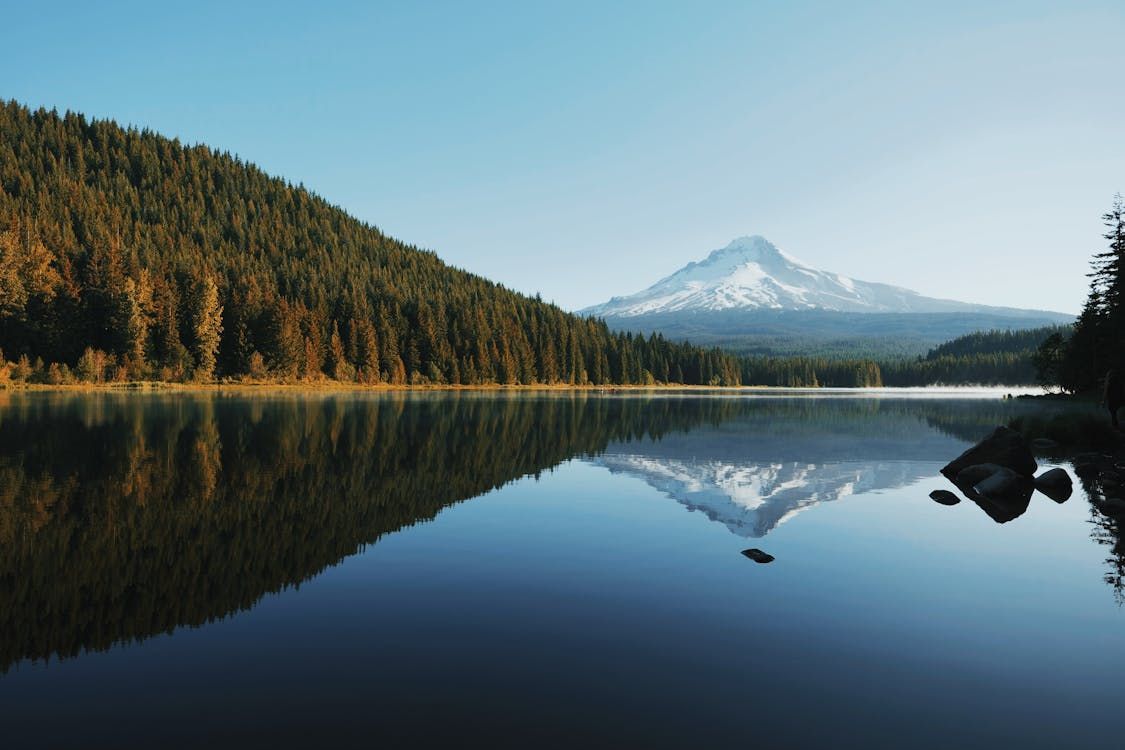
Mirror Lake, located in Oregon’s Mount Hood National Forest, is a scenic trail popular for picnicking and swimming. But for even better views, hike another mile—you’ll be rewarded with the breathtaking sights of Mount Hood, a stunning perspective of the lake below, Mount Jefferson to the south, and, on a clear day, even Mount Rainier .

Tom Dick and Harry Mountain features three distinct peaks, which inspired its name—referencing the old phrase "any Tom, Dick, or Harry," used to describe three generic people. This 7.8-mile trail takes about 4 to 5 hours to complete.

3
Miners Ridge and James Irvine Trail Loop

Image: wallace Henry

This 13-mile trail in Prairie Creek Redwoods State Park, California, is long but has relatively little elevation gain. Though it takes 6 to 9 hours to complete, the breathtaking views are totally worth it.

The Miners Ridge and James Irvine Trail Loop is one of the best places to experience the majesty of the redwoods . Staring up at these massive, ancient old-growth trees is truly awe-inspiring. But while the trees are the main attraction, they’re not the only highlight. This loop also takes you across a scenic stretch of beach—offering the perfect opportunity to cool off in the ocean midway through your hike.

4
Clouds Rest From Tenaya Lake

Image: Jess Polley

When people think of Yosemite, Half Dome usually steals the spotlight. But what if we told you there’s a less crowded hike with unique landscapes and unforgettable views?

At nearly 13 miles, the Clouds Rest Trail from Tenaya Lake is a challenging yet rewarding day hike. The trail itself is beautiful, featuring rolling terrain with several ups and downs. Reaching the summit of Clouds Rest will reward you with breathtaking 360-degree views of the national park . From the top, you can spot Tenaya Lake, the Cathedral Spires, Mount Dana, and, of course, Half Dome.

5
Angels Landing

Image: Carl Nenzen Loven

Contemplating the world from atop a jaw-dropping mountain view is a humbling experience everyone should go through at least once. At Angels Landing in Zion National Park, Utah, that sense of majesty is within reach.

Though stunning, this 4.8-mile hike is not to be taken lightly. It has some dangerous cliffs that make it a bit challenging. If you have vertigo, perhaps this trail is not for you. However, if you are in good shape and have an adventurous soul, the stunning scenery at the summit is something not to be missed.

6
Alkali Flat Trail

Image: PublicDomainPictures

For a truly unique experience, travel to White Sands National Monument in New Mexico. The breathtaking blue skies and otherworldly white dunes of the Alkali Flat Trail will transport you to a desert worthy of the best adventure films.

On regular terrain, this 5-mile hike would be considered easy. However, the desert environment and lack of shade make it far more demanding than you might expect. To stay safe, avoid hiking in the summer and be mindful of the heat.

7
Mount Bierstadt

Image: caleb weiner

Did you know Colorado is home to more than 50 fourteeners? Mountains above 14,000 feet in height are the ultimate challenge for any self-respecting hiker. Mount Bierstadt, one of the more accessible 14ers, offers a rewarding climb just a short drive from Denver.

This 7.4-mile trail provides stunning views of Mount Evans, Torreys Peak, and Grays Peak. However, no mountain should be tackled without proper preparation and planning. That said, summiting Bierstadt is an excellent test of your abilities—especially if you're gearing up for a more challenging climb.

8
Cascade Canyon Trail

Image: ELTON MENEFEE

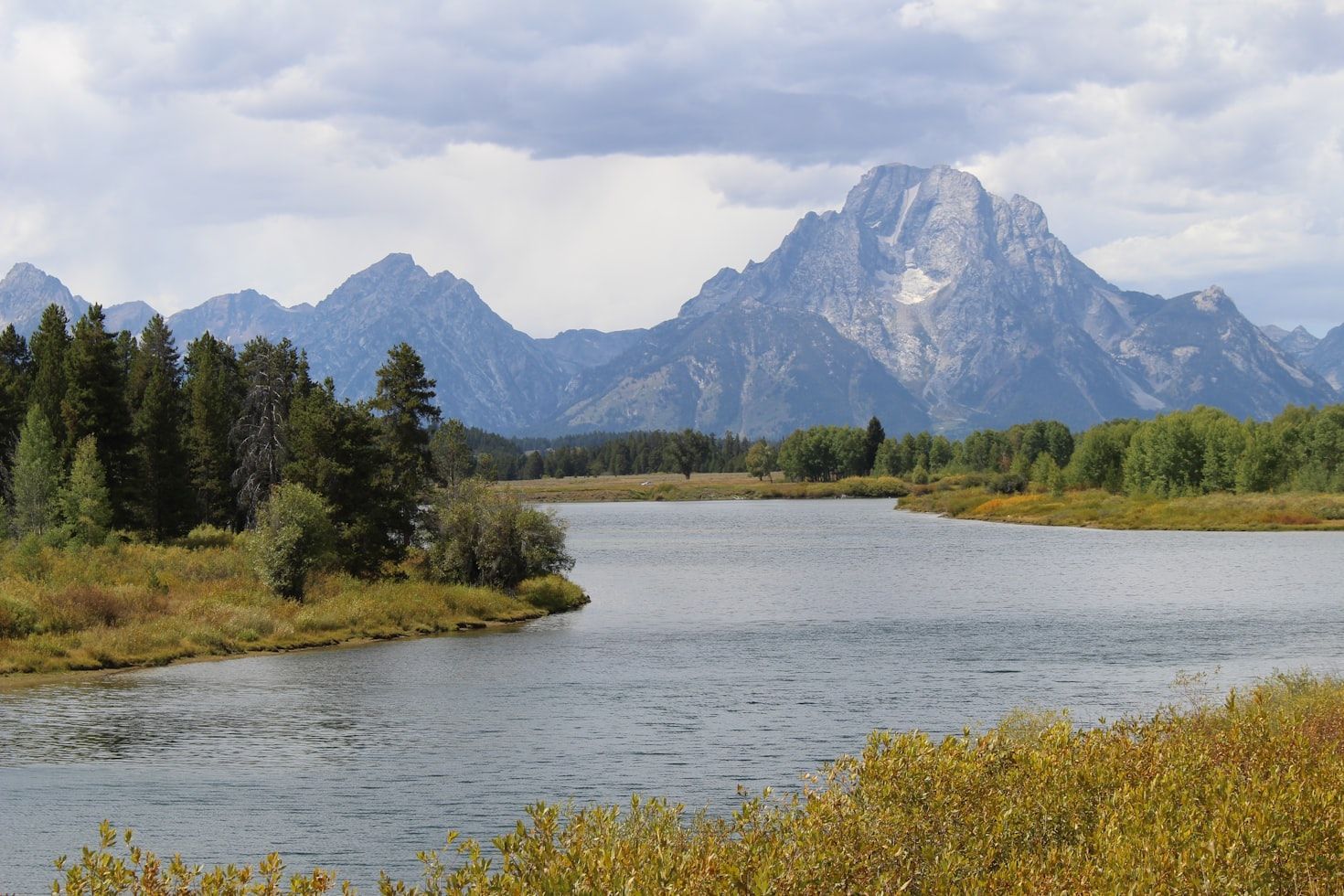
The Cascade Canyon Trail in Grand Teton National Park, Wyoming, is a must-explore for any hiker. Just a mile from Jenny Lake, the trail features two stunning landmarks: Hidden Falls and Inspiration Point.

Many visitors turn back at this point, missing out on eight more miles of breathtaking canyon scenery. If you're up for a longer trek, continue onward to experience the true grandeur of the Tetons up close. Along the way, keep an eye out for wildlife—you might even spot moose or bears!

9
Grinnell Glacier Trail

Image: Mick Kirchman

Glacier National Park is one of the most breathtaking places in America. With its turquoise lakes and jagged, arrowhead-like peaks , it stands apart from any other park in the U.S. Among its many trails, the Grinnell Glacier hike is one of the most popular in the Montana park.

This 10.5-mile trek offers stunning views, with the massive Mount Gould dominating the horizon. A word of advice: add this hike to your bucket list ASAP. Grinnell Glacier is rapidly shrinking and may disappear within the next few decades.

10
Ricketts Glen Falls Loop

Image: Venti Views

Hiking isn’t just about summiting mountains—waterfalls can offer spectacular views too! This 6.8-mile loop in Pennsylvania features more than 20 waterfalls, making it one of the best waterfall hikes in the eastern United States . While some trails lead to taller, more dramatic falls, few offer the sheer number and variety found here.

Each waterfall is unique and beautiful in its own way, ranging from 15 to 50 feet in height, with the tallest reaching nearly 100 feet. But that’s not all—along this trail, you’ll also encounter fascinating rock formations and ancient old-growth forests.

11
Giant Mountain

Image: Ty Finck

Although New England peaks are only a third the height of the Rockies, East Coast hikes can be even more challenging due to their rugged trails, steep descents, and tricky terrain. Tackling Giant Mountain in the Adirondack High Peaks Wilderness is no small feat.

This New York trail takes 4 to 6 hours to complete, but the effort is well worth it. You’ll be rewarded with breathtaking views and a picturesque forest , making it a must-visit for those confident in their ability to take on a strenuous climb.

12
Precipice Trail

Image: Raphael Assouline

With its rocky cliffs and oceanside forests , Maine’s Acadia National Park offers a hiking experience unlike any other in the eastern United States. While all of its rugged peaks provide stunning views, no trail in Acadia is as memorable—or as challenging—as the Precipice Trail.

Despite the trail’s short length (just 2.6 miles), this is a challenging hike not recommended if you have a fear of heights. Once you reach the summit of Champlain Mountain, after nearly a thousand feet of climbing, you will be rewarded with sprawling views looking out over the park, Frenchman Bay, and the Mount Desert Narrows stretching out to the Atlantic.

Explore more American facts

Choose your favorite category!

General
General

As American as apple pie—the very best America has to offer!

Culture
Culture

Delve into the astounding richness of American lore.

Geography
Geography

Hop in and explore vast and diverse American landscapes.

History
History

Discover the key moments that shaped the United States.