General General 4 min read

Behind the banners

11 U.S. state flags and their hidden meanings
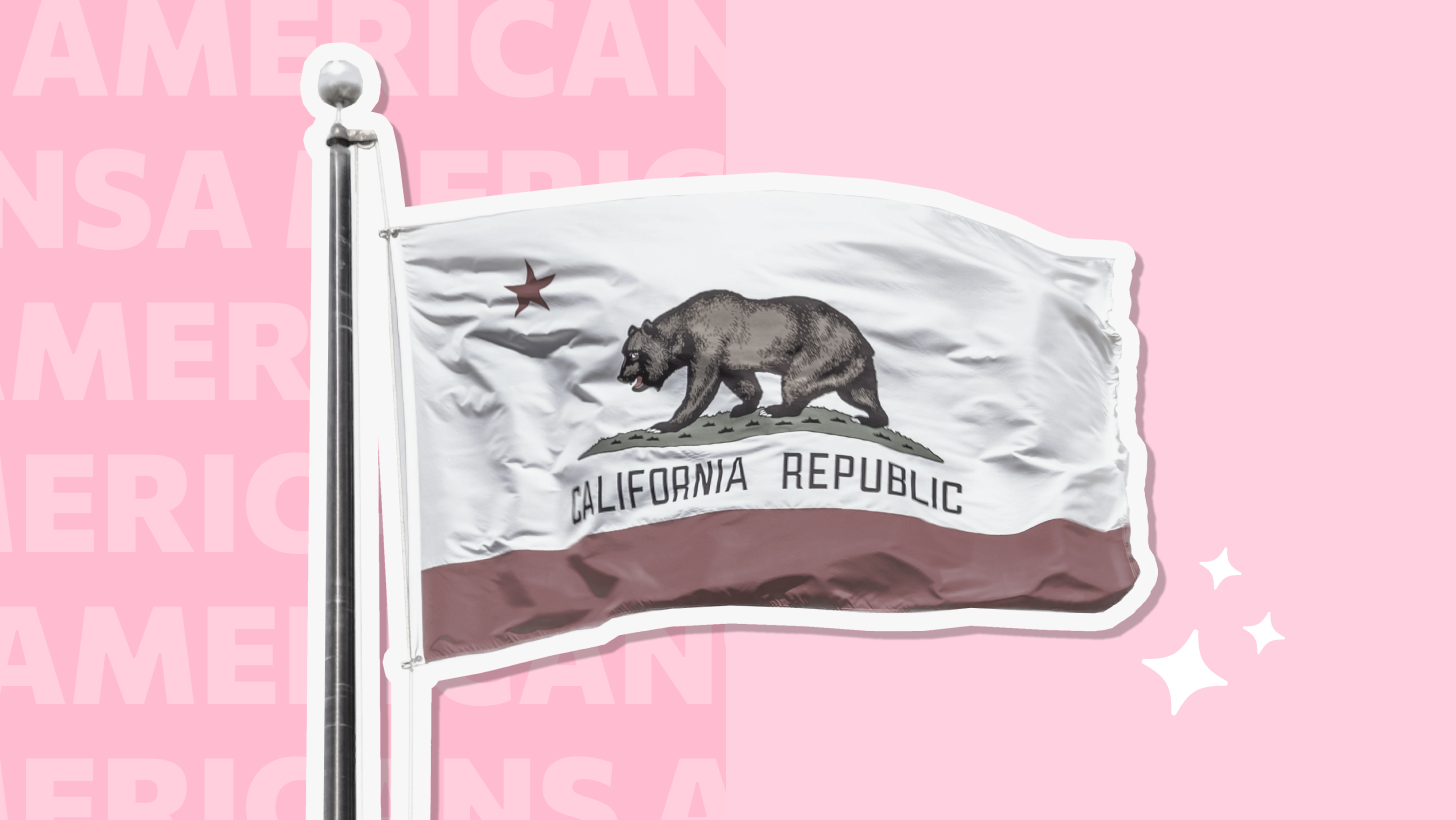
Image: Drei Kubik

Flags are more than mere symbols—they tell stories, capturing the history, pride, and values of each state they represent. Every element, from colors to symbols, was thoughtfully chosen to convey a message tied to the spirit of the state. Join us on a journey across the country as we explore 11 unique state flags and the rich stories behind them.

1
Texas

Image: Joshua J. Cotten

Also known as the Lone Star, Texas’ flag features a single star on a vertical blue stripe, representing the state’s strong independent spirit. The red stripe represents courage, while the white stripe stands for purity.

In fact, the current design was adopted in 1839 during the Republic of Texas, echoing the state's history as an independent republic before joining the Union in 1845.

2
California

Image: Lesli Whitecotton

California's flag features a grizzly bear, a symbol of strength and independence. The star represents California's status as a republic in 1846 during the Bear Flag Revolt, and the red stripe signifies courage.

Interestingly, the bear depicted on the 1911 version of the flag is said to have been inspired by the last California grizzly bear held in captivity.

3
Arizona

Image: Denisse Leon

Arizona’s flag features a golden star surrounded by red and gold rays, symbolizing both the state’s arid landscape and copper mining industry. The blue and red colors are the same shade used on the flag of the United States.

The star commemorates Arizona’s statehood, achieved in 1912, while the thirteen rays symbolize the original Thirteen Colonies.

4
Colorado

Image: Courtney Cook

Colorado’s flag features blue, white, red, and yellow with a bold "C" encircling a golden disk. The blue symbolizes the sky, gold represents the state’s abundant sunshine, white the snowcapped Rockies, and red the "ruddy" earth.

The gold and white elements also honor Colorado’s gold and silver mining industries. Officially adopted in 1911, the flag stands as a tribute to the state’s natural beauty and pioneering heritage.

5
Florida

Image: Karl Callwood

Florida’s flag features a red cross with the state seal at the intersection. The cross represents the state's Spanish heritage, as it was originally founded by Spanish explorers.

The seal depicts a shoreline where a Seminole woman spreads flowers. While some suggest the woman represents the historical heroine Milly Francis, there is no evidence to support this theory. A Sabal palm and a steamboat complete the scene, reflecting Florida's vibrant scenery.

6
Maryland

Image: Gary Cole

Maryland’s flag stands out with its bold black and gold pattern, divided into quarters. The design incorporates elements from the family crest of the Calverts, the state’s founding family.

During the colonial era, Maryland used only the gold and black Calvert arms. The colors fell out of use after American independence but were reintroduced in 1854.

7
South Carolina

Image: Kelly

South Carolina’s flag features a white palmetto tree on a blue field, with a crescent moon beside it. The roots of this design have existed in some form since 1775, being based on one of the first American Revolutionary War flags.

An early version of this flag, known as the Moultrie Flag, was famously flown during the defense of a fortress on Sullivan's Island against the British fleet. The palmetto tree was later added as a symbol of the island’s successful defense.

8
Tennessee

Image: Brandon Hooper

Tennessee’s flag features three stars arranged in a triangular pattern, symbolizing the three regions of the state —East, Middle, and West Tennessee. The red, white, and blue colors align with the state’s commitment to unity and its place in the Union.

The current version, designed by Colonel Le Roy Reeves, was adopted in 1905. However, an earlier version already aimed to represent the state's three distinct regions with three slanted bars of red, white, and blue.

9
Hawaii

Image: little plant

Hawaii’s flag is unique among U.S. state flags. It features a Union Jack in the upper left corner, reflecting the historical ties between Britain and the Hawaiian Kingdom. It was first adopted in the early 19th century by the Kingdom of Hawaii and retained when the state joined the U.S. in 1959.

The eight horizontal stripes represent the eight main islands of Hawaii: Hawaiʻi, Maui, Kahoʻolawe, Lānaʻi, Molokaʻi, Oʻahu, Kauaʻi, and Niʻihau.

10
Indiana

Image: Lucas Beck

Indiana’s flag features a large gold torch, with 19 smaller stars surrounding it, representing Indiana's status as the 19th state to join the Union. The torch symbolizes enlightenment and the path to progress.

Adopted in 1917, the flag’s design was chosen through a contest offering a cash prize. The winning design, created by Paul Hadley of Mooresville, Indiana, was selected as the official flag with only minor modifications.

11
Maine

Image: Aubrey Odom

Maine’s flag features a shield with a pine tree at its center, flanked by a farmer and a sailor, representing the state’s agricultural and maritime heritage. The North Star above the shield symbolizes guidance and Maine’s motto, "Dirigo," meaning "I Lead."

The pine tree is a nod to Maine’s nickname as the Pine Tree State. Adopted in 1909, the flag’s design emphasizes Maine’s strong connection to its natural resources.

Geography Geography 4 min read

Road trip time

Off the beaten path: 12 bizarre roadside wonders across the U.S.

Image: RDNE Stock project

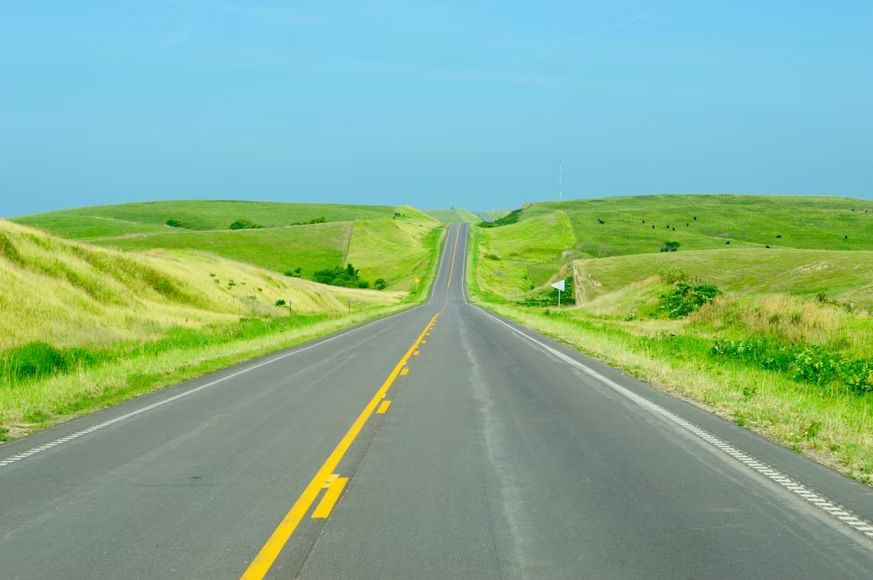
Picture this: You’re on a road trip and stumble across something so odd you have to pull over and snap a photo. Has that ever happened to you? It probably has—because that’s the magic of the American roadside attraction. It’s part charm, part mystery, and entirely unforgettable. Our highways are full of creative (and often head-scratching) stops that are well worth stretching your legs for. Here’s a look at some of the most bizarre places you’ll ever visit.

1
Carhenge – Alliance, Nebraska

Image: John Dame

Imagine driving through the Great Plains and stumbling across Stonehenge—only this version is made entirely of old cars. That’s Carhenge. Built in 1987 by artist Jim Reinders, this auto-art installation mirrors the original monument’s dimensions using vintage American cars, all painted gray. It’s history with a humorous twist, you know!

2
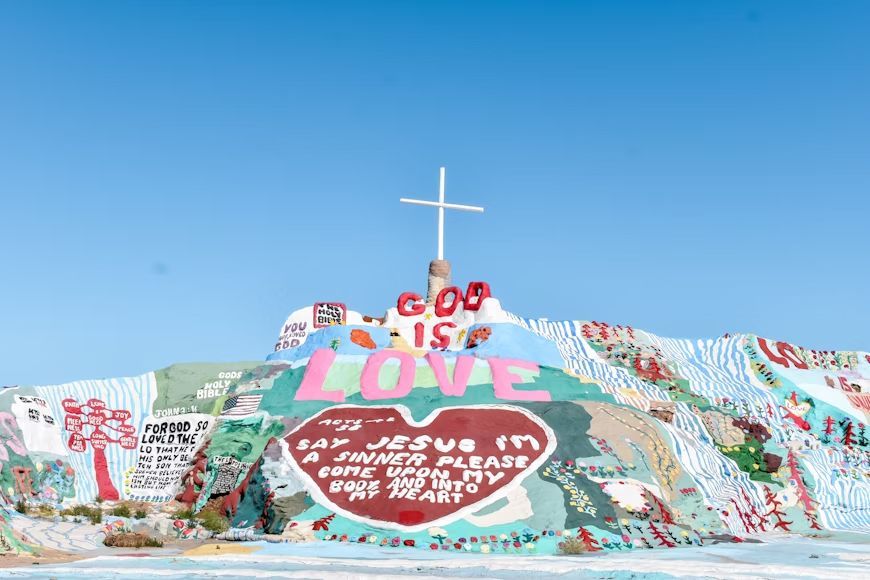
Salvation Mountain – Niland, California

Image: Megan Ellis

Located near the edge of the desert, Salvation Mountain is a wonder filled with color and faith. Leonard Knight spent decades slathering adobe and straw with thick coats of paint, spreading a message of love through hand-lettered Bible verses. You don’t have to be religious to appreciate the heart behind this monument—it’s pure passion on display.

3
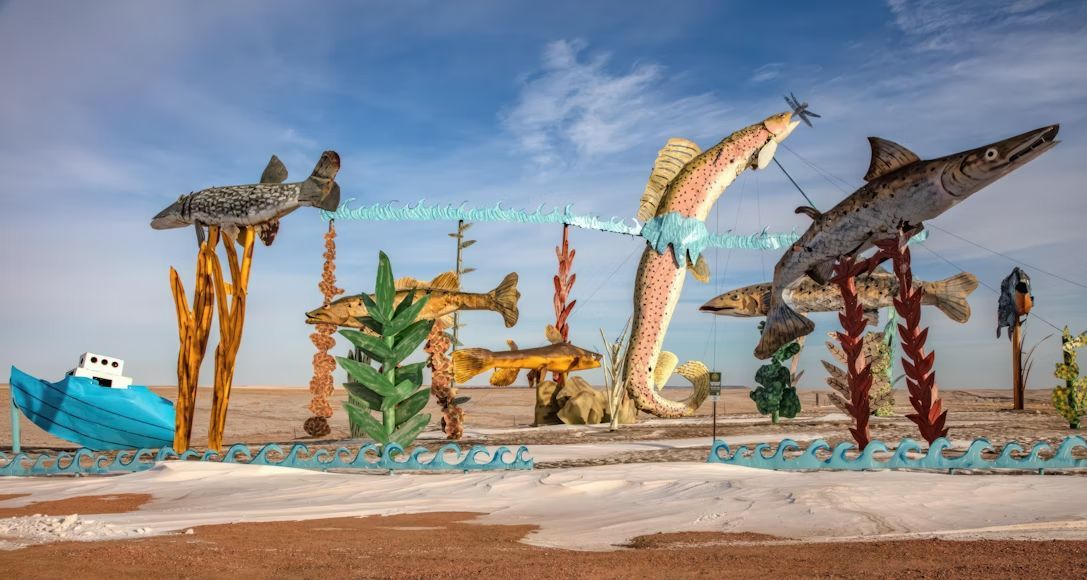
The Enchanted Highway – Regent, North Dakota

Image: Carol Highsmith's America

This isn’t your average country drive. The Enchanted Highway is a 32-mile stretch of open road lined with enormous metal sculptures—everything from geese in flight to grasshoppers the size of RVs. Created by Gary Greff, a small-town schoolteacher turned roadside visionary, this whimsical parade of artwork proves that a little welding—and a lot of heart—can turn even the quietest town into a road trip highlight.

4
The Paper House – Rockport, Massachusetts

Image: Unlimited Access

If you’ve ever wondered what to do with old newspapers, how about building a house? In the 1920s, engineer Elis Stenman did just that. The walls, furniture—even the curtains—are made from varnished newspapers. It’s cozy, clever, and surprisingly sturdy. Part architecture, part recycling marvel, this little New England oddity is well worth the detour.

5
The Museum of Bad Art – Boston, Massachusetts

Image: Marishka Tsiklauri

Some artwork takes your breath away. Other pieces make you laugh out loud—and that’s exactly the goal at the Museum of Bad Art. This small but mighty gallery celebrates delightfully terrible creations. It’s not about mocking; quite the opposite. It’s about finding joy in the offbeat and honoring artists who dared to create something totally different. Trust us—you’ll leave smiling.

6
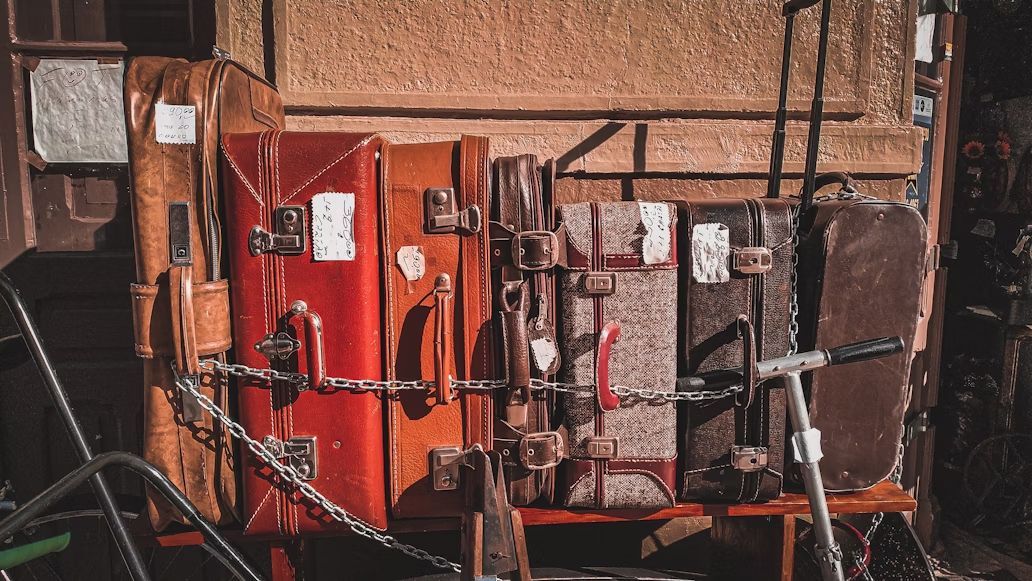
The Unclaimed Baggage Center – Scottsboro, Alabama

Image: Raquel Brepohl

Ever wonder where your missing suitcase ended up? Chances are, it’s here. The Unclaimed Baggage Center is part retail store, part treasure hunt. Spread across 40,000 square feet, it sells items left behind at airports—from clothes and gadgets to the occasional surprise oddity. If you enjoy thrifting, this is a must-stop on your trip.

7
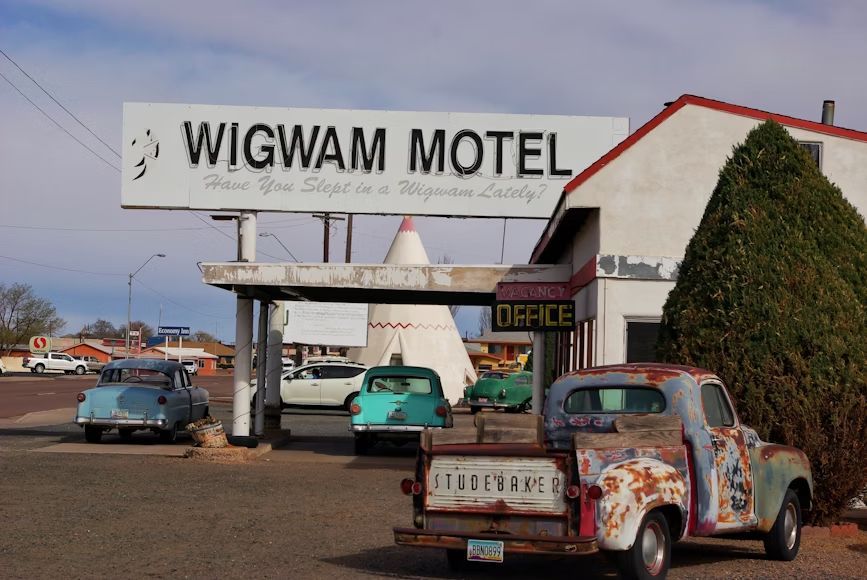
The Wigwam Motel – Holbrook, Arizona

Image: Johnathan Ciarrocca

Nothing screams classic Americana like Route 66, and the Wigwam Motel delivers. Here, you’ll sleep in your very own concrete teepee. It’s one of only three surviving "Wigwam Villages" from the 1950s. It’s kitschy, it’s cozy, and it’s a nostalgic nod to the road trips of yesteryear. Want a bonus? Check out the vintage cars parked out front.

8
The House on the Rock – Spring Green, Wisconsin

Image: Cristina Glebova

Imagine a mansion crossed with a carnival funhouse—that’s The House on the Rock. Started in the 1940s by Alex Jordan Jr., this labyrinth of rooms features bizarre collections, from a giant carousel to self-playing orchestras and a hall filled with model ships. It’s overwhelming, wonderful, and completely unforgettable—a place where your inner child will be wide-eyed the entire time.

9
The Grotto of the Redemption – West Bend, Iowa

Image: Mustafa akın

Part spiritual sanctuary, part geological marvel, the Grotto of the Redemption is made of millions of stones, gems, and fossils. Started by Father Paul Dobberstein in 1912, this labor of love took over 40 years to complete. The result? A jaw-dropping series of religious scenes and structures that glitter in the sunlight. Bring your sunglasses—you’re in for a dazzling experience.

10
The UFO Watchtower – Hooper, Colorado

Image: Gabriel Tovar

For those who believe in aliens—or just love a good alien yarn—the UFO Watchtower is a must-see. Located in the San Luis Valley, a hotspot for sightings, this quirky site offers 360-degree views of the sky, a garden filled with visitor trinkets, and plenty of stories. Try it out—what if you spot a flying saucer? Let’s face it, we’re all a little curious about what’s out there.

11
The World’s Largest Ball of Twine – Cawker City, Kansas

Image: Amie Bell

It started small. Then the neighbors added to it. Then visitors joined in. Now, it’s a Midwest legend. The World’s Largest Ball of Twine keeps growing, with a yearly "twine-a-thon" that invites everyone to contribute. It’s quirky, community-powered, and a great example of how something ordinary can become roadside-worthy.

12
The World’s Largest Collection of the World’s Smallest Versions of the World’s Largest Things – Lucas, Kansas

Image: Nik

Yes, that’s the real name. And yes, it’s every bit as whimsical as it sounds. Artist Erika Nelson created this traveling museum of tiny replicas, honoring America’s obsession with "world’s largest" attractions. It’s part satire, part celebration, and completely charming.

Geography Geography 5 min read

MONUMENTAL TRIBUTES

Legacy of valor: 10 powerful U.S. military monuments you need to see

Image: Chad Stembridge

Across the country, America's military history is etched in monumental tributes of stone, bronze, and steel. These imposing structures honor our collective past, as well as the bravery and sacrifice of those who served, embodying the enduring spirit of our nation. Join us on a journey through some of the most awe-inspiring military monuments in the U.S., each a lasting testament to courage and patriotism.

1
Arlington National Cemetery, Virginia

Image: The Silverdalex

Located in an area already filled with memorials, Arlington National Cemetery stands out as one of the nation’s most sacred landmarks. Established during the Civil War on land confiscated from General Robert E. Lee's estate, it became the final resting place for over 400,000 brave Americans, including casualties from WWII to the Vietnam War.

At its heart lies the Tomb of the Unknown Soldier, a continuously guarded monument that symbolizes the sacrifices of all unidentified fallen heroes. Notably, the graves of President John F. Kennedy and Jacqueline Kennedy are among the most visited sites in the cemetery.

2
Vietnam Veterans Memorial, Washington, D.C.

Image: Ryan Stone

Popularly known as the Vietnam Memorial, this U.S. national landmark located in Washington, D.C., honors those who served during the Vietnam War. Its centerpiece consists of two imposing black granite walls, engraved with the names of over 58,000 individuals who died or went missing while serving their country in Vietnam and Southeast Asia.

Designed by architect Maya Lin, the monument is strikingly powerful in its minimalism, evoking deep emotions through its simplicity. The site also includes the Three Soldiers statue and the Vietnam Women's Memorial.

3
Marine Corps War Memorial, Virginia

Image: Sal Cenicacelaya

Located in Arlington County, Virginia, this war memorial was inspired by the iconic 1945 photograph of six Marines raising the U.S. flag atop Mount Suribachi during the Battle of Iwo Jima. Standing 32 feet tall, the monument is an enduring symbol of courage and determination, honoring all Marines who have served since 1775.

Though the sculpture depicts a moment when the U.S. flag had 48 stars, the flag flown today is always the current version, symbolizing the memorial’s dedication to all Marines who have died in defense of the United States, regardless of the era.

4
Air Force Memorial, Virginia

Image: Yogi Panchal

Located near the Marine Corps War Memorial and Arlington Cemetery, this 270-foot-high sculpture features three stainless steel spires reaching toward the sky. It was the final project of American architect James Ingo Freed, renowned for his work with I.M. Pei and his contributions to various iconic U.S. public buildings.

The spires seem to evoke the contrails of a group of Air Force Thunderbirds performing a dramatic flight maneuver. Notably, only three of the typical four contrails are depicted, symbolizing the "missing man" formation traditionally used in Air Force funeral flyovers.

5
World War II Memorial, Washington, D.C.

Image: Joshua Woods

Featuring 56 pillars adorned with bronze laurel wreaths, each symbolizing a U.S. state or territory, this memorial honors the 16 million Americans who served in World War II. It stands as a grand tribute to the "Greatest Generation," celebrating their victories and the sacrifices they made for their country.

Interestingly, the memorial includes two subtle "Kilroy was here" engravings, a nod to the iconic symbol that became a reassuring emblem for American soldiers during the war, marking their presence and protection wherever it appeared.

6
Korean War Veterans Memorial, Washington, D.C.

Image: Joe Richmond

Dedicated in 1995, this national memorial features a haunting image of nineteen steel statues of soldiers standing in silent patrol. The memorial honors the 1.5 million Americans who served in Korea, a conflict that is sometimes referred to as the "Forgotten War."

A granite memorial wall is also part of the site, engraved with the names of U.S. military personnel and South Koreans embedded in U.S. units who died in the conflict. The monument includes the Pool of Remembrance, a tranquil 30-foot-diameter pool lined with black granite, surrounded by a grove of trees and benches, offering a peaceful place for quiet reflection.

7
National D-Day Memorial, Virginia

Image: Carol M. Highsmith, Public domain

This memorial pays tribute to the courage and sacrifice of all service members of the Allied forces on D-Day, June 6, 1944. The site prominently displays the inscription, "In Tribute to the Valor, Fidelity, and Sacrifice of Allied Forces on D-Day." Featuring a symbolic pool with a landing craft, an American soldier, and a German beach barrier, the memorial captures the essence of the immensely dangerous beach landings.

According to the National D-Day Memorial Foundation, the site is designed as a continuum of three distinct plazas, each representing a different phase of the operation—planning, execution, and victory. The centerpiece of the monument is a 44-foot-tall arch, symbolizing the triumph of the operation while surrounding elements evoke the soldiers' bravery under relentless fire.

8
U.S. Navy Memorial, Washington, D.C.

Image: Michael Afonso

The granite plaza of the Navy Memorial in Washington, D.C., is well known for its iconic Lone Sailor statue, which symbolizes all those who have served in the U.S. Navy throughout its history. The statue, crafted by sculptor Stanley Bleifeld, gazes over the Granite Sea—a map depicting the world's oceans, centered on Washington, D.C.

Flanking the memorial are two buildings, with the eastern one serving as a visitor center. This small museum often offers exhibits that explore the rich history of American sailors.

9
National Museum of the United States Army, Virginia

Image: Rob Martinez

More than just a museum, this site serves as a living memorial dedicated to the history of the U.S. Army. It honors the bravery, valor, and sacrifices of soldiers across America’s history while providing an in-depth exploration of the nation’s oldest and largest military branch.

Opened on November 11, 2020, the museum’s mission is to honor America’s soldiers, preserve Army history, and educate the public about the Army's role in American history. The facility also includes spaces for ceremonies, reenactments, lectures, educational programs, and reunions, making it a dynamic hub for both remembrance and learning.

10
USS Arizona Memorial, Hawaii

Image: Tim Mossholder

This solemn memorial rests above the sunken remains of the USS Arizona in Pearl Harbor, a pivotal site in American history. It honors the 1,177 crew members who lost their lives during the Japanese attack on December 7, 1941.

The majestic white structure symbolizes peace and remembrance, while the wall of names reminds us of the individual stories of bravery and sacrifice of those who paid the ultimate price for our freedom. A profoundly evocative monument, it stands as a testament to national resilience and unity in the face of adversity.

Explore more American facts

Choose your favorite category!

General
General

As American as apple pie—the very best America has to offer!

Culture
Culture

Delve into the astounding richness of American lore.

Geography
Geography

Hop in and explore vast and diverse American landscapes.

History
History

Discover the key moments that shaped the United States.