Culture Culture 5 min read

Spooky icons

Are you brave enough to read about these terrifying horror characters?

Image: Jamaal Hutchinson

October is definitely the spookiest month of the year. With the advent of the 10th month, a myriad of scary characters appear everywhere to celebrate Halloween! This ghostly yet fun holiday is at the center of many of our warmest memories. Who didn’t have a lovely time trick-or-treating with friends, looking sharp and dashing in an amazing costume? However, Halloween is also the time for scary movies—a time to huddle together in front of the sofa and tune into a bloodcurdling film that will keep us up all night. With that in mind, we have decided to pay tribute to 10 of the most terrifying horror characters of all time. While definitely scary, these monsters have truly earned a place in our hearts, so let’s show them a little love with this small homage. Without further ado, here’s our pick!

1
Michael Myers from Halloween

Image: norbert velescu

Who better to start this Halloween list than the main villain from Halloween ? John Carpenter’s iconic horror film not only marks the debut role of beloved actress Jamie Lee Curtis, but it also introduced the world to the terrifying Michael Myers , a murderous mental patient with a thirst for blood.

One of Michael’s most terrifying traits is his blank and unfeeling expression, provided by his chilling rubber mask. Interestingly enough, the mask itself probably wouldn’t be as scary on its own; it is a mask of Star Trek actor William Shatner , only painted white and with some traits changed in order to make it scarier.

2
Freddy Krueger from A Nightmare on Elm Street

Image: Enrique Guzmán Egas

The 1984 film A Nightmare on Elm Street is considered by many to be the quintessential slasher horror film of the ’80s, and with good reason: Wes Craven had the genius idea to turn our slumber into one of the scariest environments ever. If, for whatever reason, you feel inclined to thank the character responsible for turning our dreams into nightmares, then you can send your regards to Freddy Krueger.

Freddy’s look is definitely unforgettable: Who can overlook that stripped sweater, black fedora, and, perhaps more menacing, that sinister-looking bladed glove? This killer’s menacing image certainly sent shivers down our spines and made most of us dread going to bed.

3
Jason Vorhees from Friday the 13th

Image: Justin Campbell

Michael Myers is not the only masked menace to make it onto this list! Jason Vorhees made his first appearance in the 1980 slasher Friday the 13th , which depicted a group of campers meeting their end at Jason’s hands in the fictional Camp Crystal Lake. This towering, murderous revenant hunts teenagers at night, armed with his trusted machete and his now-iconic hockey mask.

Jason has appeared in many different films, including an entire franchise reboot in 2009. Not only that, a 2003 film pitted him against another king of the slasher genre, Freddy Krueger. Without spoiling the ending, we can honestly say that both of these horror giants prove their mettle.

4
The Thing from The Thing

Image: Robert Haverly

Don’t let this slightly vague name fool you: The Thing is one of the scariest horror characters in history. John Carpenter’s 1982 masterpiece introduced the world to this mysterious alien creature, able to shapeshift into any object imaginable.

What’s probably most terrifying about this shadowy being is that we never truly see its true form; therefore, this alien can be as terrifying as our imaginations allow it to be. However, don’t let this statement imply that we are discrediting Carpenter’s groundbreaking visual effects, as anyone who has seen any of his amazing creations can testify.

5
The Fly from The Fly

Image: Pedro Miguel Aires

Who knew that a little housefly could be so terrifying? While the original 1958 film is incredibly advanced for its time, David Cronenberg’s 1986 rendition of The Fly left an indelible mark on an entire generation with its uncanny special effects and chilling story.

In this film, Jeff Goldblum plays Seth Brundle, an eccentric scientist whose DNA gets fused with that of a fly after an experiment goes wrong. The resulting hybrid monster’s appearance is truly a remarkable tribute to the talent of this film’s makeup department, which earned them a well-deserved Academy Award.

6
Rachel McNeil from The Exorcist

Image: Kelly Sikkema

Many consider The Exorcist to be the best horror film ever made, and with good reason: not only is it bone-chilling, but it is also a wonderfully crafted film that has led it to be selected by the U.S. National Film Registry for preservation.

A big part of what made this film so incredibly terrifying was the contrast between the sweet and innocent 12-year-old Regan McNeil (wonderfully portrayed by Linda Blair) and the dark demon that possesses her. Legendary Swedish actor Max von Sydow also shines in this film, playing the titular exorcist, Father Lankester Merrin.

7
Chucky from Child’s Play

Image: Erik Mclean

This is a toy you don’t want to see lying around your house! Directed by Tom Holland, the 1988 slasher film Child’s Play features Chucky , a seemingly harmless doll possessed by the soul of a serial killer. While this might not seem particularly menacing, Academy-nominated actor Brad Dourif’s portrayal of this plastic killer truly terrified an entire generation.

The first movie was such a success that it spawned an entire franchise that’s still relevant today, with a TV series premiering in 2021. However, most fans agree that no film will ever surpass the original Child’s Play , an undisputed gem of the slasher genre.

8
The Ghostface Killer from Scream

Image: Nik

Speaking of the slasher genre, we would be remiss if we didn’t include Wes Craven’s iconic 1996 film Scream . This movie is not only terrifying, but it is also a true love letter to the entire genre: In fact, one of the first deaths in the film occurs after a character gets a question about horror trivia wrong.

A huge part of what made Scream so frightening is its antagonist. The Ghostface Killer’s main strength is that he is not a supernatural creature by any definition of the word. Not only that, this mysterious character’s presence adds a layer of intrigue to the film, as the reveal of his true identity becomes a definitive turning point in this masterpiece.

9
Pennywise from It

Image: Nong

Much like the monster from The Thing , the audience never witnesses the true form of this chilling Eldritch monster. However, the main antagonist of Stephen King’s classic novel It often dons the disguise of Pennywise, a scary clown hell-bent on terrifying the town of Derry, Maine.

To date, Pennywise has been portrayed on the big screen on two separate occasions: first by Tim Curry in the 1990 miniseries and later by Swedish actor Bill Skarsgård in the 2017 film adaptation and its 2019 sequel. In both cases, these actors were able to bring a fascinating layer of horror to a colorful figure usually associated with making people smile.

10
The Shark from Jaws

Image: Marcelo Cidrack

Granted, calling Steven Spielberg’s Jaws a horror film is probably not entirely accurate. However, we can comfortably state that the shark antagonist of this 1975 thriller truly terrified moviegoers around the world.

It is pretty hard to state the impact that this shark had, suffice to say, people at the time were incredibly scared to go back into the water due to this movie. Fun fact: Did you know that the shark has a name? Well, a nickname at least: it was called "Bruce" by the film crew, after the name of Spielberg’s lawyer.

Geography Geography 5 min read

Streets ahead

City hearts: The 10 most iconic neighborhoods in America

Image: Breno Assis

America’s history comes alive in its bustling streets and ever-expanding urban landscapes. But what truly pumps life into the heart of these vibrant cities are their neighborhoods—where people meet, live, work, and thrive. These communities are as diverse as our nation's cultural roots, offering a window into the inclusiveness and energy that define American society. From the jazz beats of New Orleans to the legendary avenues of Harlem, let’s take a journey through 10 iconic American neighborhoods that—each in its own way—embody the spirit of our country!

1
French Quarter – New Orleans, LA

Image: João Francisco

Also known as the Vieux Carré ("Old Square" in English), the French Quarter is the oldest neighborhood in New Orleans. Established in 1718 by the city’s founders, the neighborhood is now famous for its vibrant music scene—particularly jazz, which was born in its streets and clubs.

Architecturally, the French Quarter is characterized by a blend of Spanish and French colonial influences, with wrought-iron balconies and colorful buildings lining the streets. Jackson Square and St. Louis Cathedral remain central landmarks, standing as reminders of the city’s rich European history.

2
Harlem – New York City, NY

Image: John Money

Harlem is a neighborhood in Upper Manhattan known for its African American culture and rich immigration history. Originally founded as a Dutch settlement around 1658, it was named after the city of Haarlem in the Netherlands. Harlem's complex history has been defined by a series of economic boom-and-bust cycles, with significant population shifts accompanying each cycle.

Successive waves of immigration populated its streets with people from all over the world, including Jewish and Italian Americans in the 19th century and African American residents in the 20th century. The Harlem Renaissance of the 1920s and 1930s cemented the neighborhood's fame, giving rise to figures like Louis Armstrong and Duke Ellington, and helping to shape American popular culture.

3
Beverly Hills – Los Angeles, CA

Image: David Vives

Although technically a suburb of Los Angeles, with distinct neighborhoods of its own, Beverly Hills is still a somewhat closed-knit community, known for its opulent homes and celebrity residents. Originally settled in 1828, the area began as an agricultural community centered around Rancho Rodeo de las Aguas, a Mexican-era land grant.

In 1914, a group of investors, initially searching for oil, discovered water instead and decided to develop the area into a town. By the 1920s, Beverly Hills had become synonymous with wealth and luxury, attracting movie stars like Douglas Fairbanks and Mary Pickford, who built lavish estates and cemented the area as a celebrity haven.

4
North End – Boston, MA

Image: Zoshua Colah

Boston's North End is the city’s oldest residential neighborhood, dating back to the 1630s. It played a crucial role in the American Revolution, with notable figures like Paul Revere building their homes there. The Old North Church, where the famous "One if by land, two if by sea" signal was sent, also stands as a landmark of the city’s revolutionary heritage.

The narrow streets and historic buildings offer visitors a glimpse into colonial America, making it one of Boston’s top tourist destinations. The North End is also renowned for its Italian heritage, which took root in the early 1900s, and for hosting the annual Feast of St. Anthony, a tradition dating back over a century.

5
Hollywood – Los Angeles, CA

Image: Jeremy Bishop

Hollywood is arguably the world’s most famous neighborhood when it comes to film and entertainment. Founded in the late 1800s, it quickly became the movie capital of the world with the establishment of the Nestor Film Company in 1911, the first of many studios to call Hollywood home.

Its most iconic landmark, the Hollywood Sign, was originally created in 1923 as an advertisement for a real estate development but has since evolved into a universal symbol of the film industry. While many production studios have relocated over the years, Hollywood remains synonymous with celebrity and filmmaking. Each year, millions of visitors flock to the Hollywood Walk of Fame and explore the streets where countless film legends started their careers.

6
Little Italy – New York City, NY

Image: Alex Haney

Little Italy, located in lower Manhattan, was established in the late 19th century by Italian immigrants who brought their culture, cuisine, and traditions to New York. The neighborhood quickly became a vibrant center of Italian-American life , with bustling markets, restaurants, and festivals.

Though urban development has reduced the original neighborhood to just five blocks, Little Italy still retains its old charm. Iconic spots like Lombardi’s, America’s first pizzeria, continue to draw crowds, while the annual Feast of San Gennaro—a tradition since 1926—celebrates the rich heritage of the community.

7
Chinatown – San Francisco, CA

Image: Kevin Vision

San Francisco’s Chinatown is not only the oldest but also one of the largest Chinese enclaves in North America —and even outside of Asia. Established in 1848, it holds significant historical and cultural importance, playing an important role during the California Gold Rush and the construction of the Transcontinental Railroad.

Today, Chinatown is celebrated for its vibrant markets, distinctive pagoda-style architecture, and lively Chinese New Year festivities. Spanning 24 blocks, it remains a crucial cultural and commercial hub, drawing both tourists and locals with its authentic cuisine and historic landmarks.

8
Hyde Park – Chicago, IL

Image: Manta X

Best known as the home of the University of Chicago, Hyde Park has long been a hub for intellectuals, politicians, and social movements on Chicago’s South Side. Originally developed as a retreat for the city's affluent residents, the neighborhood is also known for its numerous museums and religious institutions, including the famous Museum of Science and Industry.

Hyde Park was also the site of the 1893 World's Columbian Exposition, where millions of visitors were introduced to groundbreaking innovations, such as the first Ferris wheel. Today, it remains one of Chicago’s most diverse neighborhoods, having been home to notable figures like President Barack Obama.

9
Beacon Hill – Boston, MA

Image: Leslie Cross

Beacon Hill is one of Boston’s most picturesque neighborhoods, known for its Federal-style row houses and gaslit streets. Established in the early 1800s, it quickly became a haven for the city's elite, featuring homes designed by notable architects of the era, including Charles Bulfinch.

Beacon Hill also played a significant role in the abolitionist movement, with prominent figures like Frederick Douglass residing in the area. Adding to its architectural charm, the Massachusetts State House, also designed by Bulfinch, crowns Beacon Hill with its stunning golden dome.

10
Little Havana – Miami, FL

Image: Kian Lem

Little Havana in Miami is the heart of Cuban-American culture in the United States. Home to Cuban exiles and Latin American immigrants, the neighborhood's main street, Calle Ocho, is famous for its colorful murals, Cuban cafés, and lively music. Each year, the Calle Ocho Festival, part of the larger Carnaval Miami celebration, draws thousands of visitors.

A symbol of cultural integration, Little Havana features several significant landmarks, including the historic Tower Theater, which has served as a cultural bridge for newly arrived immigrants by offering films in both English and Spanish.

Geography Geography 5 min read

America’s Mainstreet

Drive across America with these 10 facts about Route 66!

Image: Vicky McLain

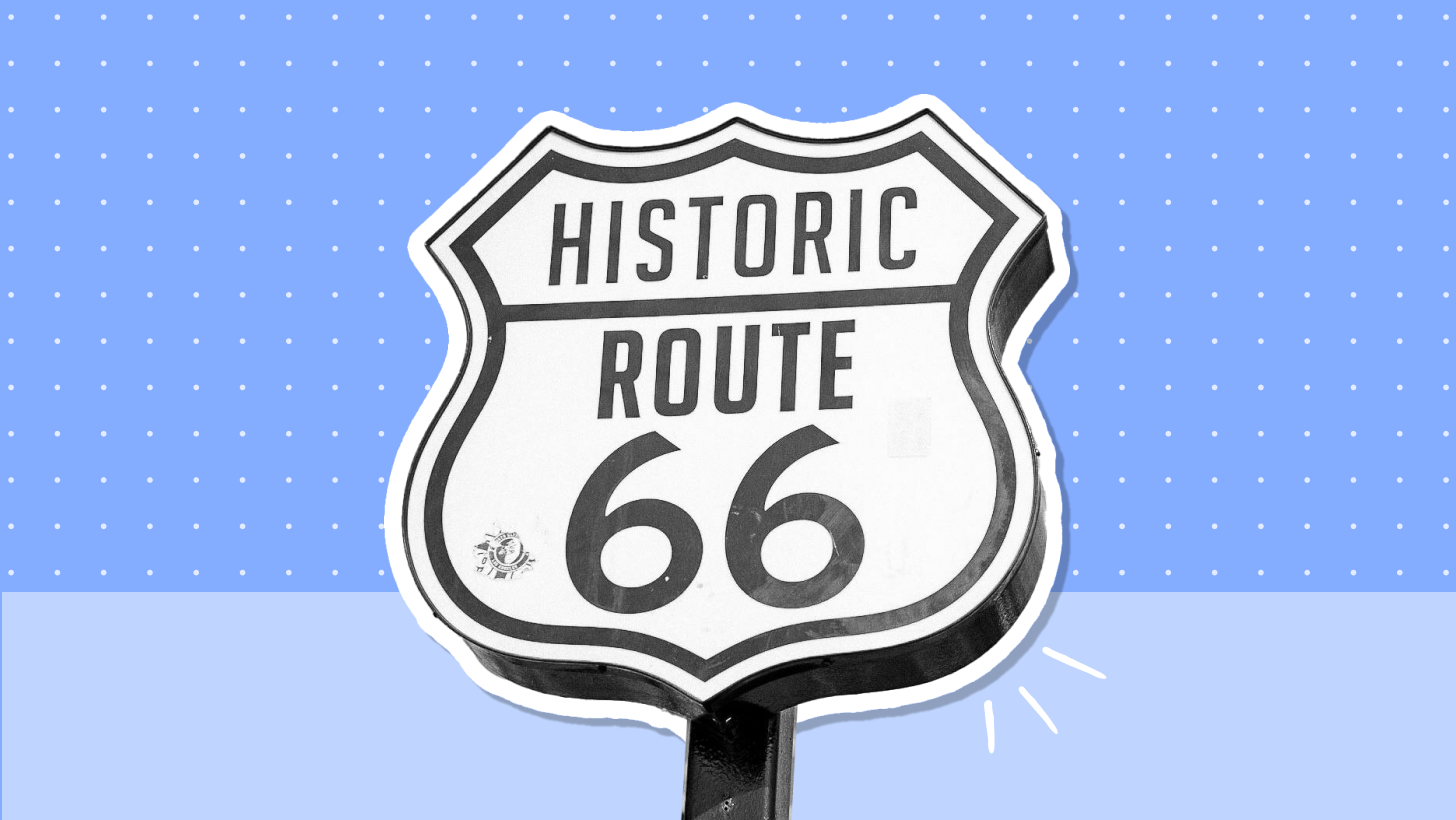
Is there a more famous highway than Route 66? Probably not. Show anyone the iconic "Route 66" sign, and they'll instantly think of this American staple. From its rich history to the beautiful landscapes it traverses, Route 66 is undeniably the quintessential American road. With that in mind, we have decided to pay homage to it by highlighting 10 fun and interesting facts about Route 66. Ready to hit the road? Then keep reading and enjoy!

1
History

Image: Christian Linnemann

Let’s start from the very beginning: in 1926, almost 100 years ago, Route 66 was established, covering a total of 2,448 miles. It was one of the original highways built under the then-new Numbered Highway System (also known as the "Federal Highways").

The route famously started in Chicago, Illinois, and stretched all the way to Santa Monica, California, passing through Missouri, Kansas, Oklahoma, Texas, New Mexico, and Arizona. At the time, Route 66 proved to be a quick and easy way to get to the western part of the country, which logically led to an increase in its popularity.

2
Landmarks

Image: Mick Haupt

If you find yourself driving along the 2,448 miles that make up Route 66, you’ll certainly come across a fair share of outstanding landmarks, including American icons like the St. Louis Gateway Arch or the Santa Monica Pier. Not only that, you might want to explore some natural wonders, such as a 50,000-year-old meteor crater located in the heart of Arizona.

However, if you're more interested in landmarks focused on unusual or outlandish topics, there are plenty of roadside attractions worth visiting . For instance, you might want to stop for a few hours in San Bernardino, California, to visit the original McDonald’s location, now turned into a museum.

3
One end of the road…

Image: Arnaud STECKLE

As we mentioned before, Route 66 is too long for us to include every single state it crosses in this article. However, we still felt the need to pay a small tribute to the two ends that "America’s Main Street" was built to connect. With that in mind, let’s start with Chicago, the easternmost point of Route 66.

Originally, Route 66 was commissioned as a quicker way to get from Chicago to Los Angeles in response to the large increase in car ownership that occurred in the 1920s. Route 66 shortened the distance between these two cities by 200 miles, providing an easy-to-follow route for millions of Americans.

4
…followed by the other end.

Image: Rocio Abrego

According to a popular saying, "All good things must come to an end," and the gorgeous west end of Route 66 is a living testament to this phrase. The "City of Angels" truly doesn’t need an introduction. In that sense, can you think of a more welcoming image than the warm California sun greeting drivers at the final stop of Route 66?

Interestingly, nowadays Route 66 ends in the equally gorgeous city of Santa Monica, located in Los Angeles County. In any case, the way the U.S. Route 66 Highway Association described the highway during its construction still holds true, and Route 66 can still be described as the "most scenic route from Chicago through St. Louis to Los Angeles ."

5
The "Father of Route 66"

Image: John Benitez

Nowadays, a route connecting Illinois and California seems almost logical, but at the time, it took the efforts of a visionary group of entrepreneurs to plan the construction of Route 66. Among them, one individual stands out, known to history as " The Father of Route 66 ": an Oklahoma businessman named Cyrus Avery.

A resident of Tulsa, Oklahoma, Avery was truly a jack of all trades. Originally a school teacher, he went on to become a businessman, an insurance agent, and an oilman after founding the Avery Oil & Gas Company in 1904. In the 1920s, Avery was a member of the federal board appointed to create the Federal Highway System, where he rallied for the establishment of what we now know as Route 66.

6
Feel like walking?

Image: Capstone Events

Who said that only cars can enjoy Route 66? Certainly not Charles C. Pyle, a Route 66 Association member who, in 1928, launched an innovative campaign to promote the new highway: a foot race from Los Angeles to New York City.

With a distance of 3,400 miles, this gargantuan race had a suitably large prize: $25,000, which today would be just under $400,000. Nearly 300 racers crossed America, passing through Route 66 and several checkpoints along the highway. Ultimately, the race was won by a Cherokee citizen named Andy Payne, who finished the race in 573 hours.

7
Culture inspired by Route 66

Image: Jonathan Gong

It seems only logical that such an iconic route has inspired a plethora of songs, books, and paintings. Let’s take a moment to pay homage to some masterworks of American culture that celebrate everything Route 66 has to offer. Celebrated authors like John Steinbeck and Jack Kerouac have set their novels on the highway, with Steinbeck nicknaming Route 66 "the Mother Road."

Perhaps most famously, songwriter Bobby Troup wrote the song "(Get Your Kicks on) Route 66" while traveling on the highway on a road trip across America. The song became a smash hit in 1946 after it was recorded by the Nat King Cole Trio, and it was subsequently covered by music legends like The Rolling Stones, Chuck Berry, and Bing Crosby.

8
Decommission

Image: Alejandro Luengo

In the 1950s, President Eisenhower sought to upgrade America’s highway system into a more modern network, comprising several new routes that connected all 50 states. In 1956, Eisenhower signed the Federal Interstate Act, unknowingly initiating a series of steps that would eventually lead to the end of Route 66 .

After several decades, Route 66 was officially decommissioned in 1985. However, that doesn’t mean you can’t travel through most of it. Nearly 85% of the original highway is still drivable, with many signs marking where the original route once stood.

9
Route 66 State Park

Image: Federico Lancellotti

As we mentioned before, there are plenty of spectacular landscapes to explore along Route 66 if you’re a fan of nature. With that in mind, did you know there’s a state park in Missouri named after Route 66?

Route 66 State Park is located at the site of the former town of Times Beach, Missouri, along the Meramec River. In addition to offering beautiful views and hiking trails, visitors might also enjoy seeing the old Route 66 bridge, which is currently undergoing restoration.

10
The music of the road

Image: Miguel Alcântara

We’ll end this article with a Route 66 fact you might not know. Route 66 has inspired many iconic songs, but did you know that a small part of Route 66 actually plays music on its own?

To encourage drivers to stick to the 45-mile-per-hour speed limit, the New Mexico Department of Transportation came up with a rather ingenious idea: by placing rumble strips at strategic points, cars driving under the speed limit will play " America the Beautiful "!

Explore more American facts

Choose your favorite category!

General
General

As American as apple pie—the very best America has to offer!

Culture
Culture

Delve into the astounding richness of American lore.

Geography
Geography

Hop in and explore vast and diverse American landscapes.

History
History

Discover the key moments that shaped the United States.