History History 4 min read

Let’s take a tour

Alcatraz: The secrets, myths, and history of America’s prison

Image: Leon Bastain

Alcatraz, also known as "The Rock," is one of the most famous prisons in American history. But there’s more to this island than just high-security cells and daring escape attempts. From its unexpected origins to some weird inmate requests, Alcatraz is packed with stories that go far beyond what Hollywood has shown us. Whether you've visited before or just love a good history lesson, these 12 fascinating facts will give you a fresh perspective on this legendary landmark.

1
Alcatraz wasn’t always a prison

Image: Maxim Babichev

Before housing America’s most dangerous criminals, Alcatraz served as a military fort. In 1850, President Millard Fillmore designated the island as a military reservation, and by the Civil War, it held prisoners of war. Its strategic location in San Francisco Bay made it ideal for defense. It wasn’t until 1933 that it officially became a federal penitentiary. Over the years, its role shifted dramatically, but its reputation as an isolated fortress remained constant.

2
Prisoners built their own cells

Image: Oxana Melis

Talk about a tough day on the job! When Alcatraz transitioned from a military prison to a federal one, military prisoners were put to work constructing their own confinement. Between 1909 and 1911, they reinforced the existing structures to prepare for the worst of the worst. By the time the Department of Justice took over, the prison was ready to house America’s most notorious inmates. Imagine building the very walls that would later trap you inside!

3
Guards and their families lived on the island

Image: Tyler Rutherford

Alcatraz wasn’t just a prison; it was also home to families. The guards and their families lived in houses and apartments on the island, creating a tight-knit community. Children took a ferry to school in San Francisco every day and played safely away from the prison yard. Some even recall watching movies in the recreation hall while criminals like Al Capone were locked up just a few feet away. Life on Alcatraz wasn’t all gloomy for those outside the cells.

4
No executions took place on Alcatraz

Image: Rita Morais

Despite its reputation, Alcatraz never had an execution chamber. While prisoner violence did lead to some deaths, executions were not carried out on the island. Inmates sentenced to death were transferred to facilities like San Quentin. That didn’t make life any easier in Alcatraz; many prisoners still feared the harsh conditions and inescapable isolation of The Rock.

5
The Pacific Coast’s first lighthouse was on Alcatraz

Image: Bruce Warrington

Before it became infamous for its prison, Alcatraz played a vital role in maritime safety . In 1854, it became home to the first lighthouse on the Pacific Coast, guiding ships through the often foggy San Francisco Bay. Though a larger lighthouse replaced it in 1909, the original helped countless sailors navigate the treacherous waters surrounding the island. Today, it stands as a historic landmark, reminding visitors of Alcatraz’s earlier days.

6
No inmate officially escaped

Image: Leo_Visions

While Hollywood loves a good prison break story, no prisoner ever successfully escaped Alcatraz, at least not officially. The closest attempt came in 1962 when three inmates, including Frank Morris, disappeared after digging their way out using spoons. Their bodies were never found, leading to decades of speculation. Did they drown in the freezing bay or make it to freedom? The mystery remains unsolved.

7
Alcatraz shut down due to high costs

Image: Jack Walker

Despite its reputation as America’s toughest prison, Alcatraz didn’t close due to security issues: It was just too expensive to maintain . The constant exposure to salt water eroded the buildings, and the cost of housing each inmate was three times higher than in other federal prisons. By 1963, the government decided to shut it down. The island was abandoned for years before turning into the tourist attraction it is today.

8
Some inmates requested transfers to Alcatraz
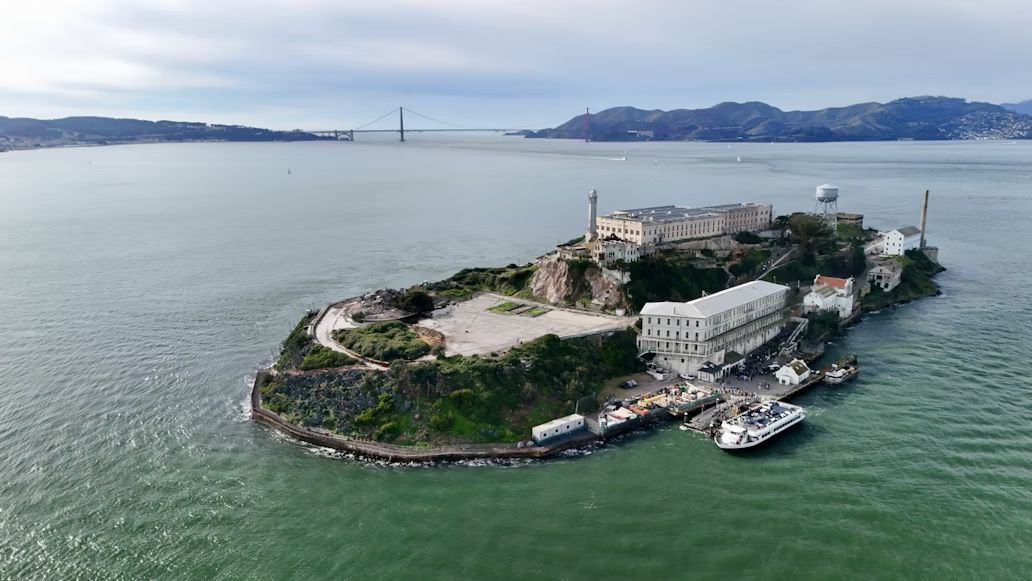
Image: Mylo Kaye

Despite its harsh image, some prisoners actually wanted to be transferred to Alcatraz. The prison provided single cells, which meant no cellmates to fight with . It also had some of the best food in the federal system because officers believed that well-fed inmates were less likely to cause trouble. For some, the strict routine and isolation were preferable to overcrowded, violent prisons elsewhere.

9
Alcatraz was named after pelicans

Image: Mollie Sivaram

Before it became synonymous with crime and punishment, Alcatraz was simply an island full of birds. Spanish explorer Juan Manuel de Ayala named it La Isla de los Alcatraces in 1775, which translates to "Island of the Pelicans." Over time, the name was anglicized to Alcatraz. Even today, the island remains a haven for seabirds, making it a birdwatcher’s paradise.

10
Alcatraz was never packed to capacity

Image: Kenny Eliason

Alcatraz was never overflowing with inmates . The prison had a maximum capacity of 336, but on average, only about 260 prisoners lived there at any given time. Sometimes, there were as few as 222. This was intentional—authorities wanted to ensure strict control over the inmates. It’s a far cry from the overcrowded prisons we hear about today.

11
Warm water showers had a hidden purpose

Image: David Castellón

Prisoners at Alcatraz were given warm water showers, not necessarily out of kindness, but as a security measure. Authorities believed that if inmates were used to warm water, they’d be less likely to brave the freezing bay in an escape attempt. Whether it worked or not is up for debate, but it certainly added another layer to Alcatraz’s infamous reputation.

12
Officers and inmates tended the gardens

Image: Maxim Babichev

Alcatraz wasn’t all cold concrete and iron bars; there were actually gardens on the island. Prison officers and even some inmates planted flowers and hardy greenery to make the island more livable. The tradition continued for decades, and today, the National Park Service maintains the Gardens of Alcatraz . It’s a surprising touch of beauty in a place best known for its harshness.

General General 4 min read

Embracing our multilingual nation

From Spanish to Chinese: The 12 most spoken languages in the U.S.

Image: Houcine Ncib

In the United States, the number of people who speak a language other than English at home has nearly tripled over the last three decades, increasing from 23.1 million to 67.8 million. According to the 2019 American Community Survey by the Census Bureau, more than 350 languages are spoken across the country , making it one of the world's most linguistically diverse nations. In this article, we’ll explore the 12 most spoken languages in the United States. Can you guess how the rankings go?

1
12. Portuguese

Image: Etienne Girardet

Today, there are over 845,000 Portuguese speakers in the United States, making it the 12th most spoken language after English.

The Portuguese-speaking community is composed of immigrants from both Portugal and Brazil. Since the 1960s, many Portuguese immigrants have settled along the coast of Massachusetts, where they could continue their traditional fishing activities. Besides Massachusetts, Portuguese is most commonly spoken in Connecticut, Rhode Island, and Utah.

2
11. Hindi

Image: Rohan Solankurkar

Hindi is the most widely spoken Indian language in the United States, with more than 890,000 people speaking it . Hindi belongs to the Indo-European language family and has been included on the U.S. State Department's list of critical languages due to strategic commercial interests in South Asia.

Hindi-speaking Indians began immigrating to North America in the early 19th century. The community has primarily settled in large cities such as New York City, Washington D.C., San Francisco, Los Angeles, and Chicago.

3
10. Russian

Image: Tessakay

There are currently almost 950,000 Russian speakers in the United States. Did you know that Russian is one of the two official languages aboard the International Space Station? NASA astronauts typically take Russian language courses to communicate with their Russian counterparts.

Another well-known Russian-speaking community is in New York's Brighton Beach neighborhood, often referred to as "Little Odessa." Cultural events, festivals, and markets featuring traditional Russian foods, music, and crafts are common sights here. Los Angeles is another city where Russian is regularly used.

4
9. Korean

Image: 昆 阿

Over the past few decades, the number of Korean speakers in the United States has grown significantly, with nearly 1,100,000 people now speaking Korean .

Los Angeles is home to the largest Koreatown in the country, and many residents in other major cities speak Korean at home, helping to maintain and promote the heritage of this Asian culture in the United States.

5
8. Arabic

Image: Rawan Yasser

With more than 1.2 million speakers, Arabic is the eighth most spoken language in our country.

Arabic is spoken in immigrant communities from countries such as Egypt, Lebanon, Syria, Iraq, and Yemen. These communities are most prominent in states like California, New York, and Michigan, where Arabic is commonly heard in homes and community centers.

6
7. German

Image: FotosFuerBlogger

German is widely spoken in states with high populations of German ancestry, such as Pennsylvania, Wisconsin, and Texas. When including Yiddish, Pennsylvania Dutch, and other West Germanic languages, there are over 1,450,000 German speakers in the United States.

Cities like Fredericksburg and New Braunfels, Texas, were founded by German immigrants and continue to celebrate their heritage with festivals such as Oktoberfest. In Pennsylvania, a large number of Pennsylvania Dutch speakers—predominantly among the Amish and Mennonite communities—speak this German dialect, which is not, as one might expect, Dutch.

7
6. Vietnamese

Image: Huynh Van

The number of Vietnamese speakers in the United States is similar to that of the previous language on this list, with more than 1.5 million people speaking the language of this Southeast Asian country.

In recent decades, the number of Vietnamese immigrants has been increasing exponentially. Most have settled in California, followed by Texas, Florida, Washington, and Georgia.

8
5. Tagalog

Image: Emmanuel Nicolas Jr.

Despite being the fifth most spoken language in the United States, Tagalog is often overlooked. For those who have never heard of it, Tagalog is one of the official languages of the Philippines.

A significant number of Filipino immigrants have settled in the United States since the early 19th century. According to the U.S. Census Bureau, there are currently more than 1.7 million Tagalog speakers . Thirty-eight percent of Filipinos in the United States live in California, with relatively large concentrations also in Hawaii and Texas.

9
4. French

Image: Erik Mclean

If we include Patois, Cajun, Haitian, and Louisiana Creole—a hybrid of French and various African languages—French is the fourth most widely spoken language in the United States.

The French influence, which dates back to the 17th century, is evident in a wide variety of American English words and phrases. Today, there are nearly 2.1 million French speakers in the country.

10
3. Chinese

Image: 五玄土 ORIENTO

The Chinese language, including its different variants such as Mandarin, Cantonese, and Hokkien, contributes significantly to the cultural diversity of the United States. Although the gap between the second and third most spoken languages in the country is considerable, the number of people who speak Chinese is still representative.

With approximately 3.5 million Chinese speakers across the country, the greatest influence of this culture can be found in states with the highest concentrations of Chinese immigrants, such as New York and California.

11
2. Spanish

Image: Leeloo The First

Spanish is the second most spoken language in the United States and one of the fastest-growing languages in the country. This is no surprise, as approximately 19% of the total population is of Hispanic origin.

According to the U.S. Census Bureau, more than 40 million people speak Spanish in addition to English in the United States. Hispanic communities are found throughout the nation, with the largest concentrations in California, Texas, Florida, and New York.

12
1. English

Image: Wilhelm Gunkel

Although it is not surprising that English is the most widely spoken language in the United States, it is still not recognized as an official language. However, more than half of the 50 states have passed laws granting it official language status.

English speakers make up a large percentage of the U.S. population, with approximately 78 percent speaking only English . American English is also incredibly rich, composed of dozens of regional dialects with distinct grammar, vocabulary, and pronunciation.

Geography Geography 5 min read

Route 66 is not here

Which is the loneliest road in America? 10 scenic and uncrowded routes

Image: Tomas Anunziata

The vast roads of America boast hundreds, possibly thousands, of beautiful scenic roads for visitors to travel and enjoy. But in the age of Instagram—where every gorgeous sunset or idyllic lake must be photographed and shared with the world—it can be difficult to delight in the natural wonders of the road with a sense of calm and solitude. Thankfully, there are still gorgeous stretches of land that, for some reason, have yet to capture the attention of the masses and remain relatively undisturbed. So, make haste and hurry to discover these 10 beautiful scenic routes before the smartphone-yielding hordes find them!

1
The Loneliest Road, Nevada

Image: Jake Blucker

Nevada is a state that offers plenty of wide, ample, and uncrowded places, for sure. The US Route 50 cuts through the heart of the state, offering solitude and stark desert beauty. The name "Loneliest Road in America" was bestowed upon this route by a 1986 Life magazine article claiming that there was not much to see—but that claim couldn’t be further from the truth.

Route 50 has plenty of ghost towns, historic mining communities, stunning state parks, unsurpassed recreational opportunities , and a selection of authentic Sagebrush Saloons.

2
Eastern Sierra Scenic Byway, California

Image: Joris Beugels

Yes, the Pacific Coast Highway, stretching along the coast of California, is one of the most famous and beautiful road trips in the world. But, as evidenced by the diverse landscapes of the Eastern Sierra Scenic Byway, the Golden State has so much more to offer.

Alpine lakes, rugged peaks, and desert expanses make up a jaw-dropping panorama all along the eastern side of the Sierra Nevada mountain range . The elevated mountainous terrain also offers breathtaking views of Mono Lake, whose famous salt waters are visible from miles away.

3
The Blues Highway, Tennessee, and Louisiana

Image: Tanner Boriack

It may sound like the title of a movie, or an album but, in this case, at least, the Blues Highway is a real road, stretching from Nashville, Tennessee, to New Orleans, Louisiana. Also known as Highway 61, this iconic route passes through Delta Blues landmarks, the French Quarter in New Orleans, and the historic jazz legacy of Preservation Hall.

As for natural beauty along the way, the Mississippi’s Natchez Trace Parkway offers a look into the area’s Native American history, as well as features stunning views of southern cypress swamps.

4
The San Juan Skyway, Colorado

Image: Maeghan Smulders

A spectacularly scenic high-elevation drive, the San Juan Skyway loop provides breathtaking views and access to historic mining towns. The route goes along U.S. Route 550 from Durango to Silverton, Ouray, and Ridgway, and then along Colorado State Highway 62 to Placerville, Colorado State Highway 145 to Telluride, Rico, Dolores, and Cortez, before completing the loop back to Mancos and Durango via U.S. Route 160.

Along this 236-mile journey, which takes about six hours to drive, you'll encounter, subalpine forests, historic mountain towns, expansive cattle ranges, and prehistoric Native American ruins.

5
High Peaks Scenic Byway, New York

Image: Kevin Wiegand

The drive along the Adirondack Mountains is not named High Peaks Scenic Byway for nothing. This upstate New York route is a short, but stunning slice of nature. Coming in at just under 30 miles long, the byway begins in the town of Keene and runs to Lake Placid, leading travelers along the highest peaks of the Adirondacks, by breathtaking bodies of water such as Chapel Pond and Roaring Brook Falls, and through charming towns and dense forests.

There are plenty of places to pull over and take in the fresh air and scenery along the drive, as well as numerous trails for those seeking more active adventures such as canoeing, biking, fishing, or cross-country skiing.

6
The Black Hills, South Dakota

Image: mary stahl

There is so much more to the Black Hills than Mount Rushmore. This isolated mountain range in western South Dakota and northeastern Wyoming covers an area 125 miles long and 65 miles wide. It encompasses rugged rock formations, canyons and gulches, otherworldly buttes, open grassland parks, tumbling streams, deep blue lakes, and intricate cave systems.

The name "Black Hills" originates from the Lakota term Paha Sapa, meaning "hills that are black." Seen from a distance, these pine-covered hills, rising several thousand feet above the surrounding prairie, appear dark, almost black.

7
North Shore Scenic Drive, Minnesota

Image: Joe Pohle

The Great Lakes boasts countless scenic drives, and the North Shore Scenic Drive is among the most spectacular. Stretching approximately 154 miles from Duluth, Minnesota, to the Canadian border, the route offers unparalleled views of the northern shores of Lake Superior .

The drive takes travelers through charming towns and rugged coastal landscapes , with plenty of opportunities to stop for food and drink while also taking in expansive forests, cascading waterfalls, and beaches studded with colorful agate stones.

8
Trail of the Ancients Scenic Byway, New Mexico

Image: Maddy Baker

The Trail of the Ancients is a scenic byway winding through the rugged landscapes of the Four Corners region, where the states of New Mexico, Arizona, Colorado, and Utah meet. The byway unveils ancient cliff dwellings, underground constructions, and intricate rock art, providing a glimpse into the ancient culture that once thrived in the area.

At the heart of the trail lies New Mexico’s Chaco Culture National Historical Park, known for its intricate stone ruins of what was once a major gathering place for the ancestral Puebloans.

9
The Finger Lakes Loop, New York

Image: Jametlene Reskp

The Finger Lakes region in upstate New York has plenty of wineries, waterfalls, and charming villages waiting to be discovered. Visitors can explore the area by car, spend the day on a bicycle, take a hike in the woods, paddle on kayak adventures, or tour the many wineries— offering endless opportunities for exploration.

This four-season playground is framed by some of Mother Nature’s finest work, with eleven freshwater lakes fanning out like fingers across the region.

10
Medicine Wheel Passage Scenic Byway, Wyoming

Image: Dan Meyers

Medicine Wheel Passage Scenic Byway is a section of US 14A that ends just west of the boundary for Bighorn Canyon National Recreation Area. At 27 miles, the steep, two-lane stretch travels among soaring mountain peaks, high-altitude deserts covered in grass and sagebrush, as well as conifer and aspen forests.

The byway gets its name from the Medicine Wheel, a sacred and historic limestone circle that sits near the summit of Medicine Mountain. American Indians constructed the wheel in stages sometime over the last 1,000 years, and still use it for ceremonies today.

Explore more American facts

Choose your favorite category!

General
General

As American as apple pie—the very best America has to offer!

Culture
Culture

Delve into the astounding richness of American lore.

Geography
Geography

Hop in and explore vast and diverse American landscapes.

History
History

Discover the key moments that shaped the United States.