History History 5 min read

Leading the way

Can you guess who was the first US president to visit the 50 states?
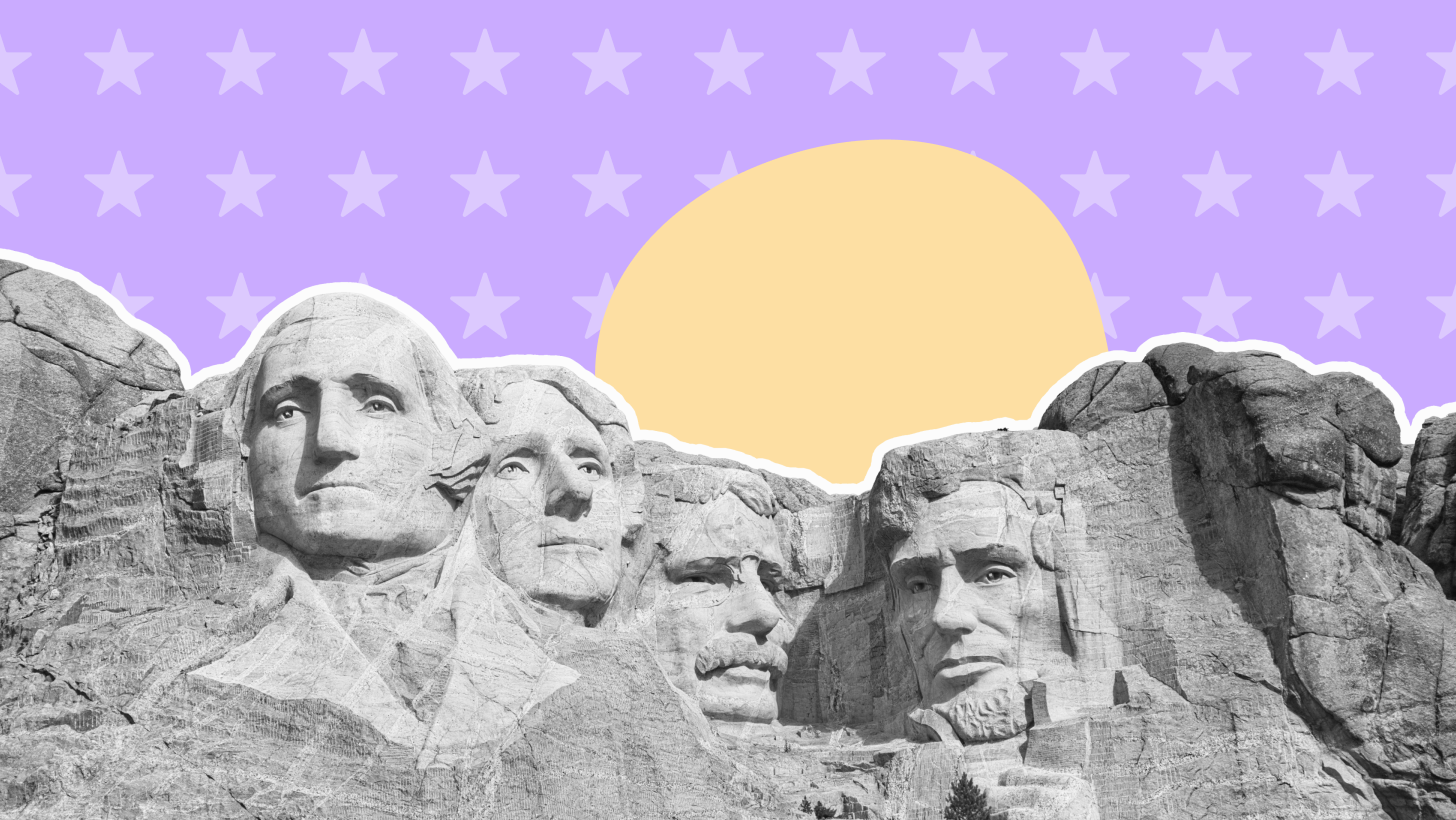
Image: Mohan Nannapaneni

We all know that George Washington was the very first President of the United States. But throughout history, many other US presidents have achieved memorable "firsts." Who was the first Chief Executive to inhabit the White House? Who was the first to make a phone call from there? And who was the first Commander-in-Chief to appear on TV? If you want to know the answers to these and other exciting questions, don't miss this article on 10 iconic presidential "firsts"!

1
First president to live in the White House

Image: Raymond M.E. Aguirre

In 1790, President George Washington signed an act of Congress declaring that the government would reside in a district "not exceeding ten miles square […] on the river Potomac." Today, we all know what stands at 1600 Pennsylvania Avenue NW in Washington, DC. That's right! We're talking about the White House, an enduring symbol of the US presidency.

But it hasn't always been that way. The construction of the White House began in 1792 and only had its first resident 8 years later. He was President John Adams, who moved into the Executive Mansion with his wife Abigail in 1800.

2
First president with telephone in Office

Image: Carlos Eduardo

Nowadays, many of us can’t imagine getting anywhere without our cell phones. But in the 19th century, things were entirely different.

The landline telephone arrived at 1600 Pennsylvania Avenue in the late 1870s, during the presidency of Rutherford B. Hayes, shortly after Alexander Graham Bell had unveiled the communication device. It's said that President Hayes was interested in the technology and recognized its potential.

However, because the invention was so new, calls from the White House were rare. The first president to use the telephone frequently and regularly is considered to be William McKinley, who took office in 1897.

3
First president to serve two non-consecutive terms

Image: Josh Carter

Several men have had the honor of serving as president of the United States on more than one occasion, starting with none other than George Washington. Thomas Jefferson, James Madison, and others have served two consecutive terms.

But there was someone who, for the first time, served two non-consecutive terms as president: Grover Cleveland. That's right, Cleveland first took office in 1885 after defeating Republican candidate James G. Blaine in the election. In 1888, he lost the presidency to Benjamin Harrison. However, in 1892, Cleveland won again, assuming his second mandate in 1893.

4
First president to win the Nobel Peace Prize

Image: Sunguk Kim

Winning a Nobel Peace Prize is not something that happens every day, right? Fortunately, four US presidents have achieved this remarkable recognition.

The first was Theodore Roosevelt, who received the Nobel Peace Prize in 1906 for his role in negotiating the end of the Russo-Japanese War. The other three presidents who received the Nobel were Woodrow Wilson, Jimmy Carter (who was awarded the prize after leaving office), and Barack Obama.

5
First president born in the 20th century

Image: Florida Memory

The turn of the century is always a momentous and exciting event, and the first decades of the last century were quite... shall we say, "busy." The first president to serve during the 20th century was William McKinley, who was already in office at the turn of the century. But here’s a different question: who was the first future president born in the 20th century?

We're referring to none other than John F. Kennedy, who was born on May 29, 1917, in Brookline, Massachusetts. At the age of 29, he won a seat in the House of Representatives, and six years later, he secured a position in the Senate.

Finally, in 1961, JFK was inaugurated as the 35th president of the United States.

6
First president to light the National Christmas Tree

Image: Gaby Dyson

The lighting of the National Christmas Tree by the president of the country has become a cherished tradition that beautifully reflects the American Christmas spirit.

This tradition began on December 24, 1923, when President Calvin Coolidge became the first to light the National Christmas Tree located at the Ellipse near the White House. The imposing tree stood 48 feet tall and was decorated with over 2,500 electric lights. Beautiful!

Fortunately, the presidents who followed Coolidge have continued this delightful Christmas custom, keeping the tradition alive for generations to enjoy.

7
First president on TV

Image: Yle Archives

In the 1930s, it wasn't common to see the president's face on TV. In fact, before 1939, no president had ever appeared on television while in office.

The first American president on TV was Franklin D. Roosevelt, who made his television debut on April 30, 1939, at the New York World's Fair. Although this might not seem so revolutionary today, at the time, it marked a turning point in political communication and how leaders connected with citizens. His speech is remembered for addressing important issues, such as the future of the nation and the world.

8
First president on color TV

Image: Aleks Dorohovich

Yes, Franklin D. Roosevelt was the first US president to appear on TV, but Dwight D. Eisenhower was the first sitting US president who was lucky enough to appear on color television!

This detail, which seems trivial today, was a radical change at the time. When color TV arose, everything people watched on their living room screens began to better reflect the reality outside. Eisenhower made his color TV debut during the 1950s , delivering a speech as part of his re-election campaign—a moment that symbolized the merging of politics and modern technology.

9
First president to visit all 50 states

Image: David Lusvardi

We know that the United States of America is a big country. In fact, we're one of the largest countries in the world in terms of territory. For this reason, it can be a challenge to get to visit all 50 states that make up our nation in a short period of time. However, one president managed to accomplish this feat for the first time.

The president who achieved this milestone was Richard Nixon, the 37th president (1969-1974), when he visited Maine on October 22, 1972, marking the completion of his goal.

It’s worth noting, in fairness to all previous presidents, that Hawaii and Alaska didn’t become states until 1959.

10
First president on the internet

Image: Anthony Massaro

Although the origins of the Internet can be traced back to the 1960s, it wasn’t until the late 1980s that it became a widely popular and accessible phenomenon.

In line with global technological advances, the White House decided to incorporate the use of the Internet during the presidency of Bill Clinton, who officially became the first president to use the Internet for work purposes while in office.

But that wasn't all! Clinton also hosted an event that seemed unimaginable before —he organized a live chat from the White House. With that, Clinton was establishing the first direct communication between a US president and the public through the Internet.

General General 7 min read

Made in the US

Inventing America: Discover the roots of these 10 national classics

Image: Tara Winstead

Ever wonder how everyday favorites like the Frisbee, Gatorade, or even the Zamboni came to be? Behind each one is a quirky story of chance, innovation, and a bit of luck, like most of the best inventions! From playground toys to sports essentials, these simple creations have become cultural icons. Let’s take a look at the surprising origins of these classic inventions and the clever minds that brought them to life. You might be amazed by how much history is hidden in the things we love!

1
The frisbee

Image: Robin Jonathan Deutsch

The best things are often created by accident, and you never know when that accident will strike. For example, did you know the Frisbee was born from a humble cake pan?

In 1938, Fred Morrison and his girlfriend were tossing a pan around on a beach in Connecticut when a passerby offered to buy it. That moment sparked an idea that stayed with Morrison through his service in World War II, where he learned about aerodynamics and began to dream of creating the perfect flying disk. After several failed attempts, he finally hit on a design in the 1950s, calling it the "Pluto-Platter."

Enter Wham-O, a company known for quirky toys like the Hula-Hoop. They bought the rights in 1957, gave it the now-iconic name "Frisbee" (inspired by Yale students tossing pie tins from the Frisbie Pie Company), and refined the design. The Frisbee took off—quite literally—spinning its way into parks, beaches, and backyards across America.

2
The slinky

Image: Adam Valstar

The slinky was also the result of accidental creativity in 1943 when Richard James, a naval engineer, knocked a spring off a shelf and noticed it "walked" in a curious way. Intrigued, he refined the design, and with his wife Betty’s help, they turned it into a toy sensation. Although the name was purely her idea!

In 1945, a demo at Gimbels Department Store sold 400 units in 90 minutes, and the Slinky quickly became a household name.

Without going into too much detail, Richard later took a wrong turn, and it was Betty who stepped in as CEO, saving the company from financial ruin. She even commissioned the iconic Slinky jingle! Under her leadership, the Slinky sold 300 million units before she finally sold the company in 1998. Talk about female power, huh?

3
The Ferris wheel

Image: Steve Shreve

Did you know the Ferris wheel was named after a person? That person was George Ferris who, in 1893, introduced the Ferris wheel at the Chicago Columbian Exposition.

Ferris, a young engineer, proposed the idea of a massive steel wheel that would rival the Eiffel Tower both in size and symbolism. He certainly set quite the challenge for himself!

Though initially rejected, Ferris funded his own research to prove the design’s safety, and his persistence paid off. The Ferris wheel became the star attraction—naturally since it stood 250 feet tall and offered visitors a thrilling 20-minute ride for fifty cents.

Sadly, Ferris’s success was short-lived. After the fair, he faced legal battles and financial ruin, and so the original wheel had one last appearance at the St. Louis World's Fair in 1904 before being destroyed.

4
Gatorade

Image: Jacob Rice

Sports legends become such because they strive to get better. And because they had a good coach who had their back. An example of a coach who went above and beyond was that of Florida’s football team.

In 1965, the Florida Gators’ football coach asked a group of professors if there was a way to help players reload fluids lost during games. Led by Dr. Robert Cade, the team created a mix of water, sodium, sugar, and lemon juice, later called "Gatorade," you can imagine why.

Of course, the first few versions tasted awful, but after some adjustments, the drink became more palatable. The Gators credited their improved performance, including their 1967 Orange Bowl win, to this new beverage.

No gatekeeping on the teams’ side, word spread, and by 1970, Gatorade was under the national spotlight when the Kansas City Chiefs used it in their Super Bowl victory.

5
The super ball

Image: Shubham Dhage

Some toys became popular after being discovered to be useless for anything else! That was the case with the Super Ball.

In 1964, chemist Norman Stingley invented a unique synthetic rubber but couldn't find an industrial use for it. However, he quickly found a solution: he turned to Wham-O, the toy company behind the Hula-Hoop and they released the Super Ball in 1966. The ball, made from the secret ingredient "Zectron," could bounce to incredible heights.

Aside from the fun, we have something else to thank the Super Ball for—it inspired the name of one of the biggest events in sports today. Lamar Hunt, owner of the Kansas City Chiefs, saw his daughter play with the toy and jokingly suggested to NFL Commissioner Pete Rozelle that the first championship game between the NFL and AFL should be called the "Super Bowl." The rest is history!

6
Fritos

Image: Roberto Carlos Román Don

Few things are as American as snacks, don’t you think? Let’s take a look at how Fritos came to be!

In 1932, Charles E. Doolin, a San Antonio confectioner, was looking for a new product when he bought a fried corn recipe from a man named Gustavo Olguin for $100.

After tweaking the recipe, Doolin created bite-sized corn chips called Fritos, which quickly became a hit. By 1933, Fritos were being mass-produced, and Doolin pioneered new marketing strategies, like direct stocking and placing clip-racks near cash registers—making his product even more accessible. (We all fall for that one, don’t deny it!)

But that’s not all. Doolin’s business success led him to invest in Disneyland, where his "Casa de Fritos" restaurant accidentally gave birth to Doritos.

7
Crossword puzzle

Image: Ross Sneddon

It feels like the crossword puzzle has been around forever, but it wasn’t actually invented until 1913. Arthur Wynne, working for the New York World newspaper, was asked to create a challenging puzzle for the "Fun" section. The concept of fun is indeed a time-sensitive concept!

The inspiration came from a childhood word game: he designed a puzzle with clues instead of words and the first crossword was published on December 21, 1913. Want to hear a fun fact? One of the clues was "What this puzzle is." The answer? "Hard."

And this invention is full of interesting tidbits. For instance, the name "Cross-word" was the result of a typing mistake—but it stuck! And, over a hundred years later, here we are!

8
Alka-Seltzer

Image: Daniel Gregoire

Alka-Seltzer was born in 1928 when Hub Beardsley, president of the Dr. Miles Medical Company, noticed a local newspaper staff staying healthy during a flu epidemic. The editor told him their secret: aspirin with baking soda dissolved in water. Inspired by this, Beardsley asked his chief chemist, Maurice Treneer, to create a remedy based on the idea, leading to a compound of aspirin, bicarbonate of soda, and Vitamin C. When Beardsley tested it on flu sufferers, the results were promising—and Alka-Seltzer was born.

You can imagine what happened next, a strong advertising campaign in the 1930s, turned Alka-Seltzer into the go-to remedy for everything from colds to hangovers. The company rebranded as Miles Laboratories in 1935 and was later acquired by Bayer in 1979. Even today, Alka-Seltzer remains a staple of American medicine cabinets.

9
Zamboni

Image: Aleksi Partanen

One would think that a machine like the Zamboni, which is used to make ice smooth was created in a place like Alaska, right? Or at least a place where snow is present almost all year round. Surprisingly, it wasn’t—the Zamboni was invented in sunny Paramount, California.

Frank Zamboni, a man who came from the ice and refrigeration business, built the machine to save time at his Skateland Skating Rink. Before the Zamboni, resurfacing the ice was a 90-minute task done manually by five workers. Can you imagine how tedious that must have been?

Using parts from an airplane, oil derrick, Jeep, and wooden bin, Zamboni created a machine that could clean and smooth the ice in only a few minutes. Realizing its potential, Zamboni turned his invention into a business, with the first orders coming from Olympic skater Sonja Henie and the Chicago Black Hawks.

10
Baseball scoreboard

Image: Taiki Ishikawa

It goes without saying that baseball is one of Americans’ favorite pastimes. Everything about it is fun; it’s not just the game.

In the late 1800s, English immigrant Harry M. Stevens saw that and made the most of it. After moving to Ohio, Stevens started a business providing food and drinks at baseball games and eventually secured contracts with major league ballparks. While he’s often credited with popularizing the hot dog, his real innovation was the creation of the modern baseball scorecard. Using Henry Chadwick's shorthand scoring system, Stevens designed a simple grid fans could use to track the game. Does the phrase "You can't tell the players without a scorecard" ring any bells?

Stevens’s scorecard caught on, and fans began scoring games themselves. Today, his scorecard system is still in use, and we all love it!

History History 6 min read

Who could hate these songs?

What Sinatra and Slash confessed: Artists who disliked their biggest hits

Image: Panos Sakalakis

The evidence piles up and confirms it: Most artists grow tired of their biggest hits. Sure, maybe the initial charm of one’s own song wears off after playing it regularly for decades. But some bands and artists have been quoted calling their own creations "terrible" and promising they would get off stage if someone asked them to play them. Surely, though, no one could hate "Strangers in the Night", don’t you think? Let’s explore what the artists behind these 10 hits songs feel about them years later.

1
We Didn’t Start the Fire

Image: Dane Deaner

Although Billy Joel is one of America’s favorite songwriters, he is often very vocal about pointing out the flaws he finds in his early hits. He even found fault with the timeless " Piano Man, " which earned him his nickname, due to a melody he finds repetitive and lyrics he compares to limericks.

He assures that he doesn’t hold grudges against his own songs, but he did point out that he thought the melody of "We Didn’t Start the Fire" was "terrible" and compared it to a dentist’s drill . He says the only redeeming quality of that song is the lyrics—those famous rapid-fire lists of historical events from the ‘40s to the ‘80s.

2
Shiny Happy People

Image: Nathan Dumlao

R.E.M. created "Shiny Happy People" with a satirically overly positive tone . It was a hit back in the ‘90s upon its release, but it always remained a bit of an oddball in the band’s otherwise more introspective and serious records.

The cheerful tune has been quoted endlessly in movies and TV shows. Even the sitcom Friends considered making it its theme song! But singer Michael Stipe expressed little love for what he called "a bubblegum pop song." Stipe went as far as to say that he "hates" the song and sees it as a fluke rather than a reflection of the band’s work. Although other members are less critical, the consensus is that "Shiny Happy People" is not R.E.M.’s proudest achievement.

3
Smells Like Teen Spirit

Image: Firmbee.com

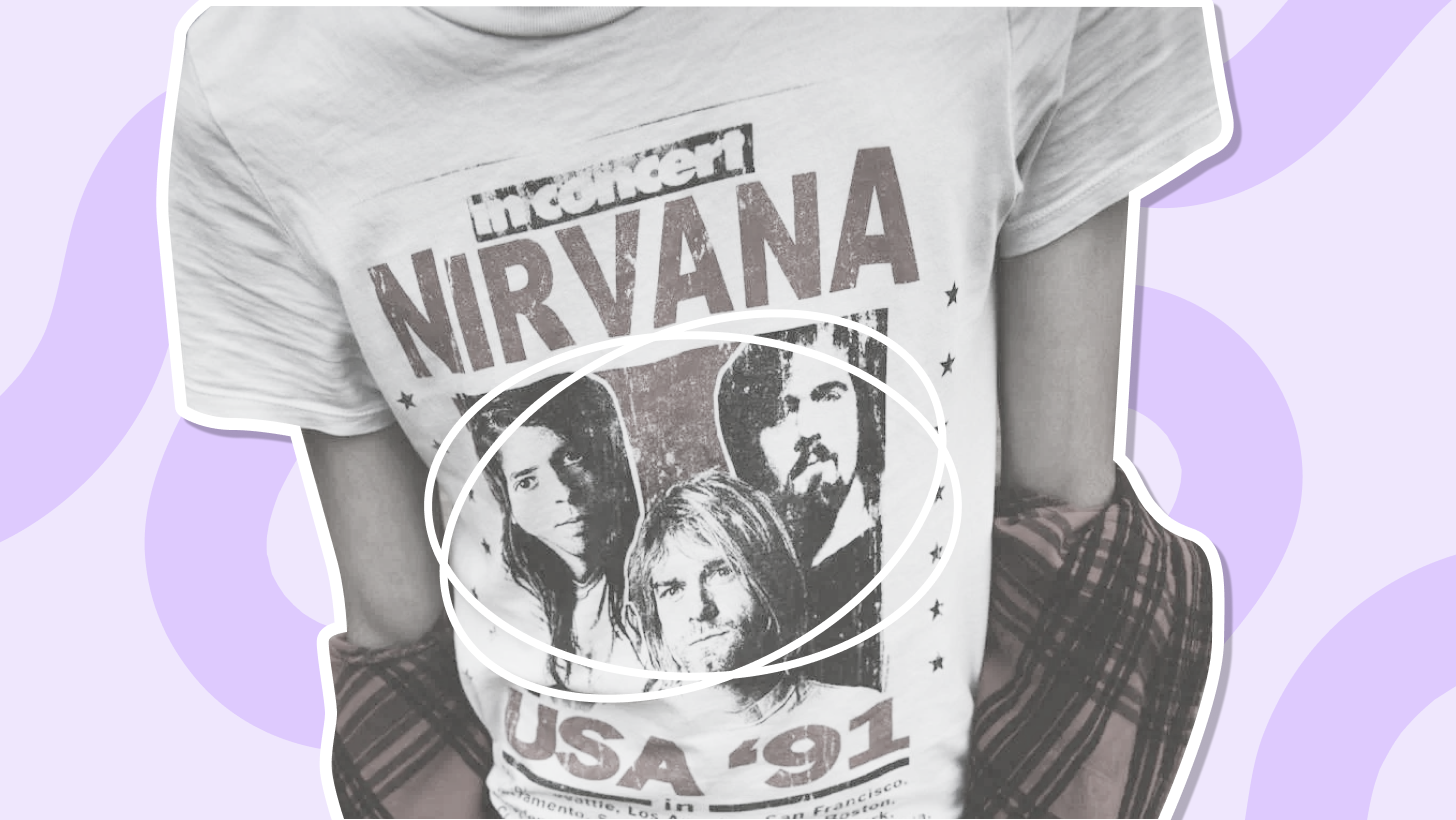
Nirvana’s breakthrough hit, "Smells Like Teen Spirit," is often credited with launching the grunge movement and bringing alternative rock into the mainstream. The song's catchy riff and cryptic lyrics became an anthem of frustration and angst in the youth of the ‘90s. But Kurt Cobain, Nirvana's frontman, quickly grew to resent the famous song.

In a 1993 interview, staying true to his grunge persona, Cobain declared: "I can barely, especially on a bad night, get through ‘Teen Spirit.’ I literally want to throw my guitar down and walk away." He said he felt the song was too "mainstream" and polished, and nothing like the gritty authenticity he had envisioned for Nirvana—something that shone through in the band’s less popular work.

4
What’s Love Got to Do with It

Image: Pixabay

"What’s Love Got to Do with It" was first offered to Donna Summer, but it was Tina Turner who made history with it in the ‘80s. Initially, though, she thought it wasn’t the right track for her. She once confessed: "I didn’t like it at first. It was a pop song. I’m a rock ’n’ roll singer. "

However, her manager convinced her to record it. Her reluctance was such that she only did a few takes of it, convinced it would be a filler track in her album. We now know how wrong she was. The hit ended up redefining her career, so successful that it inspired the title of her 1993 biographical film, starring Angela Bassett as her.

5
(You Gotta) Fight for Your Right (to Party!)

Image: Colourblind Kevin

You would think that the satirical tone of this song would be obvious. It’s not hard to tell that the flatly yelled-out lyrics about hard-partying youth were poking fun at the frat culture of the time. But the joke went over many people’s heads, and it became an anthem of sorts for the culture it meant to make fun of.

This irritated the Beastie Boys, particularly because the song became their breakout hit. Band member Adam Yauch explained that the whole song was "a joke that got out of hand." They felt the song misrepresented their style, which is why they avoided playing it live in later years.

6
Strangers in the Night

Image: Ethan Rougon

Frank Sinatra did not shy away from expressing his distaste for one of his biggest hits. He disliked "Strangers in the Night" from the start, explaining to the writer that he didn’t like the lyrics and requesting that they be changed. But the process was rushed, and he had to record the version as it was. It became an instant award-winning, chart-topping hit.

Still, the singer despised it. He reportedly muttered disparaging comments about it during live performances. People speculated that his famous addition of the scat "doo-be-doo-be-doo" was a spontaneous attempt to add some grace to a song he was so tired of.

7
Dream On

Image: Rombo

"Dream On" was a major hit for Aerosmith and helped the band’s career skyrocket in the ‘70s. It was written by lead singer Steven Tyler long before Aerosmith had formed or signed any record deal: He was 18 years old when he finished writing it. But years later, after the band recorded it, guitarist Joe Perry, in his words, "wasn’t crazy about it" for a long time.

He mentioned in interviews that the song was too soft and slow compared to the rock music he wanted to be playing. He admitted that he would have preferred that the band triumph with a more hard-core rock song, but wasn’t too sad about it, because, as he said, "a hit is a hit."

8
Under the Bridge

Image: Roberto Nickson

"Under the Bridge" is a soft, personal song that stands out in the repertoire of Red Hot Chili Peppers. According to the legend, the album’s producer discovered lead singer Anthony Kiedis’ poem about walking around L.A. when he was feeling down. The producer insisted that the lyrics were worthy of a song, and soon the whole band helped finish arranging it.

But Kiedis wasn’t so excited about sharing such an introspective song. In his memoir book, he shared that sharing such an intimate, contemplative song made him feel vulnerable, and felt it was too personal to perform on stage. This caused the band some trouble over the years, as fans always had something to say when the band skipped the song during performances.

9
Where Did Our Love Go

Image: Angelina Yan

Before "Where Did Our Love Go" was released, The Supremes were struggling to break into the mainstream. Their label had started referring to them as the "no-hit Supremes." To make matters worse, the trio didn’t like this particular low-energy song and thought nothing would come of it. But the relatable lyrics, amped by Diana Ross's lead vocals, transformed the song into a No. 1 hit on the Billboard Hot 100.

Before this, the group was used to performing upbeat, high-energy songs, like "Buttered Popcorn" or "I Want a Guy." In comparison, their first hit had a subdued tempo and a different identity. But, as producers had expected, the song worked. The Supremes went on to become the best-charting female group in history!

10
Sweet Child O’ Mine

Image: Jay Wennington

"Sweet Child O’ Mine" was written by Guns N’ Roses' lead vocalist Axl Rose about his then-girlfriend Erin Everly. The song was originally created from a simple guitar riff by Slash, which he had come up with during a jam session. It went on to become a No. 1 hit on the Billboard Hot 100.

But guitarist Slash was never a huge fan of the song. He admitted that his famous riff was okay, but that the whole song felt like it belonged to another band’s style, not theirs. Of course, the general audience loved it and it became a huge hit compared to their hard rock songs. Over time, though, Slash grew to love it because of the immense impact it had on Guns N’ Roses’ career.

Explore more American facts

Choose your favorite category!

General
General

As American as apple pie—the very best America has to offer!

Culture
Culture

Delve into the astounding richness of American lore.

Geography
Geography

Hop in and explore vast and diverse American landscapes.

History
History

Discover the key moments that shaped the United States.