Culture Culture 4 min read

TIMELESS ACHIEVEMENTS

Celebrate These 10 Extraordinary American Nobel Laureates!
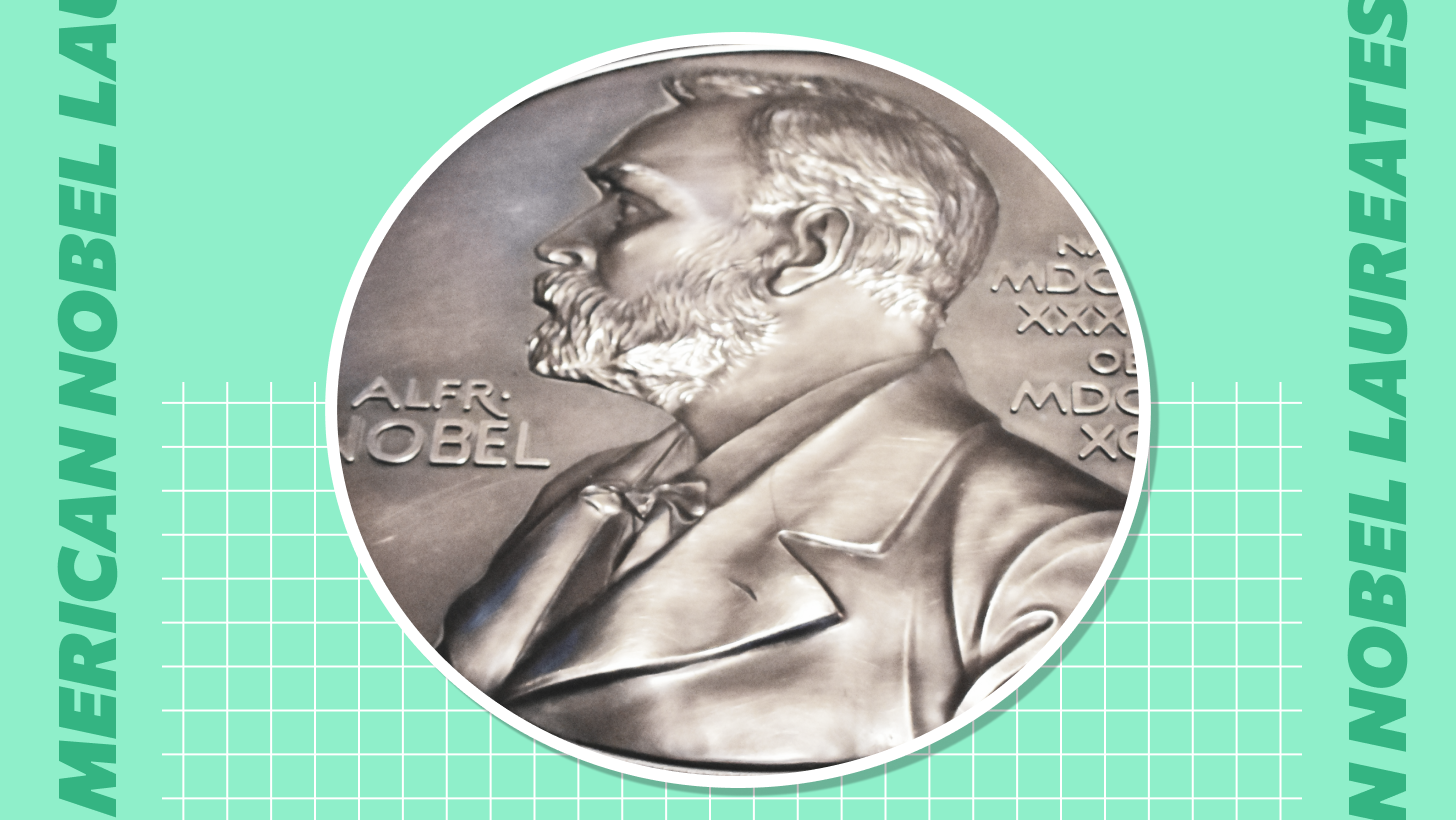
Image: Anastacia Dvi

For many disciplines, being awarded a Nobel Prize is akin to reaching the summit of Mount Everest: it is the highest achievement that many scientists, writers, and world leaders can aspire to. In that regard, we Americans can take pride in knowing that our country has been awarded an extraordinary 400 Nobel Prizes, making us the nation with the most laureates in the world. We have selected ten of these extraordinary Americans in history, in an effort to celebrate and remember their remarkable achievements.

1
Barack Obama

Image: History in HD

We’ll begin with our most recent Laureate President. You’ll quickly notice that many U.S. Presidents have made it to this list, which seems only fitting considering their paramount efforts in maintaining world peace.

In this regard, President Obama is no exception, and in 2009 he was awarded the Nobel Peace Prize for his "extraordinary efforts to strengthen international diplomacy and cooperation between peoples."

2
Al Gore

Image: Markus Spiske

The only American Vice President on this list, Al Gore, received the Nobel Peace Prize in 2007 for his "efforts to build up and disseminate greater knowledge about man-made climate change." Gore has been a long-time advocate for fighting climate change, and his endeavors were featured in the Academy Award-winning documentary An Inconvenient Truth .

Nowadays, Al Gore continues to educate the world about environmentalism and the perils of climate change. In 2021, he addressed the United Nations during their Climate Change Conference.

3
Martin Luther King Jr.

Image: Unseen Histories

No other figure represents the fight for Civil Rights in America as Martin Luther King Jr. does. In 1964, Reverend King was awarded the Nobel Peace Prize for "his non-violent struggle for civil rights for the Afro-American population."

King, who was 35 years old at the time, became the youngest Peace Prize recipient in history. This title is now held by Malala Yousafzai, who was awarded the Prize at 17 years of age, in 2014.

4
Richard P. Feynman

Image: Zoltan Tasi

From his bongo playing to his iconic studying technique, American theoretical physicist Richard Feynman has become a pop culture icon. In 1965, Feynman received the Nobel Prize in Physics alongside Julian Schwinger and Shin'ichirō Tomonaga "for their fundamental work in quantum electrodynamics."

While Feynman was by no means the first (nor will be the last) American Nobel-winning physicist, his recognition is still remembered fondly by the scientific community. With the money from the award, Feynman and his wife purchased a beach house in Baja California, Mexico.

5
Bob Dylan

Image: weston m

Bob Dylan is known as "The Voice of a Generation" and with good reason: his songs of protest and insightful lyrics have inspired generations of Americans for almost 70 years. Dylan is truly a renaissance man, being an accomplished musician, painter, and, perhaps more importantly for this list, writer.

In 2016, Bob Dylan was awarded the Nobel Prize in Literature for "for having created new poetic expressions within the great American song tradition." Fellow American musician (and die-hard Bob Dylan fan) Patti Smith performed a heartfelt rendition of his classic song "A Hard Rain’s a-Gonna Fall" during his Nobel ceremony.

6
Jimmy Carter

Image: Library of Congress

At almost 100 years of age, Jimmy Carter’s life has been filled with outstanding achievements and awards. In that sense, it is rather remarkable that our 39th President’s Nobel Peace Prize was awarded almost 20 years after he left the White House.

In 2002, President Carter received the Peace Prize for "his decades of untiring effort to find peaceful solutions to international conflicts." His award mostly acknowledged his work with the Carter Center and their exceptional work in defending and promoting human rights around the world.

7
Ernest Hemingway

Image: Annie Lang

"Beige" prose master and iconic American author Ernest Hemingway was awarded the Nobel Literature Prize in 1954 for his "mastery of the art of narrative". The Nobel Foundation specially cited Hemingway’s then most recent novel, The Old Man and the Sea , as a contributing factor in their decision.

At the time of his award, Hemingway was recuperating from an airplane accident and didn’t travel to Stockholm to receive the award. He did, however, send a speech to be read at the ceremony, in which he stated that "Writing, at its best, is a lonely life."

8
John Forbes Nash

Image: Roman Mager

American mathematician John Forbes Nash was brought into the spotlight thanks to the 2001 film A Beautiful Mind , in which Nash was portrayed by Russell Crowe. Thanks to this movie, the whole world was able to learn about Nash’s troubled but extraordinary life and the amazing theories that earned him a Nobel Prize in Economics in 1994.

Nash is mostly remembered for his groundbreaking contributions to the mathematical field known as "game theory." He was awarded the prize alongside John Harsanyi and Reinhard Selten "for their pioneering analysis of equilibria in the theory of non-cooperative games."

9
Toni Morrison

Image: Isaac N.

American novelist Toni Morrison was awarded the Nobel Prize in Literature in 1993 when she was 62 years of age. A few years earlier, Morrison received the Pulitzer Prize for her groundbreaking 1988 novel Beloved , which was instrumental in her Nobel nomination.

The Nobel Foundation acknowledged Morrison’s extraordinary talent, recognizing her as a writer "who in novels characterized by visionary force and poetic import, gives life to an essential aspect of American reality."

10
Theodore Roosevelt Jr.

Image: Library of Congress

We’ll end this article with the very first American to win a Nobel Prize. Our 26th President received the Nobel Peace Prize in 1906, in recognition of his tremendous and successful efforts in ending the Russo-Japanese War.

Roosevelt was not only the first American but also the very first statesman to receive the Nobel Peace Prize. While at the time this award was deemed controversial, ultimately the Nobel Foundation decided to acknowledge Roosevelt’s "role in bringing to an end the bloody war recently waged between two of the world's great powers, Japan and Russia."
General General 3 min read

Big names for small creatures

Bird is the word: 10 American bird names explained

Image: Dulcey Lima

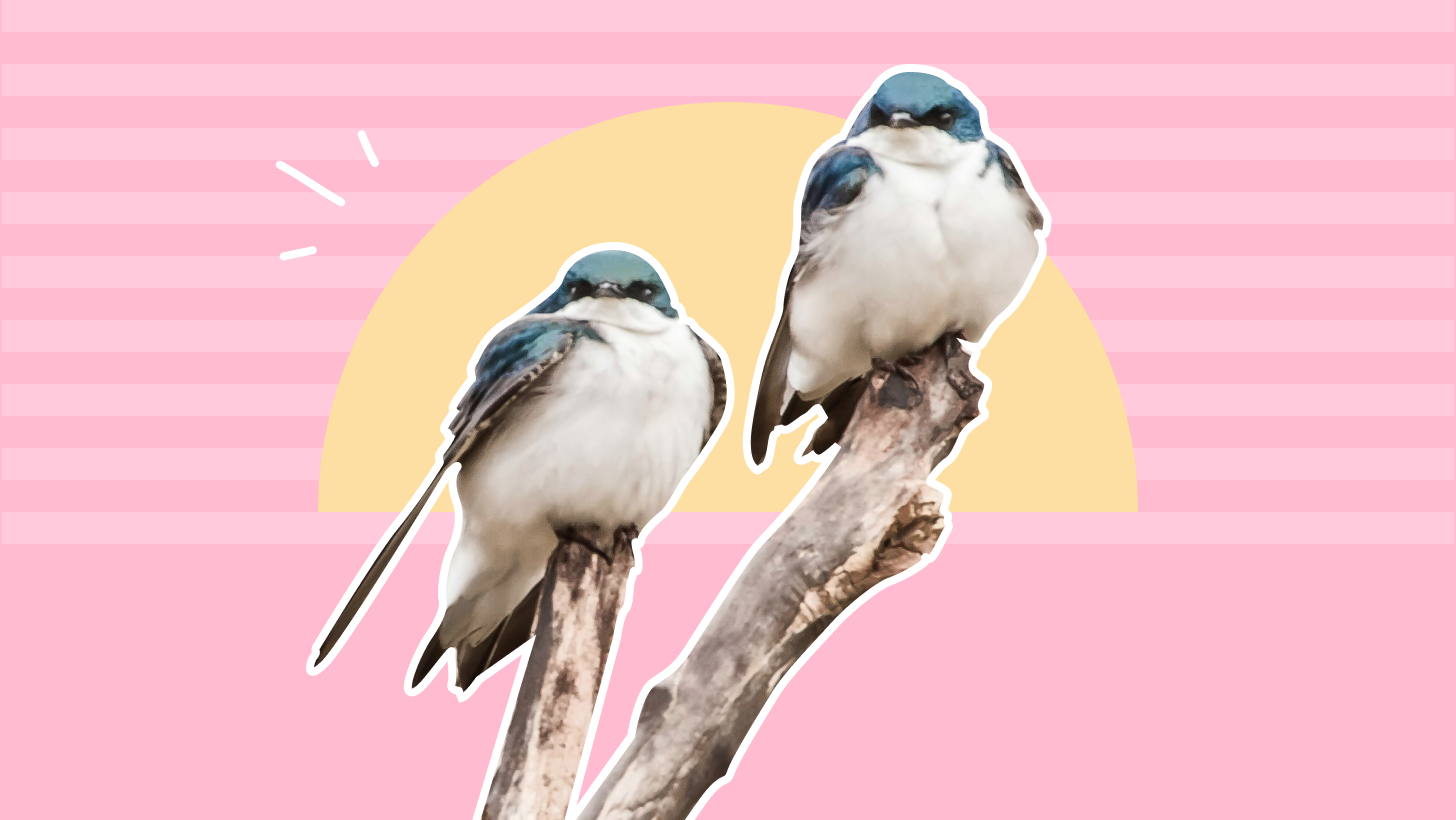
A world without birds would be a gloomy one, indeed. These feathered friends grace our skies and brighten our days with their songs, not to mention the important environmental roles they fulfill. The names we give them often showcase their characteristics or pay homage to the people who discovered them. Scroll on to learn about ten of the most common birds and their names. How many of these did you know?

1
Mourning Dove

Image: Anish Lakkapragada

The melancholic name of the mourning dove comes from its sad call , which the casual listener might mistake for an owl. Mourning Doves inhabit a wide range of open habitats, including suburbs and urban parks.

Their call is generally referred to as the "perch coo," a song sung by an unmated male from a perch. These birds have other well-known nicknames, such as "turtle doves" and "rain doves."

2
Northern Mockingbird

Image: Tyler Jamieson Moulton

More than just mockers, mockingbirds are expert singers, continuously adding new imitations of other birds' songs to their repertoires and sometimes mimicking unnatural sounds, such as car alarms. Northern mockingbirds may learn up to 200 different sounds.

These medium-sized, long-tailed gray songbirds prefer open habitats with a scattering of shrubs and small trees. They eat a wide variety of fruits, invertebrates, and even small vertebrates, such as lizards.

3
White-breasted Nuthatch

Image: Patrice Bouchard

You can recognize this bird by its white face and underside, bluish back and wings, dark crown, nasal "yank-yank" call, and its habit of creeping down tree trunks headfirst.

The name "nuthatch" is derived from "nut hacker," reflecting the bird's method of opening up nuts by jamming them into a crevice and then hammering at them.

4
Downy Woodpecker

Image: Joshua J. Cotten

The smallest woodpecker in North America, the Downy Woodpecker is a stubby-billed, black-and-white bird that inhabits deciduous woods and tree-filled urban and suburban parklands. It forages on trees, shrubs, and large weeds for insects and other arthropods.

The "downy" in this bird's common name refers to the soft, white feathers of its long, white back stripe . The "woodpecker" part refers to the fact that this bird pecks bark, looking for termites hidden underneath it.

5
House Finch

Image: Patrice Bouchard

Originally found only in the West, the House Finch was introduced to the eastern U.S. in 1939, when a few individuals were released from a pet store. The word "finch" comes from the German idiom fink , which refers to a lively or cheerful person —a description that certainly fits this active and gregarious songbird. The term "house" refers to the bird’s tendency to hang around human dwellings.

6
Song Sparrow

Image: Patrick Fobian

Song Sparrows, as their name suggests, sing a cheerful and recognizable song. Although these birds can be found in a wide range of habitats, their favorite spots are often close to streams and other sources of fresh water.

The English word "sparrow" derives from the Anglo-Saxon word spearwa . This term means "flutterer," an apt description for this active songbird.

7
Ruby-throated Hummingbird

Image: Joshua J. Cotten

The only hummingbird that regularly breeds in the eastern U.S. is the Ruby-throated Hummingbird. The male's metallic-looking red throat, or "gorget," explains the first part of the name. And the hummingbird part comes from the humming sound their wings make as they fly.

8
Blue Jay

Image: David Bridle

The "bullies" of the birdfeeder, Blue Jays' name comes from the bird's noisy, garrulous nature. This term has also been applied to other birds of the same family, which are generally gregarious as well.

Before approaching a feeder, Blue Jays often give harsh calls that sound like those of hawks, perhaps to scare off other birds that might compete for access to the bird seed.

9
Tufted Titmouse

Image: Paul Crook

These curiously named birds form longer-lasting family units than many other songbirds, with their younglings sometimes even hanging around for a second year to help raise younger siblings. The "titmouse" name has nothing to do with rodents, but instead comes from an Old English phrase meaning "small bird."

10
Spotted Towhee

Image: Anish Lakkapragada

Spotted Towhees are members of the sparrow family. These birds have dark heads and backs, white spots on their wings, rusty sides, and striking red eyes. Their song is a simple trill.

The name "towhee" is a simulation of the bird's call and it was coined in 1731 by the naturalist and bird artist, Mark Catesby.

History History 5 min read

Spirits in the halls

The White House After Dark: Whose spirits linger in the Mansion?

Image: Tom Fisk / Photo By: Kaboompics.com

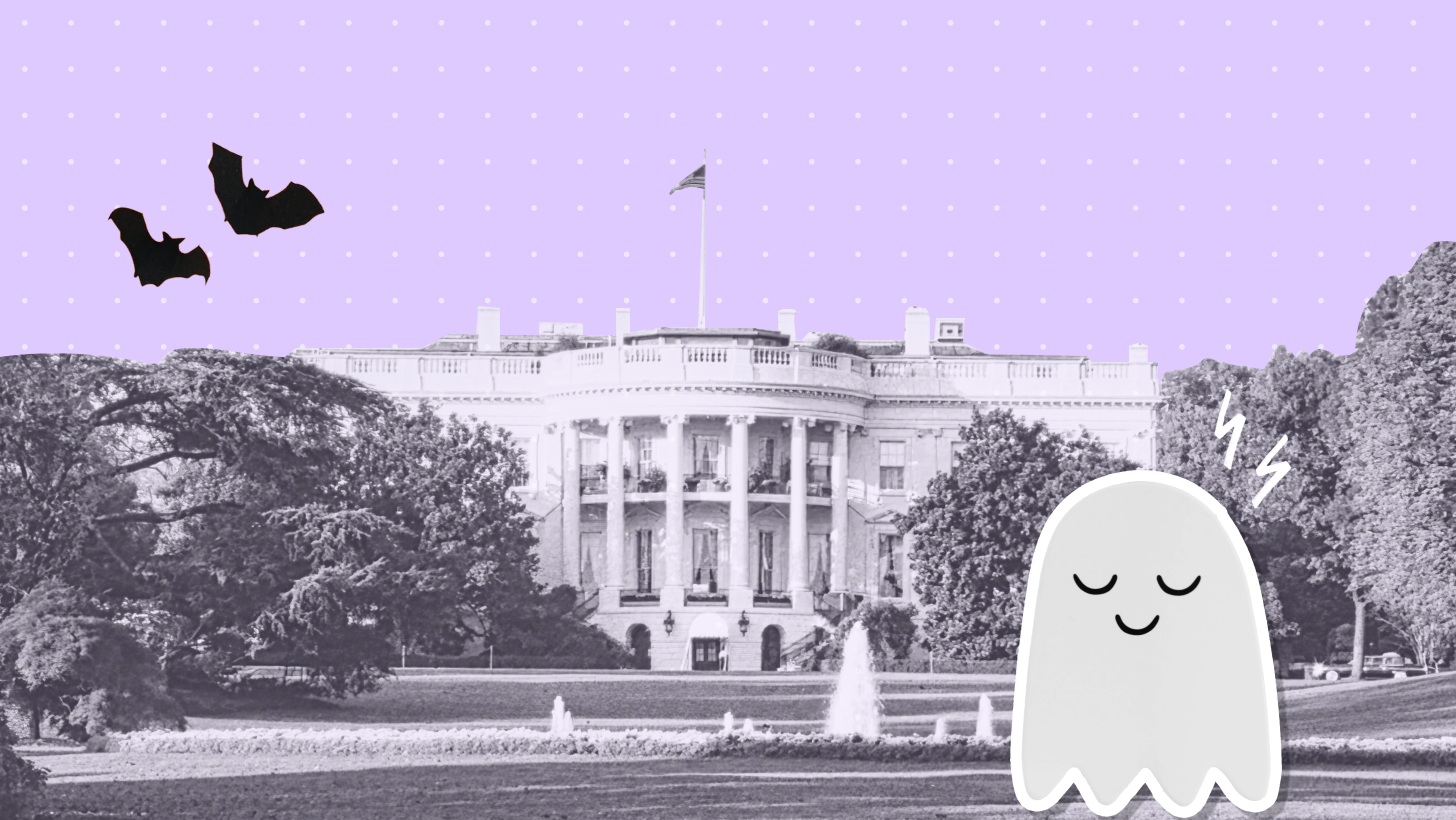
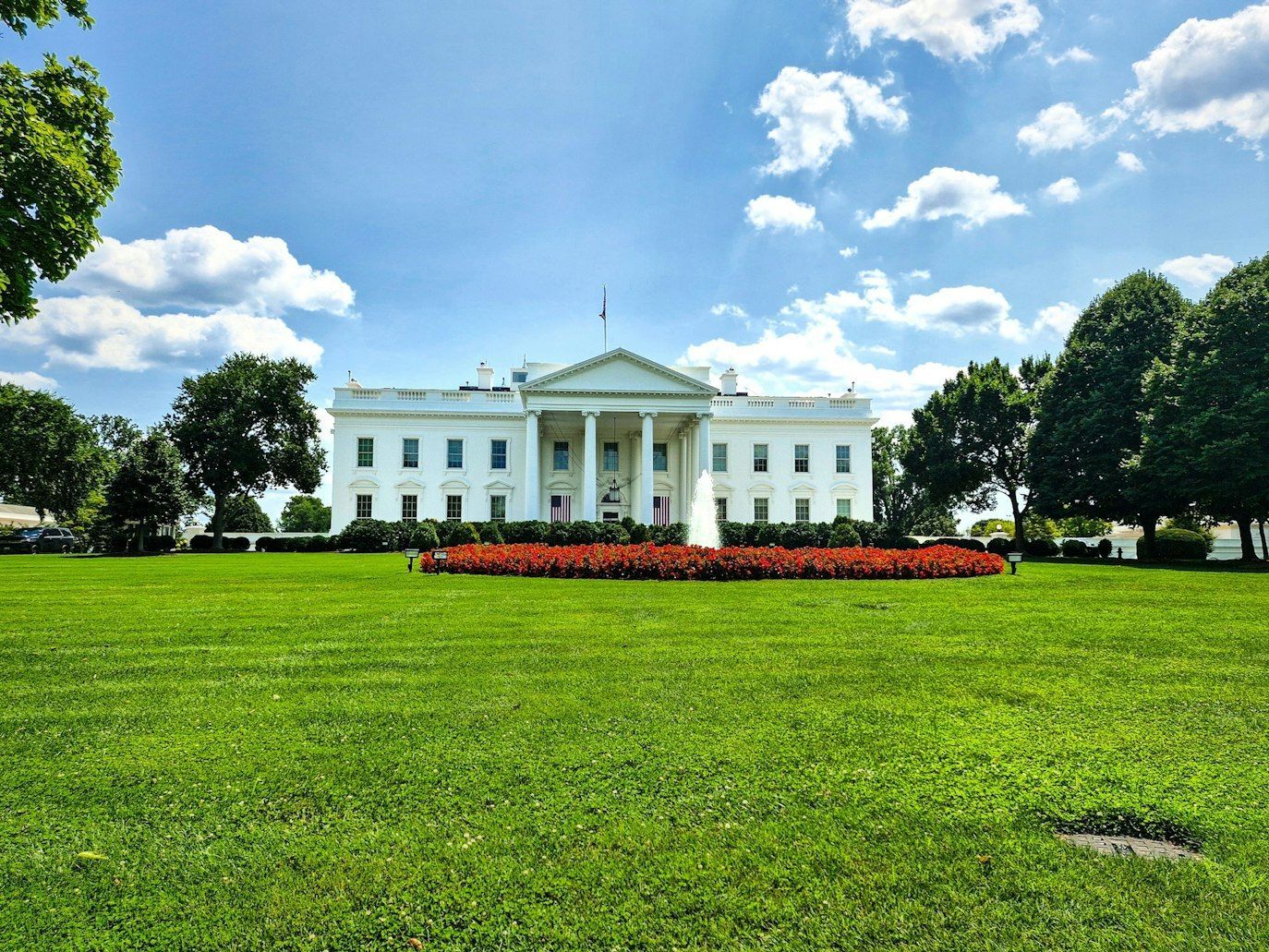
The White House was completed in the 1800s and has served as the home to every US president since. Just imagine the countless people, events, conversations, and even incidents that have taken place there. With six floors and 132 rooms, it's no surprise that the White House has a good dose of paranormal stories. From creepy footsteps and noises to the apparitions of presidential ghosts, the iconic mansion at 1600 Pennsylvania Avenue is full of supernatural tales that will give you goosebumps!

1
Abraham Lincoln

Image: Girma Nigusse

One of the most famous ghosts in the White House is none other than that of Abraham Lincoln. But this is nothing new. Shortly after the president's passing, employees of the Mansion began reporting sightings of a tall, shadowy figure dressed in a black suit. Several First Ladies, including Eleanor Roosevelt and Grace Coolidge, also claimed to have encountered Lincoln's spectral figure.

One of the best stories about his ghost involves a famous statesman from another country: Winston Churchill. During WWII, Churchill visited the White House. The story goes that after a night shower, he encountered Lincoln's ghost standing by the fireplace. Churchill greeted him calmly, saying, "Good evening, Mr. President. You seem to have me at a disadvantage."

2
Andrew Jackson

Image: Peter Oswald

Andrew Jackson, 7th President of the US, was famous for his strong, commanding personality. Perhaps it was this aspect of his character that gave rise to the tales of his loud –some say "angry"– ghost haunting the White House.

Jackson's ghost was said to appear regularly during Theodore Roosevelt's administration. Stories describe his presence as impossible to ignore, with loud footsteps and objects inexplicably falling. Another famous anecdote narrates a dinner party held by President Harry S. Truman at the White House. Many guests allegedly saw Jackson's figure standing in one of the hallways, appearing and disappearing right in front of them.

3
Thomas Jefferson

Image: Dominik Scythe

Thomas Jefferson was not only a Founding Father, the main author of the Declaration of Independence, the 3rd President of the United States, and the man behind the Louisiana Purchase. He was also a skilled violinist.

As a polymath, Jefferson was a wise, educated man with many talents. He played several instruments, but his favorite was the violin. Over the years, several stories have emerged about staff members and even other presidents hearing the haunting sound of a violin, seemingly coming from the Yellow Oval Room.

4
Dolley Madison and the Rose Garden

Image: KaLisa Veer

But paranormal stories aren't just about presidents; First Ladies also star in similar anecdotes.

One such tale is about Dolley Madison, First Lady to James Madison, who lived in the White House from 1809 to 1817 during his two terms. Dolley Madison was known to spend long hours in the gardens during her time at the House, particularly in the Rose Garden, which she loved. After her passing in 1849, many reported seeing a ghostly figure in the Rose Garden, hearing a woman's voice, or feeling as if they were being watched.

5
Abigail Adams

Image: Hugo

John Adams was the first president to ever live in the White House. He was there with his wife, Abigail Adams, during the last year of his term (1800-1801).

After Abigail's passing, many people working in the White House reported sightings of her ghost in the East Room, where she was said to hang laundry. Even today, some staff members claim to smell wet laundry near that room.

6
John Tyler

Image: Madara

Another of the haunted rooms in the White House is the Blue Room, apparently visited by the ghost of President John Tyler.

Tyler married his second wife, Julia Gardiner, in 1844 while still in office. As the story goes, the president had proposed to Julia on several occasions before she finally said yes. Over the years, reports emerged about the Blue Room of the White House, where it is suggested that footsteps are heard, and a man's voice seemingly declaring love or proposing marriage.

7
David Burnes

Image: Vihan Dalal

The White House has stood at 1600 Pennsylvania Avenue since 1800. But before that, the land it occupies belonged to someone else.

David Burnes was one of the original landowners, living there before the government purchased it. Legend has it that he wasn't totally pleased with the sale of his land. After his death, several residents –including Abigail Adams– reportedly saw a figure resembling Burnes walking near the house, often watching it from a distance.

8
William Henry Harrison

Image: Peter Herrmann

It seems ghosts might be lurking in every corner of the White House. As we've seen, several rooms and even the gardens have been the setting for various paranormal tales. But that's not all: The attic holds its secrets, too.

This story involves William Henry Harrison, the 9th president of the US and the first to pass away during his time in the White House. It's said that his spirit now haunts the attic of the mansion, where footsteps and a wailing voice can be heard at times.

9
The Thing

Image: Steinar Engeland

Legend has it that a mysterious entity has been haunting the White House for some time, one not tied to any known historical figure.

Several members of the White House staff have reported strange experiences attributed to "the Thing." That's the name given to this presence that makes those nearby feel as if they are being watched. But here's the creepiest part: Several employees reported feeling pressure on their shoulders as if someone was lightly leaning on them.

10
The Demon Cat

Image: Abdu Rahman

Now, it's time for a ghost that doesn't take human form. It's the well-known " Demon cat" (or "DC"), a spectral black cat said to haunt several government buildings in Washington, DC.

According to legend, cats were brought to the city to control the rat population in the 19th century. But one of those cats never left. It's now a ghost haunting landmarks like the White House and the US Capitol. Some people say the ghostly cat appears small at first but grows to a creepy large size as it approaches. Some even describe it as reaching the size of a "huge tiger."

Explore more American facts

Choose your favorite category!

General
General

As American as apple pie—the very best America has to offer!

Culture
Culture

Delve into the astounding richness of American lore.

Geography
Geography

Hop in and explore vast and diverse American landscapes.

History
History

Discover the key moments that shaped the United States.