Geography Geography 5 min read

Streets ahead

City hearts: The 10 most iconic neighborhoods in America

Image: Breno Assis

America’s history comes alive in its bustling streets and ever-expanding urban landscapes. But what truly pumps life into the heart of these vibrant cities are their neighborhoods—where people meet, live, work, and thrive. These communities are as diverse as our nation's cultural roots, offering a window into the inclusiveness and energy that define American society. From the jazz beats of New Orleans to the legendary avenues of Harlem, let’s take a journey through 10 iconic American neighborhoods that—each in its own way—embody the spirit of our country!

1
French Quarter – New Orleans, LA

Image: João Francisco

Also known as the Vieux Carré ("Old Square" in English), the French Quarter is the oldest neighborhood in New Orleans. Established in 1718 by the city’s founders, the neighborhood is now famous for its vibrant music scene—particularly jazz, which was born in its streets and clubs.

Architecturally, the French Quarter is characterized by a blend of Spanish and French colonial influences, with wrought-iron balconies and colorful buildings lining the streets. Jackson Square and St. Louis Cathedral remain central landmarks, standing as reminders of the city’s rich European history.

2
Harlem – New York City, NY

Image: John Money

Harlem is a neighborhood in Upper Manhattan known for its African American culture and rich immigration history. Originally founded as a Dutch settlement around 1658, it was named after the city of Haarlem in the Netherlands. Harlem's complex history has been defined by a series of economic boom-and-bust cycles, with significant population shifts accompanying each cycle.

Successive waves of immigration populated its streets with people from all over the world, including Jewish and Italian Americans in the 19th century and African American residents in the 20th century. The Harlem Renaissance of the 1920s and 1930s cemented the neighborhood's fame, giving rise to figures like Louis Armstrong and Duke Ellington, and helping to shape American popular culture.

3
Beverly Hills – Los Angeles, CA

Image: David Vives

Although technically a suburb of Los Angeles, with distinct neighborhoods of its own, Beverly Hills is still a somewhat closed-knit community, known for its opulent homes and celebrity residents. Originally settled in 1828, the area began as an agricultural community centered around Rancho Rodeo de las Aguas, a Mexican-era land grant.

In 1914, a group of investors, initially searching for oil, discovered water instead and decided to develop the area into a town. By the 1920s, Beverly Hills had become synonymous with wealth and luxury, attracting movie stars like Douglas Fairbanks and Mary Pickford, who built lavish estates and cemented the area as a celebrity haven.

4
North End – Boston, MA

Image: Zoshua Colah

Boston's North End is the city’s oldest residential neighborhood, dating back to the 1630s. It played a crucial role in the American Revolution, with notable figures like Paul Revere building their homes there. The Old North Church, where the famous "One if by land, two if by sea" signal was sent, also stands as a landmark of the city’s revolutionary heritage.

The narrow streets and historic buildings offer visitors a glimpse into colonial America, making it one of Boston’s top tourist destinations. The North End is also renowned for its Italian heritage, which took root in the early 1900s, and for hosting the annual Feast of St. Anthony, a tradition dating back over a century.

5
Hollywood – Los Angeles, CA

Image: Jeremy Bishop

Hollywood is arguably the world’s most famous neighborhood when it comes to film and entertainment. Founded in the late 1800s, it quickly became the movie capital of the world with the establishment of the Nestor Film Company in 1911, the first of many studios to call Hollywood home.

Its most iconic landmark, the Hollywood Sign, was originally created in 1923 as an advertisement for a real estate development but has since evolved into a universal symbol of the film industry. While many production studios have relocated over the years, Hollywood remains synonymous with celebrity and filmmaking. Each year, millions of visitors flock to the Hollywood Walk of Fame and explore the streets where countless film legends started their careers.

6
Little Italy – New York City, NY

Image: Alex Haney

Little Italy, located in lower Manhattan, was established in the late 19th century by Italian immigrants who brought their culture, cuisine, and traditions to New York. The neighborhood quickly became a vibrant center of Italian-American life , with bustling markets, restaurants, and festivals.

Though urban development has reduced the original neighborhood to just five blocks, Little Italy still retains its old charm. Iconic spots like Lombardi’s, America’s first pizzeria, continue to draw crowds, while the annual Feast of San Gennaro—a tradition since 1926—celebrates the rich heritage of the community.

7
Chinatown – San Francisco, CA

Image: Kevin Vision

San Francisco’s Chinatown is not only the oldest but also one of the largest Chinese enclaves in North America —and even outside of Asia. Established in 1848, it holds significant historical and cultural importance, playing an important role during the California Gold Rush and the construction of the Transcontinental Railroad.

Today, Chinatown is celebrated for its vibrant markets, distinctive pagoda-style architecture, and lively Chinese New Year festivities. Spanning 24 blocks, it remains a crucial cultural and commercial hub, drawing both tourists and locals with its authentic cuisine and historic landmarks.

8
Hyde Park – Chicago, IL

Image: Manta X

Best known as the home of the University of Chicago, Hyde Park has long been a hub for intellectuals, politicians, and social movements on Chicago’s South Side. Originally developed as a retreat for the city's affluent residents, the neighborhood is also known for its numerous museums and religious institutions, including the famous Museum of Science and Industry.

Hyde Park was also the site of the 1893 World's Columbian Exposition, where millions of visitors were introduced to groundbreaking innovations, such as the first Ferris wheel. Today, it remains one of Chicago’s most diverse neighborhoods, having been home to notable figures like President Barack Obama.

9
Beacon Hill – Boston, MA

Image: Leslie Cross

Beacon Hill is one of Boston’s most picturesque neighborhoods, known for its Federal-style row houses and gaslit streets. Established in the early 1800s, it quickly became a haven for the city's elite, featuring homes designed by notable architects of the era, including Charles Bulfinch.

Beacon Hill also played a significant role in the abolitionist movement, with prominent figures like Frederick Douglass residing in the area. Adding to its architectural charm, the Massachusetts State House, also designed by Bulfinch, crowns Beacon Hill with its stunning golden dome.

10
Little Havana – Miami, FL

Image: Kian Lem

Little Havana in Miami is the heart of Cuban-American culture in the United States. Home to Cuban exiles and Latin American immigrants, the neighborhood's main street, Calle Ocho, is famous for its colorful murals, Cuban cafés, and lively music. Each year, the Calle Ocho Festival, part of the larger Carnaval Miami celebration, draws thousands of visitors.

A symbol of cultural integration, Little Havana features several significant landmarks, including the historic Tower Theater, which has served as a cultural bridge for newly arrived immigrants by offering films in both English and Spanish.
History History 5 min read

First Family, regular domestic problems

Ten ways the First Family changed the White House

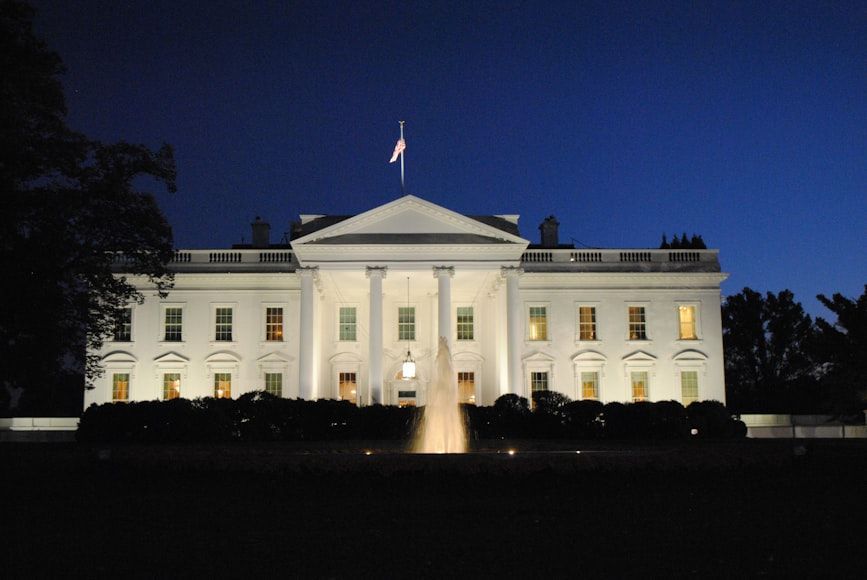
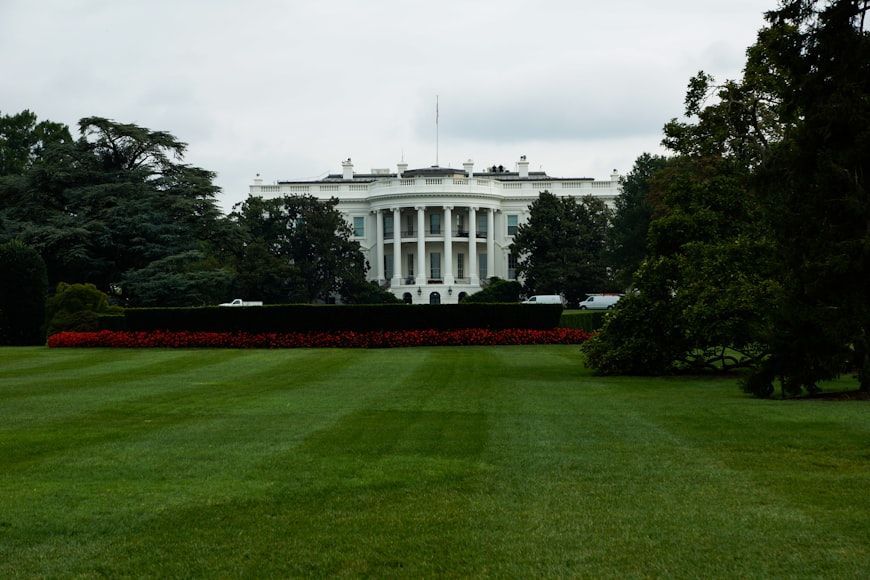
Since 1800, the house at 1600 Pennsylvania Avenue has served as the president’s official residence. In the more than 200 years since, the presidential mansion has seen it all, from being set on fire by British forces to having planes crash on its lawn. Each administration has left its mark on the White House, with many presidents and first ladies expanding, renovating, and reimagining it while creating new traditions and customs. Let’s dive into 10 ways First Families changed the presidential residence.

New Year Reception (John and Abigail Adams)

Image: Ray Hennessy

John Adams was the first U.S. president to live in the White House—then referred to as the President’s Palace or the Presidential Mansion—alongside his wife, Abigail, who played a significant role in furnishing the newly built residence.

On New Year’s Day in 1801, the Adamses held a public reception for anyone who wanted to shake hands with the president and his wife. This tradition continued (with some interruptions) until 1932, when it was ended by Franklin D. Roosevelt, who allegedly wanted to avoid being seen using a wheelchair.

Indoor Toilets (Thomas Jefferson)

When Thomas Jefferson assumed the presidency, he discovered that the White House lacked indoor plumbing, toilets, and had only an outdoor wooden privy. He ordered the construction of two "water closets," one on each side of the residence.

During Jefferson’s tenure, the White House underwent several modernizations, including improvements to the lighting system, the kitchen, and exterior features such as gutters. He also had an outdoor wine cellar built to store his extensive collection.

White House China (James Monroe)

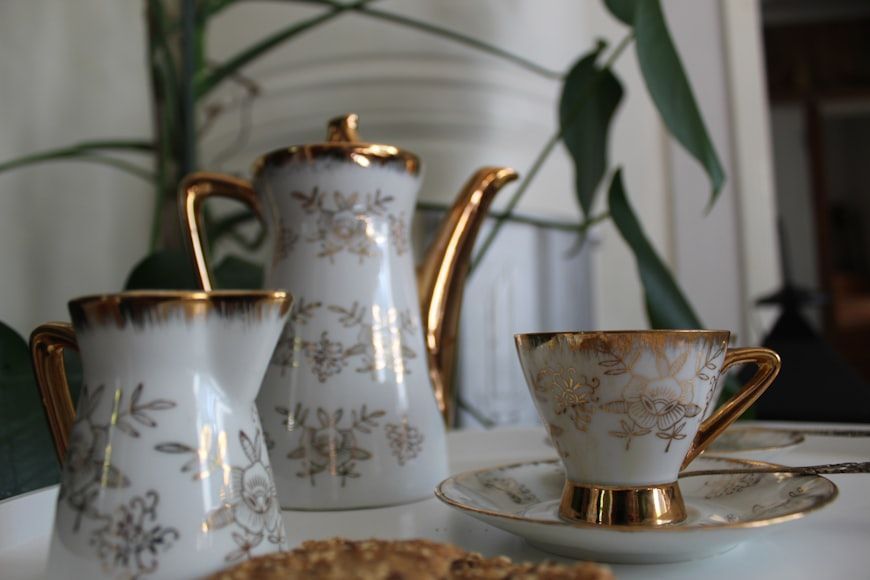
Did you know the White House has a special room dedicated to displaying the porcelain sets designed for each administration? The tradition of commissioning presidential china designs started in 1817, with President James Monroe.

Monroe’s china was designed and crafted in Paris, featuring an eagle carrying a red, white, and blue banner inscribed with "E Pluribus Unum." Following criticism over the presidential mansion’s purchase of foreign-made goods, Congress decided that future presidential china should be manufactured in the United States, though some presidential couples still chose to commission French china.

The Library (Abigail Fillmore)

When Millard and Abigail Fillmore moved into the White House, their approach to decoration and improvement differed from that of previous First Families. None of them came from a wealthy background, so they prioritized expanding the heating system and modernizing the kitchen.

More interested in intellectual pursuits than in socializing, Abigail noticed that the Presidential Mansion lacked a library and set out to create one. She personally organized the room, selected the books, and arranged them to her liking. The library became her main parlor, where she received literary figures of the time and listened to music.

Floral Arrangements (Lucy Webb Hayes)

A passionate abolitionist and the first First Lady to earn a college degree, Lucy Webb Hayes moved into the White House at the end of the Reconstruction era, and after a highly controversial election. With limited funds to renovate the presidential mansion, Mrs. Hayes found ingenious ways to conceal holes in the carpets and worn-down furniture.

Lucy Hayes was the first president’s wife to be referred to as "First Lady." She made several improvements to the White House, but she is most remembered for turning the billiard room into a greenhouse filled with flowers, which she then used for floral arrangements for the residence.

The West Wing (Theodore Roosevelt)

We all know that the West Wing is where the presidential office is located, but not everyone knows that it was not part of the original design of the White House. Before 1902, the president’s offices were located on the second floor.

When Theodore Roosevelt moved into the White House, he discovered there wasn’t enough space for his six children and the growing staff. His wife, Edith, suggested that the second floor be converted entirely into family living quarters and that the offices be moved elsewhere. The West Wing was then built as a temporary structure on the site of the old stables, but in the end, it became a permanent fixture of the residence.

The Oval Office (William Taft)

This office is known as the place where major decisions are made, but it wasn’t part of the White House’s original design. When President William Taft decided to make the temporary West Wing permanent, he also doubled its size and created the first Oval Office.

Its distinctive shape was inspired by the semicircular Blue Room in the main residence, where presidents traditionally received guests. That design, in turn, paid homage to the bow windows from which George Washington once greeted visitors at his presidential homes in New York and Philadelphia.

Interior Reconstruction (Harry S. Truman)

By 1949, the White House had endured a century and a half of wars, fires, political scandals, and modernization. With few renovations made during the Great Depression and World War II, President Truman and his family moved into a mansion that was literally falling apart—it was declared unsafe after a piano leg crashed through the floor of the family quarters.

The Trumans moved across the street during the three years the reconstruction took place. Due to the need for extensive renovations, a total demolition of the building was considered but not enacted. In the end, the decision was to preserve the exterior walls and completely rebuild and expand the interior.

Themed Christmases (Jackie Kennedy)

The White House’s themed Christmas celebrations are now a beloved tradition, complete with a spectacular tree and elaborate decorations. This lovely tradition was started in 1961 by Jackie Kennedy, who then chose The Nutcracker as a theme, and featured decorations crafted by disabled and elderly citizens.

Since then, First Families have carried on the themed Christmas tradition, honoring topics and interests relevant to the nation and highlighting causes dear to the presidential family.

Office of the First Lady (Rosalynn Carter)

First Ladies have always played an important role in supporting the president, managing the Presidential Mansion, and championing various causes. However, this role wasn’t always officially recognized or included in the White House budget.

Although some First Ladies before her had hired official staff, Rosalynn Carter was the first to organize hers into a formal Office of the First Lady , complete with departments dedicated to press, social causes, campaigns, and community outreach.

General General 4 min read

People’s early favorites

Every American remembers at least one of these children's books

Image: Josh Applegate

Do you remember the books you read as a kid? When we open those colorful pages at an impressionable age, the characters jump out and become our friends. Ducklings, wild things, and hungry caterpillars are still very much alive both in bookshelves and in our memories. Let’s explore some of the dearest children’s books in the US —we hope you find your favorite among them!

1
"The Very Hungry Caterpillar" by Eric Carle

Image: rbu1249

A must to start off this list: The visuals of The Very Hungry Caterpillar are ingrained in the upbringing of millions of kids throughout the country —and the world!

Eric Carle wrote and illustrated the story of a bug eating through several foods before transforming into a butterfly. Who could forget the tactile experience of finding different holes in the pages?

2
"Corduroy" by Don Freeman

Image: Susanne Jutzeler, suju-foto

In the world of children’s literature, Corduroy is a tear-jerker. A teddy bear sits on a store shelf hoping a kid will pick him. Little Lisa spots him but can’t afford him, and leaves. So the bear embarks on a quest to fix his missing button, hoping this will make him more likable.

In the end, Lisa comes back and buys him as he is —because, of course, he was always enough . Is there a sweeter story to teach kids about self-acceptance and love?

3
"Make Way for Ducklings" by Robert McCloskey

Image: David Trinks

A row of bronze statues in Boston’s Public Garden celebrates Make Way for Ducklings, the sweet book by illustrator and author Robert McCloskey.

He got the idea for this story when he observed ducks causing traffic issues on Beacon Street. The book follows Mr. and Mrs. Mallard as they search for the perfect place to raise their family —ducklings Jack, Kack, Lack, Mack, Nack, Ouack, Pack, and Quack. They finally settle, of course, in the lagoon of the Boston Public Garden.

4
"Charlotte's Web" by E.B. White

Image: Annie Spratt

Author E.B. White had a farm in Maine, and his daily observations of barnyard animals gave him an idea: What if a pig and a spider became best friends?

In the book, the spider weaves messages to convince humans that Wilbur is an extraordinary pig and should not be slaughtered. Charlotte’s Web brushes on themes like mortality and loss —certainly bold for a children’s book. Nonetheless, it became a timeless classic.

5
"The Cat in the Hat" by Dr. Seuss

Image: Franco Monsalvo

"Thing One" and "Thing Two" have to be among the longest-standing Halloween costumes in use. They were born thanks to Dr. Seuss’ famous The Cat in the Hat in the 50s, and every kid still seems to know its iconic characters.

The story shows a day in the life of two kids left home alone when a whimsical magical cat shows up to unleash some fun chaos. The author said that he wrote the book as a response to an article in Life Magazine that lamented the dullness of children’s primers.

6
"Frog and Toad Are Friends" by Arnold Lobel

Image: Jared Evans

Images of Frog and Toad still abound on the internet, which proves how beloved and timeless the pair became. Frog and Toad Are Friends was published in 1970 as the first in Arnold Lobel's famous series.

The wholesome dialogue, tender narratives, and classic illustrations left a lasting mark on generations of readers. Who could forget the simplicity of these two loyal friends riding a bike, flying a kite, or fishing from a boat?

7
"Goodnight Moon" by Margaret Wise Brown

Image: David_Miram

We couldn’t leave Goodnight Moon out of this list! Margaret Wise Brown wrote over 100 children’s books, but this one won the hearts of little readers and their parents.

It’s a bedtime story about a young bunny saying goodnight to everything around him , from "the great green room" to "the quiet old lady whispering ‘hush’." It shows an appeasing and sweet ritual that taught kids about routines through soothing rhymes.

8
"Where the Wild Things Are" by Maurice Sendak

Image: Adnan Uddin

In Where the Wild Things Are, mischievous young Max escapes into a vivid fantasy world after being sent to his room without dinner. There, he crosses a land of endearing monsters whom he leads as their king.

Maurice Sendak’s story and iconic illustrations captivated many generations of readers. The text was adapted into short films, a live-action film, and even an opera!

9
"Brown Bear, Brown Bear, What Do You See?" by Bill Martin Jr. and Eric Carle

Image: Daniel Diesenreither

Remember Eric Carle, author of The Very Hungry Caterpillar ? Before that big hit, he had been the illustrator for another unforgettable kid’s book: Brown Bear, Brown Bear, What Do You See?

This one was written by Bill Martin Jr. The rhyming question-response structure introduces readers to a series of animals described by their vibrant colors : a brown bear, a red bird, a yellow duck, and so on.

10
"The Phantom Tollbooth" by Norton Juster

Image: Jon Tyson

Maurice Sendak, the author of Where the Wild Things Are​ , said that The Phantom Tollbooth was a masterpiece.

This 1960s book by Norton Juster follows Milo, a bored young boy who unexpectedly receives a mysterious tollbooth that allows him to travel through fantastical lands. Juster said that the idea for this book was sparked from a random encounter with a curious child asking about infinity.

Explore more American facts

Choose your favorite category!

General
General

As American as apple pie—the very best America has to offer!

Culture
Culture

Delve into the astounding richness of American lore.

Geography
Geography

Hop in and explore vast and diverse American landscapes.

History
History

Discover the key moments that shaped the United States.