Culture Culture 6 min read

GAME CHANGERS

Discover 10 Of The Most Iconic & Successful American Products!

Image: Mike Petrucci

In this global and modern marketplace we live in, the products a nation makes almost act as ambassadors, showing the wonders of their countries of origin to the rest of the world. In that regard, America is no exception. Quite the contrary: Many of the world’s most cherished products were created in our country, and they are excellent representatives of what it truly means to live in America.

We have selected ten of the products that showcase all our ingenuity and proudly display the wonders of the American dream. Enjoy!

1
iPhone

Image: Bagus Hernawan

We’ll start with a game changer . On January 9, 2007, Apple founder Steve Jobs took the stage at the Macworld convention in San Francisco and announced "We're going to make some history together today". During the unveiling of the very first iPhone in 2007, Jobs was fully aware of how innovative his new product was , but he couldn’t have possibly imagined the scale of the technological revolution that was brought forward by the iPhone.

Perhaps the most groundbreaking aspect of the iPhone was its seemingly simple design: it effortlessly combined a cell phone and an iPod (another technological marvel in its own right), and it also added internet connectivity and browsing capabilities. To this day, Apple is still considered at the forefront of smartphone innovation, regularly releasing new groundbreaking iPhone models.

2
Air Jordans

Image: Flow Clark

Few brand logos are as instantly recognizable as Nike’s iconic "Swoosh". However, in 1985, Nike decided to raise the bet and create another groundbreaking logo that simply showed the silhouette of basketball legend Michael Jordan doing what he does best. And with this, the legend of the Air Jordan, probably the most iconic basketball shoe in history, was born.

Nike designed these shoes for Michael Jordan’s time with the Chicago Bulls and released them to the public in 1985. Since the release of the Air Jordan I, the "Jumpman" logo has graced over 35 different iterations of these quintessential shoes, with absolutely no signs of stopping.

3
Big Mac

Image: Brett Jordan

In 1967, in the city of Uniontown, Pennsylvania, a small McDonald’s restaurant debuted a new burger, which featured two beef patties, pickles, minced onions, and a slightly mysterious "special sauce". It was only a year later that this local burger was added to the menu of all McDonald’s in the United States, where it would become the company’s undisputable flagship product . At that moment, the legend of the Big Mac was born.

It might surprise you to learn that such an iconic burger actually had two previous names that failed with the public: the "Aristocrat" and the "Blue Ribbon Burger". It received its first and final name from Esther Rose, a 21-year-old McDonald’s advertising secretary. The Big Mac has become such an international icon , featured in almost every country around the world, that economists use what is known as the "Big Mac index" to survey a nation’s inflation based on the price of a Big Mac there.

4
Coca-Cola

Image: Maximilian Bruck

In 1885, when Colonel John Pemberton started selling the first version of its iconic drink from his drugstore in Columbus, Georgia, he advertised Coca-Cola in many different ways: first, as the "temperance drink", a non-alcoholic beverage that the growing temperance movement could enjoy, and then as a miraculous patent medicine that could provide the cure to many diseases. Little did he know that, almost 140 years after its invention, Coca-Cola would become a product that needs no introduction.

Coca-Cola is one of the most famous non-alcoholic beverages, available in practically every single country around the world. Not only that, it is the very first drink of its kind, having inspired thousands of different cola drinks since its commercialization. However, no one was ever close to copying its distinctive flavor, and probably no one ever will: its highly classified formula is one the most well-kept secrets in history.

5
Budweiser

Image: Blake Guidry

There is a reason why Budweiser is still known by its timeless nickname "The King of Beers". No beer is as instantly associated with America as Budweiser is, and with good reason: First bottled in 1876, Budweiser is the very first national beer brand in the United States.

Curiously, you might have noticed that in some places outside the United States, Budweiser is marketed as "Bud" . The reason behind this is an actual legal battle between the American Budweiser and Budweiser Budvar, a brewery located in the Czech city of České Budějovice, from which the name "Budweiser" comes.

6
Gillette

Image: Brett Jordan

How could a man named "King Camp Gillette" not live in history? Such a flamboyant and unique name truly demands to be remembered and, luckily, this essential personal care brand has proudly kept this name alive for over 120 years now, forever remembered after King C. Gillette’s groundbreaking and bestselling safety razor model.

The start of the 1900s saw Gillette’s safety razor jump to popularity, thanks to its groundbreaking design that allowed disposable blades that could be easily changed. This design quickly became the industry standard, particularly after the U.S. Army started issuing Gillette shaving kits to American soldiers.

7
Starbucks

Image: USAMA AKRAM

Who knew that a secondary character from Herman Melville’s "Moby Dick" would one day inspire one of the biggest coffee companies in the world? Millions of white Starbucks cups decorated with their green logo satiate the caffeinated needs of thousands of people every day.

It is a rather daunting task to choose Starbucks’ most iconic drink: We could go for its seasonal "Pumpkin Spice Latte", or for its refreshing, ice-cold "Caramel Frappucino". Whichever drink is your favorite, you’ll know you are enjoying one of the world’s most famous products whenever you see that iconic twin-tailed mermaid in your cup.

8
Wilson Football

Image: John Torcasio

There’s probably no need to say that Wilson is the quintessential brand associated with American football: After all, the company has been the official game ball supplier for the NFL since 1941. That means that Wilson's Football has been featured in practically every single Super Bowl since the very first one was held in 1967.

You probably already know that this iconic ball has a name: Every single Wilson ball used by the NFL has been known by the nickname "The Duke" , which has been emblazoned on every football since 2006. This is in reference to Wellington Mara, the legendary owner of the New York Giants who helped arrange the business connection between Wilson and the NFL.

9
Ben and Jerry’s

Image: Hybrid Storytellers

The story of this ice cream company is the story of two lifelong friends . Since their childhood in Merrick, New York, Ben Cohen, and Jerry Greenfield had always been inseparable, so much so that they decided to jointly open an ice cream parlor in Burlington, Vermont in 1978. Nowadays, the names of these two friends have truly become indivisible, as they both contribute 50% to the name of one of the most famous ice cream brands in the world.

Ben & Jerry’s is particularly famous for their unique flavors and the chunks of sweet treats mixed with their ice cream. The company also holds its beloved annual "Free Cone Day" event, held in all "Ben & Jerry’s" parlors across the world.

10
Louisville Slugger baseball bats

Image: Diana Polekhina

We’ll end this list with an American classic . In 1855, woodworker J. F. Hillerich opened his shop in Louisville, Kentucky. According to the company legend, Hillerich’s 17-year-old son Bud slipped away from the shop to watch the Louisville Eclipse baseball team play. It was during this game that the team's star batter, Pete "Louisville Slugger" Browning, broke his bat, so Bud invited him to his father’s shop to make him a new one.

The rest is history: Browning and the rest of the team adored the new bat, and the company started manufacturing their now-iconic "Louisville Slugger" bats. Just like with Wilson footballs, these bats are synonymous with "America’s favorite pastime". In case you are curious, you can learn more about this American icon by visiting the Louisville Slugger Museum & Factory, where you can also discover the world’s largest baseball bat!

Culture Culture 6 min read

ALL-TIME CLASSICS

Are you looking for the Great American Novel? Explore 10 contenders

Image: Laura Chouette

American literature is rich in stories and authors. Its best examples capture life in the big cities, luxury, and glamour, but also the small rural American towns, diving into their roots and history. Books like Francis Scott Fitzgerald's The Great Gatsby or John Steinbeck's The Grapes of Wrath are classics that have left a lasting mark on generations of readers . Today we have put together a bookshelf with 10 of the best American novels of the 20th century. This list will surely fall short, but we hope you enjoy our selection!

1
The Great Gatsby , F. Scott Fitzgerald (1925)

Image: Girl with red hat

Written by F. Scott Fitzgerald, one of the most iconic authors of the so-called "Lost Generation", The Great Gatsby portrays the dark side of the American dream . The protagonist, the mysterious and apparently frivolous millionaire Jay Gatsby, is obsessed with winning back a woman he loved in his youth. Set in the Jazz Age, Fitzgerald’s book raises the contradictions between the power of money and the most intimate individual aspirations.

Published in 1925, The Great Gatsby is one of the greatest masterpieces of American fiction . Since then, it has sold millions of copies all over the world, has had numerous theatrical and film adaptations, and was chosen as the best American novel of the 20th century on several occasions.

2
The Sound and the Fury , William Faulkner (1929)

Image: Brandi Redd

Published in 1929, The Sound and the Fury is William Faulkner's fourth novel and is considered the greatest opus of this Nobel Laureate . It chronicles the decadence of the Compsons, an aristocratic family in the American South, their secrets, and the relationships of love and hate that sustain and destroy them.

The Sound and the Fury is a profound and heartbreaking exploration of decay, despair, and loss . Faulkner's innovative narrative technique, while challenging, allows for an intimate and visceral portrayal of the characters. The novel also addresses issues of race, gender, and class with admirable narrative prowess.

3
The Old Man and the Sea , Ernest Hemingway (1952)

Image: MonicaVolpin

The Old Man and the Sea was the last novel published by Ernest Hemingway during his lifetime. For it, he won the Pulitzer Prize for Fiction in 1953 and it undoubtedly contributed to the Nobel Prize for Literature he was awarded in 1954.

The novel tells the story of Santiago, an old and experienced fisherman who embarks on a grueling three-day battle when he finally manages to catch a huge marlin. The Old Man and the Sea is considered one of the masterpieces of universal literature that has captivated readers around the world for decades . Its message about perseverance, dignity, and the search for life’s meaning is still relevant today. The novel is a must-read for anyone interested in literature and human nature.

4
In Cold Blood , Truman Capote (1965)

Image: Brandi Redd

On November 15, 1959, in a small Kansas town called Holcomb, the four members of the Clutter family, a married couple and their two teenage children, were savagely murdered by Dick Hickcock and Perry Smith.

Based on these gruesome events, the American novelist Truman Capote managed to turn around his career as a storyteller by writing In Cold Blood , the novel that definitively established him as one of the great authors of twentieth-century American literature. This book catapulted him as the pioneer of the New Journalism literary movement , a non-fiction genre that became popular in the 1960s for narrating stories based on real events.

5
The Catcher in the Rye , J. D. Salinger (1951)

Image: Gratisography

The Catcher in the Rye , written by the great J. D. Salinger, is a contemporary novel that has become a classic of modern literature. At the time of its publication in 1951, it provoked numerous controversies for its provocative language and its unabashed portrayal of teenage struggles, such as sexuality, the loss of innocence, and the transition to adulthood.

The Catcher in the Rye could be framed within the Bildungsroman —a literary genre that focuses on the psychological and moral growth of the protagonist. It follows Holden Caulfield, a teenager who, after being expelled from school, gets lost in New York trying to find his way in the world. The novel is rich in symbolism and themes , and the literary style and narrative technique are unique and exceptional.

6
American Pastoral , Philip Roth (1997)

Image: Arno Senoner

Published in 1997, American Pastoral is the novel that earned Philip Roth the Pulitzer Prize and is the first in the well-known "American Trilogy", a series of novels narrated by Nathan Zuckerman, the author's alter ego. With the Vietnam War as a backdrop, this book is a lucid tale that questions American values during the end of the happy sixties.

In American Pastoral we find Roth at his best: deep, intense, incisive, magnificent . His ability to build a universe of complex characters and dig into their psychologies is astounding and overwhelming. Few writers have managed to capture the contradictions of American society as he has done.

7
Beloved , Toni Morrison (1987)

Image: Artis Kančs

Beloved , published in 1987 by Nobel Prize winner Toni Morrison, takes place in the aftermath of the American Civil War . The novel tells the story of an African-American slave, Margaret Garner, who escapes from Kentucky to Ohio, a free state.

Magic realism runs throughout the entire book and manifests through the ghostly presence of Beloved's character. Morrison uses this technique to explore collective memory and the persistence of the past . The novel is considered a masterpiece of contemporary literature and has been acclaimed for its innovative writing style and its exploration of sensitive subjects such as slavery, freedom, identity, and memory.

8
On the Road , Jack Kerouac (1957)

Image: Daria Kraplak

On the Road is a semi-autobiographical novel in which Jack Kerouac recounts a series of trips he made across the United States and Mexico with his friend Neal Cassady. Inspired by his passion for jazz, Kerouac developed the idea of a book that would be a great improvised prose solo . He wrote it on his typewriter on a long, single roll of paper in just three weeks.

A cornerstone of the so-called "Beat Generation," On the Road was published in September 1957, after 6 years of delay due to the publisher's reservations about the explicit contents. At the time, this emblematic book had a major impact, especially on the younger readers of the 60s. Today, On the Road is still considered one of the great American novels of the 20th century for capturing the rebellious spirit of an entire generation.

9
The Heart is a Lonely Hunter , Carson McCullers (1940)

Image: Faith Enck

The Heart is a Lonely Hunter is a literary masterpiece that continues to resonate in the hearts of readers, even though it was published more than 60 years ago. Set in a small southern town, it tells the story of a group of people who have in common the rejection of a society that ignores them.

This is Carson McCullers' first novel, written when she was only twenty-three years old. She masterfully captures the essence of loneliness and the search for human connection in a way that transcends time. With a moving narrative and unforgettable characters, the novel has received critical acclaim and has earned a prominent place in literary history.

10
The Grapes of Wrath , John Steinbeck (1939)

Image: Sonder Quest

We couldn't leave The Grapes of Wrath, 1940 Pulitzer Prize winner , out of this list. In this harrowing book, Nobel laureate John Steinbeck narrates the difficult journey of a family of farmers who, beset by hunger and misery, leave the fields of Oklahoma to reach the golden shores of California, the promised land.

First published in 1939, The Grapes of Wrath is a seminal work in American literature that explores the conflict between the rich and the poor and reflects the horrors of the Great Depression with sensitivity and sharp insight. Steinbeck's chronicle of the shameful mistreatment of 1930s families is perhaps the most "American" of all American classics.

General General 2 min read

American wisdom

You’ve heard these American idioms—but their true origins will shock you

Image: Meelika Marzzarella

From colonial times to the modern day, American idioms reflect how the country grew, fought, worked, and talked. From quitting cold turkey to the whole nine yards, these sayings captured the spirit of each era. Some came from the battlefield, others from the frontier or factory floor. But all of these expressions here earned a place in everyday speech—and they still tell a uniquely American story.

1
Manifest Destiny

Image: Wayne Hollman

(1840s – Westward Expansion)

Coined in 1845 by journalist John L. O’Sullivan, "Manifest Destiny" justified America’s push westward, claiming it was the nation’s divine right and duty. Though sometimes controversial, it shaped the national mindset and defined 19th-century American expansionism.

2
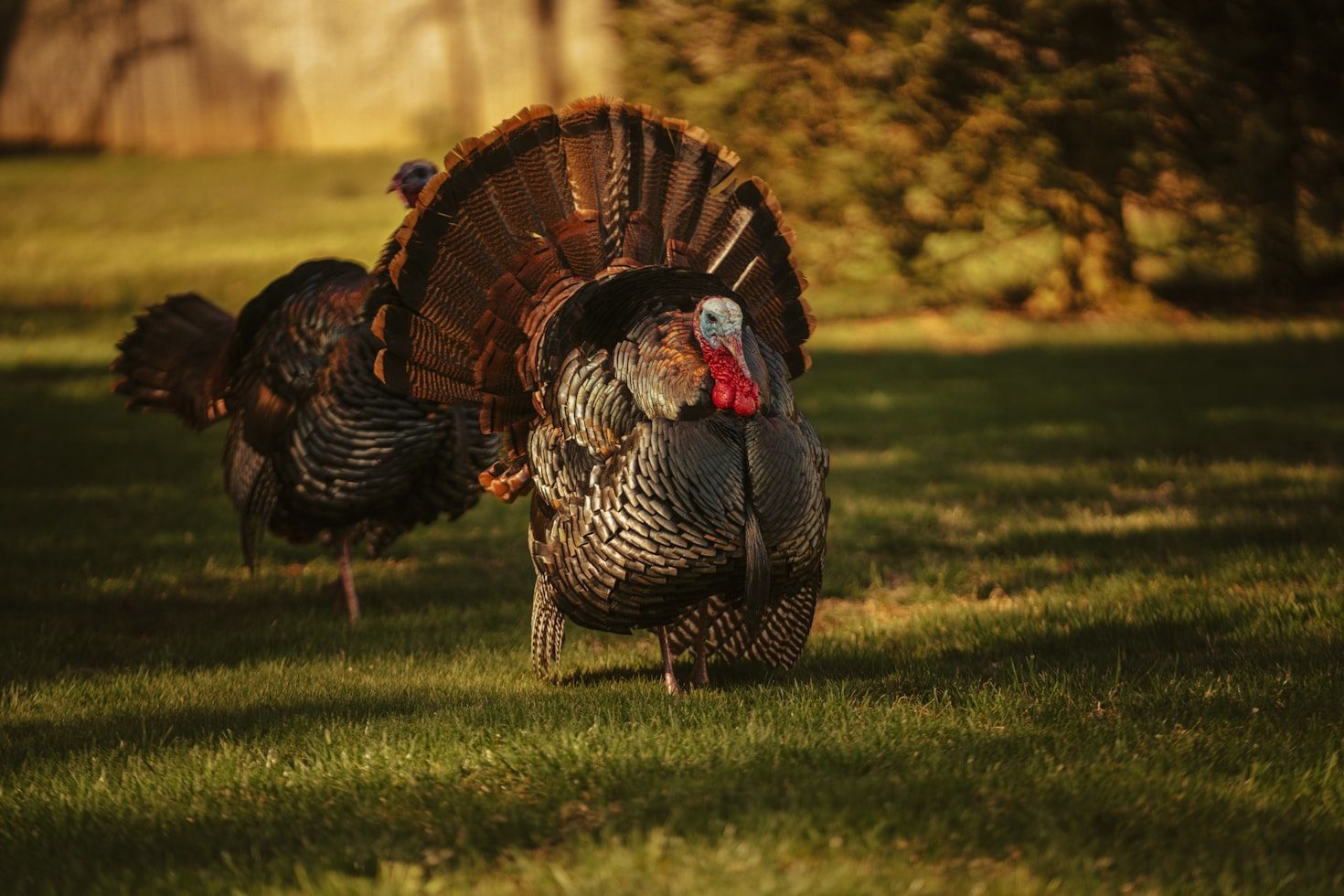
Talk turkey

Image: Tyler Donaghy

(1800s – Rural America)

"Talking turkey" originally meant speaking plainly, especially during trade or bargaining sessions around Thanksgiving time. The phrase evolved from settlers' interactions with Native Americans and each other.

3
The whole nine yards

Image: Museums Victoria

(1940s – WWII era)

This phrase likely originated in World War II aviation. Fighter pilots reportedly gave "the whole nine yards" when they unloaded all their ammunition —about 27 feet of bullets. It now means going all out, and its roots in wartime tales made it a lasting piece of American lingo.

4
Cold turkey

Image: Andres Siimon

(1920s – Prohibition era)

"Cold turkey" first emerged in drug withdrawal circles during the 1920s, describing a sudden and complete stop, often painful and abrupt. It became more widespread during Prohibition, when people abruptly quit drinking.

5
Pull yourself up by your bootstraps

Image: Nathan Dumlao

(1930s – Great Depression)

Originally a sarcastic quip about doing the impossible, the phrase took on a new life during the Depression, urging Americans to self-rely and push through adversity. By WWII, it had become a proud motto for working-class Americans.

6
Loose lips sink ships

Image: John Kostyk

(1940s – WWII propaganda)

Created by the U.S. Office of War Information, this saying warned citizens and soldiers against careless talk that might aid enemy spies. It was one of the most effective propaganda slogans of WWII.

7
Duck and cover

Image: Stephen Cobb

(1950s – Cold War drills)

Coined in a 1951 civil defense film, this phrase taught schoolchildren to seek shelter from nuclear blasts. While its actual effectiveness was debatable, "duck and cover" captured the anxious era of nuclear tension. It’s since become shorthand for futile emergency preparedness.

8
Jump on the bandwagon

Image: Museums of History New South Wales

(19th century – American politics)

Originating in the 1848 campaign of circus showman Dan Rice, politicians literally used bandwagons to draw crowds. The term evolved as others "jumped on" to align with the popular cause. It now refers to any late but enthusiastic adoption of a trend.

9
Cut to the chase

Image: Jeremy Yap

(Hollywood – silent film era)

Early films often built up slowly, so impatient viewers and editors began saying, "cut to the chase" —the action scene. Now it means getting straight to the point.

10
Put a sock in it

Image: Denny Müller

(1920s – Gramophone era)

Before volume knobs, people muffled early gramophones by stuffing socks in the horn. The phrase quickly became slang for "be quiet."

Explore more American facts

Choose your favorite category!

General
General

As American as apple pie—the very best America has to offer!

Culture
Culture

Delve into the astounding richness of American lore.

Geography
Geography

Hop in and explore vast and diverse American landscapes.

History
History

Discover the key moments that shaped the United States.