General General 5 min read

Meaningful relationships

Discover the amazing sister cities of these 10 American cities!
Image: Mikhail Nilov

As the great '70s band Sister Sledge once sang, "We are family, I got all my sisters with me." Family is definitely important, and having a few siblings to accompany us along the journey of life is certainly a blessing. In that sense, most American cities are fortunate to have their fair share of sister cities spread around the world. We have decided to select a few of the most prominent. While we would have loved to include all the sister cities we found, there are simply too many to count, so we’ll have to settle for highlighting 10 of our favorites. Enjoy!

1
Santa Fe, New Mexico

Image: Doni Rath

We’ll start with one of the most logical sisterhoods on this list: Since the capital city of New Mexico shares a name with the Spanish city of Santa Fe (full name "Santa Fe de La Vega"), it seems only reasonable for them to become sister cities—a relationship that was established in 1983.

Santa Fe was one of the first sister cities to the American city, and their bond remains strong. Both cities engage in various ways, whether through true cultural exchanges, economic insights, or tourism opportunities.

2
New York City, New York

Image: Alex Haney

Since New York City is probably the most famous American city in the world, it stands to reason that "The City That Never Sleeps" has many sister cities around the globe. We could have chosen from a long list of truly outstanding cities like London and Budapest, but we ultimately decided to showcase Tokyo. After all, both NYC and the Japanese capital share a buzzing and energetic atmosphere, filled with dazzling lights and exciting opportunities.

Interestingly, many of New York City’s boroughs have sister locations of their own. For instance, Brooklyn is the sister borough of Lambeth, a neighborhood located in southern London. Not only that, Manhattan is related to the Seocho district in Seoul, South Korea, while the municipality of Ulcinj in Montenegro is a sister to Staten Island.

3
Los Angeles, California

Image: Jeremy Bishop

As a cultural hub and "the Entertainment Capital of the world," Los Angeles has several noteworthy siblings. In fact, it is one of the American cities with the most related cities, with 25 sisters as of 2024.

The city of Eilat, Israel, has the distinction of being Los Angeles’ first sister city, established in 1959. That same year, "The City of Angels" also became sister cities with Nagoya, Japan. Other notable sister cities of L.A. include Berlin, the capital of Germany, as well as Mexico City and Bordeaux, France.

4
San Francisco, California

Image: Alexey Komissarov

As we are sure you know, San Francisco was built on a monastery founded by Spanish explorers in the 18th century, and it is from this early settlement that the city gets its name. In that sense, it stands to reason that the "Golden Gate City" shares a relationship with one of the most prominent cities in Spain.

While San Francisco is a sister city to 17 other locations (including Osaka, Japan, and Sydney, Australia), Barcelona is its only Spanish sister city. The relationship was established in 2010, and in 2018, Barcelona was honored alongside all of San Francisco's sister cities with a signpost in Hallidie Plaza.

5
Austin, Texas

Image: Tomek Baginski

Who could be a better sister city to the capital of our largest Southern state than someone from the "Land Down Under"? Since 1983, Austin, Texas, has been a sister city to Adelaide, one of the most prominent southern cities in Australia.

Remarkably, these cities share a number of amazing qualities: they are both filled with lush green scenery from their many parks, and they are crossed by equally beautiful rivers. Not only that, they are both music lovers: Adelaide is the first Australian city to be declared a UNESCO City of Music, while Austin is globally known as "the live music capital of the world."

6
Boring, Oregon

Image: everett mcintire

The town of Boring, Oregon , surely has had some tough luck: after all, would you like to visit a town with that name? The truth is that there’s nothing dull about this town; it was built in a former lava field (a rather exciting landscape, if we do say so ourselves) and named after William Harrison Boring, an early resident who helped build the town.

In any case, Boring’s rather unusual name has landed this town with kindred spirits. Since 2012, this town has been part of a group known as the "Trinity of Tedium." Alongside the village of Dull, Scotland, and the community of Bland, Australia, Boring has proven again and again that friends can be found in the most unusual of places.

7
Hackettstown, New Jersey

Image: Hunter Reilly

This is the only town on this list that shares an (almost) identical name with its sister. Hackettstown, New Jersey , is famous for being the headquarters of the beloved Mars corporation, which caters to the "sweet teeth" of many Americans. It was named after Samuel Hackett, an early settler of the area who helped build the community.

In 2011, this New Jersey town declared Hacketstown, Ireland, as its sister city. In case you are not familiar with this small Irish town, here’s a fun fact that might make you fall in love with it: Hacketstown was once the home of William Presley, an ancestor of the King of Rock 'n' Roll himself.

8
Boston, Massachusetts

Image: Matthew Landers

In 1959, the city of Kyoto, Japan, became Boston’s first sister city . When you think about it, this relationship makes perfect sense: both cities are known as cultural and economic hubs and have strong and independent identities. According to the city of Boston’s official website, both of these metropolises share "strong neighborhood identities."

Throughout the decades, Boston and Kyoto have hosted several events, including annual exchange programs for high school students. Not only that, Kyoto gifted the Boston Children's Museum a "Japan House" in a display of kinship that is still warmly remembered by the capital city of Massachusetts.

9
Seattle, Washington

Image: Thom Milkovic

You might be familiar with a traditional Irish song called "Galway Bay." It has been covered by iconic American artists like Johnny Cash and Bing Crosby. This lovely tune is particularly famous among Irish Americans and speaks about nostalgia and the longing to gaze upon Ireland’s breathtaking shores. In that sense, should you suddenly feel overwhelmed by the powerful message of this song, we can offer you the next best option in America: Galway’s very own sister city, the wonderful Seattle .

Seattle and Galway became sisters in 1986, and two corresponding bronze markers were placed in each city to mark the distance between them. Many cultural events and exchanges are organized by the Seattle Galway Sister City Association, which helps build the relationship between these two wonderful cities.

10
Washington, D.C.

Image: Sara Cottle

Our capital city is considered by many to be the personification of American democracy. After all, it houses both the White House and the Capitol Building and is named after the Father of our Country. Bearing that in mind, can you think of a better sister city for Washington D.C., than the birthplace of democracy?

Washington D.C., became the sister city of Athens, Greece, in 2000. Curiously, Athens is also the sister city to another American city, although perhaps less famously: the Greek capital city also maintains a relationship with the identically named city of Athens, Georgia.

History History 4 min read

Sip back in time

Ombibulous times: Talking the talk of prohibition

Image: Moussa Idrissi

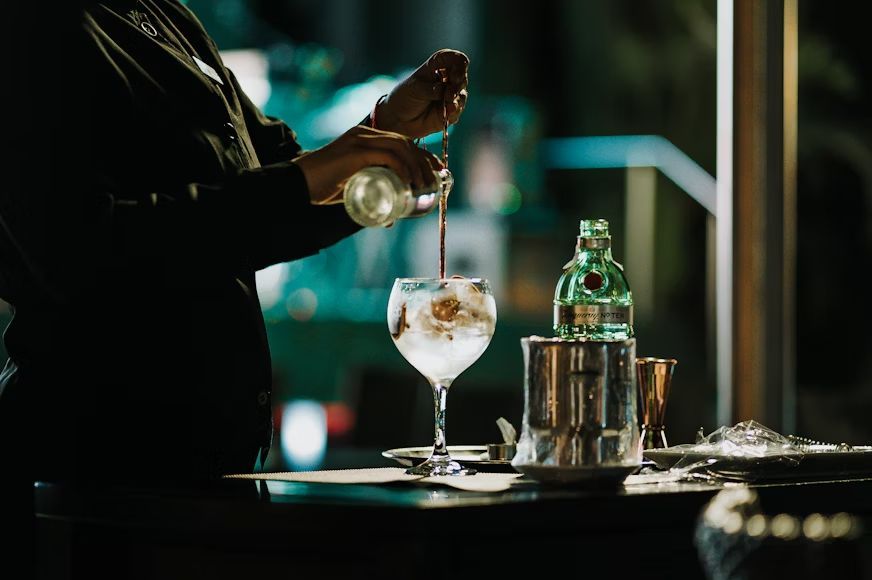
Back in the 1920s, when alcohol was outlawed but far from out of reach, people got creative—not just with cocktails, but with their lingo, too. From secret bars to shady drinks and sly lawmen, the Prohibition era brewed up a whole dictionary of clever slang. Some of these phrases are still with us today, while others sound like something out of an old gangster flick. Let’s raise a (legal) glass and dive into the wild vocabulary of the dry years!

1
Giggle water

Image: Tristan Gassert

Sounds fun, doesn’t it? "Giggle water" was slang for champagne, but later came to mean any kind of alcoholic drink that made you feel good.

The term popped up around 1910 and hung around well into the ’20s. Lighthearted and cheeky, it captured the mood of a tipsy good time. It was all laughs—until the next morning.

2
Blind pig

Image: Annie Spratt

A "blind pig" was code for an underground bar, or speakeasy, where patrons paid to see an "exotic animal" and conveniently received a cocktail with the show. This ruse was an early attempt to skirt the law. The term dates back to the 1800s and had a cousin in crime: the "blind tiger." No matter the name, nobody was there to admire animals—they came for the booze.

3
Juice joint

Image: John Hernandez

At first glance, this might sound like a fruit stand. But during the 1920s, a "juice joint" was slang for a speakeasy—especially the more modest ones. However humble, they had it all: music, dancing, and definitely drinks, legal or not.

The name originally referred to soda stands, but it didn’t take long before it meant something much stronger. If you were thirsty during the dry years, this was a must-stop.

4
Jake walk

Image: Ve al perfil de Andreas M Andreas M

Here’s a sobering one. "Jake" was shorthand for Jamaican ginger extract, a legal tonic with high alcohol content. But manufacturers altered it to skirt regulations—and the results were tragic. Drinkers developed a distinct limp from nerve damage, called the "Jake walk" or "Jake leg." Thousands were affected, especially in the South. It became both a medical crisis and a dark symbol of the risks people took to sneak a drink.

5
Ombibulous

Image: Kelsey Chance

Writer H.L. Mencken had a way with words—and a taste for booze. In 1920, he dubbed himself "ombibulous," meaning he happily drank anything alcoholic, no matter what. He was also known for calling bootleggers "booticians," always with a wink. A strong critic of Prohibition, Mencken turned his drinking habits into witty declarations.

6
Needle beer

Image: Wil Stewart

You know the drill: desperate times, desperate measures. Some barkeeps took regular beer, injected it with alcohol via a syringe through the cork, and served it up as the real deal. This DIY hack became known as "needle beer." It was risky and often poorly mixed, but in an era when options were slim, creativity was all people had. Probably not the safest pint you ever drank, though.

7
Brick of wine

Image: Kym Ellis

Yes, really! You could buy a block of grape concentrate, add water, and wait—voilà, wine! These "bricks" came with an ironic warning not to store them in a cool, dark place (wink, wink), or they might "accidentally" ferment. For wine lovers who craved a glass during the dry years, this was a sly workaround. Just add water, patience, and a sense of humor, of course!

8
Bathtub gin

Image: Bjarne Vijfvinkel

Not a flavor—a method. "Bathtub gin" referred to homemade hooch often mixed in, you guessed it, a bathtub. Tall bottles didn’t fit under sink taps, so a larger space was needed. We’ve said it before, and we’ll say it again: how creative could they get?

The quality varied wildly, and safety wasn’t exactly guaranteed. However, it became the generic term for all sorts of homebrewed booze.

9
Teetotaler

Image: Jessica Smith

This word originated before Prohibition but got plenty of use during it. A "teetotaler" is someone who avoids alcohol entirely. The term comes from the emphatic "T" in "total abstinence." It gained popularity thanks to temperance movements in the 1800s, long before the ban was official. While others were sneaking into blind pigs, teetotalers were proudly saying, "Thanks, but no thanks."

10
Dry

Image: engin akyurt

If you were "dry," you were all in on Prohibition. Drys supported the ban, and dry counties banned alcohol completely. Agents who enforced the law were often called "dry agents." The term became both a political and cultural identifier. You were either dry or...

11
Wet

Image: CHUTTERSNAP

...you were wet. A "wet" person supported legal alcohol sales, plain and simple. Wet cities and counties allowed booze to flow, and many Americans never bought into the dry movement. The wet/dry divide wasn’t just about drinks—it represented a much larger cultural clash. And as we know now, the wets eventually won.

12
Whale

Image: Todd Cravens

Not a sea creature, but someone who could drink like a fish. A "whale" was a heavy drinker, often the life of the party and the last one standing. Whether at a juice joint or speakeasy, whales had reputations to uphold. The term lives on today in gambling circles, too—but back then, it was all about your booze tolerance.

Culture Culture 3 min read

From fame to oblivion

History's hidden legends: How these Americans defied the odds

Image: The New York Public Library

America has produced more than its fair share of legends, but not all are remembered equally. From pioneers of technology to forgotten war heroes, each of these names once meant something big in the U.S. Here's a look at 10 American icons whose legacies deserve a second glance.

1
Hedy Lamarr

Image: Geoffroy Berlioz

Best known for her 1930s–40s film career, Hollywood icon Hedy Lamarr also co-invented frequency-hopping spread spectrum technology to prevent enemy jamming in WWII. And if you think it’s no big deal, know it’s the basis for modern Bluetooth and Wi-Fi!

While largely overlooked as an inventor at her time, she was posthumously inducted into the National Inventors Hall of Fame in 2014.

2
Sybil Ludington

Image: Taylor Brandon

According to many historians, at just 16 years old, Sybil Ludington rode about 40 miles through the night in 1777 to alert American militia of a British attack on Danbury, Connecticut.

This would make her ride roughly twice as long as Paul Revere’s . While some scholars question the veracity of her story, a statue stands in her honor in Putnam County, New York.

3
Bass Reeves

Image: Pramod Tiwari

Born into slavery in 1838, Reeves became one of the first Black U.S. Deputy Marshals west of the Mississippi. He made over 3,000 arrests during his law enforcement career.

Many historians believe his exploits may have inspired the Lone Ranger character, although his name rarely appears in history textbooks.

4
Mary Edwards Walker

Image: David Trinks

A Civil War surgeon and suffragist, Walker treated soldiers on the front lines and was even captured as a prisoner of war.

In 1865, she became the first woman to ever receive the Medal of Honor. Her unorthodox dress style and fearless activism made her a striking figure in 19th-century America.

5
Clara Barton

Image: Kevin Paes

Known as the "Angel of the Battlefield," Barton provided medical care during the Civil War and later founded the American Red Cross in 1881.

Though once a household name, her legacy has faded compared to other, more widely remembered wartime figures.

6
Joshua Lawrence Chamberlain

Image: Chris Chow

A college professor turned Union colonel, Chamberlain famously held Little Round Top during the Battle of Gettysburg, a pivotal moment in the Civil War.

He was awarded the Medal of Honor and later became governor of Maine, but his unexpected battlefield brilliance is often overlooked in Civil War discussions.

7
Robert Smalls

Image: Ian Hutchinson

In 1862, Smalls, a formerly enslaved sailor, seized a Confederate ship and delivered it to Union forces, securing freedom for himself and his crew.

He later served five terms in Congress, advocating for Black education and civil rights.

8
Harvey Wiley

Image: Diana Polekhina

Known as the "Father of the FDA," Harvey Wiley was a chief chemist in the late 1800s whose "Poison Squad" tested various food additives, leading to the 1906 Pure Food and Drug Act.

This law laid the foundation for the FDA and led to the removal of many dangerous substances from consumer products. Notably, it prompted Coca-Cola to eliminate cocaine from its formula in the early 20th century.

9
George Washington Carver

Image: Dan Meyers

More than just being associated with peanuts, George Washington Carver developed numerous innovative crop rotation methods and created over 300 uses for peanuts, sweet potatoes, and other plants to help Southern agriculture recover after the Civil War.

10
Joe Medicine Crow

Image: Boston Public Library

The last war chief of the Crow Nation, Joe Medicine Crow, completed several traditional war deeds during WWII—including counting coup and stealing enemy horses —and earned both the Bronze Star and the French Légion d’honneur.

Part of his legacy was bridging Native American warrior traditions with modern military service, honoring both cultural heritage and patriotic duty.

Explore more American facts

Choose your favorite category!

General
General

As American as apple pie—the very best America has to offer!

Culture
Culture

Delve into the astounding richness of American lore.

Geography
Geography

Hop in and explore vast and diverse American landscapes.

History
History

Discover the key moments that shaped the United States.