Culture Culture 5 min read

The best animated antagonists

Don't let evil win: take a look at these 12 scary Disney villains
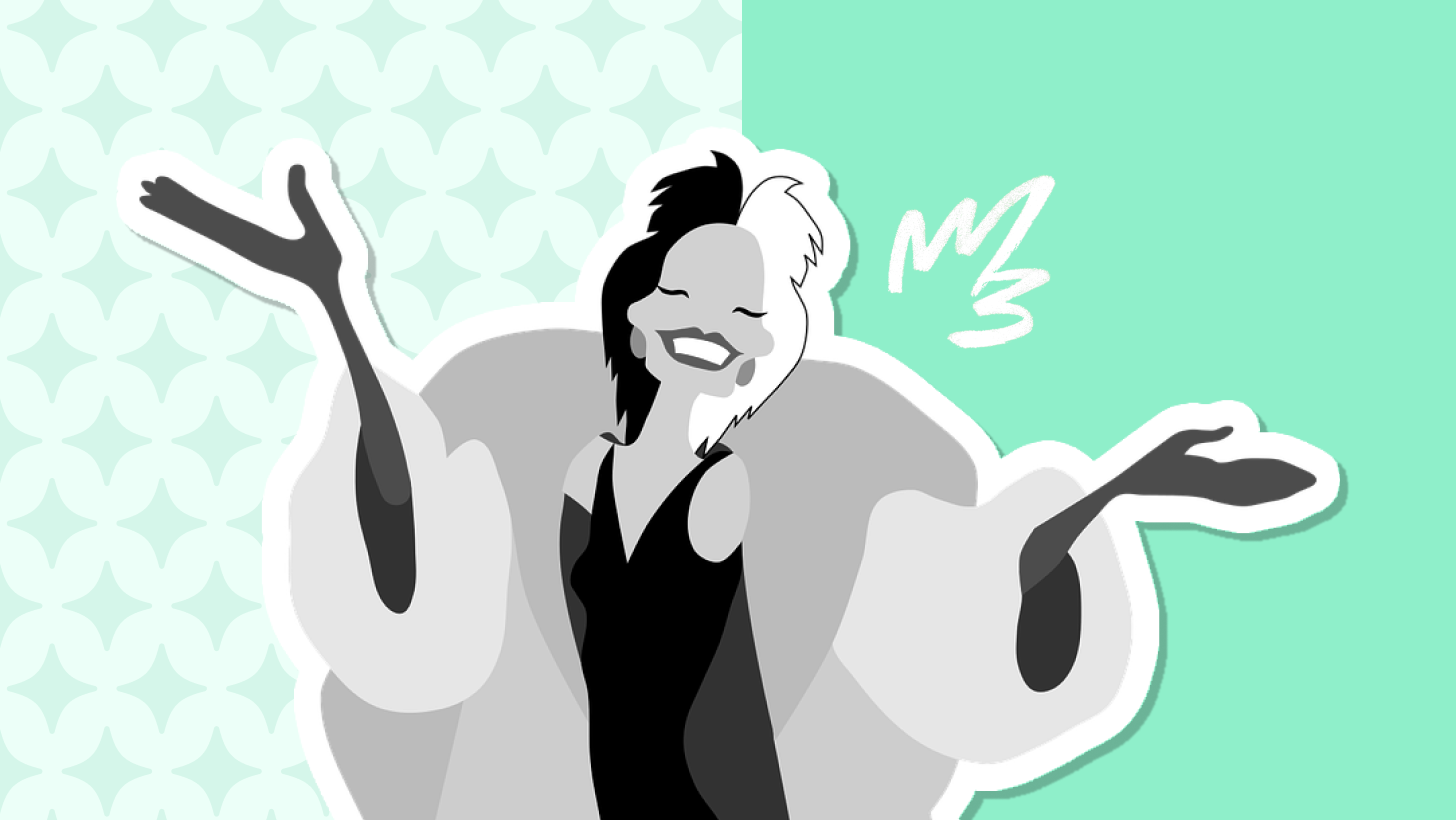
Image: inspiredbythemuse

The great qualities and feats of animated movie heroes are always spotlighted, but what about their antagonists? Most Disney films have a villain who is as interesting as the protagonists. From evil stepmothers and pirates to terrifying sorcerers, these films have given us the most iconic characters in animated film history. Join us to reminisce about 12 of our childhood's most popular —and scariest— villains.

1
Cruella De Vil

Image: Helena Lopes

The Disney adventure comedy One Hundred and One Dalmatians premiered in 1961, and since then, Cruella de Vil has been one of the most iconic villains in animated film history.

This wicked woman is ambitious and capable of doing anything to get new fur for her coats. With the help of her henchmen, she steals the Dalmatian puppies her friends Anita and Roger had refused to sell her. Anyone who hurts cute little puppies to make coats deserves to be on the podium of the most evil villains in history!

2
Jafar

Image: Boris Hamer

Conspiracy and ruthlessness define any bad guy, and _Aladdin_’s villain is no exception. Jafar is capable of destroying anyone who stands in his way to gain more power.

Posing as an honest man, this evil sorcerer takes advantage of his role as the right hand of the Sultan of Agrabah and attempts to marry Princess Jasmine. His true intention, in fact, is to take over her father’s kingdom. If these traits don’t convince you that he is a true villain, just look at how he treats his sidekick, the charismatic parrot Iago.

3
Shan-Yu

Image: Stijn Dijkstra

Shan Yu is the main villain of the Disney movie Mulan (1998). This ruthless leader of the Huns is determined to conquer China. He and his army invade the land to prove his superiority to the emperor.

Cunning and sadistic, Shan-Yu feels no remorse when it comes to taking a life. Luckily, the brave Mulan manages to defeat him and ultimately saves the emperor.

4
Ursula

Image: Brian McGowan

Her tentacles and terrifying appearance are enough to make any child tremble. Ursula, the villain in The Little Mermaid (1989), uses magic to "help" others, although her deals are deceitful and become impossible to accomplish.

Ariel, the protagonist of this story, makes a deal with Ursula, who promises to turn her into a human for three days in exchange for her beautiful voice. If Ariel receives a "true love's kiss," she can be human forever. Despite the villain's attempts to make Ariel fail, she manages to keep her part of the deal by making Prince Eric fall in love with her.

5
Scar

Image: Brian McGowan

In The Lion King (1994), the second heir to the throne becomes one of the most ruthless villains when he murders his own brother and attempts to do the same to his nephew, Simba.

Although Scar only succeeds in causing Mufasa's demise, he convinces his nephew that it was his fault and that he must leave the kingdom forever. Scar orders the hyenas to destroy Simba, but what the evil lion could never have imagined is that the little boy would survive and return to avenge his father's death.

6
Queen Grimhilde

Image: Steven Beyer

Queen Grimhilde, better known as the Evil Queen, is the wicked stepmother in the 1937 film Snow White and the Seven Dwarfs . She is considered the first Disney villain.

Obsessed with being the most beautiful in the whole kingdom, she plots to have her stepdaughter —and competition— eliminated and demands Snow White’s heart. She even uses witchcraft to transform into an old lady, which allows her to give a poisoned apple to the naive princess. Can you think of anything more terrifying?

7
Gaston

Image: brunapazini0

In the beginning, the Beast is presented as an irascible and cruel monster, but the real villain of Beauty and the Beast (1991) is Gaston.

The arrogant hunter is determined to marry Belle, even if it has to be by force. This obsession turns him into a ruthless being, capable of doing anything to have his love reciprocated. Luckily, Bella has no time to waste with this evil kind of man.

8
Maleficent

Image: professional_Designers

When it comes to villains, no one can match Maleficent. The powerful sorceress doesn't hesitate when it comes to summoning an army of monsters or using her magic for revenge.

In Sleeping Beauty (1959), Maleficent curses Princess Aurora with eternal sleep for not being invited to her christening. This villain is so popular that Disney has produced two live-action movies with Angelina Jolie in the lead role: Maleficent (2014) and Maleficent: Mistress of Evil (2019).

9
Captain Hook

Image: Lalelu2000

One of Disney's most iconic villains is, without a doubt, Captain Hook. In Peter Pan (1953), the ruthless pirate seeks to destroy the Boy Who Would Never Grow Up for being responsible for the loss of his hand and also for taunting him every time their paths cross.

Despite his inherent evilness, we can't help but laugh at Captain Hook and his irrational fear of the crocodile that ate his hand. A villain with such a weakness can't be all that terrifying, don't you think?

10
Lady Tremaine

Image: Gary Cooper

Wicked stepmothers are a classic of Disney movies and the one in Cinderella (1950) is perhaps one of the most iconic. Lady Tremaine made us shudder every time she appeared from the shadows stroking her cat, Lucifer.

To be fair, this stepmother might not have been so scary without the presence of her equally evil daughters, Anastasia and Drizella. Dead jealous, the three women make life miserable for poor Cinderella, relegated to serving and being exploited in her own home after the passing of her father. Perhaps the most terrifying thing about Lady Tremaine is that she successfully manages to inflict extreme suffering on Cinderella without laying a finger on her.

11
Governor Ratcliffe

Image: EricThriller

Governor Ratcliffe is the main villain in Disney's historical drama Pocahontas (1995). This money-hungry English settler is greedy, and he doesn't trust the "savages." He sends his men to attack them because he believes they're hiding a gold treasure.

Even when they discover that the Native Americans don't possess the riches, he still declares war on them. In a confrontation, Ratcliffe fires his musket at Chief Powhatan, but Captain John Smith —Pocahontas' love interest— takes the shot to save him. Finally, the settlers turn on Ratcliffe and arrest him for hurting their comrade.

12
Queen of Hearts

Image: Laine Cooper

Although the Queen of Hearts appears only at the end of Disney's version of Alice in Wonderland (1951), it is enough for us to notice the fear she inflicts on her subjects. This villainess is a childish, hotheaded monarch whose catchphrase is "Off with their heads!"

After feeling humiliated during a game of croquet, she loses her temper. The king convinces her to put Alice on trial before cutting off her head. Nothing seems to go right for the girl who must escape to save her life. Luckily, she finally realizes that she is in a dream and manages to wake up before she is caught by the tyrant queen.

Culture Culture 5 min read

Even show business had to start somewhere

From Rudy Vallee to Screamin’ Jay Hawkins: 10 Early American pop stars

Image: Papa Yaw

Colorful singers who stand out from the rest of the music band have been around for a long time, but it wasn’t until the arrival of live microphones that their contributions could be recognized for more than just a powerful voice; their nuances could play a bigger role in their live acts. The list of these sonic pioneers is very long, and for the sake of brevity, we are narrowing it down to ten entries. If some of these names pique your curiosity, we encourage you to give them a listen. After all, they didn’t get this big for nothing!

1
Josephine Baker

Image: Richie Lugo

Josephine Baker was the first Black woman to star in a major motion picture , the 1927 French silent film Siren of the Tropics . During her early career, Baker was among the most celebrated performers to headline the revues of the Folies Bergère in Paris. Her performance in the 1927 revue Un vent de Folie caused a sensation in the city. Her costume, consisting only of a short skirt made of artificial bananas and a beaded necklace, became an iconic image and a symbol both of the Jazz Age and the Roaring Twenties.

Baker was celebrated by artists and intellectuals of the era, who variously dubbed her the "Black Venus," the "Black Pearl," the "Bronze Venus," and the "Creole Goddess." She aided the French Resistance during World War II, and after the war, she was awarded the Resistance Medal by the French Committee of National Liberation, the Croix de Guerre by the French military, and was named a Chevalier of the Legion of Honour by General Charles de Gaulle.

2
Rudy Vallée

Image: Matt Botsford

Rudy Vallée was the first male singer to rise from local radio broadcasts in New York City to national popularity as a "crooner." He had a thin, wavering tenor voice and seemed more at home singing sweet ballads than jazz songs. But his singing, saxophone playing, and the innovative arrangements he wrote for his band attracted the attention of a rapidly increasing number of listeners, especially young women.

Singers needed strong voices to fill theaters in the days before microphones. Crooners had soft voices that were suited to the intimacy of radio; the microphones, in this case, promoted direct access to "a vulnerable and sensuous interior," or, in other words, "a conjured intimacy." Vallée was one of the first celebrity radio vocalists.

3
Bobby Darin

Image: Jack Sharp

Bobby Darin was an American teen idol and, later, an adult crooner who, in 1958, co-wrote and recorded his first million-selling single, "Splish Splash," followed by "Dream Lover" and his covers of "Mack the Knife" and "Beyond the Sea," which brought him worldwide fame.

In the early 1970s, his health was beginning to fail due to a weak heart. The knowledge of Darin's vulnerability had always spurred him on to use his musical talent while still young. Darin died in 1973 at the age of 37 in a hospital recovery room after having open-heart surgery in Los Angeles.

4
Keely Smith

Image: Harry Shelton

American jazz and popular music singer Keely Smith performed and recorded extensively in the 1950s with her then-husband Louis Prima , and throughout the 1960s as a solo artist. The couple were stars in the entertainment business, including stage, television, motion pictures, hit records, and cabaret acts.

They won a Grammy in 1959, its inaugural year, for their smash hit, "That Old Black Magic," which remained on the charts for 18 weeks.

5
The Ink Spots

Image: Jorge Flores

The first band on the list, the Ink Spots was an American vocal pop group who gained international fame in the 1930s and 1940s due to their unique musical style, which predated rhythm and blues and doo-wop .

On January 12, 1939, the Ink Spots recorded "If I Didn't Care," one of their biggest hits, selling over 19 million copies and becoming the 8th-best-selling single of all time. Since they disbanded in 1954, there have been well over a hundred vocal groups calling themselves "The Ink Spots," with and without any original members of the group.

6
Ella Fitzgerald

Image: zachrie friesen

A frequent collaborator of the Ink Spots, Ella Fitzgerald was a singer, songwriter, and composer, sometimes referred to as the "First Lady of Song," the "Queen of Jazz," and "Lady Ella." She was noted for her purity of tone, impeccable diction, phrasing, timing, intonation, absolute pitch, and a "horn-like" improvisational ability, particularly in her scat singing.

Outside her solo career, she recorded music with Louis Armstrong, Duke Ellington, and the aforementioned Ink Spots. These partnerships produced songs such as "Dream a Little Dream of Me," "Cheek to Cheek," "Into Each Life Some Rain Must Fall," and "It Don't Mean a Thing (If It Ain't Got That Swing)."

7
Bing Crosby

Image: Alexander Wark Feeney

A one-man orchestra, Bing Crosby was a singer, actor, television producer, radio personality, and businessman. The first multimedia star , he was one of the most popular and influential musical artists of the 20th century worldwide.

In 1948, American polls declared him the "most admired man alive," ahead of Jackie Robinson and Pope Pius XII. That same year, Music Digest estimated that Crosby's recordings filled more than half of the 80,000 weekly hours allocated to recorded radio music in America.

Crosby is one of 33 people to have three stars on the Hollywood Walk of Fame , in the categories of motion pictures, radio, and audio recording.

8
Perry Como

Image: Oscar Sutton

Perry Como was an American singer, actor, and television personality who sold over 100 million records worldwide and pioneered a weekly musical variety television show. His weekly television shows and seasonal specials were broadcast around the world. He recorded primarily vocal pop and was renowned for his recordings in the intimate, easy-listening genre pioneered by our newly acquainted friend, Bing Crosby.

In the official RCA Records memorial in Billboard magazine, his life was summed up in these few words: "50 years of music and a life well lived. An example to all."

9
Nina Simone

Image: Artem Bryzgalov

A bigger-than-life figure, Nina Simone was a singer, songwriter, pianist, composer, arranger, and civil rights activist whose piano playing was strongly influenced by baroque and classical music, and accompanied by expressive, jazz-like singing in her contralto voice .

Early in her career, Simone played piano at a nightclub in Atlantic City, where she was told that she would have to sing to her accompaniment. This effectively launched her career as a jazz vocalist. Simone also became known for her work in the civil rights movement during the 1950s and 1960s, and she later fled the United States and settled in France following the assassination of her friend Martin Luther King Jr. in 1968.

10
Screamin’ Jay Hawkins

Image: Music HQ

The closer of this list is one of the most colorful characters in American music. "Screamin' Jay" Hawkins was a singer-songwriter, musician, actor, film producer, and boxer, best known for his powerful, shouting vocal delivery and wildly theatrical performances with macabre props onstage, making him an early pioneer of shock rock.

Screamin’ Jay’s most successful recording, "I Put a Spell on You," was created when the entire band was intoxicated during a recording session where "Hawkins screamed, grunted, and gurgled his way through the tune with utter drunken abandon." The resulting performance became his greatest commercial success and reportedly surpassed a million copies in sales.

Culture Culture 6 min read

LITERARY HERITAGE

Epic Reads: 10 American Bestsellers That Made History

Image: Florencia Viadana

Books have a unique power to transport us to different worlds , evoke deep emotions, and leave lasting impressions on our minds and hearts. Some books do this so well that they become beloved bestsellers, cherished by readers for generations. Think about the rebellious spirit of Holden Caulfield in T_he Catcher in the Rye_ or the adventurous escapades of Huck Finn in Adventures of Huckleberry Finn . These stories have stood the test of time , resonated with countless readers, and earned their place among America's bestsellers.

In this article, we’ll take you through ten of these iconic books, exploring the stories and characters that have become integral to American literary heritage

1
The Great Gatsby by F. Scott Fitzgerald

Image: Girl with red hat

Set against the backdrop of the Roaring Twenties, The Great Gatsby captures the essence of an era defined by opulence and excess. The story follows Jay Gatsby, a wealthy and enigmatic man known for his lavish parties in West Egg, Long Island. Gatsby's unrelenting love for Daisy Buchanan, a beautiful and charming former debutante, drives the narrative forward.

As secrets unravel, the novel paints a stark picture of the American Dream's corruption , showcasing the moral decay hidden beneath the glitz and glamor of the Jazz Age. Fitzgerald's prose is both lyrical and poignant , making The Great Gatsby a timeless critique of ambition, love, and loss.

2
The Catcher in the Rye by J.D. Salinger

Image: Peter Bond

In J.D. Salinger's classic novel, The Catcher in the Rye , readers are introduced to Holden Caulfield, a teenager navigating the complexities of adolescence in 1950s New York City. Expelled from his prestigious boarding school, Holden embarks on a journey through the city, encountering a series of characters who highlight his deep sense of alienation and disillusionment with the adult world.

His candid, often cynical narrative voice offers a raw and honest look at the struggles of growing up. Salinger's portrayal of Holden's inner turmoil and his quest for authenticity amidst the phoniness of society has resonated with readers for decades, making it a perennial bestseller and a touchstone of modern American literature.

3
To Kill a Mockingbird by Harper Lee

Image: Kabiur Rahman Riyad

To Kill a Mockingbird by Harper Lee is a beloved classic that delves into themes of racism and morality through the eyes of young Scout Finch. Set in 1930s Alabama, the story follows Scout, her brother Jem, and their father, Atticus Finch, who is defending a black man, Tom Robinson, falsely accused of raping a white woman.

The novel shines through its memorable characters, especially the wise and principled Atticus and the curious, brave Scout. Lee’s writing is engaging, mixing humor and serious themes to paint a vivid picture of a small Southern town grappling with injustice.

To Kill a Mockingbird is a must-read for its powerful storytelling. It’s a book that challenges you to reflect on your values and the world around you, all while telling a captivating story.

4
Moby Dick by Herman Melville

Image: Claudia Rancourt

Moby Dick is a tale of obsession and adventure on the high seas. The novel chronicles the journey of Ishmael, a sailor aboard the whaling ship Pequod, commanded by the enigmatic and vengeful Captain Ahab. Ahab's single-minded pursuit of the great white whale, Moby Dick, drives the crew into treacherous waters and difficult situations.

Through its richly detailed narrative and profound symbolism, the story explores themes of revenge, humanity, and the sublime power of nature. Melville's masterful storytelling and deep philosophical insights make Moby Dick a cornerstone of American literature and a compelling read for those who seek both adventure and reflection.

5
The Grapes of Wrath by John Steinbeck

Image: Sonder Quest

Steinbeck's The Grapes of Wrath transports readers to the heart of the Dust Bowl era, painting a vivid portrait of the Joad family's journey from the barren plains of Oklahoma to the promise of a better life in California. Through the trials and tribulations of the Joads, Steinbeck exposes the harsh realities of poverty, displacement, and the exploitation of migrant workers during the Great Depression.

The novel's timeless themes of resilience, solidarity, and the pursuit of dignity resonate with readers across generations. Steinbeck's evocative prose and deeply human characters make The Grapes of Wrath a classic that continues to captivate audiences worldwide.

6
Catch-22 by Joseph Heller

Image: Hans Vivek

Set during World War II, Joseph Heller's satirical masterpiece introduces us to Captain John Yossarian, a bombardier stationed on the fictional island of Pianosa. Yossarian's attempts to maintain his sanity in the face of bureaucratic absurdity and the arbitrary nature of military logic form the crux of the narrative.

The term "Catch-22" itself becomes a symbol of the absurdity and paradoxes inherent in the military system, where airmen are trapped in a no-win situation. Heller's dark humor and biting wit make Catch-22 a captivating and thought-provoking read, offering insights into the absurdities of war and the human condition. With its unconventional structure and memorable characters, this novel has rightfully earned its place as a classic American bestseller.

7
The Sound and the Fury by William Faulkner

Image: Arno Senoner

William Faulkner's The Sound and the Fury delves into the tragic decline of the Compson family, Southern aristocrats grappling with personal and social disintegration. Set in Mississippi, the novel's innovative structure and stream-of-consciousness technique vividly capture the inner turmoil of its characters.

Each of the four sections offers a unique perspective, primarily through the eyes of the Compson siblings: Benjy, Quentin, and Jason. Their stories weave a complex tapestry of time, memory, and loss, reflecting broader themes of identity and change in the American South. Faulkner's masterful storytelling makes The Sound and the Fury a poignant exploration of family, pride, and the inexorable passage of time.

8
Adventures of Huckleberry Finn by Mark Twain

Image: Jp Valery

Mark Twain's Adventures of Huckleberry Finn is a seminal work in American literature, offering a vivid depiction of life along the Mississippi River in the mid-19th century. The novel follows the journey of Huckleberry Finn, a young boy who fakes his own death to escape his abusive father; and Jim, a runaway slave seeking freedom. Together, they embark on a raft adventure, encountering a series of colorful characters and challenging societal norms along the way. Through Huck's eyes, Twain addresses themes of race, identity, and moral growth with a blend of humor and biting social commentary.

Adventures of Huckleberry Finn remains a powerful exploration of freedom and friendship, celebrated for its authentic vernacular and enduring impact.

9
Lolita by Vladimir Nabokov

Image: Brandi Redd

Lolita is a provocative and masterfully written novel that describes the complexities of obsession and desire. The story is narrated by Humbert Humbert, a literature professor with a disturbing infatuation for the twelve-year-old Dolores Haze, who he nicknames Lolita.

Through Humbert's eloquent yet unreliable narration, Nabokov (a Russian expatriate who became an American citizen in 1945) explores themes of manipulation, guilt, and the dark side of human nature. The novel's controversial subject matter is handled with linguistic brilliance, making it a compelling and thought-provoking read.

Despite its challenging themes, Lolita remains a significant work for its literary artistry and its unflinching look at the intricacies of forbidden love.

10
Beloved by Tony Morrison

Image: Sibel Yıldırım

Beloved is a masterpiece that beautifully intertwines the horrors of slavery with the power of love and memory. The novel, set after the American Civil War, follows Sethe, an escaped slave, as she grapples with the haunting presence of her past.

Morrison's lyrical prose and profound storytelling bring to life the emotional and psychological scars of slavery, making the reader feel deeply connected to the characters. The ghost of Sethe's daughter, Beloved, serves as a powerful symbol of unresolved trauma and the enduring need for reconciliation.

While the themes are heavy, Morrison's compassionate and poetic approach offers a sense of hope and resilience. Beloved is a poignant reminder of the strength of the human spirit and the importance of confronting our history with honesty and empathy. It's a must-read for anyone who appreciates deeply moving and thought-provoking literature.

Explore more American facts

Choose your favorite category!

General
General

As American as apple pie—the very best America has to offer!

Culture
Culture

Delve into the astounding richness of American lore.

Geography
Geography

Hop in and explore vast and diverse American landscapes.

History
History

Discover the key moments that shaped the United States.