History History 4 min read

Which ad do you remember?

From Nike to Dove: Discover the stories behind 12 iconic ads

Image: Shreesha bhat

Some ads are so catchy, clever, or downright bold that they become part of American culture. From slogans we still repeat to jingles we can’t forget, the best campaigns leave a lasting impression. Take a look at the stories behind 12 of these iconic pieces. Which one do you remember most?

1
Pepsi: "Is Pepsi OK?"
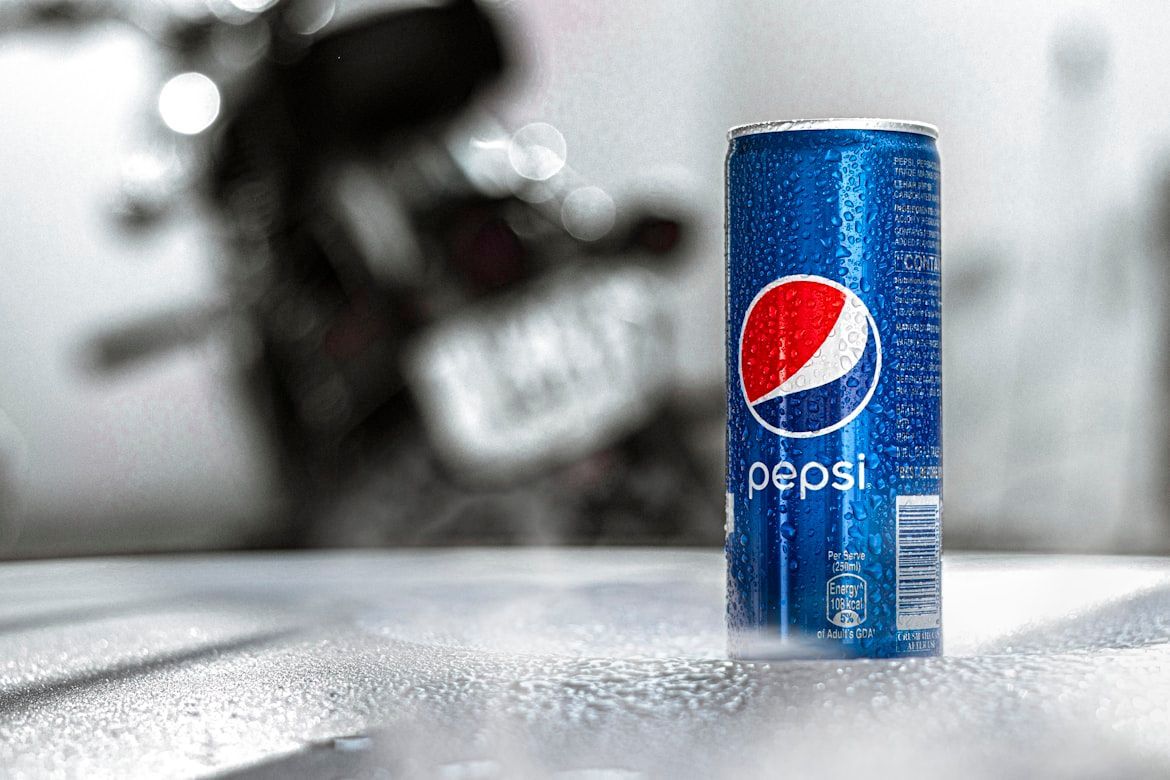
Image: NIKHIL

If you’ve ever asked for a Coke and heard, "Is Pepsi OK?", you’re not alone—it’s a common scenario that has become a cultural cliché. In 2019, Pepsi embraced that moment and turned it into an ad campaign.

Featuring celebrities, the ads leaned into the joke and confidently rebranded Pepsi as more than just "OK."

2
Westinghouse: "We Can Do It!"

Image: Nayani Teixeira

Westinghouse Electric’s We Can Do It! poster, created during World War II to boost morale among female workers , later became a symbol of female empowerment in the 1970s.

Initially unrelated to the Rosie the Riveter character, the poster eventually gained widespread use in advertisements and pop culture, celebrating women’s strength and independence.

3
Pan-American Coffee Bureau: "Give yourself a coffee break!"

Image: Jakub Dziubak

In the 1950s, the Pan-American Coffee Bureau popularized the concept of the "coffee break" with a campaign that encouraged workers to relax while drinking the popular beverage .

By the 1960s, coffee breaks had become so essential that the United Auto Workers union demanded them in their contracts, even threatening a strike if they were not included.

4
Marlboro: The Marlboro Man

Image: Brendan Stephens

Created in 1954, the Marlboro Man transformed Marlboro from a women’s cigarette into a symbol of rugged masculinity . The iconic cowboy became so recognizable that by the late '90s, nearly 90% of schoolchildren knew him.

The character was retired in 1998 as part of a tobacco industry settlement that banned the use of human and cartoon figures in advertisements.

5
Ad Council: "Friends don't let friends drive drunk."

Image: Aedrian Salazar

Launched in 1983, the "Friends Don’t Let Friends Drive Drunk" PSA became a cultural milestone, directly addressing the widespread problem of drunk driving .

At the time, alcohol was involved in roughly half of all car crash fatalities. The campaign played a key role in shifting public attitudes and helped reduce that number to around 31% in the decades that followed.

6
Levi Strauss & Co.: "A Guide to Casual Businesswear"

Image: Varun Gaba

In the 1980s, "Casual Fridays" gained popularity , but many companies quickly regretted the trend as employees began showing up in overly casual or sloppy attire. In 1992, Levi Strauss & Co. capitalized on the situation by releasing A Guide to Casual Businesswear , promoting its Dockers and Levi’s brands as polished, workplace-appropriate options.

By 1995, Levi’s reported record sales of $6.2 billion, helping to redefine "business casual" and promoting a more professional yet relaxed dress code in the workplace.

7
Snickers: "You’re Not You When You’re Hungry"

Image: Shyam Mishra

Snickers’ Super Bowl ad featuring Betty White, in which hunger causes a man to momentarily "become" her during a football game , became an instant hit and introduced the now-iconic tagline: "You’re Not You When You’re Hungry."

The campaign's humor and relatable message made it highly successful, with the concept evolving over the years through new scenarios and celebrities.

8
KFC: "FCK"

Image: Aleks Dorohovich

During a 2018 chicken shortage , KFC used humor to manage the crisis with a bold ad that featured an empty bucket and the letters "FCK" in place of its logo .

This self-aware and cheeky approach helped diffuse customer frustration and strengthened the brand’s connection with its audience through honesty and wit.

9
Pepsi: "Pepsi Challenge"

Image: NIKHIL

Pepsi’s second entry on this list is the iconic "Pepsi Challenge," a blind taste-test campaign that invited consumers to compare Pepsi and Coca-Cola .

By focusing on taste and showing that many participants preferred Pepsi, the campaign successfully shifted public perception and boosted brand loyalty during the fiercely competitive "Cola Wars" of the 1980s.

10
Nike: "Just Do It"

Image: wuyi

Launched in 1988, Nike’s "Just Do It" campaign featured athletes like 80-year-old marathoner Walt Stack to inspire people from all walks of life to take action.

The slogan quickly resonated with audiences, sparking countless personal stories of bold choices and perseverance. It has since become one of the most enduring and recognizable taglines in advertising history.

11
California Milk Processor Board: "Got Milk?"

Image: engin akyurt

Launched in 1993, the legendary "Got Milk?" campaign emphasized the importance of milk through a study showing how people felt when they ran out .

With its clever use of celebrity endorsements and pop culture references, the campaign ran for over two decades and produced hundreds of memorable ads nationwide, cementing its place as one of the most influential marketing successes in advertising history.

12
Dove: "Real Beauty"

Image: Matthew Tkocz

Launched in 2004, Dove’s "Real Beauty" campaign aimed to boost self-confidence by challenging traditional beauty standards.

Featuring real women instead of professional models , the campaign focused on diversity, aging, and natural imperfections, promoting a more inclusive and empowering definition of beauty.
General General 3 min read

Complicated words, simple meanings

What is a caucus? 12 electoral terms explained!

Image: Sora Shimazaki

Whether legislative or presidential, every two years, Americans go through an election. During this time, they are flooded with political terms that TV commentators throw around without much explanation of what they mean. The following are 12 such terms. Did you know any of them?

1
Approval voting

Image: Element5 Digital

The approval voting system is an electoral mechanism in which each voter may select any number of candidates, and the winner is the candidate approved by the largest number of voters .

This differs from plurality voting, in which a voter may choose only one option from several, and the option with the most votes wins.

2
Ballot fatigue

Image: Phil Hearing

If you have ever looked at a ballot and felt overwhelmed by the long list of races and issues further down, you have experienced ballot fatigue . This occurs when voters choose not to vote on lower-ballot races or issues.

3
Blanket primary

Image: Mick Haupt

A blanket primary is an election in which voters can select candidates from any party , regardless of their own or the candidates' political affiliation. This contrasts with a closed primary, where only registered party members can vote

4
Canvass

Image: Ernie Journeys

This term has two possible meanings. On the one hand, canvassing refers to the process of aggregating and verifying all valid ballots cast , which includes absentee, early voting, Election Day, provisional, challenged, military, and overseas citizens.

The second definition of this word, in the context of elections, canvassing also refers to the act of soliciting votes .

5
Caucus

Image: Arnaud Jaegers

A caucus can refer to a closed meeting of members of the same political party or faction, typically held to select candidates or decide on policy. It can also mean a group of people united to promote a shared cause . Similar, perhaps, but not the same.

6
Electoral college

Image: Joshua Woroniecki

An electoral college is a body of people known as presidential electors , formed every four years to represent U.S. states, who formally cast votes for the election of the president and vice president .

7
Mixed ticket

Image: Tiffany Tertipes

A concept somewhat similar to the previously mentioned blanket primary, a mixed ticket is a ballot where voters may select candidates of their choice regardless of party affiliation up to the maximum allowed for each race.

8
Dark money

Image: Mathieu Turle

In the context of elections, dark money refers to funds that are donated to a political candidate during an election campaign from organizations that are not required to disclose their donor’s identities . As expected, this money is often used to influence elections.

9
Gerrymandering

Image: Element5 Digital

This unusual word describes the process of manipulating electoral district boundaries to favor one party or candidate over another. Wayne Dawkins, a professor at Morgan State University, explains it as "politicians picking their voters instead of voters picking their politicians."

10
Super PAC

Image: Mockup Free

A Super PAC (Political Action Committee) does not contribute to candidates or parties but makes independent expenditures in federal races , such as running ads, sending mail, or communicating other messages that specifically advocate for the election or defeat of a particular candidate.

11
Air gap

Image: Andrew Neel

Put in simple terms, an air gap is a physical separation between systems that requires data to be transferred manually, using methods like a disc, flash drive, or other portable media.

Election systems use air gaps intentionally to prevent or control access . The election system cannot be connected to the internet at any time.

12
Undervote

Image: Glen Carrie

As the name suggests, an undervote occurs when a voter selects fewer choices than allowed in a contest . Similarly, an overvote happens when a voter selects more choices than permitted.

General General 3 min read

Ghost in the machine?

12 warning signs that can reveal a virus in your computer

Image: Michael Geiger

Computer viruses can be sneaky, as they attempt to go as undetected as possible while their nasty work is being accomplished. They can be picked up by clicking on malicious attachments or links, or they may be installed on your computer without your knowledge. Fortunately, most antivirus programs today can handle these threats, but it’s always wise to be aware of these 12 warning signs—just in case.

1
Too slow

Image: Milad Fakurian

If your computer suddenly starts running much slower than usual, this could be a virus infection giveaway, since viruses can cause a computer to perform significantly worse than usual by consuming a lot of resources .

2
Too hot

Image: Artur Solarz

If your computer's fan suddenly becomes unusually loud, this could be a virus warning. If this happens, the computer is being pushed to its limits by some software , possibly a virus, causing the CPU to heat up.

3
Increased random pop-ups

Image: KOBU Agency

Pop-ups are a common nuisance on the internet. However, if you notice a sudden increase in random pop-ups, it could indicate that your computer is infected with a virus. Some pop-up ads contain malware that, if clicked, can install itself on your computer and run without your knowledge. These pop-ups may appear as error messages, or even messages claiming your computer has a virus .

4
Repeated crashes and freezes

Image: Joshua Hoehne

A computer may crash or freeze when running a resource-intensive program or app. However, if it crashes or freezes frequently without any demanding programs running , it could be a sign of a virus infection .

5
Browser homepage changes

Image: Nathana Rebouças

A browser’s homepage should not change unless the user modifies it. At most, it may open a separate tab after an update, but it won’t alter the homepage. If your browser’s homepage unexpectedly switches to a different website , your computer may be infected with a virus .

6
Unknown programs

Image: KOBU Agency

An unknown program or app appearing on a computer could be an indicator of virus presence. A hidden virus may be launching programs that the user did not download .

7
Computer battery draining

Image: Roberto Sorin

As we’ve learned, viruses consume a lot of resources, and a computer’s battery is no exception . When a computer’s battery life quickly drops, this could mean a virus is running in the background and spreading to affect the system.

8
Missing files and corrupted data

Image: Markus Spiske

Missing or corrupted files can also indicate a virus infection on a computer. Heuristic viruses often target files, causing them to disappear or become unreadable . This not only disrupts the workflow but also poses a significant threat to personal and professional information, such as important documents, cherished photos, or critical work files.

9
Unfamiliar files and folders

Image: Cookie the Pom

Computer viruses not only make files disappear but also create files and folders to disguise their presence. Some viruses modify files on a computer by giving them almost identical names, allowing them to blend in with the rest of the documents.

10
Disabled security tools

Image: Ed Hardie

Antivirus programs and security tools are some of our best allies against computer viruses. That’s why, when a virus infects a computer, it often disables security features to make its job easier. Some viruses are specifically designed to disable security tools, giving them access to the computer’s data and private information. If an antivirus program has been disabled, it could be a sign that a virus has shut it down.

11
Unknown emails in the Sent folder

Image: Justin Morgan

Checking the Sent messages folder in one’s Inbox every once in a while is a smart thing to do. Some viruses gain access to a target’s contact list and send emails from their address , spreading malware to other recipients.

12
Unable to access the computer or accounts

Image: Simon Hattinga Verschure

A computer virus may completely block a genuine user’s access . If you realize that you can’t access your online accounts or your entire computer, this can be a sure sign that a virus is running on your computer.

Explore more American facts

Choose your favorite category!

General
General

As American as apple pie—the very best America has to offer!

Culture
Culture

Delve into the astounding richness of American lore.

Geography
Geography

Hop in and explore vast and diverse American landscapes.

History
History

Discover the key moments that shaped the United States.