General General 5 min read

Sing it proudly!

Patriotic beats: do you know our anthem’s backstory?
Image: Tim Mossholder / Christina Petsos

The US national anthem, "The Star-Spangled Banner," is more than just a patriotic tune; it symbolizes American history, resilience, and unity. And that’s natural, it has a backstory dating back over two centuries, so you can imagine all the interesting, fun details it carries with it. It is filled with historical moments and a few surprises . In this article, we’ll explore 10 intriguing facts about the anthem that you may not know. Let’s dive into the journey of this iconic song and discover how it became a central part of American identity.

1
A song born from the battle

Image: Benjamin Faust

Our anthem was written in mid-September 1814 by Francis Scott Key. But what was it that brought those words to his mind? Well, the lyrics were inspired by the sight of the American flag flying after the British navy was defeated at the Battle of Baltimore.

Key penned the words while observing the conflict at Fort McHenry during the War of 1812. Originally, the anthem began as a poem, not as a song.

It celebrated the fort’s resilience, symbolizing hope for a young nation. Key’s words quickly gained popularity and were eventually set to the tune of an old British song. Little did he know, it would go on to become the anthem we sing today.

2
What’s in a name?

Image: Joshua Woods

Considering what we said before, it’s logical to think The Star-Spangled Banner wasn’t the original title, do you know what it was?

Key’s poem was originally titled "The Defence of Fort McHenry," a clear reference to the conflict that served as his inspiration.

It wasn’t until October or November of 1814, when the first sheet music was printed, that the title changed to the more poetic "The Star-Spangled Banner."

The new name broadened its appeal, allowing it to reach a larger audience who quickly embraced it. It was a name that spoke not just to the battle, but to the pride of the entire nation. This small change made a big difference in how the song was received.

3
A song for all languages

Image: Etienne Girardet

You probably already knew part of these details, but what about this one? Did you know the anthem was translated into German?

During the Civil War, Key’s anthem found a new life: Union supporters translated it into German to recruit German-speaking volunteers for the militia.

That was just the beginning, but it certainly wasn’t the last time it was translated. Over the years, the song has been translated into more than a dozen languages, making it accessible to Americans from diverse backgrounds. This highlights the anthem’s flexibility, which adapts to the times and reaches new groups. After all, freedom and perseverance aren’t exclusively American traits, don’t you think?

4
Baseball’s favorite tune

Image: Wade Austin Ellis

We are all very much used to starting important ceremonies or sporting events by proudly singing the national anthem, but, as you can imagine, there was a first time for that too. Do you know about it?

"The Star-Spangled Banner" made its debut at a sporting event in 1862 during the opening of a baseball stadium in Brooklyn, New York. This marked the first time it was played at a professional game.

Its connection to sports grew stronger over the years, and now it’s a tradition to hear the anthem at nearly every major sporting event. It’s the perfect way to kick off the game, uniting fans in a shared moment of patriotism before the competition begins.

5
Congress made it official… eventually

Image: Joshua Sukoff

The military had already embraced it as an inspirational song, and it had become a tradition to play it at sporting events, but it wasn’t really official until Congress said so and that didn’t happen until 1931. What about that?

The process wasn’t simple, either. Congress debated the decision, facing opposition from various groups—Prohibitionists, pacifists, and even music teachers—but we’ll explore those details in the next section.

Alternatives like "America, the Beautiful" were suggested, but in the end, Key’s song won out. President Herbert Hoover signed the act, and the rest was history: we finally had a national anthem!

6
It’s not easy to sing!

Image: Laith Abuabdu

Remember we said teachers were against it? Can you imagine why? On their side, one of the main complaints about "The Star-Spangled Banner" was that it’s too difficult to sing . And we have to hand it to them, the anthem is notoriously hard to perform.

In terms of scales, the original melody spans an octave and a fifth, a range that challenges even professional vocalists. This explains why many groups struggle with the anthem during public performances. How many can say they’ve truly mastered it—are you one of them?

In any case, the tune, originally a British drinking song, wasn’t designed for mass sing-alongs. No wonder it’s become a patriotic rite of passage to attempt singing it!

7
Women fought for its adoption

Image: Library of Congress

Although it’s not always mentioned first when narrating our history, women have been instrumental in many key moments, and the story of "The Star-Spangled Banner" is no exception.

Women played a significant role in pushing for the anthem’s adoption as the national anthem, how so? The Daughters of the War of 1812, a patriotic women’s organization, were among the most vocal advocates. While some groups opposed it, this organization was very much in favor of it.

Their activism helped build momentum for the 1931 legislation that ultimately led to the anthem’s adoption. In an era when political opportunities for women were limited, this cause offered them a platform to engage in national issues. They succeeded, of course, because persistence pays off!

8
There is no "official" version

Image: Alessio Fiorentino

This might sound far-fetched, but it doesn’t mean there are alternate lyrics to our anthem. Rather, there’s no single, official version of "The Star-Spangled Banner." While various states have tried to legislate performance styles and etiquette, there isn’t a definitive version set in stone.

This flexibility has allowed for creative interpretations, ranging from traditional orchestral performances to more modern adaptations, depending on the context and the event.

And even if it would be nice to have an official version, this gives everyone the possibility to bring new aspects to our national hymn!

9
Jimi Hendrix’s legendary performance

Image: Aditya Wardhana

Proof of what we just said, that the lack of an official version gives place to create amazing new interpretations is Jimi Hendrix’s legendary performance. The psychedelic rock guitarist brought a fresh, rebellious spin to "The Star-Spangled Banner" when he performed it at the 1969 Woodstock Festival . While many are familiar with his electrifying Woodstock rendition, Hendrix actually performed the anthem in concert many more times, over 60 times to be specific.

His interpretation added a new layer of meaning, capturing the turbulent spirit of the era. And even though not everyone liked it, no one can deny that, given the context, it was a powerful message!

10
Do you know the four verses?

Image: Towfiqu barbhuiya

Most of us are familiar with only the first verse of "The Star-Spangled Banner," but did you know the anthem actually has four verses ?

Now, four verses were enough and we can understand that tradition is to sing only the first due to time constraints. But, as it turns out, in 1861, Oliver Wendell Holmes Sr. added a fifth verse, advocating for the end of slavery.

While the additional verses are rarely sung, they tell a richer story of American values and challenges. So, even if you never sing it, you can read the full version and enjoy learning about American ideals!
General General 4 min read

Vertical ambitions

Bigger, taller, and better: 12 skyscrapers that make you look up!

Image: Denil Dominic

Have you ever stared up at a skyscraper and wondered, "How did they even build that?" Well, that makes at least two of us! Tall buildings are architectural marvels indeed, but they also represent ambition, innovation, and a little friendly competition between cities. For example, the tallest building in our country has held that title for only a decade. However, skyscrapers aren’t the only remarkable structures, and we’ve gathered 12 of them here for you to enjoy some sky-high fun. So, buckle up, and let’s take a vertical journey through the country’s highest achievements !

1
One World Trade Center

Image: David Vives

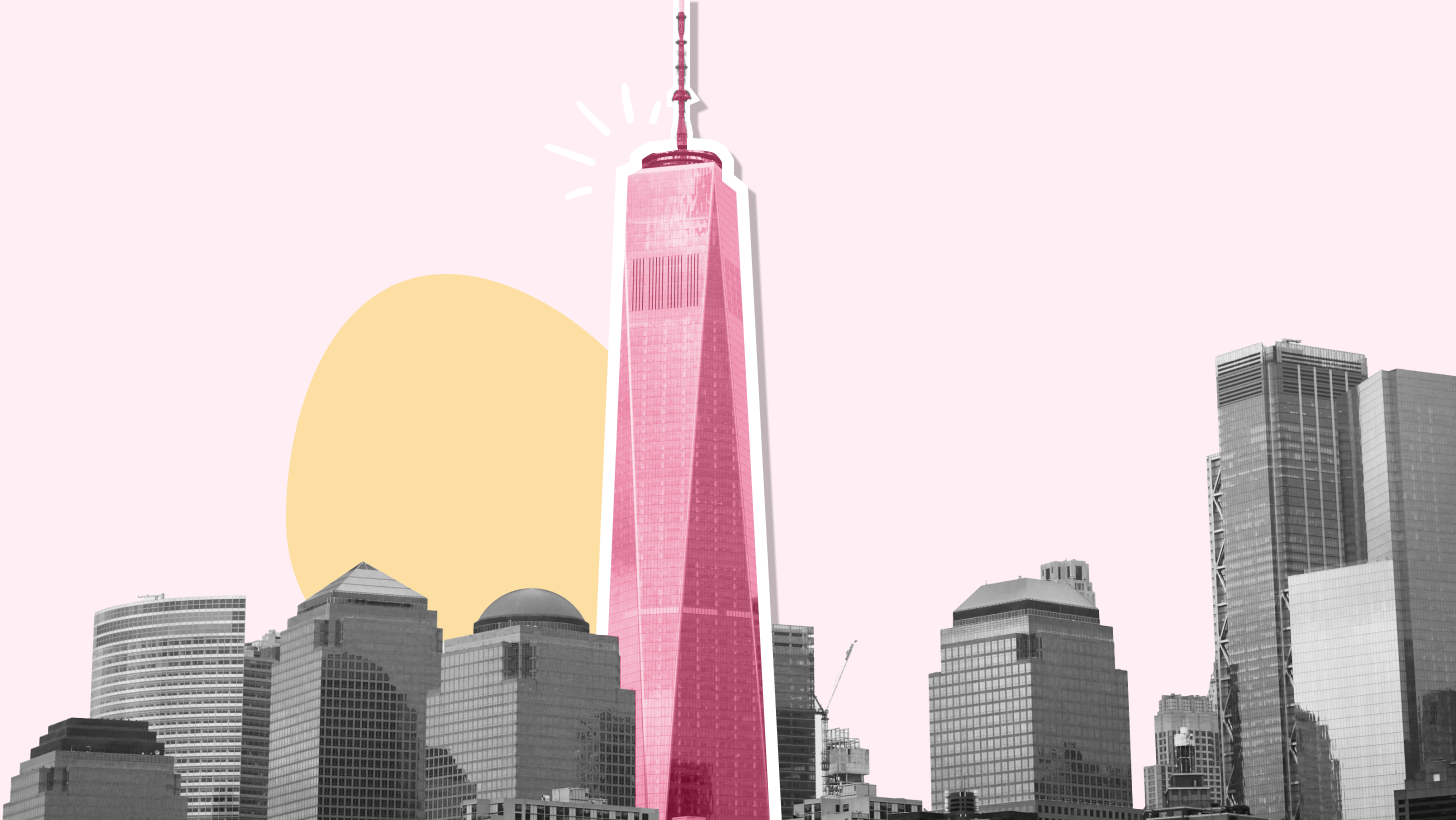
At a symbolic 1,776 feet, One World Trade Center proudly stands as America’s tallest building . Rising from the ashes of tragedy, this New York City landmark is a testament to resilience and unity.

Completed in 2014, it has been affectionately nicknamed the "Freedom Tower." Its sleek design features reflective glass that mirrors the sky, creating an ever-changing facade. The building houses offices, observation decks, and a museum dedicated to 9/11. Simply beautiful!

2
Central Park Tower

Image: Mason C

Central Park Tower, the world’s tallest residential building , reaches 1,550 feet into Manhattan’s skyline. Completed in 2020, it’s sometimes called the "Billionaires’ Row Tower" for its ultra-luxury apartments.

This architectural masterpiece offers jaw-dropping views of Central Park and beyond. It’s not just tall; it’s opulent, with a private club, pools, and even its own ballroom. If you’ve ever dreamed of living among the clouds, this is the place to do it (if you can afford it, of course).

3
Willis Tower

Image: Margo

Chicago’s Willis Tower, formerly known as the Sears Tower, was the world’s tallest building for 25 years (we did say there was some friendly competition going on!). Its 1,451-foot height dominates the skyline and has been a beacon of innovation since 1973.

The building’s unique design uses nine bundled tubes for extra stability against those famous Chicago winds. Visitors can step out onto The Ledge, a glass box extending from the 103rd floor, for a heart-pounding view. A true Midwestern marvel!

4
111 West 57th Street

Image: Parrish Freeman

Known as the "Steinway Tower," this ultra-skinny skyscraper is as much art as architecture. Rising 1,428 feet above Manhattan, it’s the thinnest skyscraper in the world and the fourth tallest in our country.

Its design nods to New York’s Jazz Age glamour, blending terracotta details with modern engineering. Completed in 2022, it houses luxury apartments that come with breathtaking views and equally jaw-dropping price tags.

5
One Vanderbilt

Image: Lukas Kyzur

Standing 1,401 feet tall, One Vanderbilt is a relatively new addition to New York City’s skyline. Completed in 2020, it’s located right next to Grand Central Terminal .

The building’s futuristic design is matched by its cutting-edge features, including Summit One Vanderbilt, an immersive observation experience. Its elevators take you to the top in a flash, and once you’re there, you’ll be treated to sweeping views of the city.

6
432 Park Avenue

Image: Miikka A.

At 1,396 feet, 432 Park Avenue is all about modern simplicity . Completed in 2015, it is one of the most recognizable buildings in the world.

ts grid-like windows give it a timeless look, but don’t be fooled—the apartments inside scream luxury. With amenities like private dining rooms and a spa, residents live the high life, pun intended! Love it or hate it, you can’t miss it.

7
Trump International Hotel and Tower

Image: Kenny Eliason

Chicago’s Trump Tower, standing 1,388 feet tall, is a gleaming addition to the city’s skyline . Completed in 2009, its reflective surface mirrors the surrounding beauty of the Chicago River.

This skyscraper combines luxury residences, a hotel, and fine dining. Its signature feature is the outdoor terrace, which offers stunning views of the Windy City.

8
30 Hudson Yards

Image: Frank Nürnberger

At 1,268 feet, 30 Hudson Yards is the centerpiece of New York’s futuristic Hudson Yards development.

Completed in 2019, it’s home to The Edge, the Western Hemisphere’s highest outdoor sky deck . The building boasts offices, dining, and even direct access to a luxury mall. Its sleek design symbolizes the city’s constant evolution. It has it all—just like the city itself!

9
Empire State Building

Image: Chris Barbalis

This may not be the tallest, but it certainly is one of the most iconic! The Empire State Building, at 1,250 feet, is a timeless symbol of New York City.

Completed in 1931 during the Great Depression , it was once the world’s tallest building. Its Art Deco design and iconic silhouette have graced countless movies and postcards. The city views it offers are simply unbeatable. No trip to New York is complete without a visit.

10
Bank of America Tower

Image: David Vives

Rising 1,200 feet in Midtown Manhattan, the Bank of America Tower is a green marvel. It was completed in 2010 and is one of the world’s most eco-friendly skyscrapers .

It uses innovative technology to reduce energy consumption and even collects rainwater. With its sharp, crystalline design, it looks as modern as its environmental features. This tower shows that sustainability and style can go hand in hand. Who knew going green could look so good?

11
St. Regis Chicago

Image: Andrew LaDeur

At 1,191 feet, the St. Regis Chicago adds a touch of elegance to the city’s skyline. Completed in 2020, its design is inspired by a flowing river , with undulating glass panels that shimmer in the sunlight. It’s a mix of hotel and residential spaces, with luxury oozing from every corner.

The building’s unique silhouette stands out in the architectural playground that is Chicago. If beauty were a competition, this skyscraper would be a top contender.

12
Aon Center

Image: Erol Ahmed

The Aon Center, at 1,136 feet, is a classic fixture in Chicago’s skyline. Built in 1973, it was originally clad in white marble, though granite replaced it later for durability. Its clean, rectangular design exudes timeless elegance.

Home to offices and observation areas , it’s a favorite among architecture lovers. You know how they are all about simplicity— the ultimate form of sophistication!

General General 3 min read

Life finds a way

From raccoons to foxes: take a look at 12 types of "urban wildlife"

Image: jennifer uppendahl

For many Americans, seeing a black bear scratching its back on a pole in a city street is not that strange. Many mammals, birds, reptiles, and insects that eat a wide variety of foods are moving in and changing their behaviors as they learn urban survival skills.

1
Coyotes

Image: Ray Hennessy

Coyotes have a natural talent for survival, and they are built to thrive in any environment, including cities where food is readily available everywhere.

As it has been noticed multiple times, coyotes have deciphered how semaphors work and wait for the red light to cross the street.

2
Black bears

Image: Bruce Warrington

Studies have shown that female black bears living in urban areas aged one to one and a half years weighed nearly twice as much as their country counterparts. Some of those urban female bears produced cubs, while none of the rural bears of the same age reproduced.

Curiously, bears seem to know when it is trash day and will scavenge for food in trash cans on those dates specifically.

3
Raccoons

Image: Ralf Volkmer

Raccoons that live in urban environments are more exploratory than their country cousins, taking more time to investigate the squares. Some raccoons even figure out how to yank bungee cords off of trash cans .

These city animals are also more social, traveling in pairs more often than their rural relatives.

4
Bald eagles

Image: Alexas_Fotos

Believe it or not, in the 1960s, the bald eagle was on the verge of extinction due to the use of pesticides. But since those pesticides have been banned, their population has rebounded, and they're no longer on the list of endangered species.

City eagles need only a place to nest and a clean source of food, which can even be a trashcan, and they’ve figured out how to use city infrastructure like cellphone towers, bridges, and cranes along waterways .

5
Pigeons

Image: Dawood Javed

Possibly the most urban animal on the list, aside from rats, pigeons are uniquely suited to urban life. They can recognize human faces , so they know which people have fed them before.

These creatures have an incredible ability to distribute themselves, so there are never more pigeons than available food. A park with twice as much food as another park will also have twice as many pigeons.

6
Booklice

Image: Brett Jordan

Whether we see it or not, our homes are filled with insect life. One of them, booklice, has found that the starch in book bindings makes an ideal food source.

Booklice have adapted to suck the moisture directly out of the air and can live off that vapour for three weeks, avoiding dehydration.

7
Squirrels

Image: Mark Brennan

Squirrels and urban environments have gotten along for a long time now. There’s ample food and shelter, and few natural predators. They’ve learned to live in much greater densities in cities than they do in other environments, and they can tell which humans will feed them .

8
Sparrows

Image: Carlos Quintero

The sparrows that live in New York City have become night owls, staying out later to feed because the bright lights around buildings draw plenty of insects .

9
Rats

Image: Joshua J. Cotten

Almost no one would call a rat clean, but contrary to popular belief, city rats tend to carry fewer diseases and parasites than rural ones because they have less contact with livestock excrement from farms, and their human neighbors don’t harbor many parasites.

10
Ospreys

Image: KaroGraphix Photography

Ospreys have seen their numbers grow in North America partially because they have forsaken trees in favor of building their 250-pound nests on power poles, cell phone towers, channel markers , and other human-made structures.

11
Crows

Image: Veronica Dudarev

Crows are very smart creatures, and they have learned to use the city infrastructure to their advantage. These birds drop nuts and bones from great heights to crack the hard outer shells so that they can reach the food inside. City crows simply drop the previously impenetrable food into the street and let the cars crack it open .

12
Tomcods

Image: John Werner

Nature can adapt to almost anything, and tomcods are living proof of this. A very polluted segment of the Hudson River is home to these humble fish, who have adapted to its contaminated waters through genetic variations that allow them to thrive in such conditions.

Explore more American facts

Choose your favorite category!

General
General

As American as apple pie—the very best America has to offer!

Culture
Culture

Delve into the astounding richness of American lore.

Geography
Geography

Hop in and explore vast and diverse American landscapes.

History
History

Discover the key moments that shaped the United States.