Culture Culture 6 min read

From fact to fiction

Real-life Americans who inspired iconic fictional characters
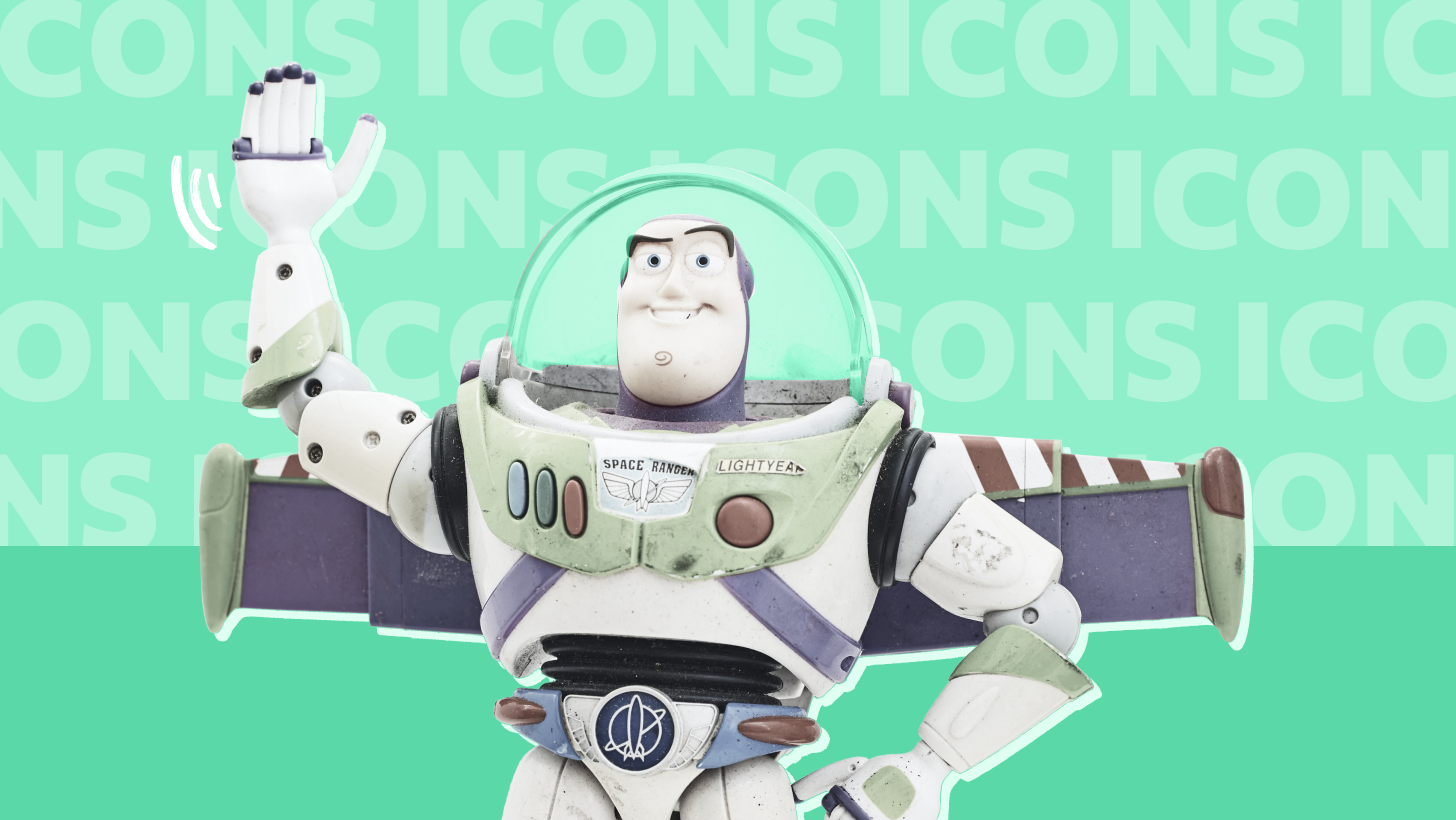
Image: Jose Betancourt

Some stories you just can’t make up—like that of a tough archeologist wrestling pythons, a media mogul rising and falling before the eyes of the world, or an eccentric millionaire genius forever scarred from malfunctions of his own inventions. Some unforgettable fictional characters were based on the lives and feats of real people who, willingly or not, found themselves caught in movie-like plots. Read on to explore the lives of 10 Americans who changed the world so significantly that writers decided to immortalize them.

1
Roy Chapman Andrews - Indiana Jones

Image: Intricate Explorer

Roy Chapman Andrews was an American explorer, adventurer, naturalist, and paleontologist who made it out of brawls with pythons, a whale, and armed bandits. He was erroneously reported dead a couple of times and led expeditions across the deserts of China and Mongolia—despite having a fear of snakes . One might safely say that he was the real-life Indiana Jones.

Though neither George Lucas nor Steven Spielberg, the producers behind the franchise, have ever confirmed the claims, they are fully aware of the number of parallels between the movie hero and the former director of the American Museum of Natural History , who collected dinosaur eggs as a hobby. Even Andrews’ granddaughter, Sara Appelbee, believes that Indy was at least inspired by her grandpa.

2
Chuck Wepner - Rocky Balboa

Image: Luisa Frassier

A number of real-life pugilists are said to have inspired Silvester Stalone’s hero —or at least his iconic training methods, such as pulling carts or punching meat packs. Philly boxer Joe Frazier, who even had a cameo in the first movie, was one of them. Also, the nickname "Rocky" was taken from Rocco "Rocky" Francis Marchegiano, an Italian-American heavyweight champion who finished his career undefeated.

But the heart and soul of Rocky was the boxer, Chuck Wepner. Stalone has recounted many times that it was after watching Wepner give his all against the legendary Muhammed Ali that he got the idea for an underdog boxer who would never quit. Wepner’s career and his unyielding spirit later inspired other movies, like Chuck (2016) and The Brawler (2019).

3
Belva Gaertner & Beulah Annan - Velma Kelly & Roxie Hart

Image: tadah

In 1924, reporter Maurine Dallas Watkins covered courthouse stories for the Chicago Tribune . One day, she was asked to write about the trial cases of two women accused of shooting their partners. A few months later, she quit the Chicago Tribune and proceeded to publish a play she had written: Chicago .

The two women were Belva Gaertner and Beulah Annan, both by then acquitted of the charges of murdering their respective partners. The ever-changing accounts of their alibis for the crimes, as well as the audience’s fascination with them, was what inspired Watkins to write the characters of Velma Kelly and Roxie Hart , whose storylines closely resemble those of Gaertner and Annan. Watkins, who had described Gaertner and Annan as the "beauty of the cell block" and the "most stylish of Murderess Row," later sustained that she believed both women were guilty.

4
Draper Daniels & Mary Wells Lawrence - Don Draper & Peggy Olson

Image: S O C I A L . C U T

5

It is known that the multi-award-winning TV show Mad Men focused on showcasing the lifestyle and operations of grand advertising agencies from Madison Avenue, New York, in the mid-20th century. Although parts of the show were exaggerated for dramatic effect, some experts sustain that the anti-hero Don Draper was likely based on Draper Daniels—at least in terms of his career accomplishments.

Daniels was the creative director of the legendary agency Leo Burnett and led famous campaigns for Marlboro, a leading cigarette company in the 1950s. One can only hope that his personal life was less turbulent than that of the fictional character, but the show perfectly transmitted the ingenuity of a big-buck creative director . Did you know that his apprentice, Peggy Olson, was also based on a real-life publicist? It is believed that Mary Wells Lawrence , an advertising legend and pioneering female leader in the industry, inspired the character of Peggy, a hungry and charismatic young writer who is only at the beginning of a brilliant career.

6
William Randolph Hearst - Charles Foster Kane

Image: Zoe

Citizen Kane (1941), widely considered one of the best films ever made, was famously inspired by the life of media mogul William Randolph Hearst. Charles Foster Kane, just like his real-life counterpart, rose from humble beginnings to immense wealth by building a newspaper empire . In this case, the history of personal scandal depicted in the movie did match reality.

Like Kane, Hearst had a mansion complete with private zoos and priceless art collections. Both men had political careers and a heavy presence in the press and media. Hearst did not take the movie lightly; the portrayal was so thinly veiled that the story offended him greatly, particularly the inclusion of a doomed romance that paralleled his relationship with actress Marion Davies.

7
Pocahontas

Image: EricThriller

We know that Disney's Pocahontas (1995) is a highly romanticized version of historical accounts, but Pocahontas indeed was a real-life Native American woman in the 1600s. The movie took great liberties with facts. For example, Pocahontas was only 10 or 11 years old when she met English newcomers, not the young woman suggested in the film.

She was indeed the daughter of Powhatan , their tribe chief, and early accounts claim that she intervened to prevent the execution of English sailor John Smith, though these tales have been disputed over the centuries. The story of her life, captivity, transformation to Christianism and marriage to John Rolfe have been represented in several films, plays, books, and paintings throughout time, even though historical records of her life are scarce.

8
Howard Hughes - Tony Stark

Image: Igor Bumba

Sure, perhaps Iron Man never existed. But Tony Stark might have, in a way. The billionaire genius who became Marvel's icon was heavily inspired by real-life American industrialist and aviator Howard Hughes. Both Stark and Hughes were visionary inventors, known for their technological prowess, complex personal lives, and eccentric personalities.

During his lifetime, Hughes was one of the richest and most influential people in the world, and, like Tony Stark, he behaved accordingly. Hughes had romantic entanglements with Hollywood stars and led a luxurious lifestyle. This was parodied in Stark’s playboy personality and his interactions with the press. Interestingly, Hughes, an enthusiastic pilot, carried several injuries he had sustained from being in four different plane crashes. These wounds were paralleled by those in Stark, who carried a literal gap in his body after an accident caused by a malfunction of his own technology.

9
Peggy Lee - Miss Piggy

Image: cottonbro studio

Yes, even Miss Piggy drew inspiration from a real person. That person was none other than Peggy Lee, the legendary jazz singer , songwriter, and actress with a 70-year-long career. Lee was known for her sultry voice and sassy but commanding stage presence, a diva superstar personality. Does that remind you of a certain Muppet?

Miss Piggy’s signature traits include her charm and her conviction that she is destined for stardom . Many of Peggy Lee's qualities, even physical traits like her blond hair, were gracefully taken in by Miss Piggy’s creators, but not all. For instance, the tendency to karate-chop Kermit the Frog when she is mad at him might have been ad-libbed.

10
The Unsinkable Molly Brown

Image: Jean-Christophe André

Molly Brown survived the sinking of the RMS Titanic, and her persona even made it to the 1997 James Cameron film. In it, Kathy Bates played Margaret Brown, aka "The Unsinkable" Molly Brown. A socialite, activist, and philanthropist, she showed stellar leadership and bravery during the disaster as a first-class passenger who helped several people into lifeboats before being forced to board one herself.

In the movie, she is portrayed as a strong, outspoken woman ready to defy social conventions and eager to make space for more people in the lifeboats. Reportedly, that night in 1912, she insisted that the boat return to save others, but her pleas were ignored. Real-life Molly Brown was known for her flamboyant personality ; she spoke several languages and traveled extensively. She even tried her hand at acting.

11
Buzz Aldrin - Buzz Lightyear

Image: Kindel Media

Finally, it must be said: Buzz Lightyear was named and designed in honor of none other than Buzz Aldrin, the second person to walk on the Moon . Of course, as one of the faces and emblems of space exploration, Aldrin served as a direct inspiration for the beloved space ranger from the Toy Story franchise.

Sure, Buzz Lightyear was just a toy, but the yearning in his eyes when he looked at the stars was powerful enough to represent any astronaut. Was Aldrin honored by this nod to him? Yes, he even participated in several Disney events where both Buzzes discussed space travel, and the real astronaut gave the character advice about venturing "to infinity and beyond."
General General 4 min read

Beyond the Preamble

The amendment that took 200 years and other intriguing Constitution facts

Image: Anthony Garand

The Constitution is undoubtedly one of the most important documents in our history —and in our present! But even if we think we know everything about it, there are still some surprising details that might shock even the most knowledgeable history fans. Did you know that the 27th Amendment, which is also the last one, took more than 200 years to be ratified? Join us to uncover 10 fascinating facts about the Constitution that many people don't know about!

1
10/12

Image: Sue Winston

We know that the Bill of Rights consists of the first 10 amendments to the Constitution, but did you know that Congress originally proposed 12 amendments? That's right! Yet, the states ratified only 10, leaving two out.

But here's the interesting part: One of these unratified amendments —the one concerning congressional compensation— was ratified more than 200 years later! In 1992, it became the 27th Amendment, which is also the last one.

2
World record

Image: Pierre Bamin

Our Constitution was signed in the 18th century, and while we know it's been a long time, what you might not know is that it is considered the world's oldest written national constitution still in effect today.

With various changes and amendments added over the years, this document not only defined the ideals of our nation but also earned us a world record!

3
The youngest

Image: MJ S

The men who signed this historic document were of varying ages. In fact, the age difference between the youngest and oldest signer was a remarkable 55 years!

The youngest to sign was attorney Jonathan Dayton of New Jersey, who was 26 years old at the time. Do you want to know who was the oldest? Keep reading!

4
The oldest

Image: Adam Nir

Well, as we mentioned, there was a 55-year age gap between the youngest and oldest signers of the US Constitution.

Do you know who the oldest was? That's right, Benjamin Franklin! He was a distinguished 81 years old when he signed this historic document.

5
500 copies

Image: Christa Dodoo

The original Constitution had 500 copies printed for distribution, made by the Founding Fathers themselves. They distributed those copies to members of Congress and state legislatures. Of those 500 original copies, however, only 13 are known to exist today. We have to say that, given that more than 230 years have passed, it's impressive that so many have survived!

6
How much?

Image: Jp Valery

Logically, since so few original copies remain, they ' re incredibly rare and valuable. In fact, one of these original documents was sold in 2021, and you won't believe its price!

You might have imagined it was sold for $5 million, maybe $10 million. But no, this invaluable copy went for $43.2 million. With that sale, it also became the most expensive historical document ever sold at an auction.

7
30 bucks

Image: Barry A

The person who transcribed the original US Constitution signed in 1787 had an important job, didn't he? The man who accomplished this major deed was Jacob Shallus, a clerk of the Pennsylvania General Assembly at the time. He was responsible for taking the text drafted by the Founding Fathers and transcribing it onto parchment: over 4,000 words scribbled down entirely by hand! Surprisingly, he was paid just $30 for this task.

8
Let's celebrate

Image: Kelly Sikkema

In 1789, long before Thanksgiving became an official national holiday, President George Washington issued a proclamation declaring November 26 as a day to give thanks. As it was an occasion for national gratitude, he also encouraged citizens to celebrate the birth of the new nation and the recently established Constitution.

9
A spelling issue

Image: Katherine McAdoo

Being a text from so long ago, some words —particularly proper nouns— may have changed slightly since the Constitution was first drafted. This was the case for the state of Pennsylvania, which is spelled as "Pensylvania" in the original document. However, while some may consider it a misspelling today, it was actually an accepted spelling for the state's name in the 18th century.

Fun fact: You can also find "Pensylvania" engraved on the Liberty Bell!

10
The Father of the Constitution

Image: Richard Hedrick

"The Father of the Constitution" is one of the nicknames given to James Madison, one of our Founding Fathers. And it's these very words that appear on the rare $5,000 bill.

Although this bill is no longer in circulation, if you are lucky enough to get your hands on one, you'll read "James Madison, The Father of the Constitution" next to the portrait of the 4th U.S. President.

Geography Geography 6 min read

Take note: These 12 US bridges are road trip worth it!

Image: Joseph Corl

Bridges aren’t just structures of stone and steel—they’re storytellers in their own right. Each one holds a legend, whether of a nation’s earliest days or a bold leap in engineering. Some rise like monuments that mark the passage of time, while others capture the imagination with elegance or daring design. From quiet covered spans in New England to soaring marvels out West, every bridge reveals a chapter of America’s journey. Let’s explore 12 structures that stand out for their legacy and grandeur.

1
Frankford Avenue Bridge, Philadelphia, Pennsylvania

Image: See page for author, Public domain, via Wikimedia Commons

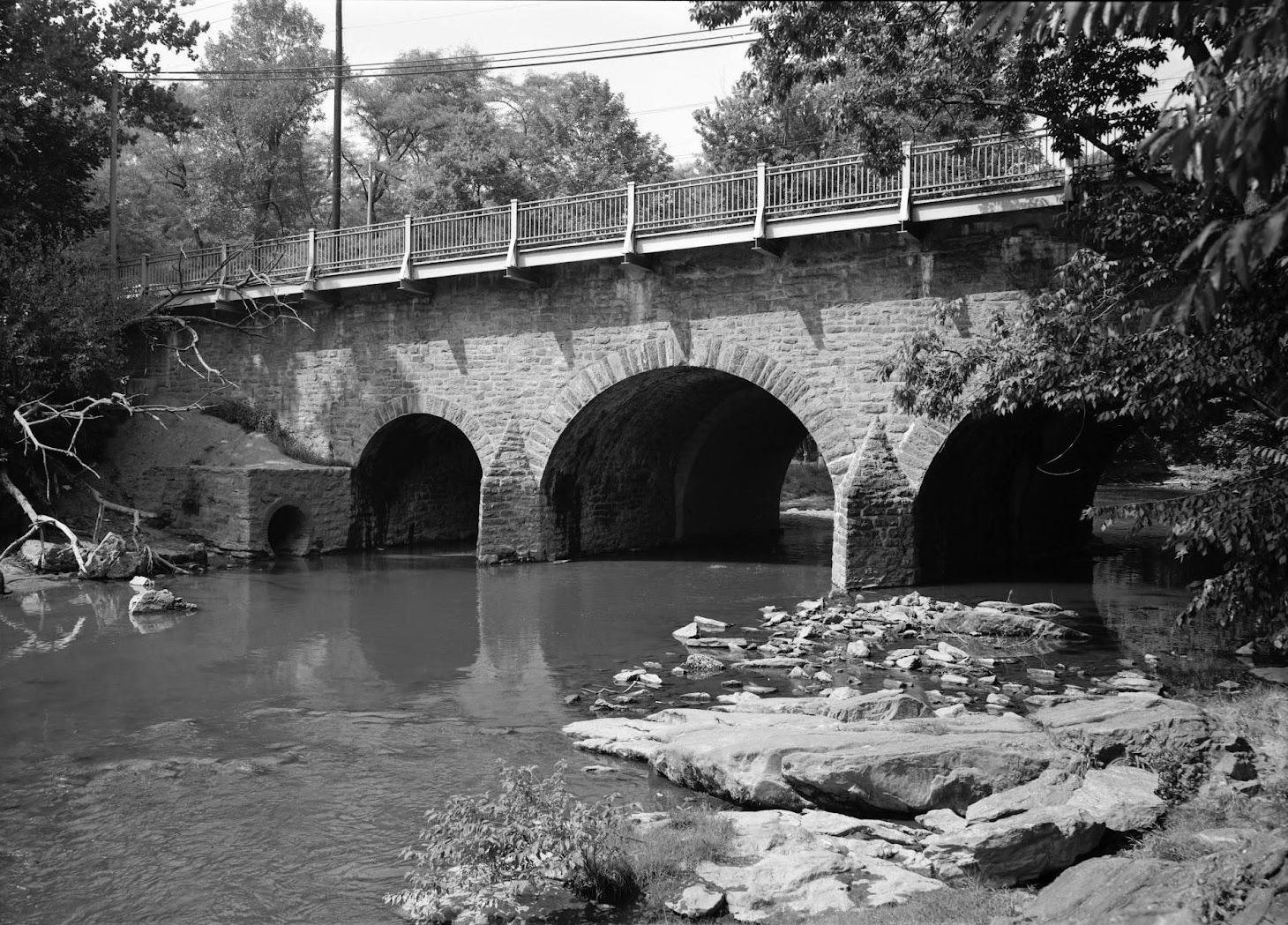
Long before America declared independence, a bridge was already standing strong in Philadelphia. Built in 1697, the Frankford Avenue Bridge holds the title of the oldest bridge still in use in the United States. Picture stagecoaches rattling across its stone arches, carrying passengers between Philadelphia and New York. Today, cars hum across the same path, hardly noticing they’re rolling over a structure that has endured for more than three centuries —a quiet survivor of colonial times still woven into modern city life.

2
Golden Gate Bridge, San Francisco, California

Image: Maarten van den Heuvel

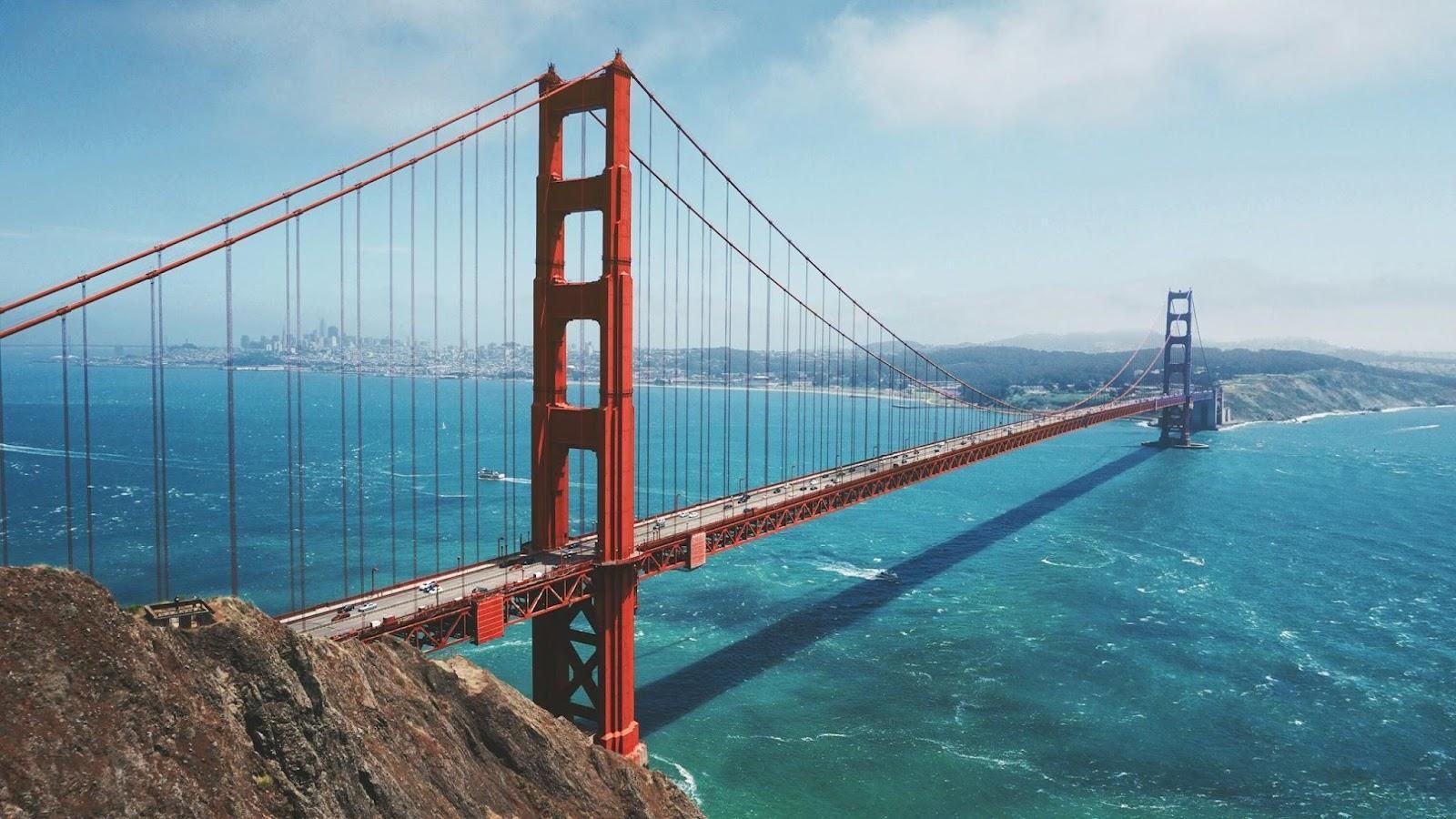
What if we told you that a bridge once called "impossible" now defines an entire city? When it opened in 1937, the Golden Gate spanned an incredible 4,200 feet, a record that stunned engineers across the globe. Its sweeping cables and graceful towers are much more than just steel —it’s poetry over water. Painted in its famous "international orange," this bridge doesn’t just stand tall against the fog, it glows through it, serving as both a practical crossing and a proud emblem of San Francisco’s scenic location.

3
Sunshine Skyway Bridge, Tampa Bay, Florida

Image: Joseph Corl

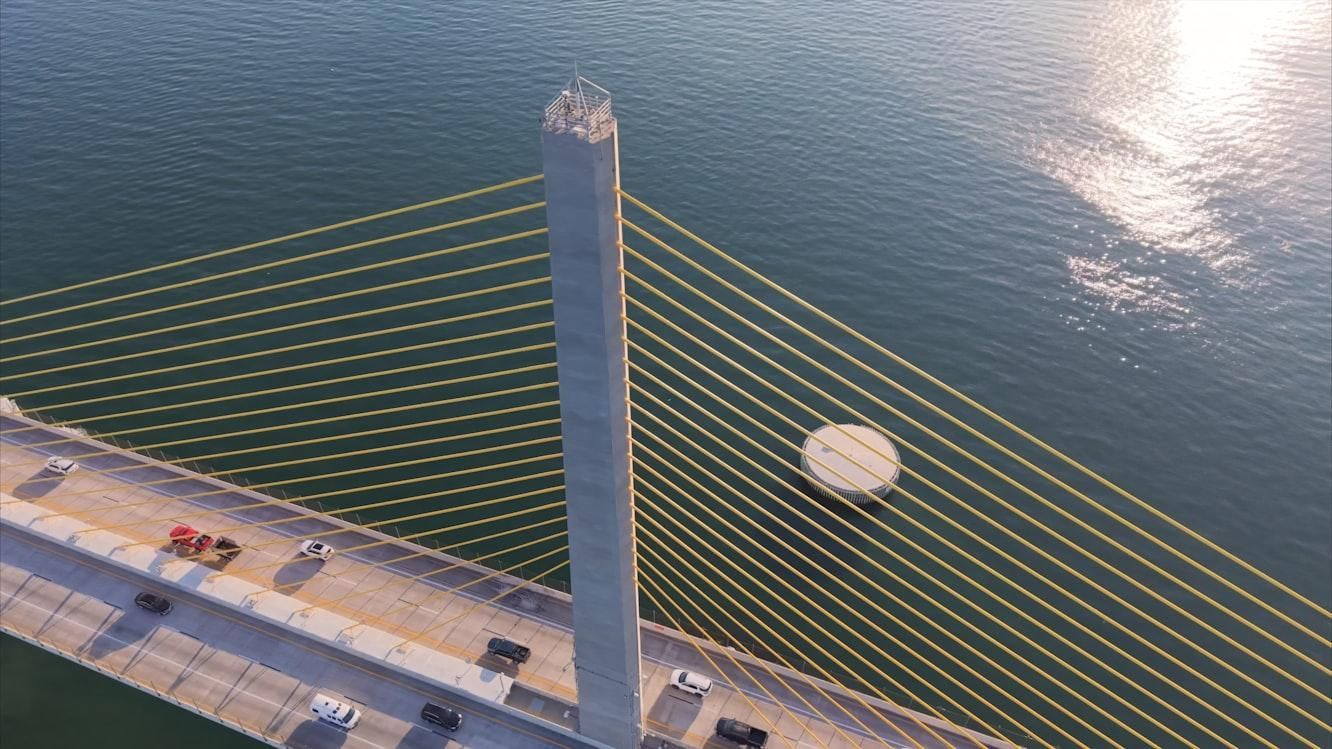
Reaching gracefully across 4.1 miles of Tampa Bay, the Sunshine Skyway Bridge rises like a fleet of white sails frozen in motion. Finished in 1987, it was designed to do more than just connect two shores—it was built to inspire. Its towering piers and broad cables give it the look of a ship setting out to sea, a fitting image for Florida’s sunlit coast. On bright days, motorists often describe the drive as more than a commute; it feels like gliding above the Gulf itself, where the horizon stretches endlessly and the water sparkles below like glass.

4
Brooklyn Bridge, New York, New York

Image: Alexander Rotker

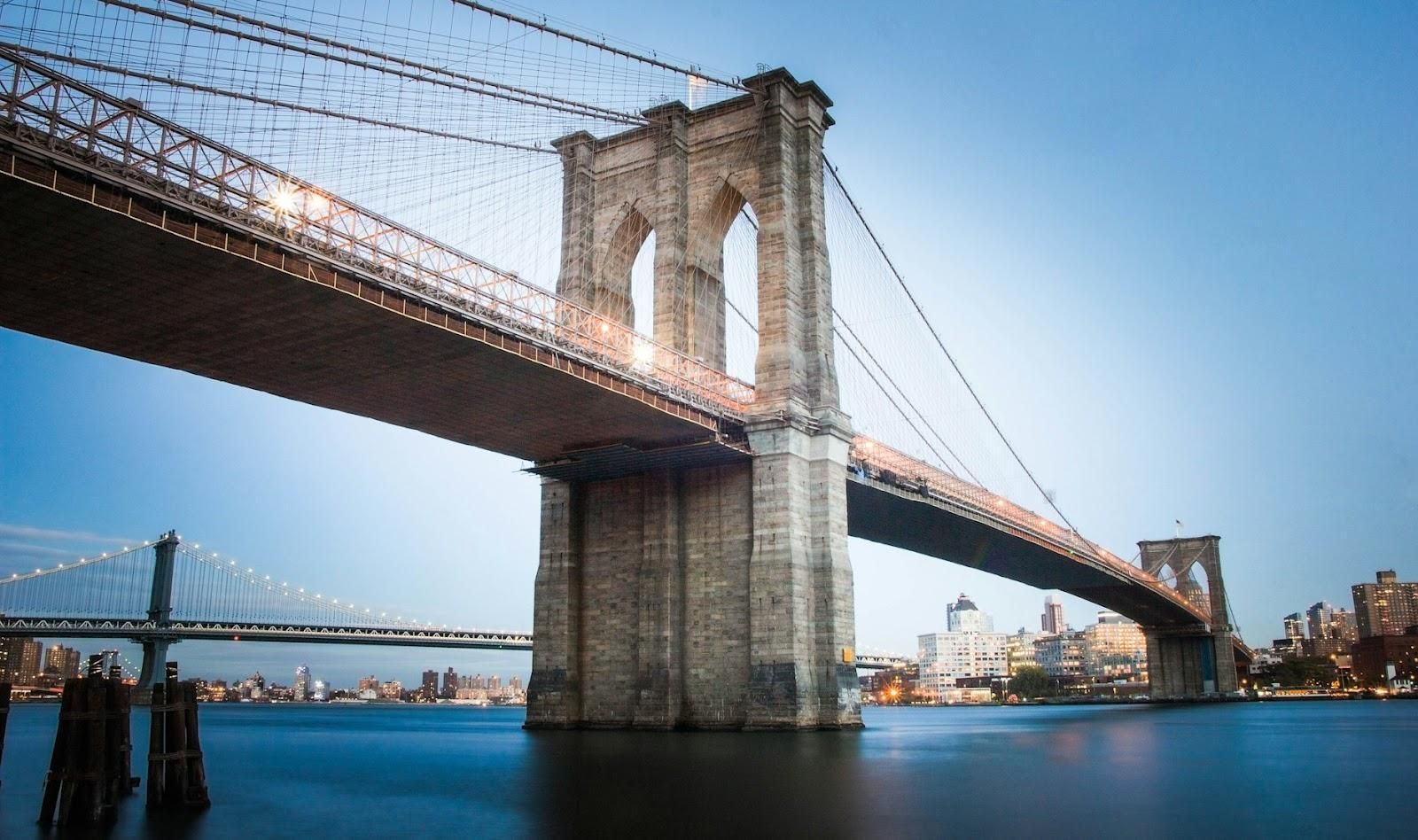
Here’s a tale worth telling: when the Brooklyn Bridge first opened in 1883, many New Yorkers doubted its strength. To calm their fears, showman P. T. Barnum led 21 elephants across the span, proving once and for all that the monumental structure could hold far more than horse-drawn carriages. With its stone Gothic towers rising like cathedrals and its web of cables fanning out in graceful arcs, the Brooklyn Bridge is both an engineering triumph and a work of art. More than a century later, it still stands as a symbol of American ingenuity.

5
Memorial Bridge, Washington, D.C.

Image: Devansh Bajaj

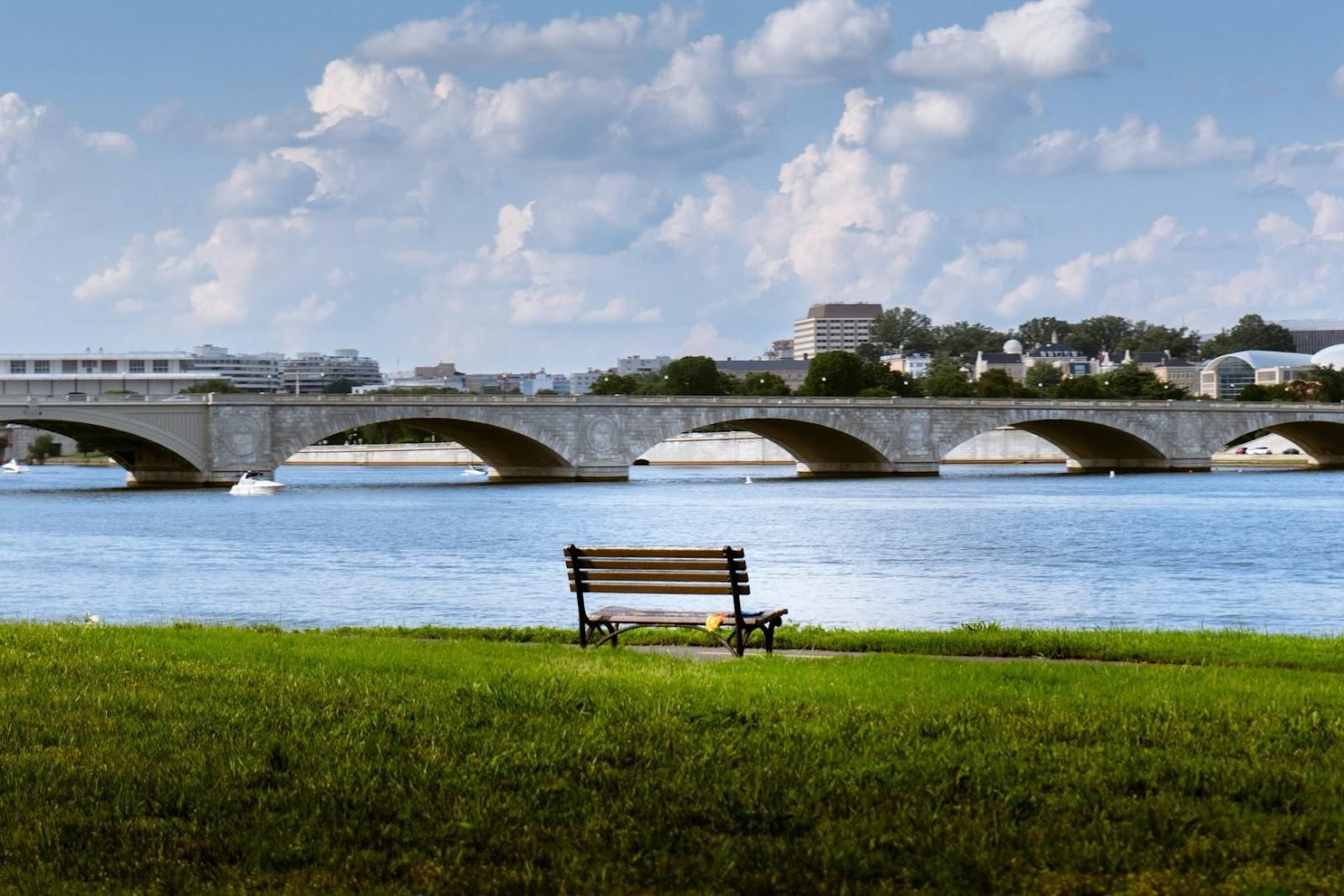
Picture this: a bridge that doesn’t just link two shores, but two chapters of American history. The Arlington Memorial Bridge, completed in 1932, was designed to align the Lincoln Memorial with Arlington House, symbolizing a nation healing after the Civil War. Its central span works like an enormous see-saw—an elegant bascule that tips upward, heavy as a freight train, to open the way for ships on the Potomac. More than steel and stone, it’s a gesture of reconciliation and remembrance.

6
Tunkhannock Creek Viaduct, Nicholson, Pennsylvania

Image: WallyFromColumbia at English Wikipedia, Public domain, via Wikimedia Commons

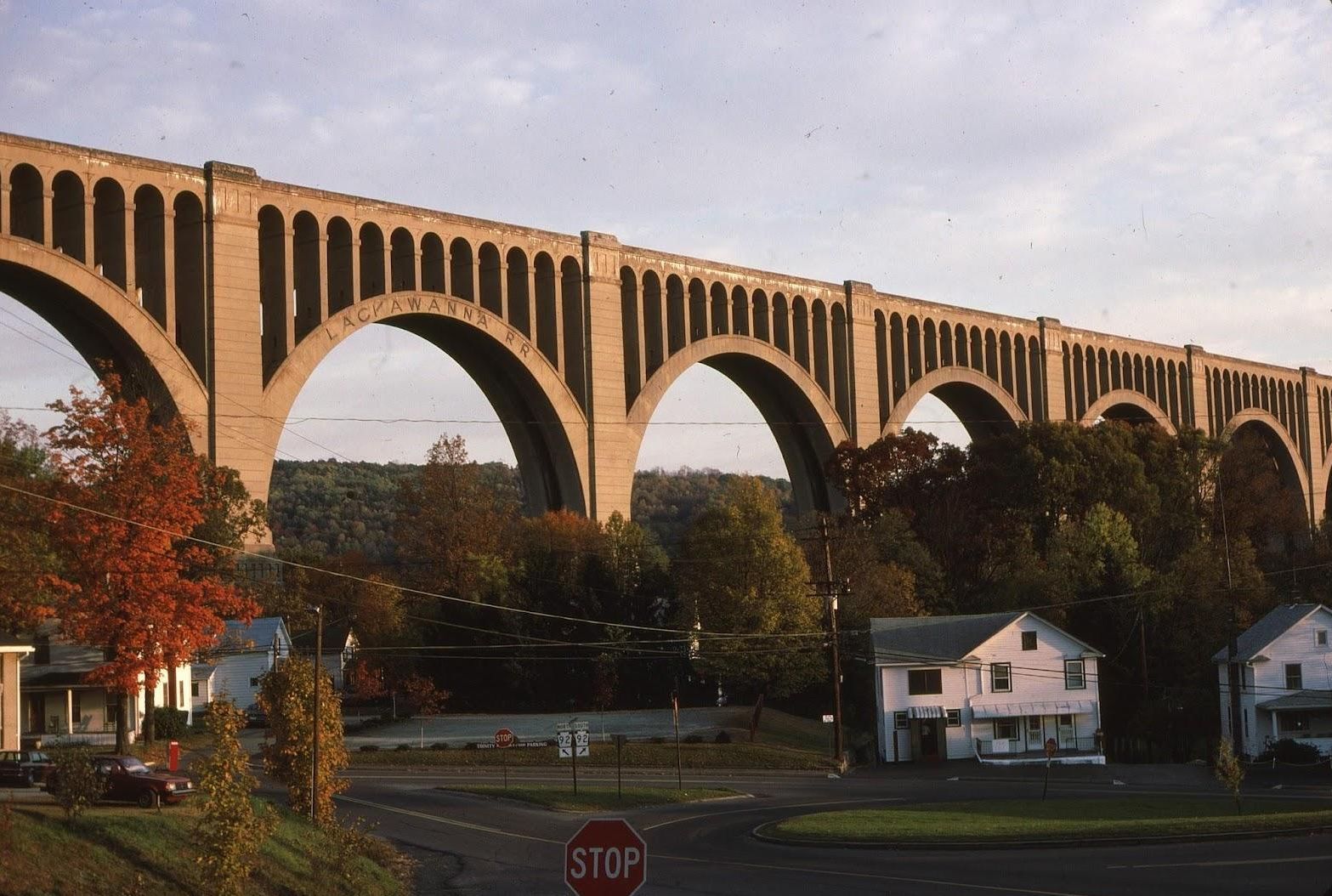
Imagine standing at the foot of a concrete wall as high as a 20-story tower, stretching farther than the eye expects a bridge could go. That’s what people experienced in 1915 when the Tunkhannock Creek Viaduct—better known as the Nicholson Bridge—first appeared on the Pennsylvania landscape. Spanning 2,375 feet with arches rising 240 feet above the valley, it was the largest concrete bridge in the world at its completion. More than a century later, trains still roll across its 12 arches, looking like miniature toys against the bridge’s sheer immensity.

7
Roebling Suspension Bridge, Cincinnati, Ohio

Image: Thomas Rupp

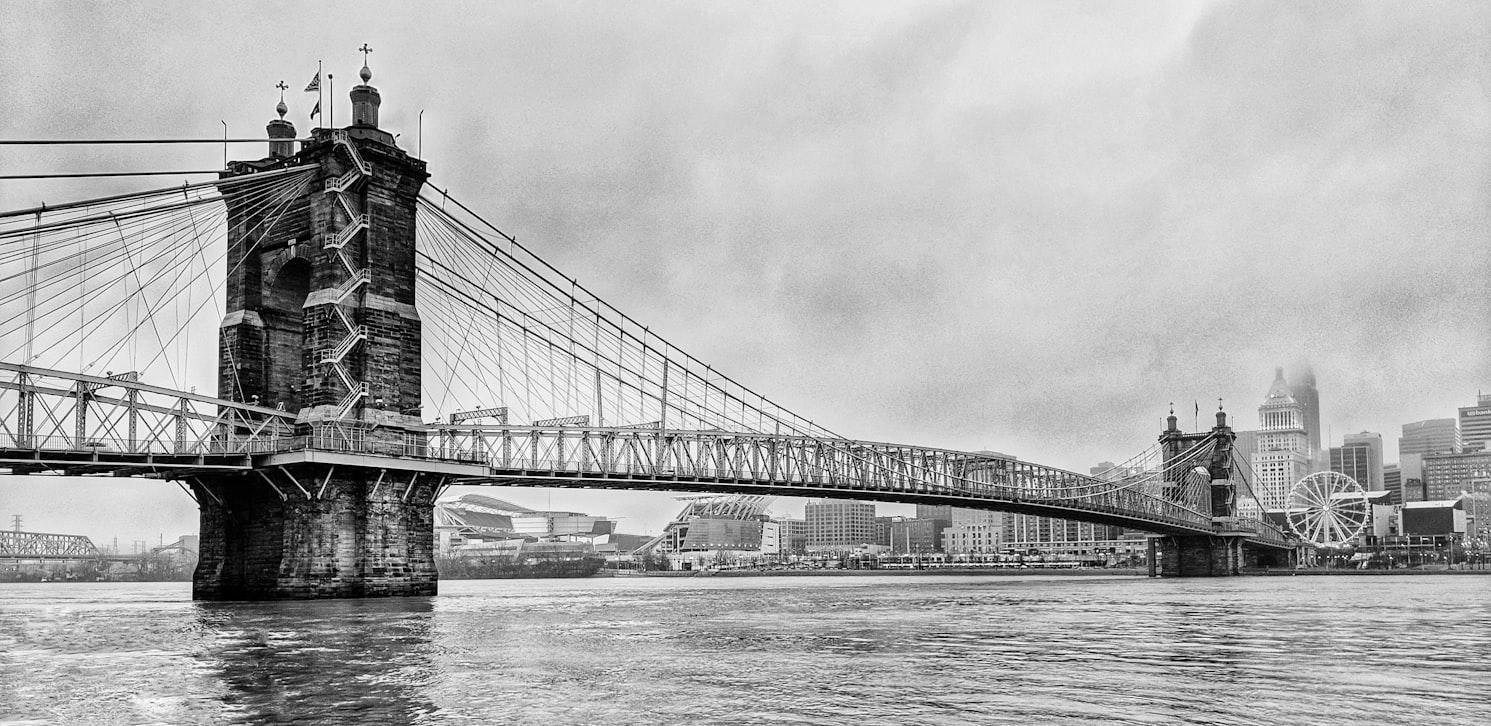
If the Brooklyn Bridge impressed you, the Roebling Suspension Bridge in Ohio will blow your mind, as it was built years earlier by the same man. When it opened in 1867, it set a world record as the longest suspension bridge, stretching an impressive 1,057 feet across the Ohio River. It was John A. Roebling’s first marvel, only overtaken by his own later New York landmark. For the people of Cincinnati, the bridge was proof that American engineering could rival anything in the world, a daring leap that linked two cities and paved the way for future icons.

8
North Bridge, Concord, Massachusetts

Image: Christopher Ryan

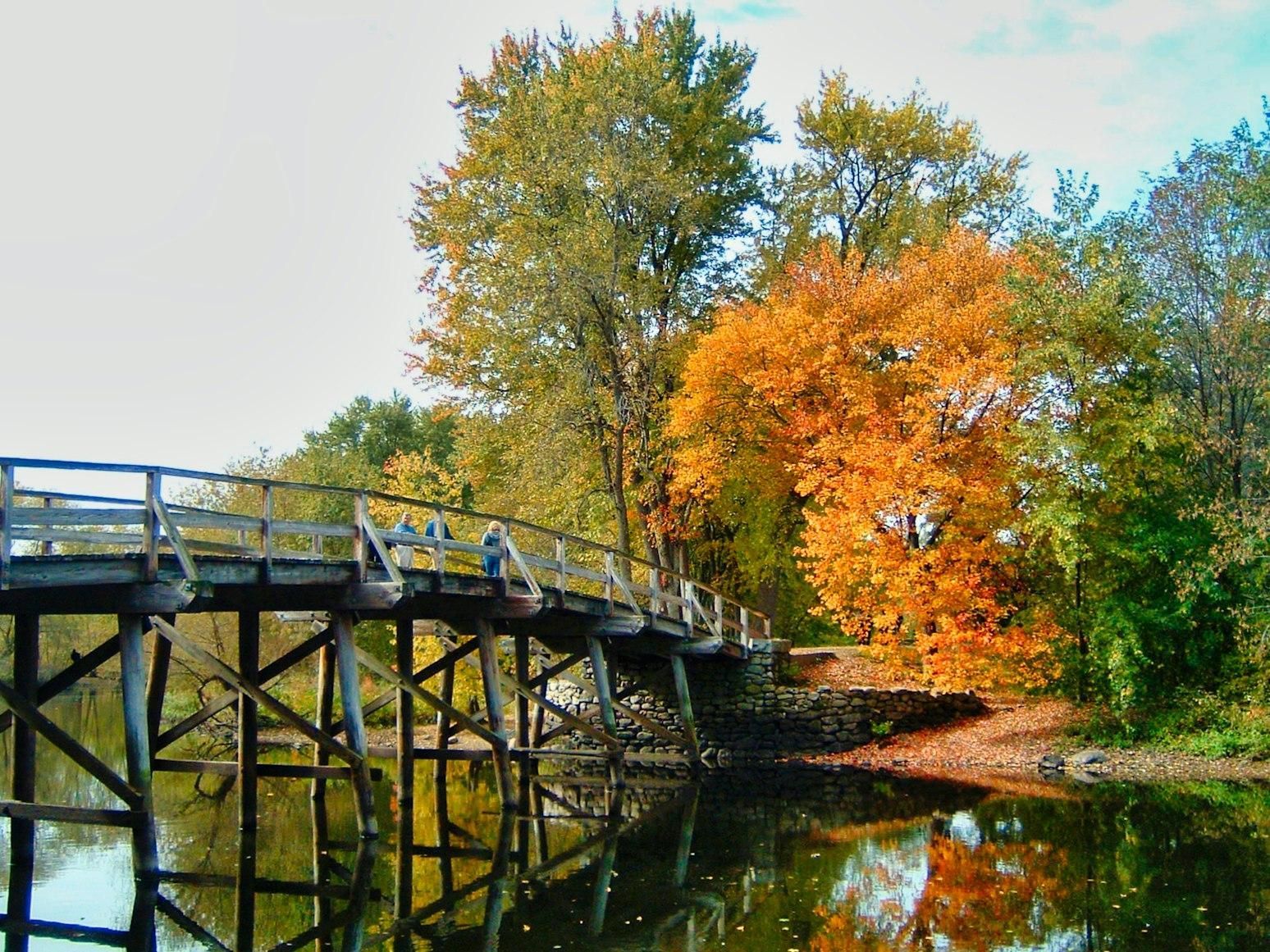
Set foot on the North Bridge in Concord and you’re not just crossing the Concord River—you’re walking into the pages of history. It was in this exact place that, in April 1775, a musket fire rang out, sparking the first battle of the American Revolution and changing the course of a nation forever. The bridge visitors see today is a careful 1956 reconstruction, built to honor the original. Yet, the setting remains almost the same: the quiet river below, the fields beyond, and the sense that this unassuming wooden span still carries the echoes of liberty’s first call.

9
Middle Covered Bridge, Woodstock, Vermont

Image: Michelle_Pitzel

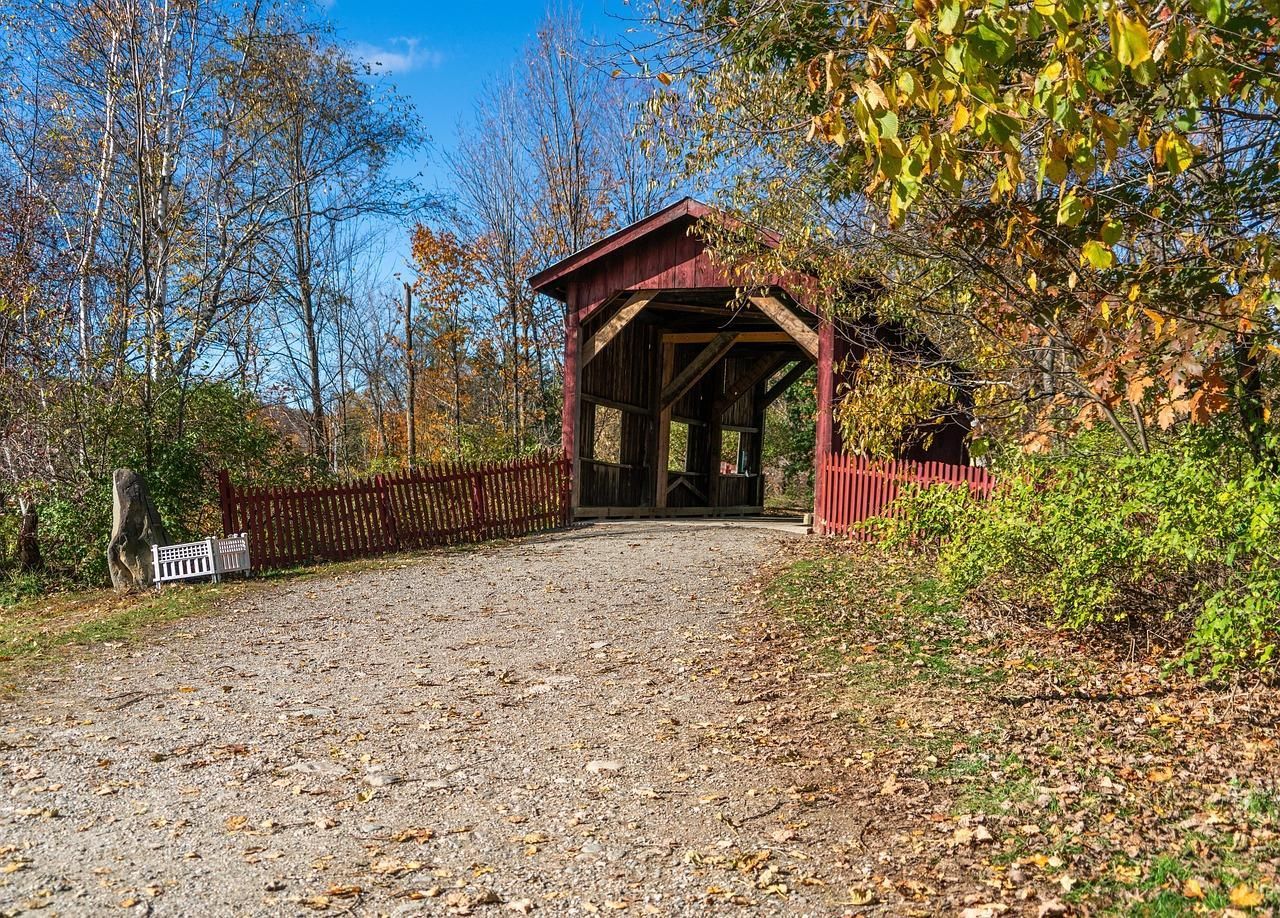
There’s a certain mystique about covered bridges, and Woodstock’s Middle Bridge feels like it was lifted straight from a storybook. Though built in 1969, it was crafted with traditional techniques, giving it the spirit of a much older landmark. Stretching 135 feet across the Ottauquechee River, its peaked wooden roof frames a perfect New England scene —red barns, rolling hills, and the steady flow of water beneath. Beyond its whimsical charm, the roof serves a purpose: protecting the bridge’s sturdy timbers from Vermont’s long, snowy winters so it can stand strong for generations.

10
New River Gorge Bridge, Fayetteville, West Virginia

Image: Ian Pearthree

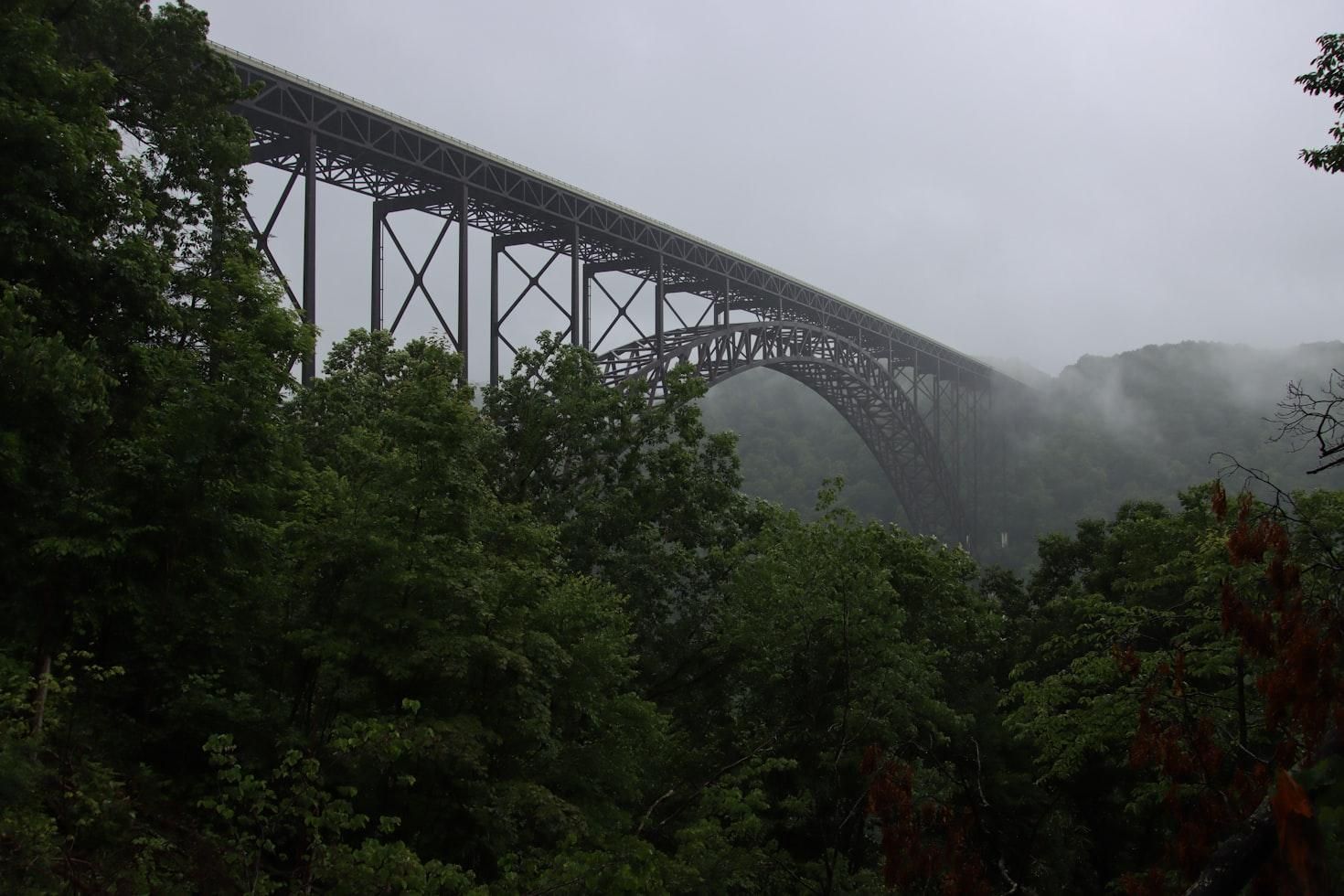
From a distance, the New River Gorge Bridge might seem like any other stretch of highway. But step onto it, and it’s a different story. Opened in 1977, this steel arch rises 876 feet above the rushing waters below—higher than stacking two Statues of Liberty end to end. It is a symbol of West Virginia’s rugged beauty, celebrated each October during "Bridge Day," when traffic halts, and the bridge transforms into a stage for daring jumps, local crafts, and awe-struck visitors soaking in one of the most breathtaking views in America.

11
Bow Bridge, Central Park, New York, New York

Image: Pierre Blaché

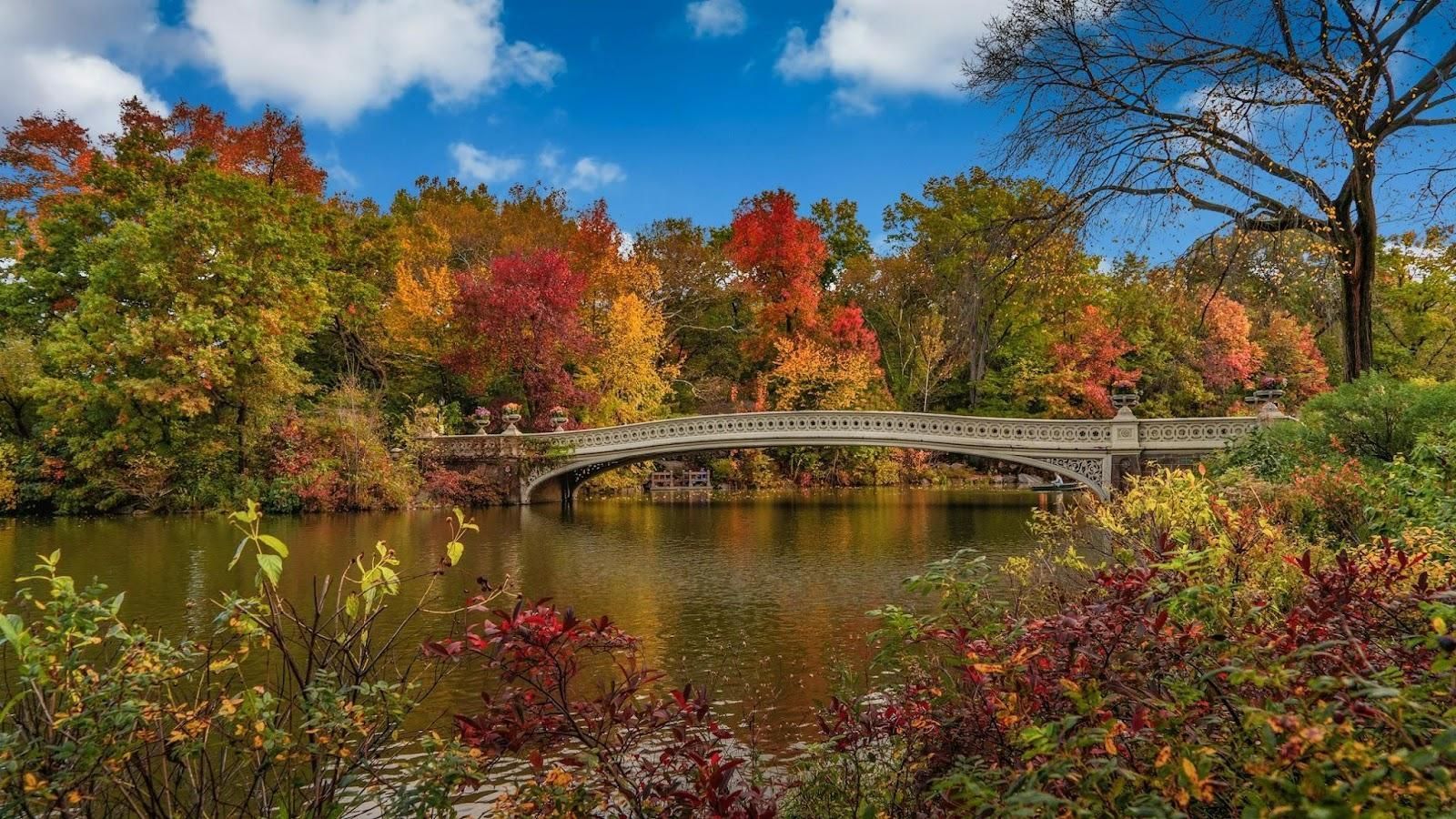
As light as lace yet forged from iron, Bow Bridge sweeps in a gentle curve across Central Park’s shimmering lake. Completed in 1862, it quickly became more than a passage—it turned into a stage for the city’s daily rhythms. Artists set up easels to capture its elegance, photographers frame it against the water, and couples linger at its railings, savoring the view. Street musicians often fill the air with music, while beyond the trees, New York’s skyline stretches high. Amid the steel and stone of the metropolis, Bow Bridge endures as a quiet piece of poetry shaped in metal.

12
Harbor Bridge, Corpus Christi, Texas

Image: Vladislav Osterman

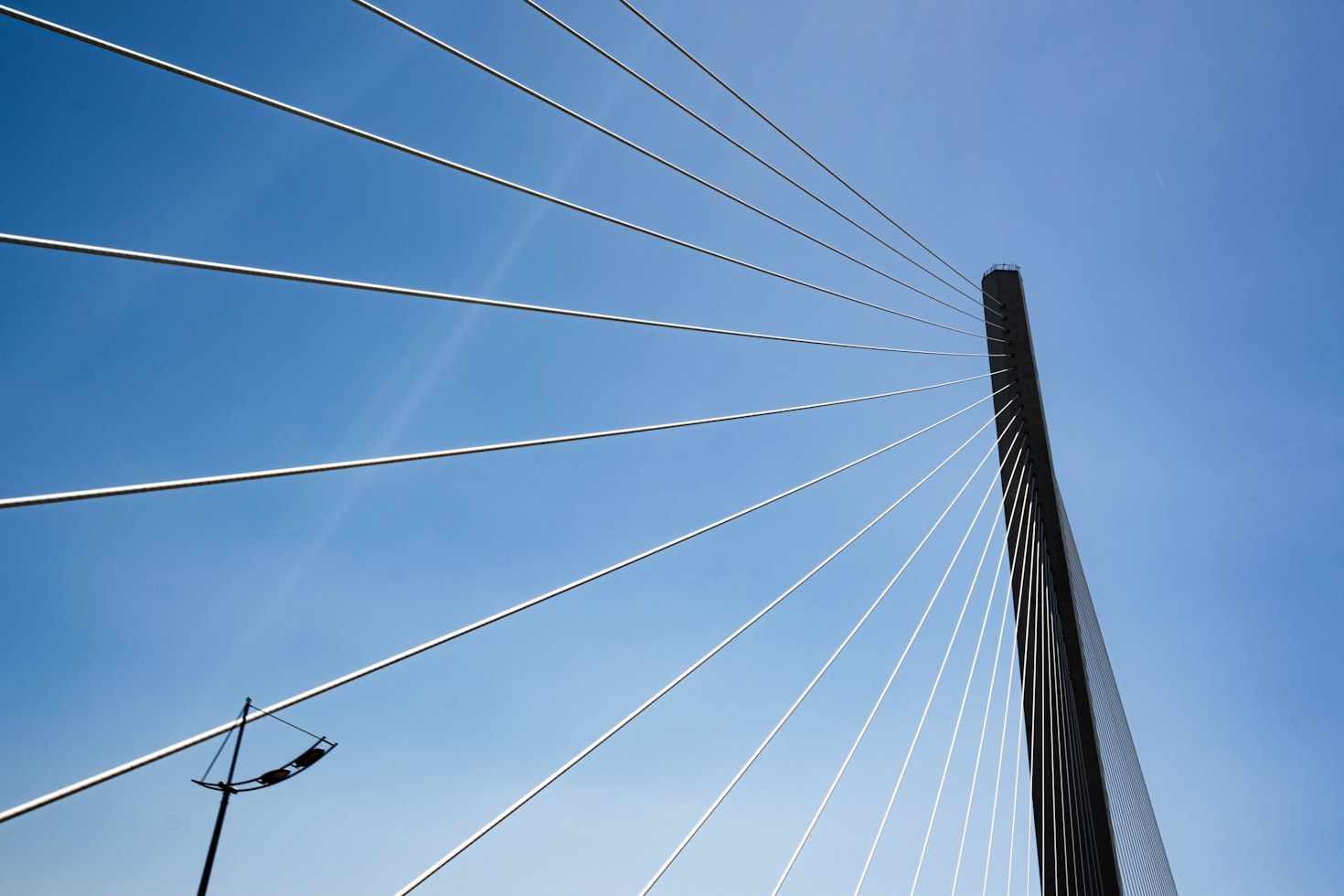
You now know what the oldest bridge in America is, but what about the newest? Unveiled in 2025, the new Harbor Bridge in Texas was designed to last up to 170 years. Its sleek towers and graceful cables rise 205 feet above the water, high enough for massive cargo ships to glide underneath without pause. By day, it’s a marvel of modern engineering, but when night falls, it completely transforms. A sophisticated computer system of LED lights ripples across its frame, painting Corpus Christi’s shoreline in vivid colors. More than a crossing, it’s a staple of economic growth.

Explore more American facts

Choose your favorite category!

General
General

As American as apple pie—the very best America has to offer!

Culture
Culture

Delve into the astounding richness of American lore.

Geography
Geography

Hop in and explore vast and diverse American landscapes.

History
History

Discover the key moments that shaped the United States.