Geography Geography 5 min read

Extraordinary secrets about the capitals of the United States

The only state capital without a McDonald's and 11 other fun facts

Image: AmericanBenchCraft

Can you guess which is the only U.S. capital built on top of an extinct volcano? What about which is the oldest state capital, the least populated, or the one with the coldest temperature? If you're dying to know the answers to these questions, read on to discover 12 fun facts about our state capitals that you probably didn't know!

1
Jackson, Mississippi

Image: Engineers' office, department of Tennessee, Public domain, via Wikimedia Commons

Did you know Jackson, Mississippi, is named after the 7th U.S. President, Andrew Jackson? It is one of the four state capitals named after American presidents —the other three are Jefferson City (Missouri), Lincoln (Nebraska), and Madison (Wisconsin).

Jackson is the only U.S. capital built on top of an extinct volcano. Interestingly, during the Civil War, the city was burned by Union troops, giving it the nickname "Chimneyville". In addition, Jackson is best known for being the center of the civil rights movement during the 1950s and 1960s.

2
Santa Fe, New Mexico

Image: Wendy Shervington

In 1610, Spanish settlers established Santa Fe as the capital of New Mexico, making it the oldest state capital in the country. But that's not the only peculiarity of this quaint city with a temperate climate and a unique historical and cultural richness. At 7,000 feet above sea level, Santa Fe is also the highest U.S. capital.

3
Honolulu, Hawaii

Image: Daniel Lee

Known for its spectacular beaches and rich cultural heritage, Honolulu is the only state capital not on the North American mainland. Considered the birthplace of modern surfing, it also has the highest average annual temperature of any U.S. state capital.

But those aren't the only interesting facts about Hawaii's capital. Here are a few equally (or more) crazy ones: it hosts the only royal palace in the United States (Iolani Palace), the island is made up of volcanic soil, and it houses the world's largest open-air shopping mall (Ala Moana Center).

4
Annapolis, Maryland

Image: Terry Granger

Annapolis is a historic city on the shores of the Chesapeake Bay, known for its colonial architecture, nautical tradition, and academic value. But did you know it is also the smallest U.S. capital by land size? Just 6.7 square miles!

Annapolis was also one of the nine capitals the United States has had throughout its history. For nine months during the Revolutionary War, Maryland's current state capital served as the seat of the Confederation Congress.

5
Bismarck, North Dakota

Image: NASA Astronaut, Public domain, via Wikimedia Commons

If you thought Juneau, Alaska, had the lowest average winter temperature of all state capitals, think again! It's actually Bismarck, North Dakota, where the coldest temperature ever recorded was -45°F. Imagine that!

Bismarck was founded in 1872 on the banks of the Missouri River. The city was named after Otto von Bismarck, the chancellor of Germany, to attract German investors. Another fun fact? In 1930, Bismarck and Fargo had a dispute, known as the "Capitol Tower War," over which city should be the state capital.

6
Charleston, West Virginia

Image: Carol M. Highsmith, Public domain, via Wikimedia Commons

Did you know that the original name of West Virginia's capital was Charles Town in honor of the father of Colonel George Clendenin, one of the first settlers?

Charleston is best known for offering a unique combination of history, culture, and outdoor adventure.

7
Hartford, Connecticut

Image: Balazs Busznyak

Founded in 1635, Connecticut's capital is one of the oldest cities in the U.S. Hartford is known for being a key cultural center in New England. It was the home of writer Mark Twain and is home to historic sites such as the State Capitol, the Harriet Beecher Stowe House, and Bushnell Park, the oldest public park in the country.

Hartford is also called the "insurance capital of the world" due to the presence of major insurance companies. But the city's most curious fact is that it was where Teddy Roosevelt, aboard the Columbia Electric Victoria Phaeton, took the first presidential automobile ride in history!

8
Harrisburg, Pennsylvania

Image: Katherine McAdoo

Pennsylvania's capital city is best known for its role in the Civil War and the Underground Railroad. Located on the banks of the Susquehanna River, Harrisburg has been an important center of transportation and commerce. Today, it is known for its historic architecture, museums, and special events.

Harrisburg is also home to the longest stone arch bridge in the world, the Rockville Bridge, built in 1902. Oh, and in 1979, it came close to a nuclear disaster due to the accident at the Three Mile Island plant, the worst in U.S. history —but that's a longer story for another article!

9
Olympia, Washington

Image: Peter Robbins

Located at the southern tip of Puget Bay, Washington's state capital is known for its natural beauty and vibrant culture. But did you know Olympia is the northernmost state capital in the contiguous U.S.?

Oh, and it's also a great place to try some of the best craft beer in the country!

10
Salt Lake City, Utah
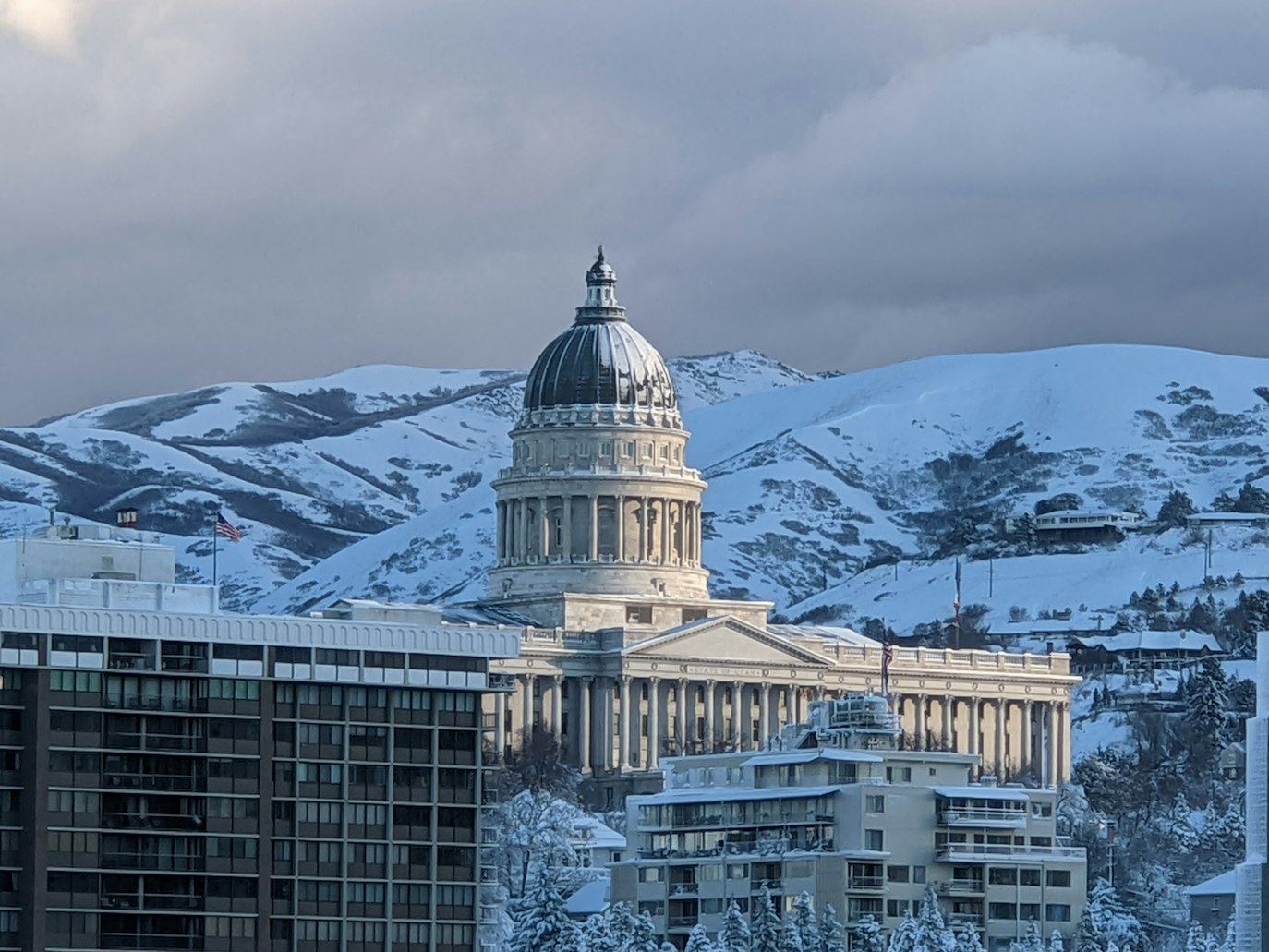
Image: Cong Wang

Utah's state capital is popular for being one of the best places to ski in the United States. But that's not all! Salt Lake City is also the only state capital with three words in its name. Have you ever thought about that?

It has the largest Mormon population in the country and is the world headquarters of the Church of Jesus Christ of Latter-day Saints. Another fun fact? Salt Lake City is home to more plastic surgeons per capita than any other state capital!

11
Montpelier, Vermont

Image: John Holm

Named after the French city of the same name, Montpelier is the least populated state capital, with a population of just 7,900. Probably for that reason, Vermont's capital prides itself on its small local businesses: it is the only state capital that doesn't have a McDonald's or a Starbucks. Could you live without these fast food chains? It doesn't have a Walmart store either!

12
Topeka, Kansas

Image: Nils Huenerfuerst

Topeka, Kansas’s state capital, has several interesting tidbits. For example, did you know its name, of Native American origin, means "a good place to dig potatoes"? Interesting, don’t you think?

In 2010, Topeka temporarily changed its name to "Google, Kansas" to attract the attention of the internet giant and become the capital city of fiber optics. Frivolous facts aside, Topeka was also very important in the history of the civil rights movement.
General General 4 min read

Which is the craziest street name you remember?

Which are the strangest street names in America?

Image: Albert Stoynov

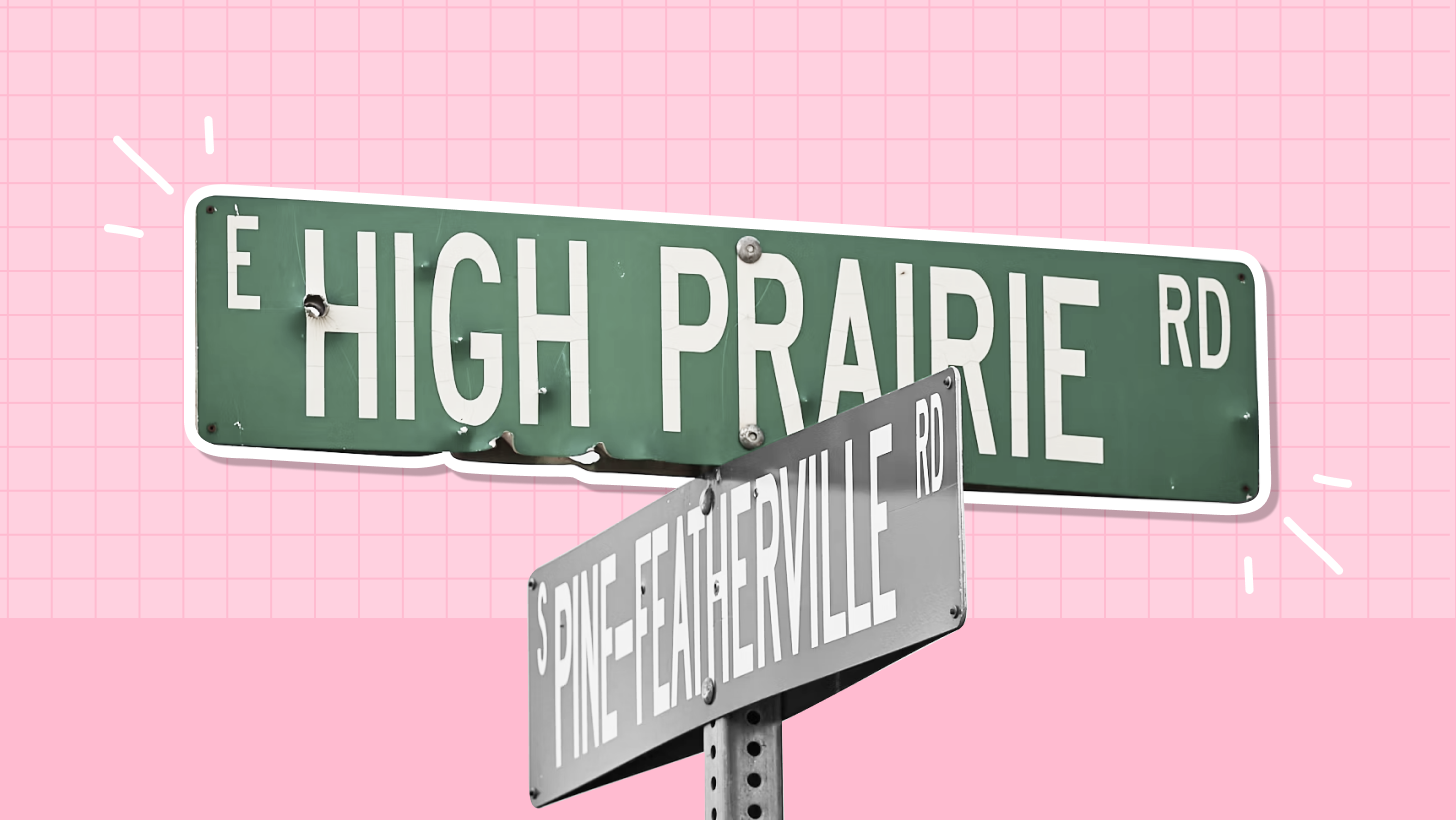
"Maple" is a good name for a street, yes. But we already have many of those. Streets with names that stand out are easier to remember, and the ten examples provided in this list are memorable, to say the least. From a street named Pig’s Eye Lake to a road named Psycho Path, America displays its creativity and humor at every corner. Did you know any of these?

1
Frying Pan Road

Image: Ashwini Chaudhary(Monty)

As we discuss our first entry on the list, we must prepare you for the incoming spoonful of roads and streets named after various things, starting with the namesake one. There is a suburb in Hendon, Virginia with a community named Fryin Pan that dates back to at least the 1700s. However, in the 1890s, they changed the name to Floris. The original name has remained as a road.

2
Chicken Dinner Road

Image: Karyna Panchenko

Believe it or not, there is a road in Idaho called Chicken Dinner. According to the main story, the origin of the name lies with a resident who lobbied the governor to improve the road outside her house. Laura Lamb was known for her chicken, and when a couple of vandals painted the words "Lamb's Chicken Dinner Avenue" on the freshly oiled road, they inadvertently christened the street with the name that is known today.

3
Bad Route Road

Image: Markus Spiske

While the name doesn’t sound very enticing, a trip down this residential Montana street may not be as bad an idea as it sounds. This street possibly received its unfortunate name from Bad Route Creek, an offshoot of the Yellowstone River. The creek's name itself may have originated from the difficult conditions and the challenges faced by early explorers and settlers in the region.

4
Psycho Path

Image: Jorge Salvador

It was voted as the nation’s wackiest street name, and for good reason. Psycho Path is a small private road in Traverse City, Michigan . Owners of private roads can register whatever name they choose with the local authorities. We prefer to think that the owner of this road is not a particularly dangerous person but rather someone with a sense of humor.

5
Alcohol Mary Road

Image: Timothé Durand

A memorable street named, indeed—Alcohol Mary Road in Greenwood, Maine, is named after a local woman who was known for producing alcohol during the Prohibition years. To the residents, it symbolizes the town's spirit of independence.

The Hertell family, who lives on the road and has a family matriarch named Mary, has grown tired of fielding questions about whether their beloved grandmother was an outlaw.

6
Zzyzx Road

Image: Diego Jimenez

Sounds like "Six Six," but it’s not spelled in the same way. Not only is there a town in Southern California named Zzyzx, but there is also a street that leads to the town.

According to the story, Curtis Howe Springer created the name Zzyzx and gave it to the area in 1944, claiming it to be the last word in the English language.

7
Five Forks Trickum Road

Image: Prayag Tejwani

There is a road in Gwinnett County, Georgia , named Five Forks Trickum Road, which has only four forks. The reason for this is simple: in decades past, it once had a five-fork intersection.

As for the "Trickum" part, local lore suggests that this comes from a shop owner who once lived there, and often swindled customers out of their money.

8
Liquid Laughter Lane

Image: Surface

A poetic image if we ever heard one, Liquid Laughter Lane is a real street in Columbia, Maryland . When the local community was planned, names for the streets were needed and the team in charge of coming up with these names resorted to statistics, demographics, and geographical locations, among common elements. But they also took inspiration from things like literature and poetry, which helped them come up with beautiful names like Liquid Laughter Lane.

9
Pig’s Eye Lake Road

Image: Fabian Blank

Pig’s Eye Lake Road is a nod to an actual person named Pierre "Pig’s Eye" Parrent (nicknamed as such because he had only one eye), who played an important role in the history of St. Paul and Minnesota . He established a tavern that served as a meeting place for traders and settlers, making it a focal point in the community.

Today, Pig's Eye Lake Road continues to serve as a reminder of the area's history and the colorful characters who contributed to its development.

10
Ninth and a Half Street

Image: Nick Hillier

Since the second part of an address is typically a number, it is advisable to name the first part with a word rather than another number; however, there are exceptions. Ninth and a Half Street runs along the north-south boundary between what used to be Old Nebraska City and South Nebraska City (which now make up Nebraska City).

If you are wondering where this name came from, it has to do with the fact that the city was formed from three preexisting cities, and when they went to rename the streets of the newly formed city, the numbers didn’t quite line up.

General General 4 min read

Science usually starts as science fiction

Trip to Mars, anyone? Discover 10 American science fiction authors

Image: RDNE Stock project

It takes a special kind of talent to be a science fiction writer. Whether you are writing about a dystopian future or a utopian one, you are creating a new world with its own rules and systems to guide it. Long before Elon Musk started seriously considering a trip to Mars, science fiction authors were already exploring how this might turn out. Many writers have attempted this genre, but only a few have made a significant impact. The following ten belong to that prestigious group. If you haven’t read any of these authors, we encourage you to do so. Not only is it a lot of fun, but it also fuels your own imagination.

1
Ray Bradbury

Image: Rod Long

Perhaps the most emblematic name in American science fiction, Ray Bradbury was an author and screenwriter best known for his novel Fahrenheit 451 , and his short story collections The Martian Chronicles , and The Illustrated Man .

His works not only imagine what extraterrestrial colonies might be like but also explore how such experiences would affect humans on a deeply personal level. His prose is both poetic and informative, making it accessible to both young and adult readers alike.

2
Philip K. Dick

Image: Filip Filkovic Philatz

If you’ve ever seen the movie Blade Runner or the TV series The Man in the High Castle , then you’ve been exposed to the work of Philip K. Dick. This prolific novelist wrote numerous novels and short stories that explore philosophical and social questions such as the nature of reality, human nature, and characters struggling against illusory environments, monopolistic corporations, and authoritarian governments.

His novel Do Androids Dream of Electric Sheep? was the basis for Blade Runner and his works have earned him countless awards all over the world.

3
William Gibson

Image: Brian McGowan

The creator of the now-ubiquitous term "cyberspace," William Gibson was a speculative fiction writer whose works explore the effects of technology, cybernetics, and computer networks on humans (fans of Black Mirror will likely find this author to their liking).

His first novel, Neuromancer , was credited with revitalizing science fiction literature in the 1980s, and he was described in 1999 as "probably the most important novelist of the past two decades.

4
L. Ron Hubbard

Image: Luna Wang

"While he is now more famous for founding Scientology, L. Ron Hubbard was a genuine science fiction writer who authored works such as Battlefield Earth, To the Stars, Buckskin Brigades, and Death’s Deputy , among other titles.

Hubbard was quite a prolific pulp science fiction and fantasy writer in his early career and, in 1950, he published Dianetics: The Modern Science of Mental Health , establishing organizations to promote and practice Dianetics techniques.

5
Theodore Sturgeon

Image: Rod Long

A critic turned writer, Theodore Sturgeon wrote over 120 short stories, 11 novels, and even a handful of scripts for the original Star Trek television series. His first science fiction novel, More Than Human , won the 1954 International Fantasy Award for that year's best novel.

Though he was not as well known to the general public as contemporaries like Isaac Asimov or Ray Bradbury, Sturgeon gained recognition among readers of mid-20th-century science fiction anthologies. At the height of his popularity in the 1950s, he was the most anthologized English-language author alive.

6
Alfred Bester

Image: Steve Johnson

One of the few writers credited with inventing modern science fiction, according to one of his colleagues, Alfred Bester was an author, TV, radio, and comics scriptwriter, and magazine editor. His novel, The Demolished Man , was the first winner of the Hugo Awards in 1953.

While working as a scriptwriter for DC Comics, he created the supervillain Solomon Grundy and also wrote extensively for television, magazines, and radio.

7
H. P. Lovecraft

Image: Alejandro Piñero Amerio

An author whose work is as famous in the science fiction genre as it is in horror, H. P. Lovecraft was a writer of science fiction, fantasy, horror fiction, and a mixture of all these genres. His most notable work is the Cthulhu Mythos .

Some of his more popular works include The Call of Cthulhu, At the Mountains of Madness, The Shadow over Innsmouth , and The Shadow Out of Time . The central theme of his books is cosmicism, a theory dictating that "there is no recognizable divine presence, such as a god, in the universe, and that humans are particularly insignificant in the larger scheme of intergalactic existence."

8
Frank Herbert

Image: Pierre Bamin

Franklin Patrick Herbert Jr. is best known for writing the best-selling science fiction novel of all time, 1965's Dune , along with its five sequels. He also wrote short stories and worked as a newspaper journalist, photographer, book reviewer, ecological consultant, and lecturer.

His famous saga, set in the distant future and spanning millennia, explores complex themes, such as the long-term survival of the human species, human evolution, planetary science and ecology, and the intersection of religion, politics, economics, sex, and power in a future where humanity has long since developed interstellar travel and colonized thousands of worlds.

9
Ursula K. Le Guin

Image: Karsten Klemme

With a literary career spanning nearly sixty years, Ursula Kroeber Le Guin is another legendary name on this list. She is best known for her works of speculative fiction, including science fiction works set in her Hainish universe and the Earthsea fantasy series.

Frequently described as a science fiction author, Le Guin has also been called a "major voice in American letters," though she once said she would prefer to be known as an "American novelist."

10
Orson Scott Card

Image: Greg Rakozy

The only person to have won a Hugo Award and a Nebula Award in consecutive years, both for his novel Ender’s Game , and its sequel, Speaker for the Dead , Orson Scott Card is a science fiction writer who often features characters with exceptional gifts who make difficult choices with high stakes. Since 1979, he has published over 50 novels and 45 short stories.

During his childhood, Card read children's classics and popular novels, his favorite book being Mark Twain's The Prince and the Pauper . He often refers to works by Robert A. Heinlein and J. R. R. Tolkien as sources of inspiration.

Explore more American facts

Choose your favorite category!

General
General

As American as apple pie—the very best America has to offer!

Culture
Culture

Delve into the astounding richness of American lore.

Geography
Geography

Hop in and explore vast and diverse American landscapes.

History
History

Discover the key moments that shaped the United States.