General General 3 min read

They have rules too

The president can’t open the White House windows? Here’s why!

Image: Fine Photographics

Being the president of a nation might seem glamorous, and while it comes with a couple of nice benefits, the role is also full of obligations, strict protocols, and surprising restrictions . From accepting luxurious gifts to buying a smartphone or taking a simple walk, here are all the "don’ts" of being a US president!

1
Open the windows

Image: Braden Burson

Yes, you read that right. A sitting US president can’t just get up and open the windows of the White House to enjoy a beautiful day. While there’s no law against it, the protocols state that any action that could pose a security risk to the commander-in-chief must be carefully reviewed and approved by the staff.

2
Go to the cinema

Image: Krists Luhaers

Going to the movies is one of life’s simple pleasures. Unfortunately, if you’re the president, it’s not one of your options. While it’s not officially forbidden, crowded and dark spaces like movie theaters represent serious security risks. Luckily, the White House has its own private screening room, so the president and his family can still enjoy movie night at home.

3
Attend their children’s events

Image: Sincerely Media

You’ll rarely see a president at their kids’ school plays or sporting events. And it’s not because they’re bad parents; it’s because regulations discourage them from attending. With so many people, children, and things happening at the same time, keeping the commander-in-chief safe in those settings is nearly impossible.

4
Buy their own tech devices

Image: appshunter.io

When a new iPhone hits the market, many rush to buy it, but presidents can’t make this decision on their own. Any electronic device, like a smartphone or tablet, could be vulnerable to hacking or espionage. So while presidents can use cell phones, theirs must be secure, vetted, and government-approved.

5
Block people on social media

Image: Julian

And that isn’t the only restriction on cell phones. Presidents who use their social media accounts for official communications are advised not to block people in their official POTUS account, since doing so could be seen as suppressing free speech. On the other hand, they can block users on personal accounts.

6
Go out alone
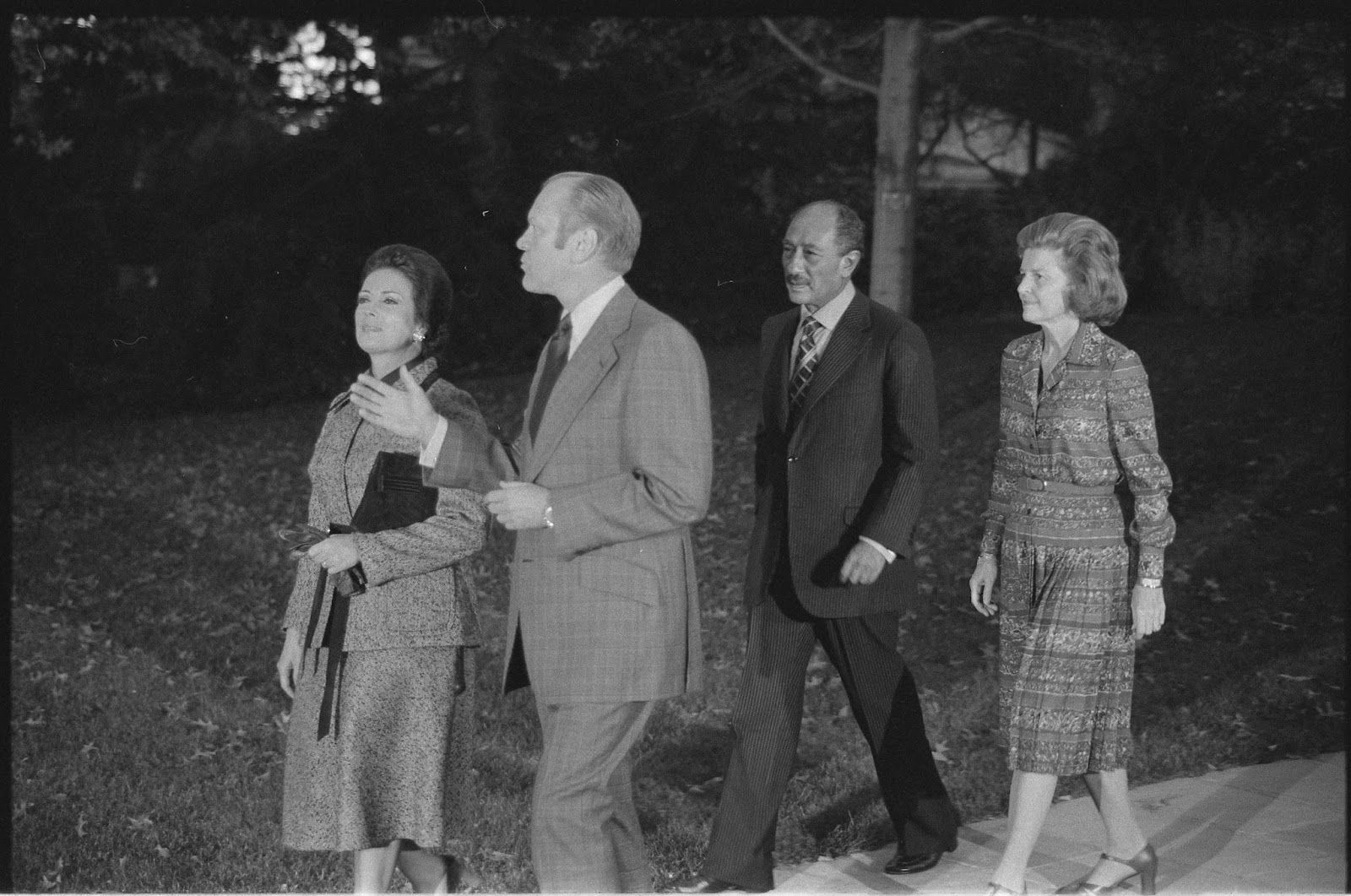
Image: Warren K. Leffler, Public domain, via Wikimedia Commons

The US president can’t just grab the keys and head out for a walk. Sure, strolls around the White House gardens are fine, but stepping beyond the gates is a different story. Anytime the president leaves the White House, even for a quick walk around the block, the Secret Service must secure the area, plan the route, and provide constant protection. Sounds a little overwhelming, right? But when you’re the commander in chief, safety always comes first!

7
Drive

Image: Jerry Kavan

Ever felt the urge to hop in your car and drive somewhere spontaneously? Well, if you’re the President of the United States, that’s off-limits. Security measures strongly recommend that presidents must always travel in a secure vehicle with a driver and a full security detail. In fact, the last president known to drive alone on the open road was Lyndon B. Johnson (1963-1969).

8
Fly on commercial airlines

Image: The White House, Public domain, via Wikimedia Commons

Just as security protocols strongly discourage the president from driving alone on open roads, flying on commercial airlines is also off-limits. Imagine being hundreds of feet in the air, locked in with strangers; it could be extremely unsafe when you’re the president of the United States. Implementing proper security measures would be too complicated, and with a large presidential staff, there might not even be enough seats for everyone.

9
Accept expensive gifts

Image: Ayana Ames

Presidents receive many, many letters and gifts from the public, but not all of them can be accepted. The US Constitution and federal law require presidents to decline overly expensive gifts, whether they come from foreign leaders or everyday citizens, to prevent any appearance of conflict of interest or corruption.

10
Discard official mail

Image: Wolfgang Vrede

Although it may seem like a harmless, ordinary task, the president can’t just start cleaning out their office or email inbox. All presidential correspondence, physical or digital (even spam!), is considered official government property. It must be processed or archived according to federal records regulations, and discarding anything requires a strict review process.
Geography Geography 5 min read

CROSS-COUNTRY ADVENTURES

Discover America: The 10 most scenic routes in the U.S.A.

Image: Sean McArthur

For those with a thirst for adventure, America's vast and diverse landscape offers some of the most breathtaking road trips in the world. From challenging mountain roads to exhilarating scenic highways, the open roads of the United States beckon both locals and tourists alike. Exploring our country can be one of the most rewarding experiences within reach, and you don’t need much—just a bit of courage (and a lot of gas!). Whether you're planning a weekend getaway, an epic cross-country journey, or just feeling curious, we've gathered in this article 10 of the most beautiful roads in the country.

1
Pacific Coast Highway

Image: Joe Pilié

The Pacific Coast Highway , officially known as California State Route 1, runs along the stunning California coastline. This iconic route stretches from Dana Point in Orange County to Leggett in Mendocino County, offering breathtaking views of the Pacific Ocean, rugged cliffs, and charming coastal towns.

Designated by the United States Department of Transportation as an All-American Road , the Pacific Coast Highway also serves as a vital artery for residents in the Greater Los Angeles Area and the San Francisco Bay Area. Unfortunately, the route is also known for its frequent coastal landslides, which often cause sections of the road to be closed or redirected inland, so if you are planning to take this route, be sure to check conditions and plan ahead.

2
Blue Ridge Parkway

Image: Angela Bartosh

For those who love bluish mountains and epic landscapes, this route is a must-visit. Winding through the Appalachian Mountains, the Blue Ridge Parkway connects Shenandoah National Park in Virginia to the Great Smoky Mountains National Park in North Carolina.

This 469-mile drive is renowned for its fall foliage, lush scenery, and panoramic vistas. Whether you plan to hike some of its many trails, explore historic sites, or simply enjoy the views from the comfort of your vehicle, the Blue Ridge Parkway offers a truly rewarding experience. Just be aware that the road is not maintained in winter, and certain sections and high passes may be closed from late fall through early spring.

3
Route 66

Image: Nikolai Justesen

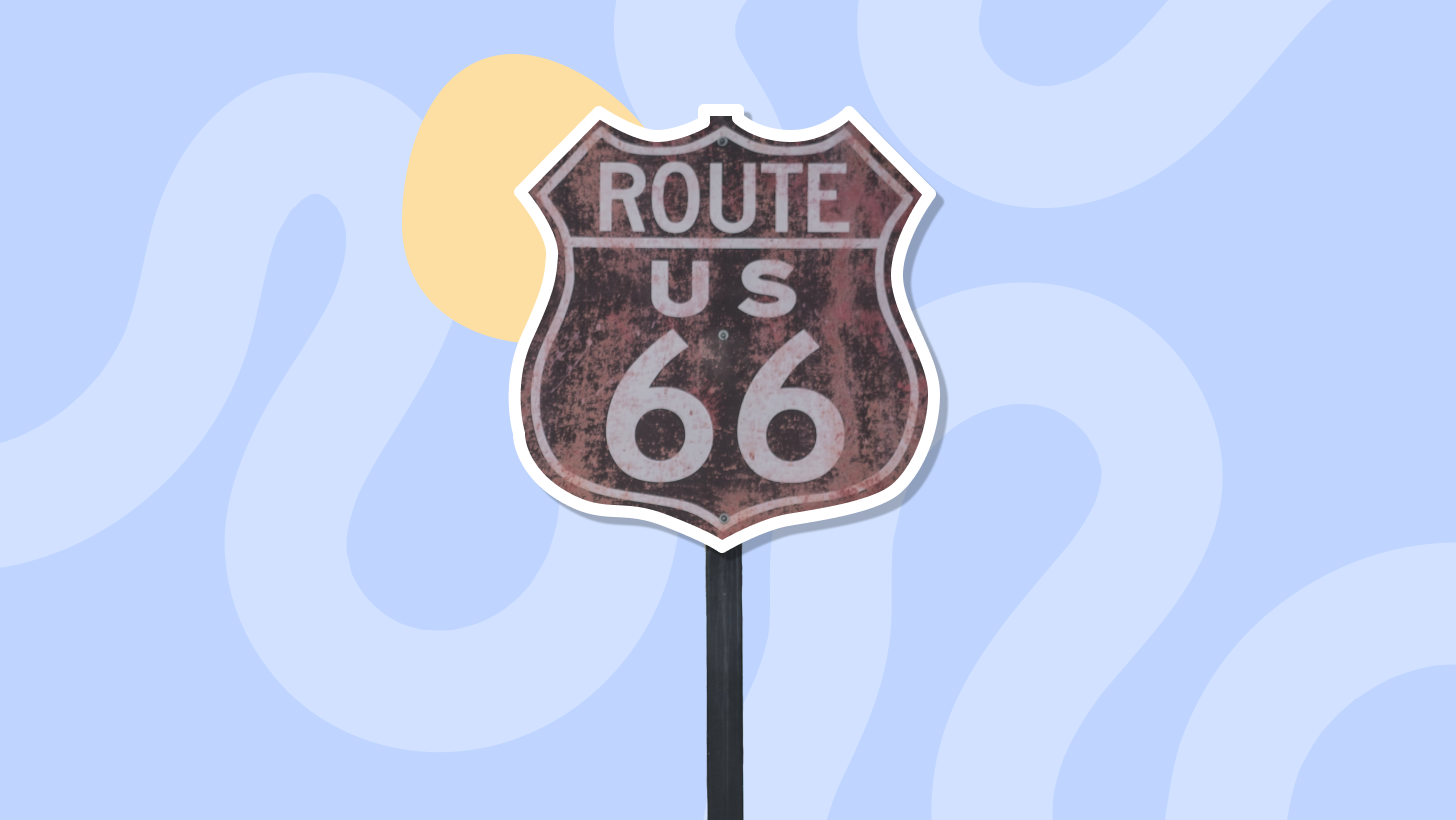
Famously dubbed the "Mother Road" by Steinbeck in The Grapes of Wrath , Route 66 embarks on an epic cross-country journey from Chicago to Santa Monica, stretching a total of 2,448 miles. Immortalized in songs and media, this historic road has achieved legendary status, not only as one of the country’s most celebrated routes but also as a symbol of the United States around the world.

This iconic route takes you through picturesque small towns, vast deserts, and quintessential Americana. Though the original road was supplanted by the Interstate Highway System in 1985, much of the historic route has been preserved as a National Scenic Byway , now known as "Historic Route 66."

4
Great River Road

Image: Mitchell Kmetz

Following the course of the Mississippi River , the Great River Road stretches 2,340 miles through ten states, from Minnesota to Louisiana. The term "Great River Road," however, refers not only to the official network of roadways that follow the river's path but also to a broader region of historical and touristic significance.

Originally extending north into Canada, it once connected with the provinces of Ontario and Manitoba. Notable stops along the route include the Twin Cities, Mark Twain's hometown of Hannibal, Missouri, and the Delta Blues Museum in Clarksdale, Mississippi.

5
Going-to-the-Sun Road

Image: Tevin Trinh

Located in Montana's Glacier National Park, the Going-to-the-Sun Road is a 50-mile engineering marvel, with sections carved into steep rock faces. This alpine route traverses the Continental Divide through Logan Pass at an elevation of 6,646 feet, offering jaw-dropping views of glaciers, waterfalls, and wildlife.

The road is named after Going-to-the-Sun Mountain, which dominates the eastbound view beyond the high pass. According to a Native American legend, a deity called Sour Spirit descended from the sun to teach the Blackfeet tribe how to hunt, giving the mountain its name.

6
Overseas Highway

Image: Ilse Orsel

Connecting mainland Florida to Key West, the Overseas Highway is a 113-mile journey across a series of bridges and tropical islands. Much of the route was built on the remnants of the Overseas Railroad , which was severely damaged and partially destroyed by the 1935 Labor Day hurricane. In the 1950s, the Overseas Highway was revamped into a major coastal route linking Miami to Key West.

This exotic drive not only offers spectacular views of turquoise waters and coral reefs but also provides the opportunity to spot local wildlife such as American alligators, American crocodiles, and Key deer.

7
Tail of the Dragon

Image: Stephen Cook

Deals Gap , a thrilling mountain pass along the North Carolina–Tennessee state line, is famously known as the Tail of the Dragon due to its astonishing 318 curves in just 11 miles. This legendary stretch of U.S. Route 129 is a global favorite among motorcyclists and sports car enthusiasts, who often come to challenge their vehicles and driving skills on its winding curves.

As the road forms part of the southwestern boundary of the Great Smoky Mountains National Park , the 11-mile stretch remains free from urban development and features numerous scenic overlooks and pull-off points.

8
Hana Highway

Image: Claude Piché

Also known as The Road to Hana, the Hana Highway on Maui, Hawaii, is a 64.4-mile stretch of Hawaii Routes 36 and 360 that traverses through rainforests, cascading waterfalls, and seascapes. As it meanders across the island, the road features over 600 curves , leading to the charming town of Hana, one of the most isolated communities in the state.

Before you get too excited, though, be prepared for a journey that can take nearly three hours. Although the distance may seem short on paper, the highway's winding, narrow nature and its 59 one-lane bridges can significantly extend travel time.

9
Natchez Trace Parkway

Image: Mika Matin

Stretching 444 miles from Natchez, Mississippi, to Nashville, Tennessee, the Natchez Trace Parkway is a journey rich in history and natural beauty. This scenic drive follows the ancient Native American trail of the same name, even preserving sections of the original path.

This historical route offers peaceful landscapes and numerous recreational opportunities for visitors. Notable stops include archaeological treasures like Emerald Mound , several abandoned towns and historic settlements, and the Meriwether Lewis Monument and Grave Site.

10
U.S. Route 50

Image: Paddy Kumar

U.S. Route 50 is a major highway that spans the width of the United States, connecting Ocean City, Maryland, on the East Coast to Sacramento, California, on the West Coast. Stretching 3,073 miles, this route traverses diverse landscapes but is most renowned for its rural desert and mountainous scenery in the western United States.

Particularly notable is its Nevada segment, famously dubbed "The Loneliest Road in America" due to its sparse traffic and lengthy, isolated stretches. Established in 1926 as part of the original U.S. Highway system, US 50 initially extended from Wadsworth, Nevada, to Annapolis, Maryland. The original route incorporated several historic trails, including the Lincoln Highway, Midland Trail, and the National Old Trails Road.

General General 5 min read

Foreign affairs

An ode to diplomacy: 12 extraordinary US embassies around the world

Image: Christian Lucas

You might think an embassy is just a plain office building for diplomats. Well, think again! The United States has some of the most eye-catching, quirky, and downright unique embassies you’ll ever see. From gleaming glass towers to tropical hideaways, these buildings aren’t just about paperwork—they’re part of America’s handshake to the world. Here are 12 beautifully designed US embassies where architecture meets foreign politics.

1
Paris, France

Image: U.S. Department of State from United States, Public domain, via Wikimedia Commons

The U.S. Embassy in Paris is the oldest American diplomatic mission in the world. Benjamin Franklin himself served as the first ambassador, back when the United States was fighting for independence. Today, the chancery building stands on the Place de la Concorde, a spot once used for public executions during the French Revolution. Few embassies can match this mix of American heritage and European history.

2
New Delhi, India

Image: Ash Carter, Public domain, via Wikimedia Commons

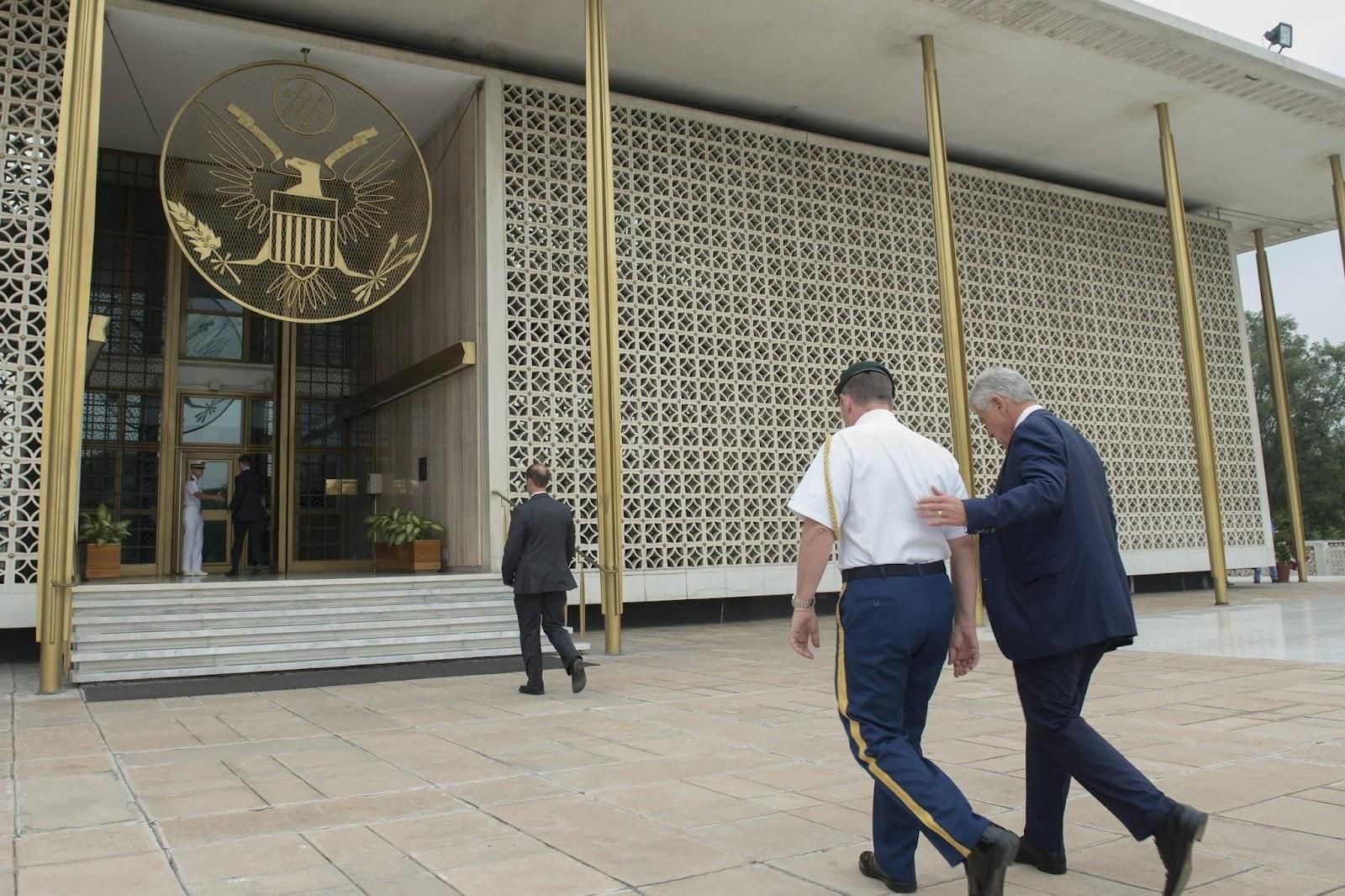
Set on 28 acres in a district where nearly every corner is marked by a foreign flag, the U.S. Embassy in New Delhi feels more like a grand estate than a government office. The entrance alone impresses visitors with its broad fountain and big golden Great Seal of the United States.

When it first opened in the 1950s, the complex introduced many locals to the clean lines and bold simplicity of American modernist design. Decades later, the compound still carries that sense of mid-century optimism, standing as both a piece of architectural history and a stage for diplomacy.

3
London, United Kingdom

Image: Phil Lev

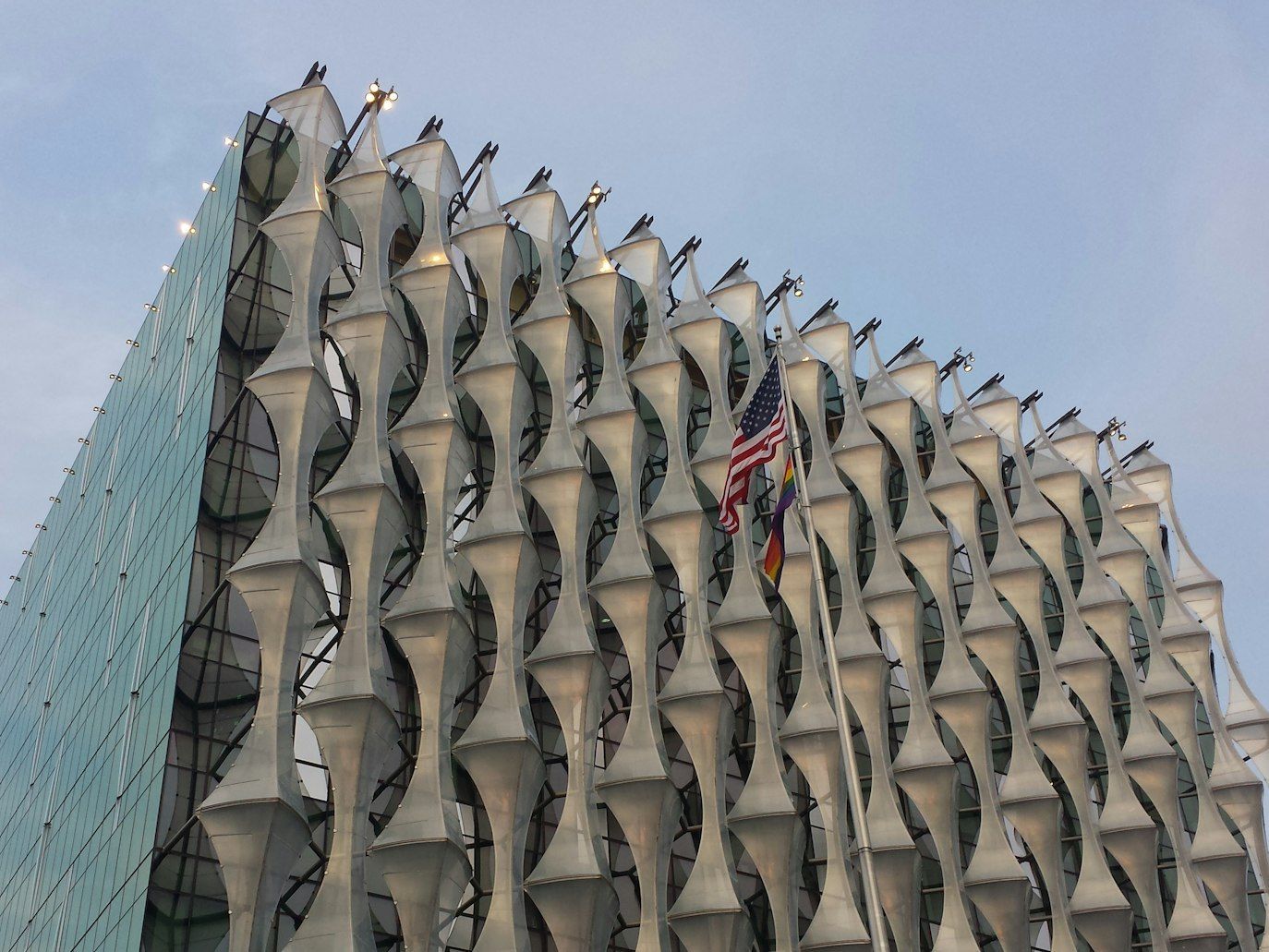
If James Bond had to hand-deliver a top-secret note to Uncle Sam, this is exactly where he’d go. Opened in 2018, the current building of the U.S. Embassy in London came with a price tag of about $1 billion—yes, billion with a "B." It spans nearly 12 acres along the River Thames, enough to be one of the most enviable addresses in town.

The sleek glass cube design doesn’t just reflect light, it sparkles as if auditioning for a starring role in a spy flick. Its gardens and public walkways also make it one of the few embassies in the world that feels just as welcoming as it does secure.

4
Brasília, Brazil

Image: mbastosbr

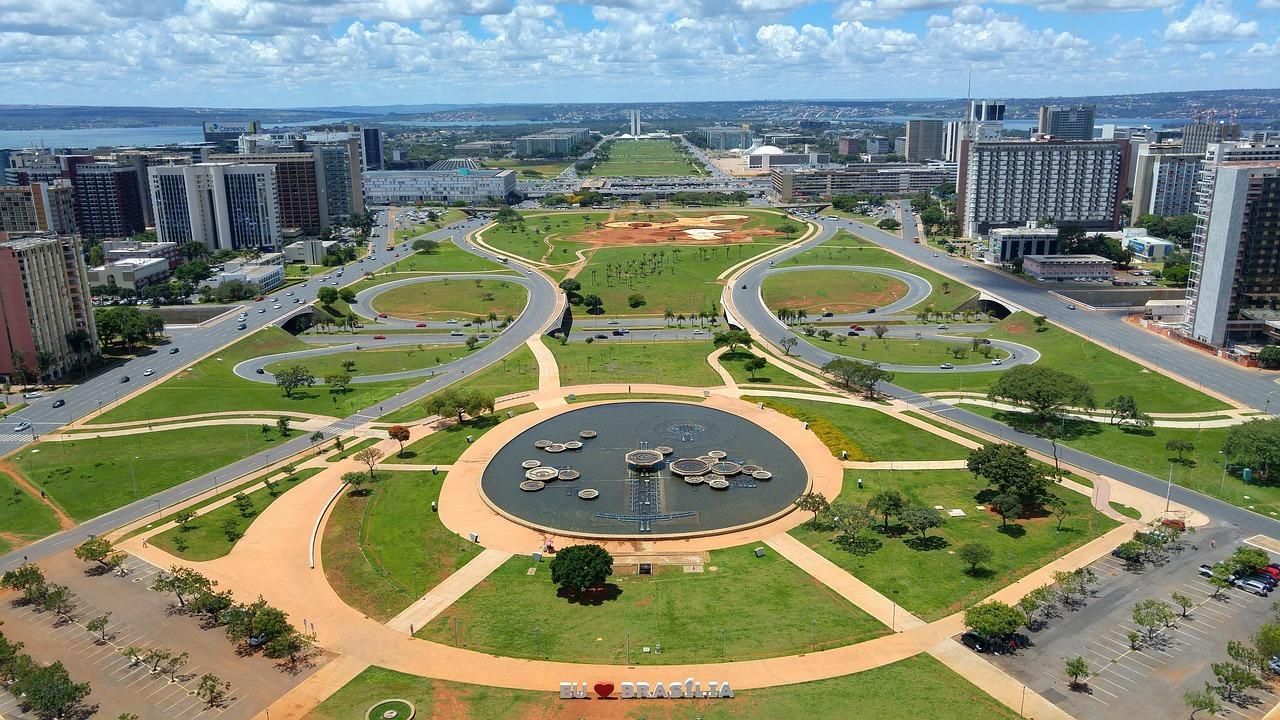
When Brazil built a new capital in 1960, the United States became the first nation to establish its embassy in the brand-new city of Brasília. The 12-acre compound took another decade to finish, but the wait was totally worth it.

Today, the building unfolds like a tropical retreat with lush courtyards, a marble facade, clusters of palms, and broad office space that seem to invite a slower pace. Inside, the Stars and Stripes waving overhead reminds you that this is less about vacation and more about international business, carried out in unmistakably American style.

5
Yerevan, Armenia

Image: Arina Dmitrieva

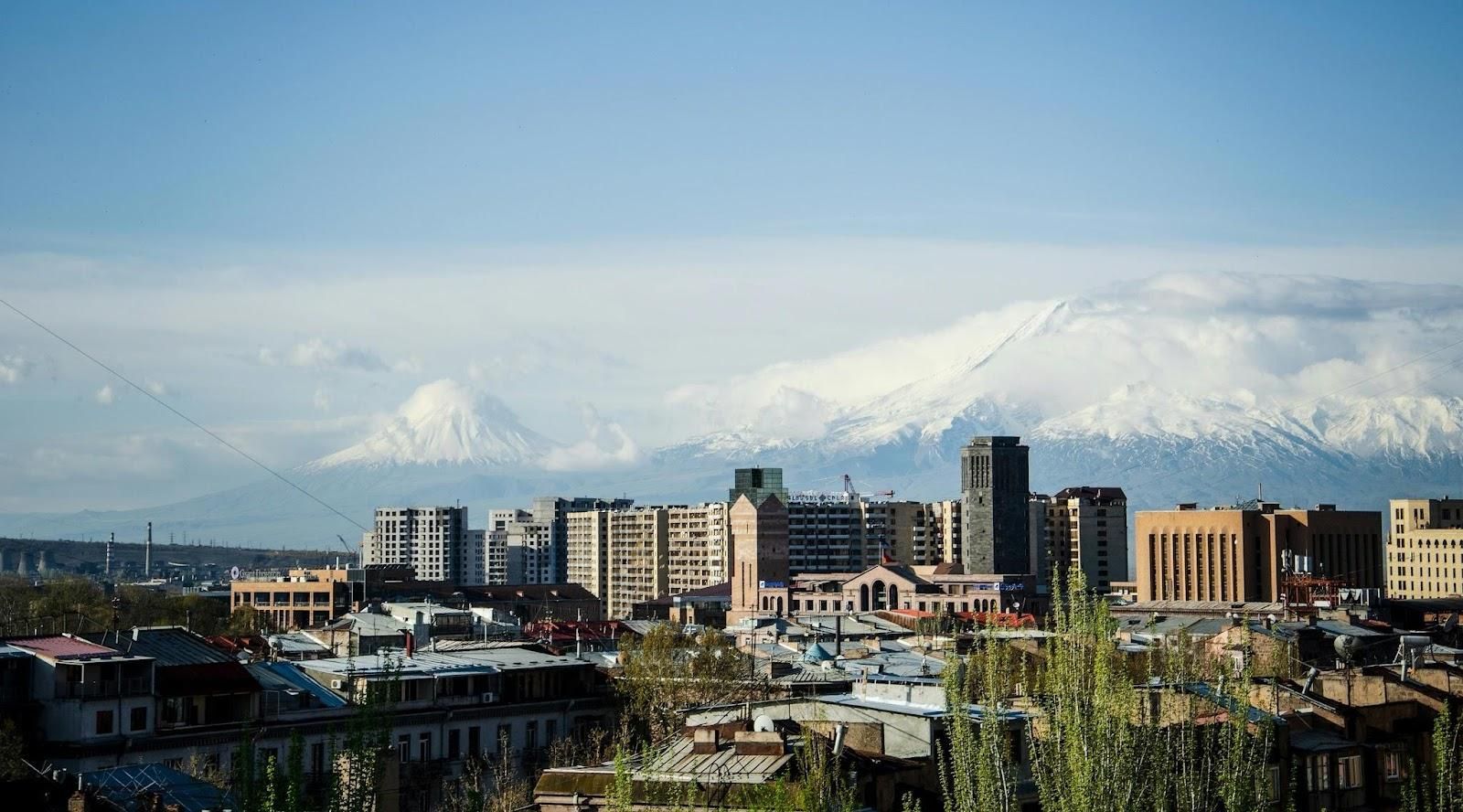
If embassies were given awards, the U.S. outpost in Yerevan would easily take home the trophy for "biggest backyard." Sprawled across 22 acres, it’s more park than office, with open lawns rolling out under the backdrop of Armenia’s rugged mountains.

Yet, the real deal is inside. The embassy serves as a gathering spot for locals, hosting cultural festivals, English-language programs, art exhibits, and workshops that make diplomacy accessible and engaging. With its airy design and community-centered vibe, it feels less like a fortress and more like an open invitation to join.

6
Ottawa, Canada

Image: Jane T D.

Right across the northern border, Canada hosts a striking U.S. Embassy right on Ottawa’s Sussex Drive. Spanning 138,000 square feet and completed in 1999, the building simply stands out. With its stainless-steel dome that gleams in the sunlight, it feels like a freshly minted coin.

Step inside and you’ll find an airy glass interior with open spaces, echoing the values of dialogue and solidarity. In a city lined with Gothic revival architecture, the U.S. Embassy rises as both a modern landmark and the stage where American diplomacy meets Canadian friendliness.

7
Tokyo, Japan

Image: Evgeny Tchebotarev

Set amid Tokyo’s frantic setting, the U.S. Embassy in Japan has stood its ground since the 1970s, quietly observing one of the world’s most dynamic capitals. Step outside its secure walls, and in just minutes you’re in the tranquil embrace of the Imperial Palace gardens, where koi ponds and ancient stone bridges feel worlds apart from the neon lights. Contrast is the essence of this post, rooted in a nation where skyscrapers rise beside shrines, and where diplomacy intertwines with both centuries-old heritage and cutting-edge modernity.

8
Canberra, Australia

Image: National Archives at College Park - Still Pictures, Public domain, via Wikimedia Commons

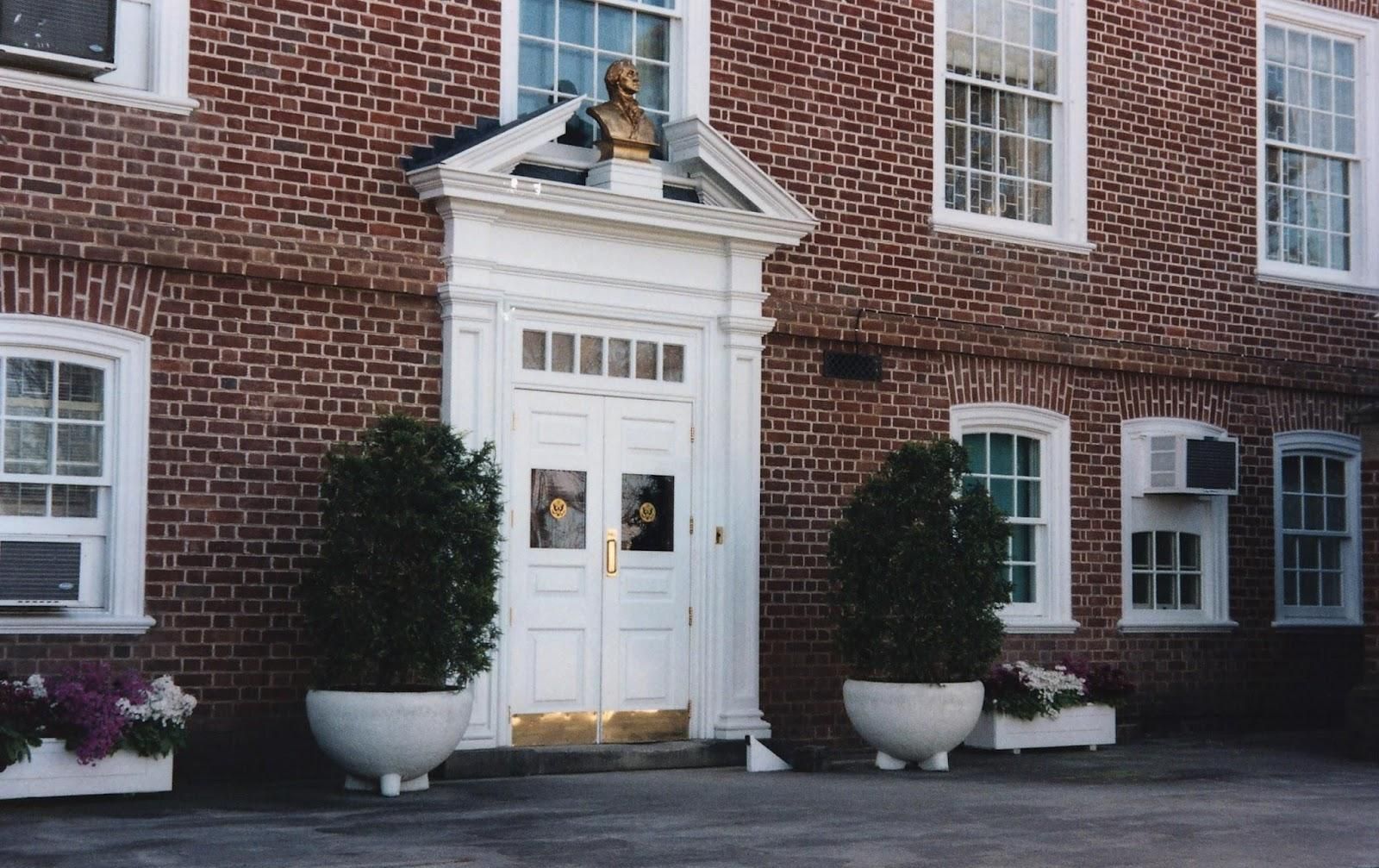
Opened in 1963, the U.S. Embassy in Canberra feels like a time capsule from the golden age of mid-century design. With its grand dome and red-brick elegance modeled after Thomas Jefferson’s Monticello, the building brings a piece of Virginia heritage halfway around the world.

Framed by tall eucalyptus trees and the crisp skies of Australia’s capital, it strikes a balance between old-world stateliness and natural charm. For many visitors, this government office is a symbol of American history and Australian hospitality.

9
Buenos Aires, Argentina

Image: here, Public domain, via Wikimedia Commons

Known as Palacio Bosch, this embassy doesn’t look like an office building at all. Originally built in 1910 for one of Argentina’s wealthiest families, the mansion still carries a Belle Époque aura. With sweeping marble staircases, glittering chandeliers, and fancy salons full of gilded details, it feels like the set for The Great Gatsby .

Outside, the gardens stretch wide and elegant, providing the backdrop for countless receptions where formal diplomacy blends with the warmth of Argentine culture. Guests might hear live music drifting through the air, join in animated conversation, or even share a round of _mate_—a reminder that this embassy is as much a cultural meeting point as it is a place for politics.

10
Oslo, Norway

Image: Christoffer Engström

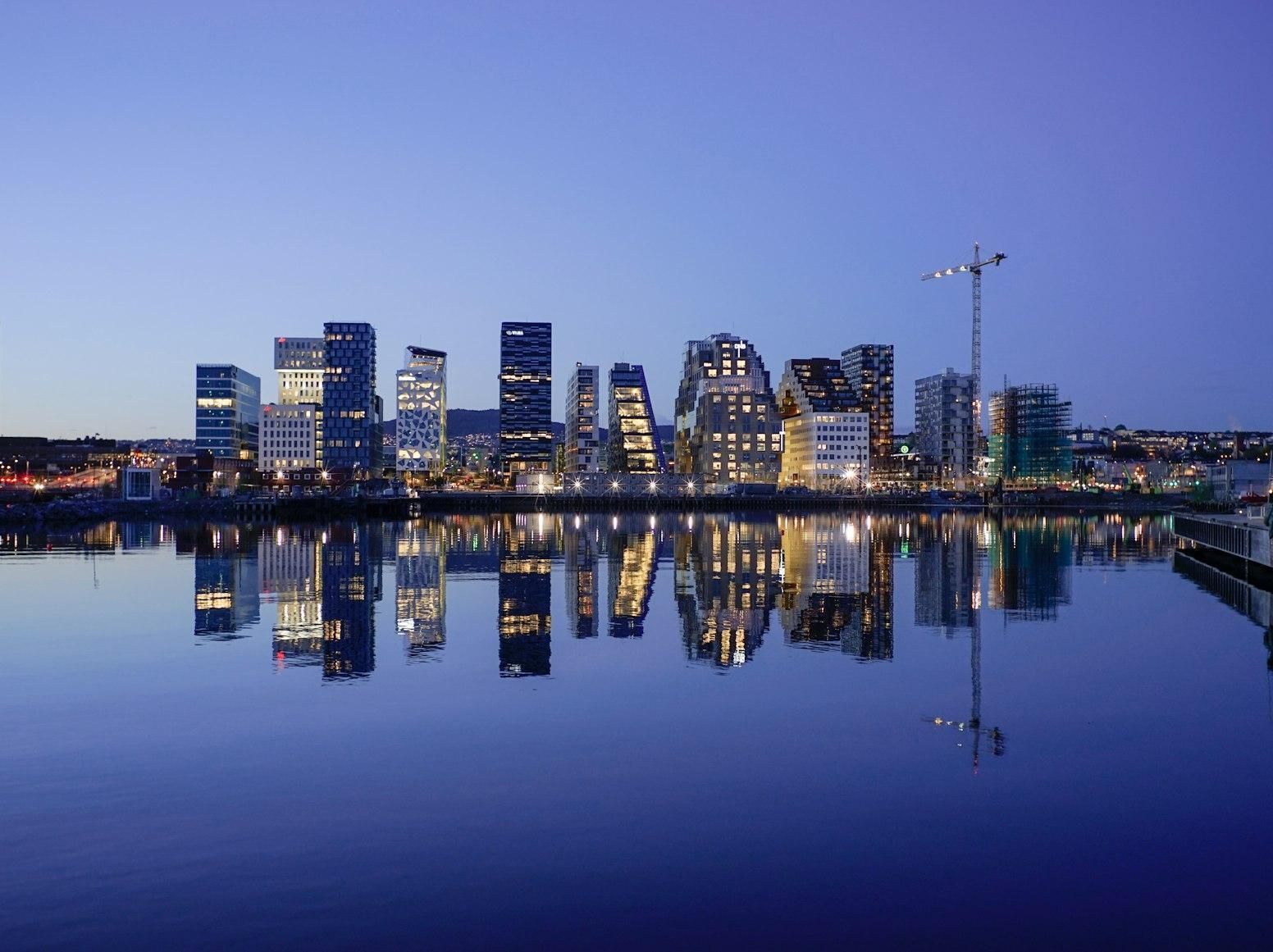
Though smaller in scale than others on this list, the U.S. Embassy in Oslo stands out with a design that mirrors the Norwegian landscape. Its facade pairs sleek glass walls with rugged stone, a blend that feels both contemporary and timeless.

In the summer, the building glimmers in the glow of endless daylight. Come winter, snow transforms its sharp lines into something out of a Nordic fairytale, with frosted rooftops and a quiet stillness in the air. More than just an office, this embassy feels woven into its setting—an architectural nod to Norway’s mix of modern design and deep connection to nature.

11
Mexico City, Mexico

Image: Oscar Reygo

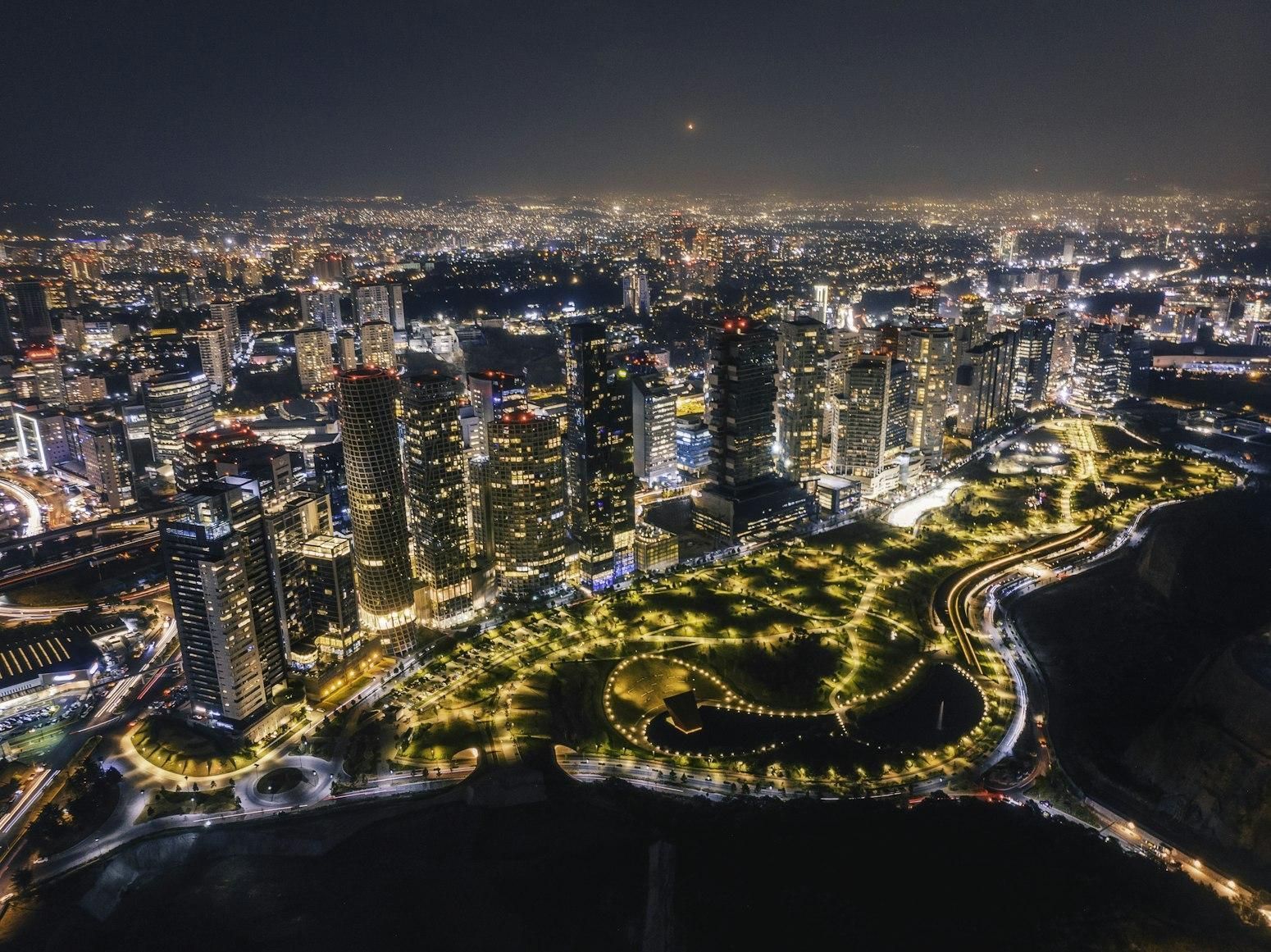
In one of the world’s liveliest capitals, this embassy makes its mark with sheer scale: over 1.8 million square feet of workspace. That makes it one of the largest American embassies , almost a city within a city.

Beyond its size, the U.S. Embassy in Mexico plays a central role in cultural exchanges and international cooperation, making it as vital to daily life as the bustling neighborhoods that surround it.

12
Singapore

Image: Mark Stoop

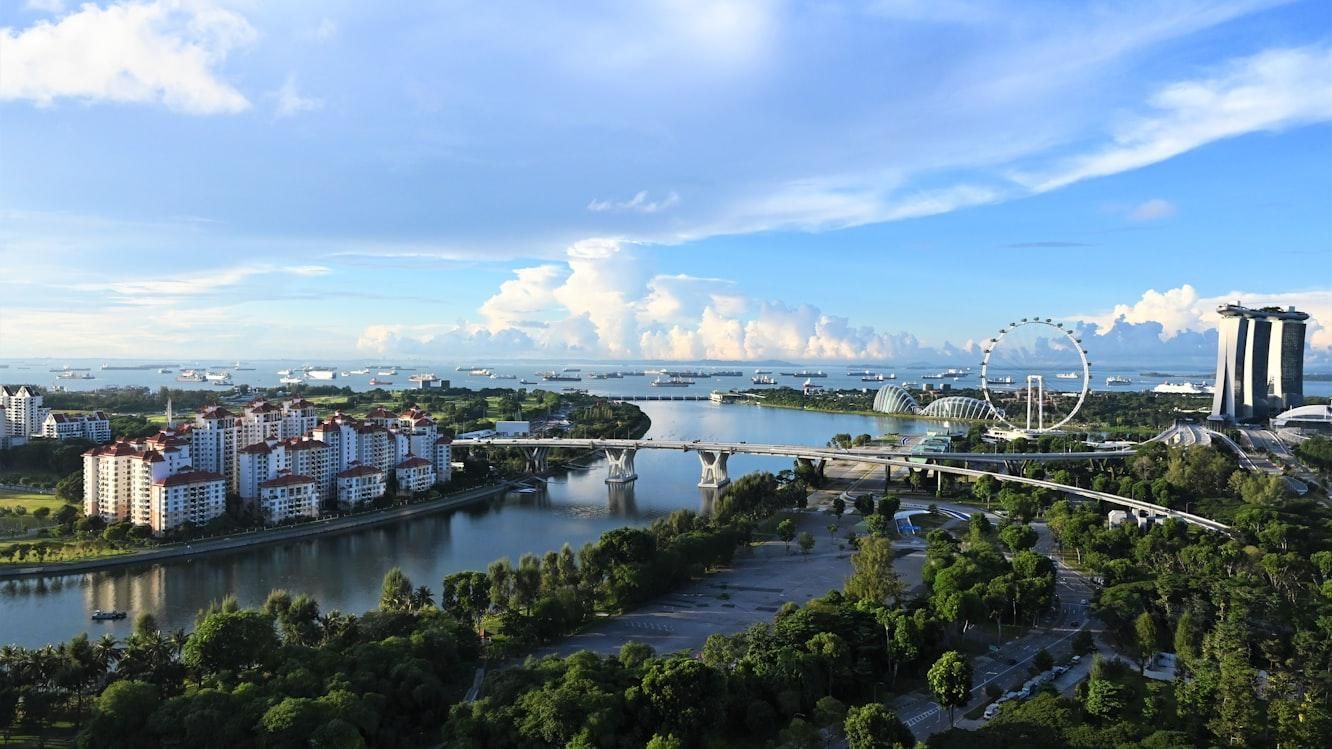
Nestled among orchids, palms, and flowering shrubs, the U.S. Embassy in Singapore feels more like a tropical retreat than an office. Its wide, low-slung profile is designed to stay cool in the humid climate, blending seamlessly into the greenery. Just like in the rest of the city, architecture and nature work in harmony, offering a daily reminder that diplomacy can grow strong roots in even the warmest of places.

Explore more American facts

Choose your favorite category!

General
General

As American as apple pie—the very best America has to offer!

Culture
Culture

Delve into the astounding richness of American lore.

Geography
Geography

Hop in and explore vast and diverse American landscapes.

History
History

Discover the key moments that shaped the United States.