History History 6 min read

The lighter side of Patriots

Discover 10 quirks and fun facts about our Founding Fathers!
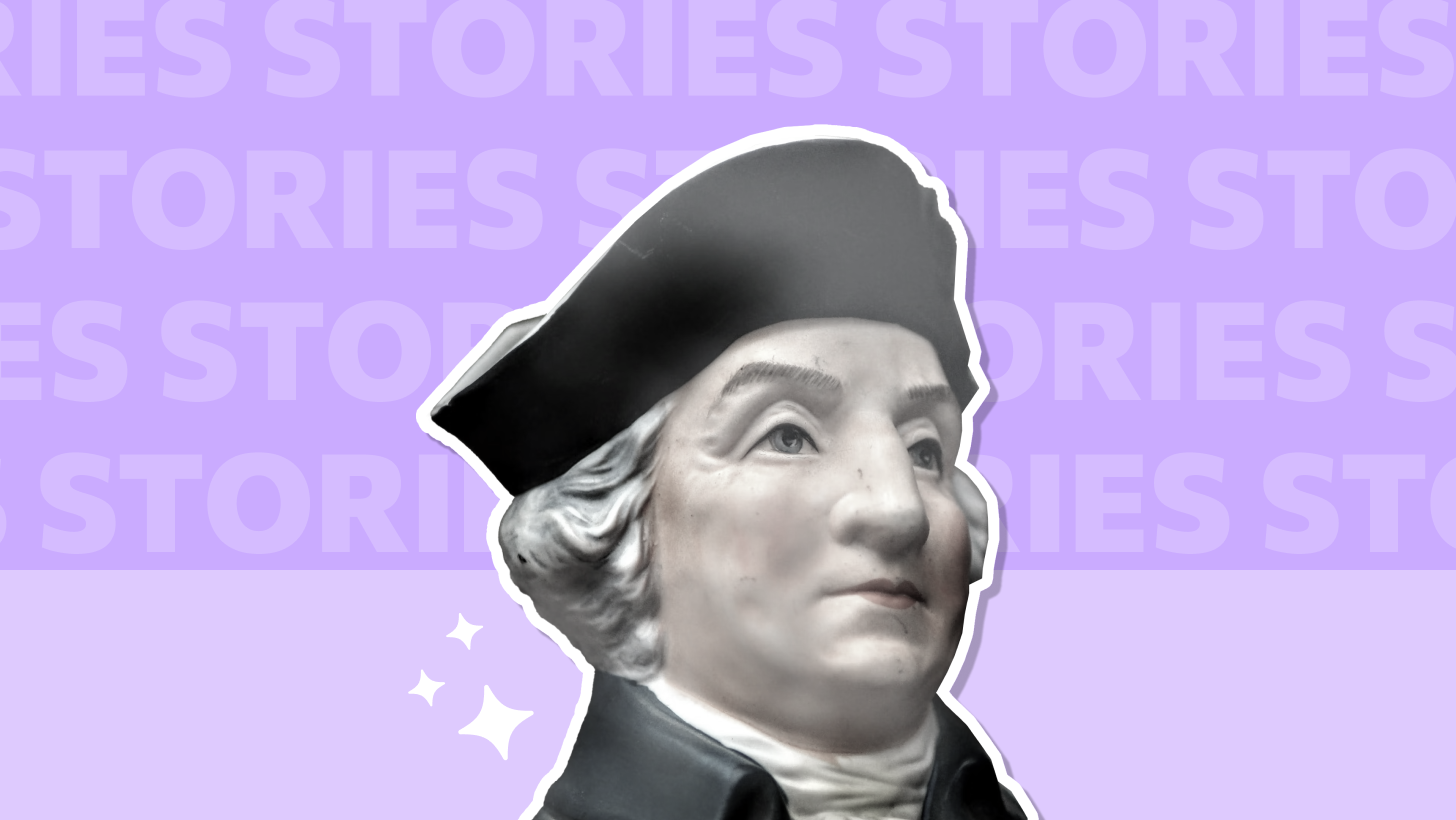
Image: Adam Nemeroff

From the names we honor on our streets to the faces we see daily on our dollar bills, we think you’ll agree that the Founding Fathers are a visible presence in the lives of all Americans—and with good reason. After all, we owe our eternal gratitude to these brave men who helped build this great nation of ours. In that sense, the grandeur and nobility of these figures sometimes make us forget that the Founding Fathers were also human beings, filled with quirks, hobbies, and a sense of humor. Bearing that in mind, we have prepared 10 fun and weird facts about our Founding Fathers, hoping this will help you get in touch with the lighter side of these American symbols. Enjoy!

1
Thomas Jefferson: Patriot, president… And foodie?

Image: Pixzolo Photography

Let’s start with what is arguably Thomas Jefferson’s most criminally overlooked contribution to history. Next time you are dipping a delicious and crispy French fry in some ketchup, take a moment to thank our 3rd President, who is often considered solely responsible for bringing this recipe to America.

During his time serving as ambassador to France, Jefferson fell madly in love with more than a few mouth-watering French dishes, which included a recipe for "potatoes deep-fried while raw, in small cuttings." He brought these recipes back home with him, and, while French fries didn’t become particularly popular until the beginning of the 20th century, Jefferson is still credited for introducing this quintessential side dish to the United States.

2
Benjamin Franklin’s "fowl" enemy

Image: Tyler Donaghy

There’s no denying that America loves turkeys —they are the undisputed star of every Thanksgiving Day feast. Having said that, can you imagine a world in which the turkey is emblazoned on official documents or currency? Forget that: Can you picture the POTUS delivering an important speech behind a podium with a turkey on it?

America would have definitively been an entirely different country if Benjamin Franklin had been successful in choosing the turkey as our national symbol. In a letter, Franklin stated that he believed that the bald eagle was "a bird of bad moral character," while the turkey, in his view, was a "Bird of Courage" more aligned with American values.

3
John Hancock’s signature

Image: Signature Pro

The Declaration of Independence was surely a pivotal moment in our country’s history. This document provided the basis of freedom, liberty, and justice on which America was founded. As you probably know, Founding Father John Hancock had the honor of being the first to sign this ever-so-important piece of paper.

In turn, history has thanked Hancock in a rather unusual way, with the simple yet versatile slang term "to give your John Hancock," which means to sign your name onto something.

4
John Adams dog from hell

Image: Jamie Street

Ask anyone to tell you possible dog names for your new puppy and they might suggest timeless classics like "Spot," "Buddy," or "Rex." However, had you asked our 2nd President, his suggestions might have been a bit more daring. During his time in the White House, John Adams and his wife Abigail were the proud owners of an adorable dog that sported a terrifying name: Satan.

What’s interesting is that the Adams truly had a unique talent when it came to naming their pets. Alongside Satan, the couple also had a female dog named Juno and a horse called Cleopatra. In any case, don’t be too fast to judge Good Old Satan. As the saying goes, a dog by any other name is still a good boy.

5
Are any Fans of the Bard Out There?

Image: Taha

For many book critics, the world will never know another writer as incredible as William Shakespeare. His works still inspire admiration around the world, with millions of fans reading, commenting, and recreating many of his timeless plays. In that sense, would you be surprised to learn that two of our Founding Fathers were die-hard fans of the Bard?

John Adams and Thomas Jefferson were self-proclaimed admirers of Shakespeare’s literature, frequently writing letters that praised his impeccable style. Adams once called the Bard "the great master of nature" and the "great teacher of morality and politics." Not only that, a popular legend states that, when both Founding Fathers visited Shakespeare’s home in England, they chipped a piece of his chair to take home as a souvenir.

6
Whiskey that tastes like freedom

Image: Thomas Park

George Washington’s resume was certainly impressive: 1st President, Commander-in-Chief of the Armed Forces, and tactical mastermind. However, there’s another noteworthy activity that is often overlooked by history books— George Washington owned and ran a commercial whiskey distillery from his home in Mount Vernon.

Think about it: Is there any liqueur more likely to lift your "spirits" (see what we did there?) than a fine malt whiskey personally distilled by the "Father of Our Country"? The thousands of tourists that visit Mount Vernon every year seldom forget to visit the distillery.

7
Have you seen this dog?

Image: Joe Caione

Picture this: You are putting out signs in your block trying to locate your beloved and recently lost dog. All of a sudden you receive an unexpected call, informing you that they have found your dog and that it is currently in the care of none other than the President of the United States!

In all honesty, that’s not exactly how the story went, but it’s a true testament to George Washington’s honor and etiquette. According to historians, a little fox terrier named Lila was found by Continental Army troops behind American lines after the Battle of Germantown in 1777. After learning from the dog’s collar that she belonged to an enemy soldier, Washington ordered for the dog to be returned to her rightful owner, with a note assuring him that she was unharmed and safe.

8
Fancy a cold one?

Image: Drew Beamer

George Washington was not the only Founding Father adept at brewing alcoholic beverages. The great city of Boston proudly boasts an iconic beer brand named after Samuel Adams , paying homage to the beer-brewing past of this Founding Father.

There’s another bit of fun trivia regarding "Samuel Adams Beer": If you’ve ever enjoyed a pint of this delicious beer, you probably saw Adams raising a beer glass on its label. However, some theorize that the man depicted in the logo might actually be fellow patriot Paul Revere. Having said that, there’s no solid evidence to back this up, other than the fact that both revolutionaries looked a little similar.

9
Thomas Jefferson’s magical cookbook

Image: Hayden Walker

As mentioned earlier, Thomas Jefferson was a bit of a foodie. Granted, he would look at us in complete bewilderment if he heard us call him a "foodie," but it’s safe to say he loved good cuisine. Besides bringing French fries to our country, every American should salute and pay tribute to the 3rd President for yet another culinary jewel: Mac and cheese.

Again, we should clarify that the recipe Jefferson brought wasn’t exactly the one you would find in a box of Kraft. However, he would often serve his dinner guests macaroni pasta, paired with a cheese sauce that closely resembles the dish we know and love today. It’s believed that Jefferson’s delighted guests helped popularize this creation, which would eventually become one of America’s favorite meals.

10
Benjamin Franklin purposely misspelled "Pennsylvania"

Image: Adam Nir

We’ll end with a remarkably smart mistake that came from a remarkably smart man. Benjamin Franklin was behind some of the earlier forms of currency in the United States. After moving to Philadelphia in 1723, he became involved in printing money, which had only recently started circulating around Pennsylvania. As the great inventor that he was, Franklin added some remarkably clever ways to bypass counterfeiters and help differentiate his bills from possible fakes.

One of the smartest—and possibly simplest—features Franklin introduced was purposely misspelling the word "Pennsylvania" on his bills. After all, such a blatant and evident mistake would immediately inform anyone that this bill came from Franklin’s own hand.

General General 2 min read

No country like this one

10 uniquely American ideas the world tried to copy (and failed)

Image: Jean-Philippe Delberghe

From its bold founding to its modern innovations, the United States has carved a path few nations have followed. From the Revolution to the Space Race, this list traces 10 unique ways in which America has stood out, decade by decade, showing how our country became a global force for change, invention, and cultural transformation.

1
Revolutionary birth

Image: The New York Public Library

America was the first modern nation to declare independence based on Enlightenment ideals. The Declaration of Independence introduced the concept of inherent rights and government by consent, inspiring revolutions in France, Haiti, and Latin America. No other nation at the time had so explicitly tied its founding to liberty and self-rule.

2
Written constitution

Image: Larry Alger

The U.S. Constitution is the oldest still in use today. It created a blueprint for federalism, checks and balances, and individual rights, influencing over 100 countries’ constitutions. The inclusion of the Bill of Rights further established protected freedoms.

3
Peaceful power transfer

Image: Louis Velazquez

The Election of 1800 set a world precedent with a peaceful transfer of power between rival parties. When Thomas Jefferson defeated John Adams, it proved that democracy could endure without bloodshed. Many nations had never witnessed a nonviolent regime change.

4
Emancipation Proclamation

Image: J. Amill Santiago

Lincoln’s executive order helped end legal slavery in the U.S. and energized abolition movements abroad. It didn’t immediately free all slaves but made ending slavery a Union war aim. It shifted the Civil War’s moral weight and added global pressure on slaveholding powers.

5
Industrial giant

Image: Birmingham Museums Trust

Post-Civil War, America rapidly became the world’s top industrial power. Fueled by railroads, steel, and oil, U.S. output surpassed Britain’s by 1890. Titans like Rockefeller and Carnegie built vast enterprises and modern corporate models.

6
National Parks system

Image: Jeremy Bishop

Yellowstone became the world’s first national park. America led the way in setting aside land for preservation rather than exploitation. Over time, the U.S. developed the largest and oldest park system in the world.

7
The melting pot

Image: Ferdinand Stöhr

By 1910, nearly 15% of the U.S. population was foreign-born. No other country absorbed as many immigrants in such numbers. Ellis Island processed over 12 million people, and cities transformed with many cultural layers.

8
Cultural exports

Image: Jake Blucker

Jazz, Hollywood, and consumer culture became dominant American exports. By the 1920s, U.S. movies, music, and fashion shaped global tastes. Hollywood became the world’s storytelling engine, and jazz introduced a uniquely American sound.

9
Internet birthplace

Image: Kimberly Nguyen

The U.S. Defense Department developed ARPANET, the precursor to the Internet. By the 1980s, American tech hubs like Silicon Valley were driving digital transformation. Companies like Apple, Microsoft, and later Google reshaped how the world communicates.

10
Space leadership

Image: NASA

America remains the global leader in space exploration and private spaceflight. More than 50 years after the U.S. became the first—and still only—nation to land humans on the Moon, it continues to push the frontier.

History History 3 min read

Everything has a secret to tell

Take a deep breath before reading these iconic landmarks’ untold stories

Image: Venti Views

America is filled with famous landmarks that everyone recognizes. But some of these places hold secrets known to only a few. For example, did you know that Niagara Falls can be turned off and on like a faucet? Or that a hidden social club exists inside New York’s Grand Central Station? Discover 12 of these incredible facts and impress your friends with your knowledge!

1
The Statue of Liberty’s color

Image: Pierre Blaché

We start our list with a moderately well-known fact: the Statue of Liberty’s beautiful emerald color is not original. Technically, it’s a sign of damage. While the statue's infrastructure is made of iron, its exterior is copper, which has turned green over time due to oxidation .

Fortunately, that same green coating now protects the statue from further damage and deterioration.

2
Grand Central Terminal’s hidden club

Image: David Vives

A busy train station may not seem like the ideal place for a social club, but that’s exactly the case with the Explorers Club. Operating for decades, this exclusive venue primarily serves locals, featuring a full gym, an indoor hard court, and even a smaller secondary court .

3
Gateway Arch’s time capsule

Image: Chris Hardy

This beloved St. Louis landmark holds a secret at its peak: a time capsule was placed inside the arch in 1965 , containing 762,000 signatures—many from students who attended St. Louis schools at the time.

The capsule is permanently welded inside the arch and will remain sealed for as long as the structure stands.

4
New York's High Court Building’s ball court

Image: Markus Spiske

New Yorkers seem to have a penchant for sports courts hidden on the top floors of iconic buildings—this one being the second on our list. The New York High Court Building is primarily a place for legal proceedings and bureaucratic work, but on its fifth floor, visitors will find a basketball court known as the "Highest Court in the Land."

5
The White House’s dentist

Image: Benyamin Bohlouli

It’s easy to imagine hallways and rooms filled with endless state secrets in the White House basement. But what most people won’t guess is that you can also find a dentist’s office, a carpenter’s shop, and even a bowling alley down there.

6
Niagara Falls is a huge faucet

Image: Tosab Photography

As strange as it sounds, this statement is true in a sense. The complex system of pumps and gates that administer the water of the Falls can be controlled by a central command.

In fact, part of Niagara Falls is even scheduled to be "turned off" in the coming years to replace some obsolete structures—just like a faucet.

7
Washington Monument’s Civil War graffiti

Image: Sonder Quest

Graffiti has been around all over the world, for a couple of centuries now. The Washington Monument was still under construction when the Civil War broke out, and Union soldiers stationed there carved their names and drew pictures onto the monument . These markings can still be seen today at its base.

8
Mount Rushmore’s hidden room

Image: Jéan Béller

One of America’s most famous landmarks hides a secret room known as the Hall of Records , which is filled with documents intended to preserve the nation’s history for future generations. This hidden chamber is accessed through a concealed door behind Abraham Lincoln’s ear.

9
Lincoln Memorial’s secret carvings

Image: Andy Feliciotti

Speaking of Lincoln, you’ll need a flashlight to spot this one—but it’s there. On the north wall stone of the Lincoln Memorial, the letters "EBL" can be seen carved . These initials stand for Evelyn Beatrice Longman, the artist who sculpted the memorial’s ornamental border.

10
Empire State Building’s secret floor

Image: Kit Suman

As it turns out, the Empire State Building has one more floor than the famous 102. This extra floor was originally constructed for building maintenance but now serves as an exclusive hotspot for celebrities, complete with an ultra-thin, knee-high railing separating observers from the sky surrounding them.

11
Brooklyn Bridge’s wine cellars

Image: Partha Narasimhan

Wine cellars are cold and dark places—just like the basements at the Brooklyn Bridge’s bases. This connection, now quite obvious, was made by the bridge’s engineer, Washington Roebling, who incorporated two full wine cellars into the bridge’s bases on each side and then rented the space to local businesses who needed the extra storage.

12
Disneyland’s secret members-only club

Image: Travis Gergen

If a trip to Disneyland isn’t enough of a Disney experience for you, there’s an exclusive club on the premises called Club 33 . This exclusive joint boasts an invite-only guest list, where members must pay anywhere from $25,000 to $100,000 to join, with annual membership dues ranging from $12,500 to $30,000. Do you think it’s worth it?

Explore more American facts

Choose your favorite category!

General
General

As American as apple pie—the very best America has to offer!

Culture
Culture

Delve into the astounding richness of American lore.

Geography
Geography

Hop in and explore vast and diverse American landscapes.

History
History

Discover the key moments that shaped the United States.