Geography Geography 5 min read

Route 66 is not here

Which is the loneliest road in America? 10 scenic and uncrowded routes

Image: Tomas Anunziata

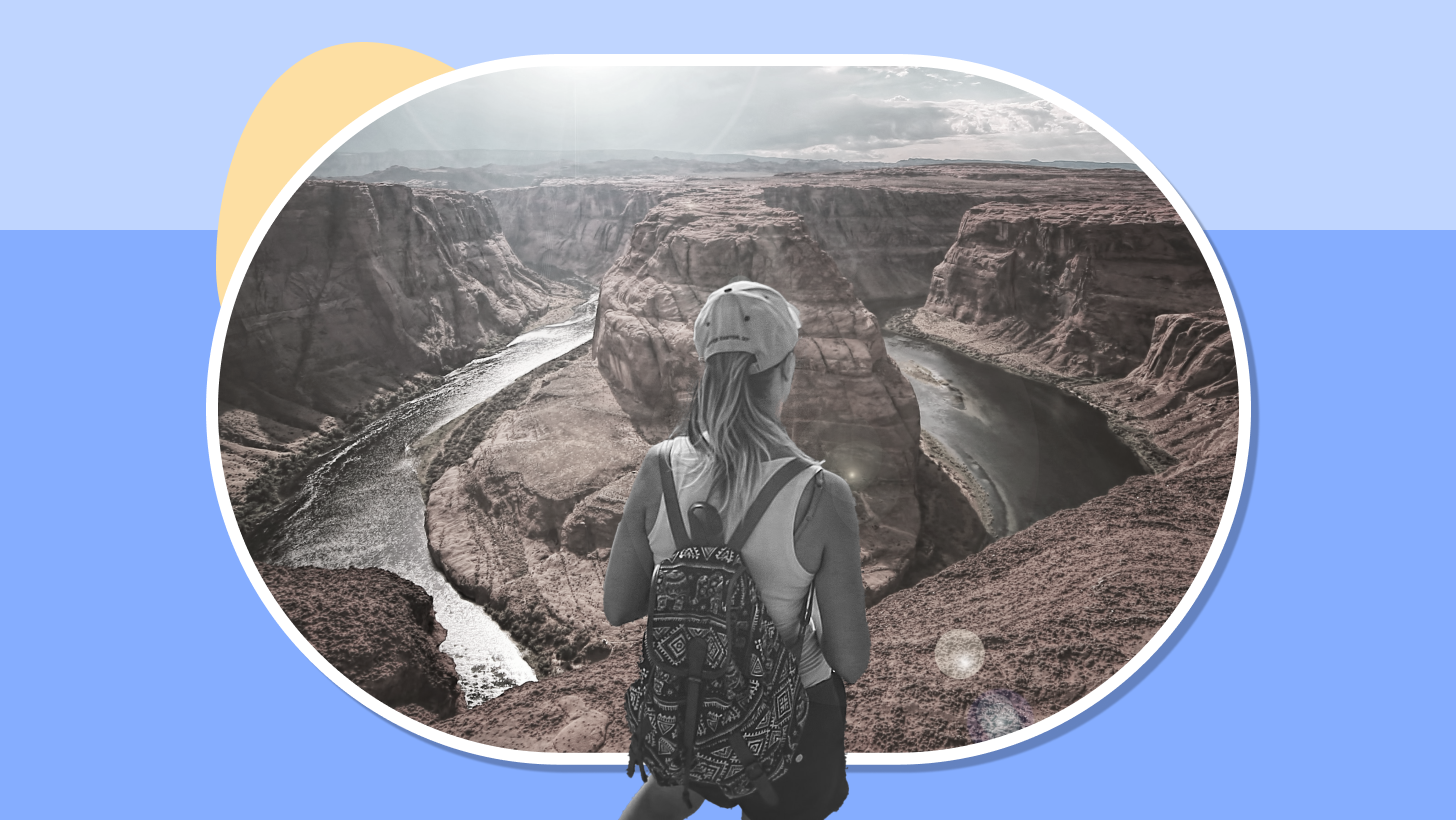
The vast roads of America boast hundreds, possibly thousands, of beautiful scenic roads for visitors to travel and enjoy. But in the age of Instagram—where every gorgeous sunset or idyllic lake must be photographed and shared with the world—it can be difficult to delight in the natural wonders of the road with a sense of calm and solitude. Thankfully, there are still gorgeous stretches of land that, for some reason, have yet to capture the attention of the masses and remain relatively undisturbed. So, make haste and hurry to discover these 10 beautiful scenic routes before the smartphone-yielding hordes find them!

1
The Loneliest Road, Nevada

Image: Jake Blucker

Nevada is a state that offers plenty of wide, ample, and uncrowded places, for sure. The US Route 50 cuts through the heart of the state, offering solitude and stark desert beauty. The name "Loneliest Road in America" was bestowed upon this route by a 1986 Life magazine article claiming that there was not much to see—but that claim couldn’t be further from the truth.

Route 50 has plenty of ghost towns, historic mining communities, stunning state parks, unsurpassed recreational opportunities , and a selection of authentic Sagebrush Saloons.

2
Eastern Sierra Scenic Byway, California

Image: Joris Beugels

Yes, the Pacific Coast Highway, stretching along the coast of California, is one of the most famous and beautiful road trips in the world. But, as evidenced by the diverse landscapes of the Eastern Sierra Scenic Byway, the Golden State has so much more to offer.

Alpine lakes, rugged peaks, and desert expanses make up a jaw-dropping panorama all along the eastern side of the Sierra Nevada mountain range . The elevated mountainous terrain also offers breathtaking views of Mono Lake, whose famous salt waters are visible from miles away.

3
The Blues Highway, Tennessee, and Louisiana

Image: Tanner Boriack

It may sound like the title of a movie, or an album but, in this case, at least, the Blues Highway is a real road, stretching from Nashville, Tennessee, to New Orleans, Louisiana. Also known as Highway 61, this iconic route passes through Delta Blues landmarks, the French Quarter in New Orleans, and the historic jazz legacy of Preservation Hall.

As for natural beauty along the way, the Mississippi’s Natchez Trace Parkway offers a look into the area’s Native American history, as well as features stunning views of southern cypress swamps.

4
The San Juan Skyway, Colorado

Image: Maeghan Smulders

A spectacularly scenic high-elevation drive, the San Juan Skyway loop provides breathtaking views and access to historic mining towns. The route goes along U.S. Route 550 from Durango to Silverton, Ouray, and Ridgway, and then along Colorado State Highway 62 to Placerville, Colorado State Highway 145 to Telluride, Rico, Dolores, and Cortez, before completing the loop back to Mancos and Durango via U.S. Route 160.

Along this 236-mile journey, which takes about six hours to drive, you'll encounter, subalpine forests, historic mountain towns, expansive cattle ranges, and prehistoric Native American ruins.

5
High Peaks Scenic Byway, New York

Image: Kevin Wiegand

The drive along the Adirondack Mountains is not named High Peaks Scenic Byway for nothing. This upstate New York route is a short, but stunning slice of nature. Coming in at just under 30 miles long, the byway begins in the town of Keene and runs to Lake Placid, leading travelers along the highest peaks of the Adirondacks, by breathtaking bodies of water such as Chapel Pond and Roaring Brook Falls, and through charming towns and dense forests.

There are plenty of places to pull over and take in the fresh air and scenery along the drive, as well as numerous trails for those seeking more active adventures such as canoeing, biking, fishing, or cross-country skiing.

6
The Black Hills, South Dakota

Image: mary stahl

There is so much more to the Black Hills than Mount Rushmore. This isolated mountain range in western South Dakota and northeastern Wyoming covers an area 125 miles long and 65 miles wide. It encompasses rugged rock formations, canyons and gulches, otherworldly buttes, open grassland parks, tumbling streams, deep blue lakes, and intricate cave systems.

The name "Black Hills" originates from the Lakota term Paha Sapa, meaning "hills that are black." Seen from a distance, these pine-covered hills, rising several thousand feet above the surrounding prairie, appear dark, almost black.

7
North Shore Scenic Drive, Minnesota

Image: Joe Pohle

The Great Lakes boasts countless scenic drives, and the North Shore Scenic Drive is among the most spectacular. Stretching approximately 154 miles from Duluth, Minnesota, to the Canadian border, the route offers unparalleled views of the northern shores of Lake Superior .

The drive takes travelers through charming towns and rugged coastal landscapes , with plenty of opportunities to stop for food and drink while also taking in expansive forests, cascading waterfalls, and beaches studded with colorful agate stones.

8
Trail of the Ancients Scenic Byway, New Mexico

Image: Maddy Baker

The Trail of the Ancients is a scenic byway winding through the rugged landscapes of the Four Corners region, where the states of New Mexico, Arizona, Colorado, and Utah meet. The byway unveils ancient cliff dwellings, underground constructions, and intricate rock art, providing a glimpse into the ancient culture that once thrived in the area.

At the heart of the trail lies New Mexico’s Chaco Culture National Historical Park, known for its intricate stone ruins of what was once a major gathering place for the ancestral Puebloans.

9
The Finger Lakes Loop, New York

Image: Jametlene Reskp

The Finger Lakes region in upstate New York has plenty of wineries, waterfalls, and charming villages waiting to be discovered. Visitors can explore the area by car, spend the day on a bicycle, take a hike in the woods, paddle on kayak adventures, or tour the many wineries— offering endless opportunities for exploration.

This four-season playground is framed by some of Mother Nature’s finest work, with eleven freshwater lakes fanning out like fingers across the region.

10
Medicine Wheel Passage Scenic Byway, Wyoming

Image: Dan Meyers

Medicine Wheel Passage Scenic Byway is a section of US 14A that ends just west of the boundary for Bighorn Canyon National Recreation Area. At 27 miles, the steep, two-lane stretch travels among soaring mountain peaks, high-altitude deserts covered in grass and sagebrush, as well as conifer and aspen forests.

The byway gets its name from the Medicine Wheel, a sacred and historic limestone circle that sits near the summit of Medicine Mountain. American Indians constructed the wheel in stages sometime over the last 1,000 years, and still use it for ceremonies today.
Culture Culture 7 min read

Foreign gems

These 12 iconic Americans weren't actually born in the U.S.

Image: cytis

Alexander Hamilton wasn’t the only prominent American to be born abroad. Some personalities are so ingrained in American culture that we just assume they were born in the United States. However, many of the major contributors to American science, art, and politics didn’t begin life in our country. Although some iconic figures of American history were immigrants, their stories are absolutely inspirational. Continue reading to learn more about the lives of 12 great Americans you might not have realized were born outside the U.S.

1
Alexander Hamilton

Image: John Trumbull, CC0, via Wikimedia Commons

On January 11, 1757, in the remote Colony of Nevis, British Leeward Islands, a boy was born. He went from having nothing to being a key player in the history of the United States of America. Alexander Hamilton, the illegitimate son of a Scottish trader and a French-English woman, would become George Washington's right hand and one of the nation's Founding Fathers.

At the age of 16, he landed in New York, where he began to study law. But his studies were interrupted when the Revolutionary War broke out. During his lifetime, Hamilton was an influential promoter of the U.S. Constitution, as well as the founder of the nation's financial system, the Federalist Party, the U.S. Coast Guard, and The New York Post .

2
Bob Hope

Image: d

"I left England when I realized I couldn't be king," Bob Hope liked to say. Leslie Townes Hope was so American that his audience was unaware he was actually born in London. When he was five years old, however, his family emigrated to the United States and settled in Cleveland, Ohio.

He began working in show business when he finished high school, appearing in countless Broadway plays, Hollywood films, and television shows. Throughout his more than 60-year career, Hope was not only one of the most influential comedians of his time; he was also one of the most awarded actors in history, the unofficial entertainer of the American troops, and the presenter who hosted the Oscars ceremony the most times.

3
Henry Kissinger

Image: White House Photographic Office, Public domain, via Wikimedia Commons

During the 20th century, this controversial diplomat played a key role in American politics. However, Heinz Alfred Kissinger was born into a Bavarian Jewish family on May 27, 1923. Escaping Nazi Germany, he emigrated to the United States, where his name was changed to Henry.

Henry Kissinger soon obtained citizenship. He served in the Army, studied at Harvard University, and had a long and active life in our country's politics. During the Eisenhower, Kennedy, and Johnson administrations, he worked as a security consultant for various agencies. His reputation led him to be appointed National Security Advisor by President Richard Nixon in 1969, and Secretary of State in 1973, the first person in history to hold both positions simultaneously.

4
Charlie Chaplin

Image: Bain News Service, publisher.Library of Congress, Prints & Photographs Division, Public domain, via Wikimedia Commons

Charles Chaplin, one of the greatest Hollywood legends, was born in London in 1889. At the age of 20, Chaplin crossed the Atlantic to try his fortune in the United States. It was here that he came up with his signature character, Charlot, an endearing tramp who has become a universal icon.

From then on, Charlot appeared in dozens of films that allowed Chaplin to consolidate his reputation as one of the industry's most beloved actors. In 1972, the Academy of Motion Picture Arts and Sciences awarded him an Honorary Oscar for his outstanding career. The audience applauded for twelve uninterrupted minutes.

5
Alexander Graham Bell

Image: Harris & Ewing, photographer, Public domain, via Wikimedia Commons

​​Known for being the inventor of the first patented telephone, Alexander Graham Bell also worked on the development of deaf-friendly systems, was one of the founders of the National Geographic Society, and made great contributions to the U.S. telecommunications industry. Yet, he was born in 1847 in Edinburgh, Scotland.

In 1871, Bell settled in Boston, Massachusetts, where he worked as a teacher and tutor of deaf students. His influence on American science and culture was so important that on the day of his death, all telephone services in the United States stopped for one minute in his honor.

6
Samuel Goldwyn

Image: Metro-Goldwyn-Mayer, Public domain, via Wikimedia Commons

Films, perhaps the most representative industry of American culture, would not be the same without the contribution of numerous foreigners who settled in California since the beginning of the 20th century. This is the case of Samuel Goldwin, one of the most influential magnates in the history of Hollywood, born in Warsaw, Poland, in 1879.

During his more than 50 years of activity, Goldwyn founded several film studios and produced the first feature film entirely made in Hollywood. His reputation in the industry grew steadily, based on his incredible eye for finding great talent. There is a theater named after him in Beverly Hills, and he received a star on the Hollywood Walk of Fame for his invaluable contributions to cinema.

7
Joseph Pulitzer

Image: Allen & Ginter, CC0, via Wikimedia Commons

This self-made, foreign man became an American media mogul and inspired the world's most prestigious journalism award. Born in 1847 in Hungary, young Joseph Pulitzer emigrated to the United States at the age of 17 without knowing a word of English.

After fighting in the Civil War, Pulitzer began to study law. He soon discovered his talent for journalism. Within a few years, he became a leading national figure in the U.S. Democratic Party, began running the New York World newspaper, and became a pioneer of tabloid journalism.

8
Albert Einstein

Image: Archivo General de la Nación, Public domain, via Wikimedia Commons

Despite being born in Germany, the most famous scientist of the 20th century ended his days in the United States, where he was able to continue his research after Nazism took power. In 1933, Albert Einstein was visiting our country, and given the context in Europe, he decided not to return to the old continent and renounced his German citizenship.

Einstein accepted a position at the Institute for Advanced Study in Princeton, where he continued his scientific work until his death. During his stay in America, he remained active in the academic world and received multiple awards. His scientific legacy remains fundamental to modern physics and the understanding of the cosmos.

9
Madeline Albright

Image: U.S. Department of State, Public domain, via Wikimedia Commons

Madeleine Albright was the first woman in the history of the United States to serve as Secretary of State. What you may not know is that the diplomat was born in Prague, Czechoslovakia, as Marie Jana Korbelová. In 1948, Albright immigrated with her family to America and settled in Denver, Colorado.

After graduating from Wellesley College, she worked as a journalist and editor for different newspapers. She later earned her doctorate and began her political career working in the White House. She was a senior advisor to the Democratic Party, and when Bill Clinton became president, she was first appointed Ambassador to the United Nations. A few years later, she became Secretary of State.

10
Alfred Hitchcock

Image: Shamley Productions , Paramount Pictures, Public domain, via Wikimedia Commons

The great Alfred Hitchcock began his film career in England, where he was born, but it was in the United States where he was really able to display all his genius. While in Hollywood, he directed more than 30 films, some of which are considered masterpieces to this day.

Although Hitchcock was relatively successful in his country, in 1939, producer David O. Selznick convinced him to cross the pond and settle in our country. And thank goodness he did! The master of suspense is considered one of the most influential directors of all time and is regarded as one of the most important artists of the seventh art.

11
Meyer Guggenheim

Image: Joe Dudeck

The patriarch of the Guggenheim family, known for playing a decisive role in the transformation of the American mining and smelting industries, was actually born in Lengnau, Canton Aargau, Switzerland. Meyer Guggenheim emigrated to the United States in 1847, where he started working as a salesman.

After earning a considerable sum of money buying and selling stocks, he began investing in silver mines. In a short time, he amassed one of the largest fortunes of the 19th century. Meyer died in 1905 in Palm Beach, but his legacy still influences many sectors today, from industry to philanthropy.

12
Levi Strauss

Image: manusama

Is there anything more American than a pair of blue jeans? What started as a strong and durable pair of pants became the garment that revolutionized the fashion market. Worn by miners, cowboys, rock stars, presidents, and men and women all over the world, blue jeans have been a favorite for generations. However, their creator was not born in the United States.

Levi Strauss, the founder of the first jeans manufacturing company, was born in 1829 in Buttenheim, Germany, as Loeb Strauss. In 1847, he emigrated to New York, but when the California gold rush began, he decided to move to the West Coast and open a branch of the family business in San Francisco. And the rest is history!

Geography Geography 3 min read

American wonders

The Grand Canyon is older than dinosaurs—10 facts you never knew

Image: Drif Riadh

The Grand Canyon is one of America’s greatest natural wonders, but its history holds more surprises than you might think. From its ancient formation to modern discoveries, this canyon’s story is filled with adventure, mystery, and national pride. Here are 10 astonishing facts that reveal its amazing journey through time.

1
Ancient origins

Image: Ameer Basheer

The Grand Canyon isn’t just old—it’s millions of years older than previously thought. Some rock layers at the bottom date back 1.8 billion years, nearly half the age of Earth itself. While the canyon itself is around 5 to 6 million years old, recent studies suggest parts of it began forming 70 million years ago—during the dinosaur era.

2
Once an ocean floor

Image: Yannis Papanastasopoulos

Long before it was a canyon, this region sat beneath an ancient sea. The Kaibab Limestone, the canyon’s top layer, formed from marine fossils left behind as the waters receded 270 million years ago. The presence of coral, shellfish, and even shark fossils proves the area was once home to a thriving ocean ecosystem.

3
Carved by more than water

Image: Wolfgang Hasselmann

While the Colorado River played a huge role in shaping the canyon, other forces were at work. Volcanic activity, tectonic uplift, and even landslides helped carve out its immense depths. Lava flows from nearby volcanoes poured into the canyon, creating layers of rock that tell the story of violent geological change.

4
The earliest human inhabitants

Image: Russ McCabe

Humans have lived near the Grand Canyon for at least 12,000 years. The earliest known inhabitants were Paleo-Indians, who left behind stone tools and spear points. Later, the Ancestral Puebloans built cliff dwellings and left behind intricate pottery, proving that this seemingly inhospitable land was once home to thriving communities.

5
First European encounter

Image: Antoine Vidal de La Blache

Spanish explorer García López de Cárdenas was the first European to lay eyes on the canyon in 1540. Sent by Francisco Vázquez de Coronado in search of legendary cities of gold, he and his men were shocked by its vastness. They tried to climb down for water but failed, unable to comprehend its sheer scale.

6
Named a national monument

Image: Benjamin Cutting

President Theodore Roosevelt designated the Grand Canyon a national monument in 1908, calling it a place "every American should see." He was instrumental in protecting it from commercial exploitation, setting the stage for its eventual National Park status in 1919.

7
Hidden caves

Image: Russ McCabe

The Grand Canyon contains over 1,000 caves, but fewer than 400 have been explored. Some remain completely untouched, preserving prehistoric fossils and evidence of ancient human life. Today, only one cave is open to the public—Grand Canyon Caverns, located nearby in Arizona.

8
Phantom ranch

Image: Annie Spratt

Built in the 1920s, Phantom Ranch remains one of the most isolated lodges in America. Located at the bottom of the canyon, it’s only accessible by hiking, mule ride, or rafting. Due to high demand, reservations are awarded through a lottery system.

9
America’s first canyon explorer

Image: Alex Moliski

John Wesley Powell led the first recorded expedition through the Grand Canyon in 1869. With one arm lost in the Civil War, he braved the Colorado River’s treacherous rapids in wooden boats. His journey mapped the canyon’s uncharted territory, proving it wasn’t an impassable wasteland but a geological treasure trove.

10
Forgotten civilizations?

Image: Otacilio Maia

In the 1930s, explorer Emery Kolb uncovered a sealed cave in the canyon containing ancient artifacts and human remains. Some speculated it belonged to a lost civilization, but archaeologists determined it was a prehistoric Native American site. The canyon still holds thousands of undiscovered archaeological sites, adding to its mystery and historical significance.

Explore more American facts

Choose your favorite category!

General
General

As American as apple pie—the very best America has to offer!

Culture
Culture

Delve into the astounding richness of American lore.

Geography
Geography

Hop in and explore vast and diverse American landscapes.

History
History

Discover the key moments that shaped the United States.