General General 5 min read

Incredible creatures

You won't believe these 10 American animals' amazing traits and skills
Nature never ceases to amaze us. From mammals that can "glide" through the air to creatures that can twist their heads 180 degrees, America's wildlife is as diverse as it is impressive. While you probably recognize many of the animals in this article, they have some skills that could shock anyone. Join us to discover these 10 incredible American animals with amazing abilities and unique traits !

1
Blue jay

Image: Mark Olsen

The blue jay is a beautiful bird with –as its name suggests– striking blue plumage. It also has white feather details and a sort of black "collar" on its neck. But it is not just a pretty face; it also has wonderful abilities.

Blue jays are excellent mimics . They can imitate the calls of other birds, especially hawks, in order to frighten and scare away predators. Nature is wise!

In addition, these birds that live in family groups have a great memory . Blue jays have been seen storing nuts far from where they originally found them and then returning to those locations later without much effort.

2
Bald eagle

Image: Mathew Schwartz

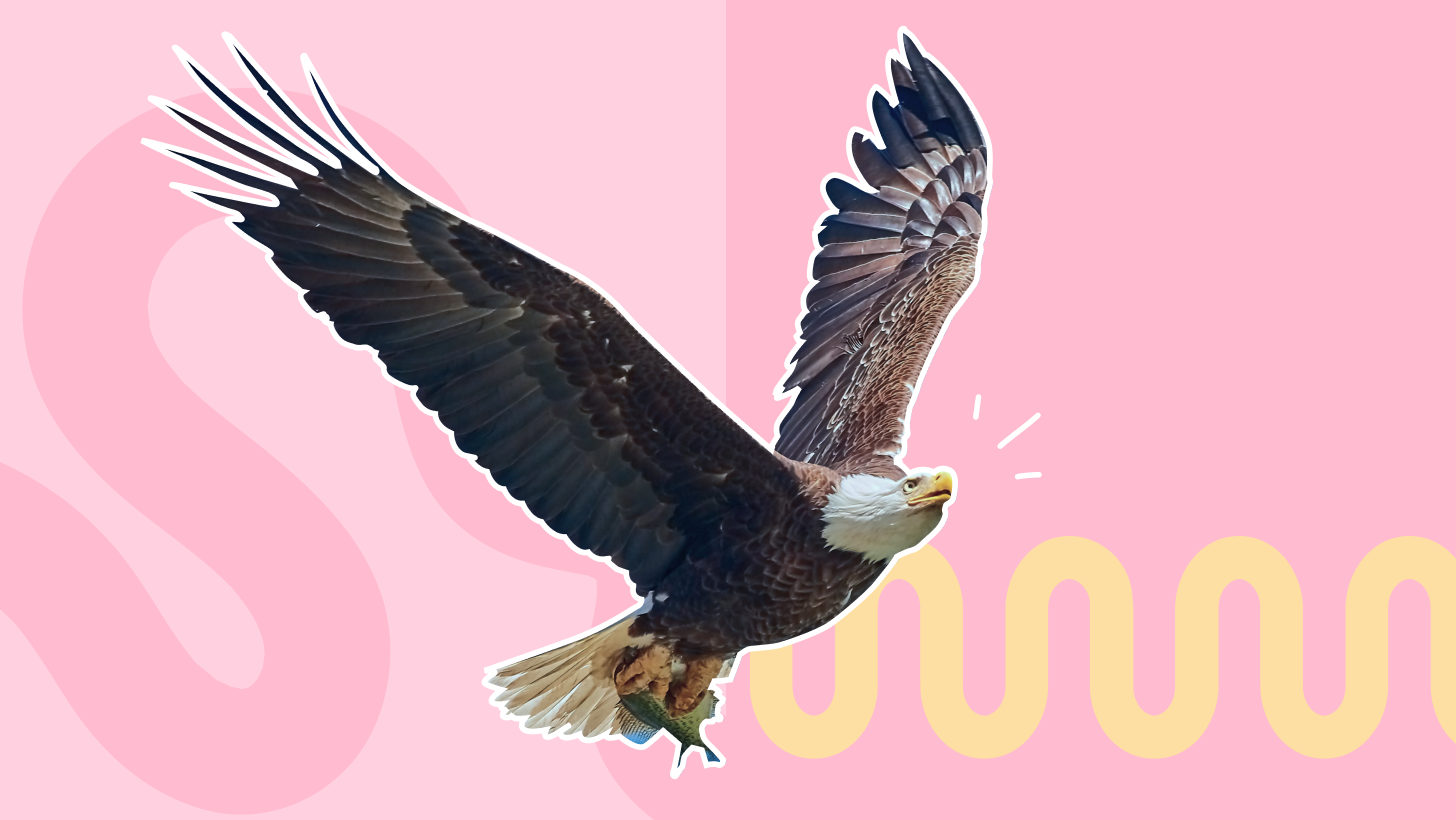
As one of America's most iconic symbols, the bald eagle makes an imposing impression just with its presence. It is one of the largest birds in the world, with a wingspan ranging from 6 to 7.5 feet and weighing between 3 and 6.5 pounds.

One of its most outstanding traits is its vision , considered by many experts to be 4 to 5 times sharper than human eyesight. This bird has such precise vision that it can spot its prey from several miles away while flying!

In addition to that, its hunting skills are exceptional. Bald eagles rarely fail to catch a snack, thanks to their large and powerful talons. Their prey can be quite large, as their grip strength can reach 400 pounds per square inch.

3
Pronghorn antelope

Image: David Thielen

Despite its common name, the pronghorn is not an antelope. In fact, it belongs to another family called Antilocapridae , exclusive to North America. Yes, they only exist here!

Pronghorns have several characteristics that make them unique, including their iconic horns . First off, pronghorns shed their horns every year (because who doesn't want to renew their outfit?). And, unlike many other species, it's not just the males that have horns; the females do too.

But here's its best feature: the pronghorn is nothing less than the fastest land animal in America, capable of reaching speeds of over 50 mph. And that's not all; this animal can sustain its speed for very long distances. A true runner!

4
American alligator

Image: Joshua J. Cotten

The American alligator can measure between 13 and 15 feet long and weigh more than 900 pounds, making it one of the largest reptiles in the USA.

But its size is not the only thing that impresses. The American alligator, which inhabits the southeastern United States, has one of the fiercest and most powerful bites in the entire animal kingdom, reaching 2,980 pounds of pressure per square inch. Just picture that destructive power!

Biting so hard must have negative consequences for the teeth, right? True. But this is not a problem for the American alligator, as this reptile has the ability to regenerate its lost teeth more than 50 times in its lifetime!

5
Barn owl

Image: Bob Brewer

The barn owl is one of the several owl species found in America. Its most characteristic feature is its heart-shaped face. This distinctive quality is not only cute, but it also serves a purpose: it directs sound into the bird's ear cavities. The barn owl has exceptional hearing , allowing it to detect the smallest prey in the dark.

On the other hand, one of the most striking features of owls is their ability to rotate their heads about 180 degrees and, in some cases, even more. If you found The Exorcist disturbing, you don't want to watch videos of owls rotating their heads!

6
Wood frog

Image: Richie Bettencourt

The wood frog is a small amphibian native to the northeastern states, famous for the dark markings around its eyes. These markings are like a mask that extends, much like when someone's makeup smudges.

But this frog's appearance is not the only thing that distinguishes it. It also has an incredible skill: the ability to withstand freezing temperatures. And that's not all; during the winter, their bodies can actually freeze solid and then thaw out in the spring without sustaining serious damage. Amazing!

Although it is not Captain America, this ability allows the wood frog to adapt very well to temperatures as low as -10°F for several weeks.

7
Flying squirrel

Image: Saori Oya

Have you ever dreamed of flying through the sky like a superhero? Who wouldn't want that? There is a squirrel that has this advantage, which is why it is commonly called the flying squirrel.

Despite its funny name, the flying squirrel doesn't actually fly but glides through the trees. Even so, watching this small mammal deploy a membrane between its limbs to glide with great precision from the heights is impressive. In addition, they can perfectly regulate speed and direction during their ride through the air.

Have you ever seen one of these creatures?

8
Gila monster

Image: David Clode

There is only one venomous lizard in the U.S., and that title goes to the great Gila monster.

This lizard, naturally found in the southwestern regions of our country, has unique abilities that set it apart from other animals. The "monster" in its name is no coincidence: this lizard has a fearsome bite , capable of injecting painful venom. The Gila monster's venom is delivered through grooves in its teeth, something extremely rare for a lizard.

And there's more. This animal can go several months without eating! This is due to its slow metabolism , which allows it to survive even when food is scarce.

9
Eastern diamondback rattlesnake

Image: Leah Storme

The eastern diamondback rattlesnake is one of the largest rattlesnakes that inhabit our country, reaching 6 feet in length and weighing around 10 pounds. Its characteristic diamond-shaped pattern on its back is what gives it its iconic name.

Besides having one of the most potent venoms among rattlesnakes, this snake has another important advantage. The diamondback rattlesnake has thermo-detecting pits. But what is that? They are tiny orifices located between its eyes and nose, which allow it to detect the temperature of its warm-blooded prey even in the deepest darkness.

10
American beaver

Image: Tim Umphreys

Beavers are amazing animals. These rodents that inhabit freshwater environments are like the architects of the animal world. They have impressive building skills, with dams being their primary type of construction.

The dams that beavers build with sticks, logs, stones, mud, and other materials from nature are designed to protect their community and lodges. Beavers' lodges are perfectly engineered, featuring underwater entrances that keep them isolated and safe, just like a natural bunker!

They are also excellent swimmers . They have an affinity for water and use it in very creative ways. For example, they slap their flat tails against the water's surface to alert their families when danger is near.
General General 5 min read

Second look

Lost in history: 10 forgotten presidents who changed America

Image: Library of Congress

Be honest—how many U.S. Presidents can you name off the top of your head? Great leaders like Washington and Lincoln often steal the spotlight, and with legacies as groundbreaking as theirs, it's totally understandable. However, this also means the work of many lesser-known—but no less important—figures in American history is often overlooked. From controversial characters to underrated statesmen, join us as we unravel the stories of 10 forgotten U.S. presidents.

1
Martin Van Buren (1837-1841)

8th President

Image: Library of Congress

Van Buren, the first president born after the American Revolution, inherited an economic crisis shortly after taking office, known as the Panic of 1837 . The market crash, caused by speculative banking practices, led the country into a severe economic depression.

Van Buren’s quick response was to establish an independent treasury system, which effectively separated federal funds from private banks. This system helped stabilize the currency and laid the foundation for modern federal financial management. Furthermore, Van Buren was also a key figure in the development of the two-party system that continues to shape American politics today. Quite the legacy for an often-overlooked figure!

2
John Tyler (1841-1845)

10th President

Image: Library of Congress

John Tyler became president in 1841 following William Henry Harrison’s death, marking the first time a vice president succeeded a sitting president. Although this might seem unremarkable today, Tyler asserted the constitutional authority of the presidency by doing so, setting an important precedent for the peaceful transfer of power and solidifying the role of the vice presidency in American democracy.

However, Tyler is mostly remembered for championing westward expansion and overseeing the initial negotiations for the annexation of Texas—a move that literally reshaped the nation. Though this ultimately led to tensions with Mexico and the Mexican-American War, his efforts to settle a peaceful border treaty between the United States and Canada helped balance his legacy.

3
James K. Polk (1845-1849)

11th President

Image: Library of Congress

James K. Polk, the 11th president, is often called the "expansionist president" due to his aggressive territorial policies. Under his leadership, the United States expanded significantly, acquiring more than a million square miles of land through various treaties and the victory in the Mexican-American War.

His presidency fulfilled the concept of Manifest Destiny, extending the nation's reach to the Pacific Ocean. However, his legacy remains somewhat controversial, as many of his actions exacerbated the divide between the northern and southern states, setting the stage for the American Civil War.

4
Zachary Taylor (1849-1850)

12th President

Image: Library of Congress

Zachary Taylor, a hero of the Mexican-American War, became president in 1849 with little political experience. Despite being a Southern slave owner, he opposed the expansion of slavery into the newly acquired western territories, a stance that put him at odds with many in the South.

While Taylor's presidency was cut short by his sudden death in 1850, his role in opposing the spread of slavery into new states set the stage for future debates. Though brief, his actions as president are often praised for their conciliatory nature, as he sought compromises in an attempt to prevent the looming conflict.

5
Millard Fillmore (1850-1853)

13th President

Image: Library of Congress

Millard Fillmore took over after Zachary Taylor's untimely death in 1850, inheriting a fractured nation on the brink of civil war. His most controversial act was signing the Compromise of 1850, which included the Fugitive Slave Act, requiring the return of escaped slaves to their owners.

This somewhat ham-fisted attempt to maintain the fragile peace between the North and South only deepened the divisions that eventually led to the Civil War. On a lighter note, Fillmore was the first president to initiate trade relations with Japan, marking the start of Japan’s modernization and its integration into the global economy.

6
Franklin Pierce (1853-1857)

14th President

Image: Library of Congress

Franklin Pierce, elected in 1852, faced an increasingly divided nation over the issue of slavery. His signing of the Kansas-Nebraska Act in 1854 allowed new territories to decide for themselves whether to permit slavery, leading to violent confrontations between pro- and anti-slavery factions in what became known as "Bleeding Kansas."

Despite his troubled domestic policies, Pierce followed his predecessor's path of expanding U.S. influence abroad. He pushed for new trade routes and even attempted to negotiate the acquisition of Cuba from Spain, though his efforts ultimately failed.

7
James Buchanan (1857-1861)

15th President

Image: Library of Congress

James Buchanan’s inability to resolve the tensions between North and South is often criticized, but he faced a nearly impossible task. He sought to avert conflict through diplomacy but was hesitant to overstep states' rights, arguing that the Constitution did not grant him the authority to prevent secession.

Despite his efforts, South Carolina seceded in December 1860, just weeks after Abraham Lincoln’s election, setting the stage for war. In foreign policy, Buchanan strengthened U.S. relations abroad, securing trade agreements with China and managing tense relations with Great Britain.

8
Rutherford B. Hayes (1877-1881)

19th President

Image: Library of Congress

Rutherford B. Hayes is often remembered for his controversial election in 1876, which was decided by a congressional commission after a disputed vote count. His administration is also known for effectively ending the Reconstruction Era by withdrawing federal troops from the South.

While this helped bring stability to the South, it also allowed the rise of segregationist policies. On the other hand, Hayes was one of the first presidents to advocate for civil service reform, arguing that a merit-based government workforce was necessary to reduce corruption and ensure efficiency within the federal system.

9
Chester A. Arthur (1881-1885)

21st President

Image: Library of Congress

Initially seen as a product of the corrupt political machine system, Chester A. Arthur surprised many by becoming a champion of civil service reform. In 1883, he signed the Pendleton Civil Service Reform Act, which mandated that government jobs be awarded based on merit rather than political connections.

This act significantly reduced the influence of patronage in American politics, a practice that had long fueled corruption. Arthur also modernized the U.S. Navy, which had been neglected since the Civil War. His administration helped lay the foundation for the powerful naval force that would emerge in the 20th century.

10
Benjamin Harrison (1889-1893)

23rd President

Image: Library of Congress

Though almost forgotten today, Harrison’s administration was marked by significant legislative accomplishments. In particular, the Sherman Antitrust Act aimed at curbing the power of monopolies and promoting competition, and is considered the first major attempt by the federal government to regulate corporate power.

Harrison pushed to secure federal funding for education and voting rights for African Americans, but many of his efforts were blocked by Congress. Despite these setbacks, he remained a vocal advocate for African American civil rights, consistently addressing the issue in his speeches to Congress.

General General 5 min read

The Soundtrack of Our Lives

Plop, plop, fizz, fizz! Remember these 10 catchy jingles?

Every brand aims to create a logo, slogan, or jingle that is instantly recognizable and remains iconic over time. But the truth is, not all of them succeed. However, some brands have developed jingles so catchy that, from the moment you hear them, you can't help but sing along. We're talking about those ads that we can still easily remember, even though they were created years ago. Do any come to mind? So, get ready to relive 10 of these unforgettable jingles that stuck in our minds!

1
"I don't want to grow up"- Toys 'R' Us

Image: Liao Je Wei

No kid on Earth doesn't love toys, and Toys 'R' Us knew this too well. Their unforgettable commercial, "I Don't Want to Grow Up, I'm a Toys 'R' Us Kid," is proof of that. Remember it? Of course, you do!

Launched in the 1980s, this ad was a hit. The kids' voices repeatedly stating, "I don't want to grow up," immediately brings the brand's name to mind. In addition to the catchy line, the commercial also showcased a wide variety of toys available in stores, which are—of course—the reason why kids never want to grow up!

2
"Give me a break"- Kit Kat

Image: Abi Schreider

Kit Kat has successfully tied itself to the joy of taking a break , thanks in large part to its iconic jingle: "Give me a break, give me a break, break me off a piece of that Kit Kat bar!" Feeling like dancing?

We're sure you've caught yourself singing this line more than once in everyday life. The infectious tune has lived rent-free in our minds since the ‘80s when the commercial first debuted. In it, chefs, firefighters, builders, office workers, and people from all walks of life—including children—hold up a Kit Kat bar, smiling and dancing as they politely ask for their well-deserved break.

3
"Plop plop fizz fizz"- Alka-Seltzer

Image: Ksenia

For a jingle to stand out, it needs to be both consistent and effective . And Alka-Seltzer's most famous jingle nailed it perfectly.

"Plop, plop, fizz, fizz, oh what a relief it is!" is the catchy jingle that hit the radio in 1953. With two simple words, it shows us how to use the product: "Plop" (drop the tablet into a glass of water), "fizz" (watch it dissolve), and then, relief!

Later adapted for TV, the commercial featured Alka-Seltzer's mascot, Speedy , who explained the product's benefit: "Those speedy bubbles relieve your upset stomach and headache fast! For acid indigestion alone, Alka-Seltzer Gold."

4
"Sometimes you feel like a nut"- Almond Joy and Mounds

Image: Jessica Loaiza

As brands offer a variety of products, they often look for unique ways to differentiate each one, creating distinct commercials to highlight the essence of each product. But Almond Joy and Mounds, produced by the same company, did the opposite: they were united in the same commercial.

"Sometimes you feel like a nut, sometimes you don't. Almond Joy's got nuts, Mounds don't." Not only is it funny and catchy, but it's also crystal clear: although the bars look similar, there’s one key difference. Yep, the nuts ! So, which one is your favorite?

5
"Mmm Mmm Good" – Campbell's Soup

Image: Kelly Common

Sometimes, the simplest approach is the most effective, right? And that was demonstrated by Campbell's when it launched its famous jingle "Mmm Mmm Good." You've probably heard it!

What's the expression you use when you taste something that's delicious? That's right: Mmm! The canned soup brand exploited this universal expression to the fullest by adding it to its commercials and consistently evoking a cozy, homey vibe. By doing so, they connected the product with the kind of food we all prefer: homemade .

6
"My Bologna Has a First Name"- Oscar Mayer

Image: Aneta Voborilova

Almost everyone knows how to spell " bologna ," and that's largely thanks to Oscar Mayer's catchy 1973 jingle. Remember that one?

In the famous commercial, a young boy sings, "My bologna has a first name, it's O-S-C-A-R/ My bologna has a second name, it's M-A-Y-E-R/ Oh, I love to eat it every day, and if you ask me why, I'll say/ 'Cause Oscar Mayer has a way with B-O-L-O-G-N-A." The catchy tune and playful lyrics became a cultural phenomenon, making the brand name synonymous with the product. It was a highly effective marketing tactic!

Kids and adults alike couldn't stop spelling out this fun jingle, which still plays in our minds to this day.

7
"Meow, meow, meow, meow…"- Meow Mix

Image: Matheus Queiroz

Sometimes, we wish our pets could talk to us. It's a fantasy explored by many cartoons and some famous movies. But if your cat could talk, what would it ask for as its favorite meal? Hard to guess, right? Meow Mix, the cat food company, decided to give us an answer.

In its 1970s commercial, a kitten "sings" the catchy jingle, "Meow, Meow, Meow, Meow, Meow, Meow, Meow," while the visuals clearly show that the cat is asking for Meow Mix's delicious food. Associating the very sound of the animal with the brand name was a very clever move!

8
"Like a Good Neighbor"- State Farm

Image: Tierra Mallorca

You know a jingle is good when it's been around for decades , and that's the case with the iconic "Like a good neighbor, State Farm is there" from the well-known insurance company.

The jingle was written in 1971, and since then, it has become one of the most recognized jingles in commercial history.

Sung warmly and softly, the jingle conveys the idea that the insurance company will always be there for the customers, whatever they need, providing a sense of security and reliability.

9
"I'm A Big Kid Now"- Huggies Pull-Ups

Image: Jimmy Conover

Cuteness is a great way to connect with an audience, and Huggies, the famous diaper and pull-up brand, understands this perfectly.

And the proof of this is its iconic jingle, "I'm a big kid now!" This line represents the transition from diapers to training pants and the start of the potty training process.

The commercial, which debuted in 1992, features a young child proudly telling his parents about all the things he can do now that he's a "big kid." It highlights the joy and pride of this milestone for both toddlers and their parents. The jingle was a big hit and became one of the brand's most famous.

10
"I'm Lovin' It" - McDonald's

Image: Road Ahead

When you think of McDonald's advertisements, it's impossible not to remember the legendary "I'm Lovin' It."

Although it's newer than some other jingles on this list, "I'm Lovin' It" debuted in 2003 and quickly became an iconic part of the McDonald's brand. Along with the catchy "pa ra pa pa pa" hum, the jingle successfully linked the brand with the pleasure of enjoying a delicious burger.

Thanks to its simplicity and positive vibes, the jingle became a crucial part of the brand's identity and is etched in the memory of many Americans.

Explore more American facts

Choose your favorite category!

General
General

As American as apple pie—the very best America has to offer!

Culture
Culture

Delve into the astounding richness of American lore.

Geography
Geography

Hop in and explore vast and diverse American landscapes.

History
History

Discover the key moments that shaped the United States.