Geography Geography 6 min read

AN UNUSUAL TRAVELLER’S GUIDE

Discover 10 Of The Saddest (But Funniest) Names On Your Map.

Image: Pat__

Every city, island, mountain, and lake has an interesting story behind its name. Many of them are called after the person who discovered them. Others, however, were baptized after the mood and mindset of the person who had the honor of naming them.

In 2017, Artist Damien Rudd published Sad Topographies , an illustrated guide that compiles some of the saddest —and funniest— names around the world. Inspired by his book, in this article, we have gathered just a few examples out of an incredible array of somber places in the United States . Read on and we hope that, if you are not in the best mood today, we’ll make you smile.

1
Frustration Lake, Alaska

Image: Robin Holmquist

Have you ever felt upset or annoyed when you were trying unsuccessfully to achieve something? Well, that’s probably what happened to a pilot in the 60s when he couldn’t land on the rough surface of this icy lake in Alaska. Located in the Matanuska-Susitna region, by the Tordrillo Mountains, and adjacent to Triumvirate Glacier this area is difficult to access but frequented nonetheless by mountaineers in search of adventure .

According to Alaska Guide Co, Frustration Lake got its name in 1964 after a plane carrying three alpinists had to look for another climbing spot when they realized that it would be impossible to master the extreme conditions of this wayward body of water . So now you know, if you ever visit The Last Frontier, you might want to visit this faraway lake just to wash away all your frustrations.

2
Misery Islands, Massachusetts

Image: MagicTV

Misery Islands, an 87-acre nature reserve near Salem Harbor in Massachusetts, is full of stories. As early as 1900, a business group built a luxury retreat meant for the Boston and North Shore socialites that included a saltwater swimming pool, a casino, a clubhouse, a tennis court, a lounge, and even a 9-hole golf course! Can you imagine? Unfortunately, the enterprise didn’t last long, and a year later only ruins remained.

Not long after, a summer colony of more than 25 cottages was established on the coasts of Misery Islands, although they were also short-lived. In 1926, a devastating fire destroyed many houses and the owners eventually left. In light of these events, it is not surprising that in the 1620s, shipbuilder Captain Robert Moulton described his time here as "three miserable days". Despite the name they inherited, nowadays Misery Islands are open to the public and are worth a visit if only to appreciate their breathtaking views and the fresh sea air.

3
Desperation Drive and Solitude Way, California

Image: vishu

If you are driving to Eldorado National Forest in California and you suddenly start feeling down, don’t panic, perhaps you just got lost and landed on the intersection of Desperation Drive and Solitude Way . Located on Frenchtown, originally a mining camp 37 miles from Sacramento and southeast of Shingle Springs, these two charming winding roads to nowhere are somewhat of a mystery.

We can't be sure why or who gave them those names, but we couldn’t leave them out of this list. Who hasn't felt desperate and alone at some point? And who knows, maybe their remote location and surrounding tall pine trees bring some kind of solace and comfort.

4
Failure Canyon, Utah

Image: Ashim D’Silva

Utah is known for its natural beauty, national monuments, world-class ski resorts, and let’s face it, unusual names. Due to its cowboy, Indian, and Mormon heritage the Beehive State is home to places like Mount Timpanogos, Cutthroat Lake, and Eureka City. But perhaps one of the most peculiar ones is Failure Canyon, a valley in the mountainous Summit County.

With an elevation of 7,200 feet, this gorge originates in the southwest section of the Uinta Mountains and drains north into Beaver Creek. Rumor has it that it was named after Beaver Creek Charlie , a Ute Indian who went broke after failing as a prospector during the gold rush.

5
Spiteful Geyser, Wyoming

Image: David Köhler

We’ve heard of vengeful people, but spiteful geysers? Apparently, it’s a thing. Spiteful Geyser, located on Firehole River in Yellowstone National Park, is a crystalline pool with an average temperature of 179.5°F running off down the hillside.

This hot spring possibly formed from a hydrothermal explosion, got its name because when it erupts it spatters water straight at the boardwalk , catching everyone around off guard. However, despite its vindictive reputation, Spiteful Geyser seems to have grown in the last few years: it has not erupted since 1998.

6
Cape Disappointment, Washington

Image: Karsten Winegeart

Don't let the name fool you, Cape Disappointment won’t let you down! In fact, it’s one of Washington’s favorite state parks , featuring coastal forests, large beaches, an old fort, breathtaking scenery, and not one but two working lighthouses. Located just by the town of Ilwaco, where the Columbia River meets the Pacific Ocean, this 2,023-acre camping park established in the early 1950s offers its visitors a variety of fun outdoor activities all year round.

So why is it called Cape Disappointment? The area earned its depressing name in 1788 when Captain John Meares failed to cross the river bar . The English navigator and explorer thought that the mouth of the Columbia River was only a bay and was eventually proved wrong. Over the years, the area was renamed a couple of times only to end up being called as one frustrated man intended, more than two centuries ago.

7
Lonelyville, New York

Image: Billy Liao

Lonelyville is a small beach community located on Fire Island in Suffolk County, New York. This little town got its nostalgic name from three businessmen and friends from Bay Shore who planted the flag in the area in the early 1900s. An article under the title "Lonelyville-By-The-Bay, Not So Lonely After All", published in a newspaper of the time stated that. one member of the group "racked his fertile brain for a name" and "almost immediately ‘Lonelyville’ suggested itself, and with due eclat, and champagne, the resort was christened and launched upon the sea of fame."

Nowadays, Lonelyville has approximately 80 houses, predominantly summer-only vacation cottages. There are no bars, stores, or cafes, so it’s the ideal place to vacation if you are looking for peace and quiet . Fun fact: one of the most prominent past residents of Lonelyville is writer and director Mel Brooks, who used to own an ocean-front house designed by no other than famed architect Richard Meier.

8
Nothing, Arizona

Image: ashutosh nandeshwar

Can you think of a better name for a ghost town? We certainly can’t! Nothing is an uninhabited town in eastern Mohave County, Arizona that, at its height, had a population of four. The settlement was established in 1977 by Richard "Buddy" Kenworthy, a liquor store owner from Coolidge. A friend suggested that he should call the new land Nothing, "since there ain't nothing out there."

For some time, the site consisted of a small convenience store and a gas station but was abandoned in 2005 when Kenworthy finally moved out. Over the years there were a few attempts to revive the town and even a pizza joint was opened in 2009. Unfortunately, these efforts proved to be unsuccessful and today Nothing is just a stopover for travelers passing through Route 93.

9
Despair Island, Rhode Island

Image: Pexels

Despair Island is one of the many islands that make up Narragansett Bay in Newport County, Rhode Island. This small 91-acre isle, composed mainly of rocks used by nesting birds, is a bit elusive. At high tide, it is barely visible and has to be marked with a buoy.

It was Puritan minister Roger Williams who gave this group of islands their names in the 17th century. Unfortunately for Despair Island, it got the worst possible one . The others surrounding it were given more uplifting aliases: Hope Island and Prudence Island. In fact, a children's Colonial-period song honored them like this: "Prudence, Patience, Hope, and Despair / And little Hog Island, right over there."

10
Disenchantment Bay, Alaska

Image: Joshua Sukoff

It seems to have been a popular fashion among explorers to embody their maritime frustrations in the names they gave to the places they discovered. This inlet right at the head of Yakutat Bay in Alaska, was named "Puerto del Desengaño" —Spanish for "bay of disenchantment"— by Tuscan explorer Alessandro Malaspina in 1792. Similar to what happened to other places listed in this article, Malaspina was disappointed when he discovered that the bay was not the entrance to the legendary Northwest Passage.

Nowadays, Disenchantment Bay is far from an unsatisfying place. It can be visited on a cruise ship or a charter boat to enjoy its spectacular views of the rugged coastline, icy islands, and the breathtakingly beautiful Hubbard Glacier.

General General 4 min read

Cash curiosities

What would you do with a $10,000 bill? 10 rare facts about US money!

Image: Photo By: Kaboompics.com

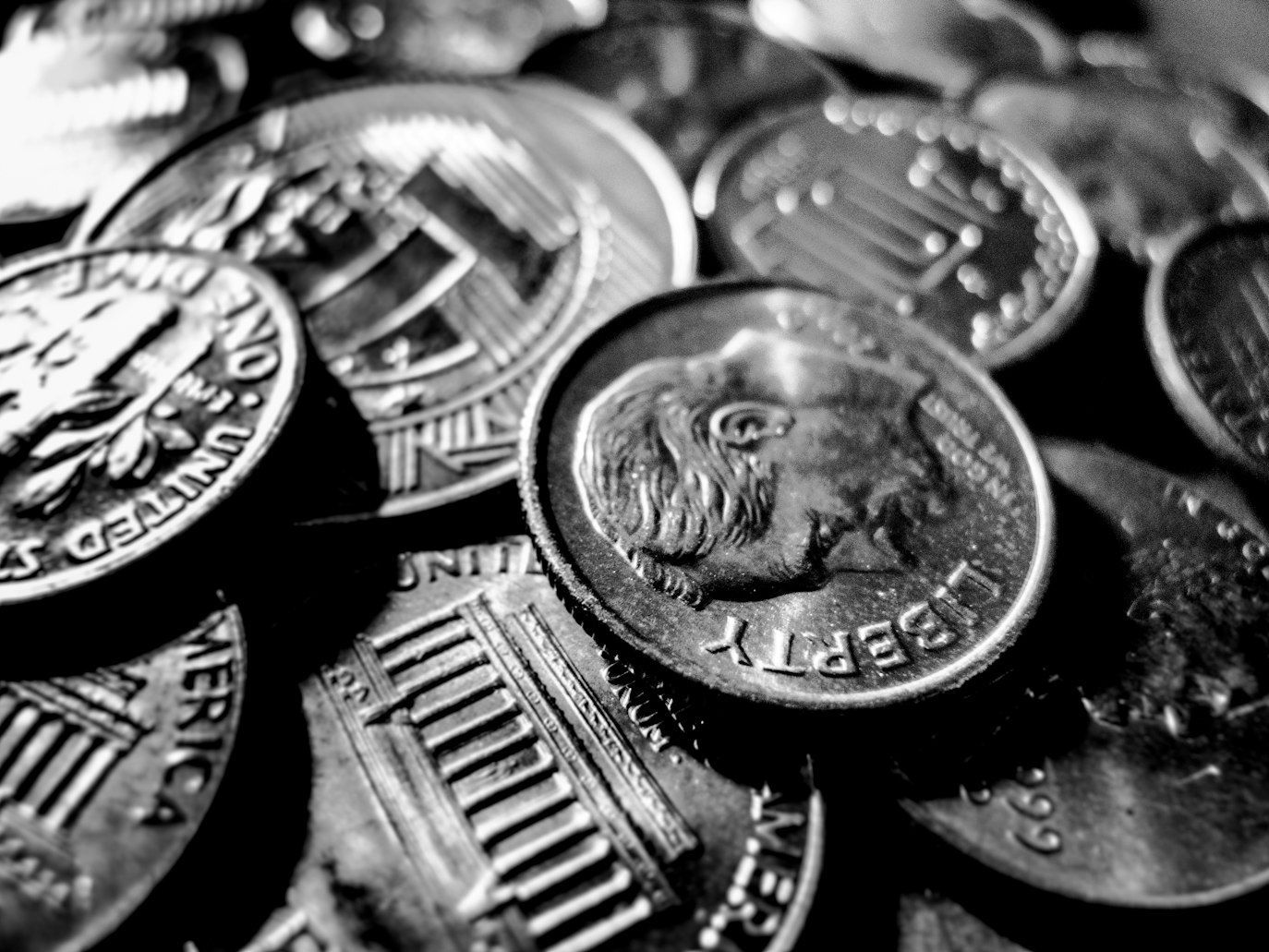
While cash is becoming less common, there's no denying the economic and historical value of banknotes and coins. That's why so many people collect them! You might think you know a lot about the money we use every day, but there are plenty of hidden details and surprising facts that most people don't realize. From a $10,000 bill featuring Salmon P. Chase to coins with unexpected features, join us as we uncover 10 fun facts about US currency that just might surprise you!

1
$10,000!

Image: Eyestetix Studio

Did you know that, for a time, there was a $10,000 bill? That's right! The bill featured the portrait of Salmon P. Chase, President Lincoln's Secretary of the Treasury, and it was the highest denomination of US currency ever to be publicly circulated! While there was also a $100,000 bill, the latter was only used for large transactions between Federal Reserve Banks.

2
The first President on a coin

Image: Sebastian Enrique

We're totally used to seeing Abraham Lincoln's face on a penny, but that wasn't always the case.

Lincoln's image first appeared on the penny in 1909 to commemorate the 100th anniversary of his birth, making him the first US president to appear on a coin, an honor befitting our great Honest Abe! More than 115 years have passed since that addition, and his face is still featured on the iconic penny.

3
Silver pennies

Image: Josh Appel

In addition to featuring Abraham Lincoln's face, pennies are famous for their classic copper color. However, there was one year when the penny took on a different hue.

During WWII, a copper shortage occurred, hindering the usual production of pennies. For that reason, in 1943, pennies were made of steel coated in zinc, giving them a silver color and making them closely resemble dimes.

4
2 and 3 cents?

Image: Towfiqu barbhuiya

Did you know that, in the 19th century, the US had 2- and 3-cent coins? That's right! The 2-cent coin was minted from 1864 to 1873. On the front, it featured a shield symbolizing the Union during the Civil War . On the reverse, it bore the phrase "In God We Trust," making it the first coin to use the motto . The 3-cent coin had two versions: the silver 3-cent coin (1851–1873) and the nickel 3-cent coin (1865–1889).

5
Long lifespan

Image: Shot by Cerqueira

While each coin is used with a different frequency, the average lifespan of a coin can be as long as 40 years ! Just think about all the places and situations it might pass through during that time. Of course, the more a coin circulates, the quicker it will wear down. That’s why the penny has the shortest lifespan , lasting about 25 years on average.

6
In God We Trust

Image: Kelly Sikkema

"In God We Trust" is not only the official motto of the United States (and the state of Florida), but also the phrase that appears on all US currency currently in circulation. But how long has this phrase been there?

"In God We Trust" first appeared on some coins during the Civil War, starting with the aforementioned 2-cent piece. By 1938, the motto appeared on all US coins, but it wasn't until 1955 that President Eisenhower signed a law requiring "In God We Trust" to be included on all US coins and paper money.

7
Precious metals

Image: Jingming Pan

Today, US coins are primarily made of zinc, copper, and nickel. However, back in the early days of the US Mint, things were quite different. In the past, US coins were made not just of copper, but also of silver and even gold!

Over time, using those materials for coins became too expensive, and production shifted to more affordable metals such as zinc and nickel.

8
Safety edges

Image: Joshua Hoehne

When coins were made of precious metals like gold and silver , there was always the risk that someone might tamper with or shave the edges to extract the valuable material. Fortunately, the brilliant Isaac Newton came to the rescue. He introduced the clever idea of adding reeded edges to coins, which helped protect them from opportunistic tampering. With these marked edges, any shaving of the coin would be immediately noticeable. Pretty smart, right?

9
The most coins in the world

Image: Sarbasri Bhaumik

The US Mint manufactures billions of coins each year for circulation, and while that’s nothing new, there’s something about it that might surprise you: the United States is actually the world’s largest producer of coins . No other country makes more!

Pennies, nickels, dimes, and quarters are produced in large quantities every day. But that’s not all—dollar coins and special collectors’ coins are also minted, though in much smaller amounts.

10
"Paper" currency

Image: Adam Nir

Our paper money isn’t actually made of paper . It’s composed of 25% linen and 75% cotton. This blend gives US bills greater strength and flexibility, making them not only more durable but also more difficult to counterfeit. Plus, if you accidentally toss a buck in the washing machine, there’s a good chance it’ll come out just fine!

General General 3 min read

Your garden, your rules

12 common garden pests in the U.S. and how to control them

Image: Anna Shvets / Igor Son

Even on the smallest possible scale, nature is wild, and garden pests are a clear expression of that reality. Holes in leaves, small grubs around the roots of container plants, speckled foliage, and skeletonized leaves are just a few signs that pests may be present in your garden.

Check your plants often, and act quickly as soon as you spot a problem. Your garden will thank you!

1
Spotted and striped cucumber beetles

Image: Alexandria Szakacs

Striped and spotted cucumber beetles favor cucumbers and melon vines. These insects spread bacterial wilt from plant to plant, a disease that is often fatal. When striped cucumber beetles are a chronic problem, the best course of action is to choose bacterial-wilt-resistant cucumber varieties .

2
Colorado potato beetle

Image: Олександр К

As the name implies, the surest way to attract Colorado potato beetles to your garden is by planting potatoes. These insects lay clusters of orange-yellow eggs on the undersides of leaves, which hatch into highly destructive orange larvae that feed voraciously and grow quickly. While beetles can be killed at any stage, it's easiest to remove the adults and eggs by hand .

3
Eggplant flea beetle

Image: Weronika Romanowska

Eggplant flea beetles can destroy an eggplant plant in just a few days. While many insecticides can kill these pests, the most effective method requires protecting plants with summer-weight floating row covers. These covers transmit enough sunlight while physically blocking the beetles from the plants.

4
Harlequin cabbage bug

Image: David Clode

These insects might look striking, but they are the worst enemy of summer kale, broccoli, and other brassicas. They suck the sap from leaves, leaving behind unsightly pockmarks.

Harlequin cabbage bugs can be picked off by hand , and wearing a face mask can help you avoid the unpleasant odor they emit. Also, spraying them off with a jet of water will help knock them back.

5
Mexican bean beetle

Image: Viktor Talashuk

In a similar case to the one we mentioned earlier, it’s the larvae of Mexican bean beetles that cause the most damage. The adults emerge in late spring but usually don’t become a serious problem on bean plants until midsummer.

The best way to deal with this pest may seem harsh, but necessary if you want to keep your other plants safe: you must completely harvest and remove the infested plants from the garden . After picking all the beans, the entire plant should be pulled, bagged, and taken far away from the garden.

6
Red spider mites

Image: adege

Tiny red spider mites live on the undersides of leaves, where they feed on plant sap. To control them, the best approach is to increase humidity and, if growing under glass, introduce a biological control . Alternatively, organic sprays can also be effective.

7
Codling moth

Image: Mikkel Frimer-Rasmussen

These moths are responsible for the maggots found in apples. To avoid these, spray emerging caterpillars twice with bifenthrin , starting in midsummer. Another useful method involves hanging pheromone traps in late spring to catch male moths and prevent them from mating.

8
Winter moth

Image: Erik Karits

Winter moth caterpillars hide inside webbed leaves on fruit trees during the spring. One effective way to control these pests is by applying sticky traps to capture the adult moths before they lay eggs.

9
Scale insects

Image: efraimstochter

Scale insects cluster on branches and beneath leaves, often leading to poor plant growth. Other common symptoms include sticky excretions (called honeydew) and the development of sooty mold, especially on evergreens. The solution is to wash off the mold and spray the plant with horticultural oil .

10
Viburnum beetle

Image: Grant Ofstedahl

The Viburnum beetle and its larvae can create holes in the leaves. The answer to this is to spray the areas affected during the spring with bifenthrin or thiacloprid .

11
Adult vine weevil

Image: Henry Lai

The adult weevil is a nocturnal, flightless insect that makes notches in the leaves of your plants. To control this pest, apply nematodes by mixing them with water and applying the solution to the soil in the affected area.

12
Rose slug

Image: Naoki Suzuki

The rose slug is easy to overlook until its feeding starts to damage the leaves. Rose slugs feed on the undersides of leaves, out of sight, nibbling on the tissue between the veins. By the time they’re done, the leaves often resemble skeletons.

Luckily, the solution only requires blasting the slugs off the roses with a spray of water or treating them with spinosad, a bioinsecticide derived from soil bacteria.

Explore more American facts

Choose your favorite category!

General
General

As American as apple pie—the very best America has to offer!

Culture
Culture

Delve into the astounding richness of American lore.

Geography
Geography

Hop in and explore vast and diverse American landscapes.

History
History

Discover the key moments that shaped the United States.