Geography Geography 5 min read

America’s Mainstreet

Drive across America with these 10 facts about Route 66!
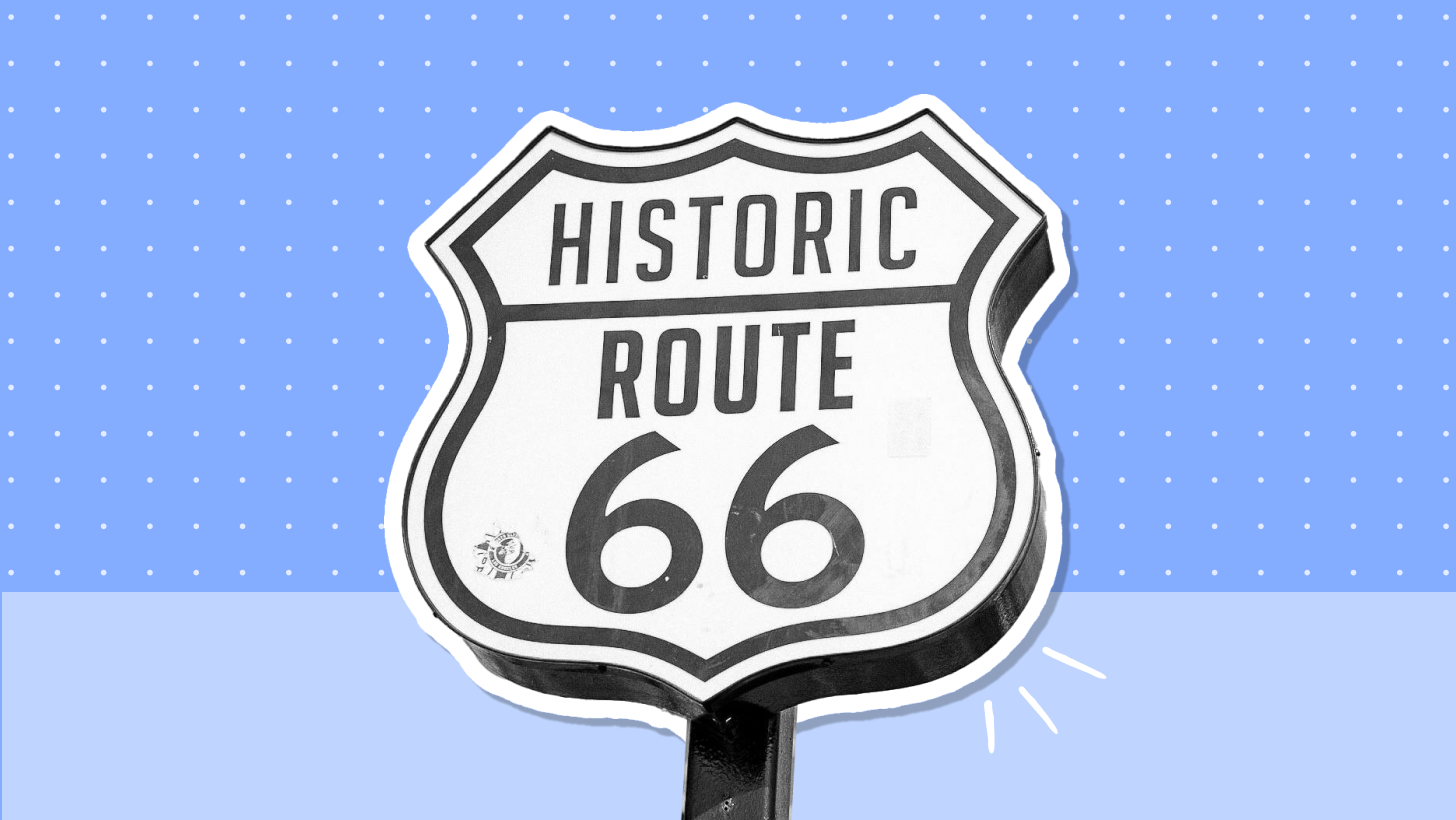
Image: Vicky McLain

Is there a more famous highway than Route 66? Probably not. Show anyone the iconic "Route 66" sign, and they'll instantly think of this American staple. From its rich history to the beautiful landscapes it traverses, Route 66 is undeniably the quintessential American road. With that in mind, we have decided to pay homage to it by highlighting 10 fun and interesting facts about Route 66. Ready to hit the road? Then keep reading and enjoy!

1
History

Image: Christian Linnemann

Let’s start from the very beginning: in 1926, almost 100 years ago, Route 66 was established, covering a total of 2,448 miles. It was one of the original highways built under the then-new Numbered Highway System (also known as the "Federal Highways").

The route famously started in Chicago, Illinois, and stretched all the way to Santa Monica, California, passing through Missouri, Kansas, Oklahoma, Texas, New Mexico, and Arizona. At the time, Route 66 proved to be a quick and easy way to get to the western part of the country, which logically led to an increase in its popularity.

2
Landmarks

Image: Mick Haupt

If you find yourself driving along the 2,448 miles that make up Route 66, you’ll certainly come across a fair share of outstanding landmarks, including American icons like the St. Louis Gateway Arch or the Santa Monica Pier. Not only that, you might want to explore some natural wonders, such as a 50,000-year-old meteor crater located in the heart of Arizona.

However, if you're more interested in landmarks focused on unusual or outlandish topics, there are plenty of roadside attractions worth visiting . For instance, you might want to stop for a few hours in San Bernardino, California, to visit the original McDonald’s location, now turned into a museum.

3
One end of the road…

Image: Arnaud STECKLE

As we mentioned before, Route 66 is too long for us to include every single state it crosses in this article. However, we still felt the need to pay a small tribute to the two ends that "America’s Main Street" was built to connect. With that in mind, let’s start with Chicago, the easternmost point of Route 66.

Originally, Route 66 was commissioned as a quicker way to get from Chicago to Los Angeles in response to the large increase in car ownership that occurred in the 1920s. Route 66 shortened the distance between these two cities by 200 miles, providing an easy-to-follow route for millions of Americans.

4
…followed by the other end.

Image: Rocio Abrego

According to a popular saying, "All good things must come to an end," and the gorgeous west end of Route 66 is a living testament to this phrase. The "City of Angels" truly doesn’t need an introduction. In that sense, can you think of a more welcoming image than the warm California sun greeting drivers at the final stop of Route 66?

Interestingly, nowadays Route 66 ends in the equally gorgeous city of Santa Monica, located in Los Angeles County. In any case, the way the U.S. Route 66 Highway Association described the highway during its construction still holds true, and Route 66 can still be described as the "most scenic route from Chicago through St. Louis to Los Angeles ."

5
The "Father of Route 66"

Image: John Benitez

Nowadays, a route connecting Illinois and California seems almost logical, but at the time, it took the efforts of a visionary group of entrepreneurs to plan the construction of Route 66. Among them, one individual stands out, known to history as " The Father of Route 66 ": an Oklahoma businessman named Cyrus Avery.

A resident of Tulsa, Oklahoma, Avery was truly a jack of all trades. Originally a school teacher, he went on to become a businessman, an insurance agent, and an oilman after founding the Avery Oil & Gas Company in 1904. In the 1920s, Avery was a member of the federal board appointed to create the Federal Highway System, where he rallied for the establishment of what we now know as Route 66.

6
Feel like walking?

Image: Capstone Events

Who said that only cars can enjoy Route 66? Certainly not Charles C. Pyle, a Route 66 Association member who, in 1928, launched an innovative campaign to promote the new highway: a foot race from Los Angeles to New York City.

With a distance of 3,400 miles, this gargantuan race had a suitably large prize: $25,000, which today would be just under $400,000. Nearly 300 racers crossed America, passing through Route 66 and several checkpoints along the highway. Ultimately, the race was won by a Cherokee citizen named Andy Payne, who finished the race in 573 hours.

7
Culture inspired by Route 66

Image: Jonathan Gong

It seems only logical that such an iconic route has inspired a plethora of songs, books, and paintings. Let’s take a moment to pay homage to some masterworks of American culture that celebrate everything Route 66 has to offer. Celebrated authors like John Steinbeck and Jack Kerouac have set their novels on the highway, with Steinbeck nicknaming Route 66 "the Mother Road."

Perhaps most famously, songwriter Bobby Troup wrote the song "(Get Your Kicks on) Route 66" while traveling on the highway on a road trip across America. The song became a smash hit in 1946 after it was recorded by the Nat King Cole Trio, and it was subsequently covered by music legends like The Rolling Stones, Chuck Berry, and Bing Crosby.

8
Decommission

Image: Alejandro Luengo

In the 1950s, President Eisenhower sought to upgrade America’s highway system into a more modern network, comprising several new routes that connected all 50 states. In 1956, Eisenhower signed the Federal Interstate Act, unknowingly initiating a series of steps that would eventually lead to the end of Route 66 .

After several decades, Route 66 was officially decommissioned in 1985. However, that doesn’t mean you can’t travel through most of it. Nearly 85% of the original highway is still drivable, with many signs marking where the original route once stood.

9
Route 66 State Park

Image: Federico Lancellotti

As we mentioned before, there are plenty of spectacular landscapes to explore along Route 66 if you’re a fan of nature. With that in mind, did you know there’s a state park in Missouri named after Route 66?

Route 66 State Park is located at the site of the former town of Times Beach, Missouri, along the Meramec River. In addition to offering beautiful views and hiking trails, visitors might also enjoy seeing the old Route 66 bridge, which is currently undergoing restoration.

10
The music of the road

Image: Miguel Alcântara

We’ll end this article with a Route 66 fact you might not know. Route 66 has inspired many iconic songs, but did you know that a small part of Route 66 actually plays music on its own?

To encourage drivers to stick to the 45-mile-per-hour speed limit, the New Mexico Department of Transportation came up with a rather ingenious idea: by placing rumble strips at strategic points, cars driving under the speed limit will play " America the Beautiful "!
History History 5 min read

Exploring local folklore

American Bestiary: 10 famous mythical creatures to fear

Image: Jon Sailer

Welcome to the fascinating world of mythological creatures! This article is a celebration of the human imagination and the stories that have captivated us for generations. This time around, we invite you to explore the most amazing beings American folklore has ever created . From the popular Bigfoot to the mighty Wendigo, dive into these startling legends and uncover the mysteries surrounding them.

1
Bigfoot

Image: Jon Sailer

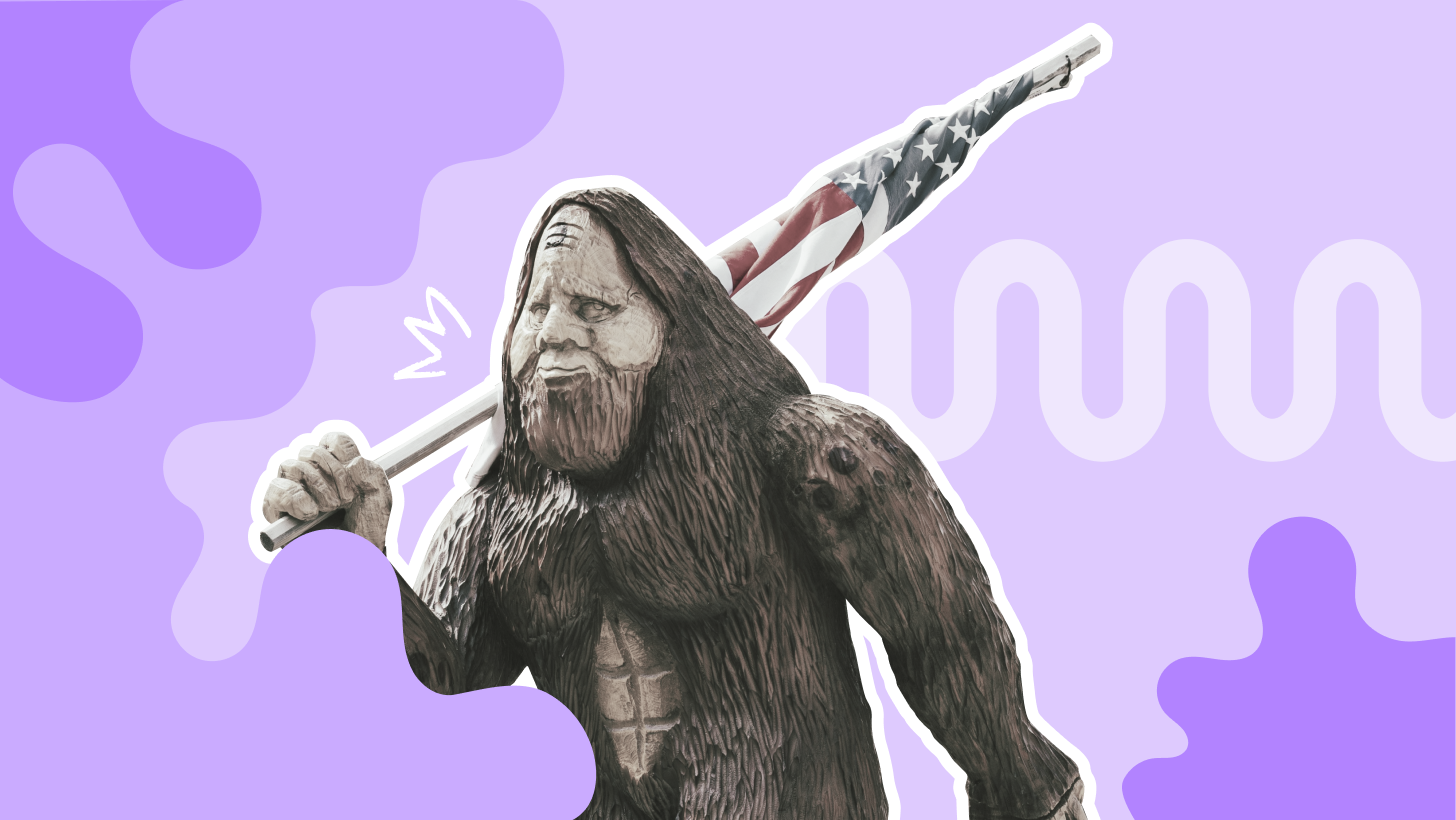
Legend and cultural icon, Bigfoot— also known as Sasquatch— has fueled our imaginations since at least the mid-20th century. This mythical creature, which appears in both American and Canadian folklore, is believed to inhabit the forests of the Pacific Northwest.

Its origin is not entirely clear, but it likely stems from a blend of stories brought by European immigrants and tales from North American indigenous cultures. Many people throughout history claim to have seen Bigfoot and describe it as a 6- to 9-foot, half-human, half-ape creature covered in dark hair. Others have only found its large 24-inch footprints, which has certainly helped keep the legend alive.

2
Pukwudgie

Image: Johannes Plenio

Pukwudgies are mythical creatures from Native American folklore, more precisely from the New England region. They are described as small, humanoid beings, about 2 to 3 feet tall, with grayish skin, pointed ears, and spines on their back.

According to Wampanoag legends, Pukwudgies are considered guardians of the forest. They are mischievous creatures with the ability to disappear and move swiftly through the forest. In addition, they are known to cast spells and curses on those who offend them or cross their path. So now you know, if you ever travel to these lands, remember to be respectful and honor nature to avoid being punished by these protective little monsters.

3
The Jersey Devil

Image: Belinda Fewings

There are not as many sightings of the Jersey Devil as there are of other creatures on this list. However, some people claim to have found traces of claw prints made by a two-legged creature. The few eyewitnesses who were able to catch a glimpse describe the Jersey Devil as a bizarre assortment of different animal parts, resembling everything from kangaroos and dogs to horses and even reptiles.

This creature theoretically inhabits an area in South Jersey known as the Pine Barrens. It is linked to a local legend from 1735, which claims that a woman nicknamed Mother Leeds allegedly cursed her thirteenth unborn child. The baby eventually became a demon who murdered the entire family and fled to the woods to steal livestock and terrify unwary travelers to the end of times.

4
Urayuli

Image: osensei

Very similar to Bigfoot, the Urayuli, or "hairy men," are a mythical race of creatures that live in the woodlands of southwestern Alaska, near Lake Iliamna. Those who claim to have seen the Urayuli describe them as being 10 feet tall, with shaggy hair, luminescent eyes, and long arms stretching down to their ankles.

According to lore, the Urayuli are said to be transformed children who got lost in the forest, therefore they are considered peaceful creatures. Taking this into consideration, it is very likely that this legend was born as a cautionary tale to prevent children from wandering out alone at night.

5
Wendigo

Image: DGSstudios

One of the most terrifying creatures in Native American mythology is the Wendigo. According to legends originating in Algonquian folklore, the Wendigo is an evil spirit that feeds on human flesh. This creature is believed to have the ability to possess people, turning them into starving monsters who cannot help but devour other humans.

The Wendigo has been depicted in various forms throughout history but is generally described as a slender, skeletal giant with glowing eyes and sharp fangs. This malevolent, cannibalistic, and supernatural being is usually associated with cold winters, as well as with greed and gluttony.

6
Wampus Cat

Image: Peter .

The Wampus cat is usually described as a fierce, bipedal creature with a humanoid body and a feline head. This spectral, panther-sized beast has been reported across the American Southeast for centuries, with numerous legends about its origins varying by region.

One of the most famous stories has its roots in Alabama and comes from a Native American tradition. According to this story, a Cherokee woman disguised herself in the skin of a mountain lion to secretly follow her husband on a hunting trip. When the men gathered around the fire to share stories forbidden to women discovered her, they cursed her to spend eternity as a half-woman, half-mountain lion.

7
Florida Skunk Ape

Image: RyanMcGuire

Florida, the Sunshine State, has its own version of Bigfoot: the Skunk Ape. This creature is said to resemble an orangutan more than the gorilla-like Sasquatch. This particular being got its name for the pungent odor that announces its presence and was seen many times lurking around the Florida swampland during the 1960s and 1970s.

Sightings were so common during that time that, in 1977, the state legislature had to introduce a bill to protect the elusive man-ape. Although the bill was never passed and Florida wildlife officials deny the existence of the Skunk Ape, many people continue to report sightings of the black, hairy creature to this day.

8
Champ

Image: GregMontani

If you thought Scotland had the only lake monster, you haven't met Champ yet. Lake Champlain, a freshwater lake in New York, is said to be home to America's most famous lake monster. Since the early 19th century, there have been accounts of Europeans claiming to have seen a seahorse-headed creature emerging from the water. However, the local Native Americans, the Abenaki, and the Iroquois, had stories of a horned serpent called Tatoskok dating back much earlier.

Over the years this beast has manifested itself to numerous people. In fact, in 1977, a woman named Sandra Mansi claimed to have taken a photo showing a creature with a small head and a long neck, which—let's be honest—looks suspiciously similar to the Loch Ness Monster.

9
Menehune

Image: Timothy Dykes

The Menehune are a mythological race of little people in Hawaiian tradition that only appear at night. For the most part, these two-foot-tall creatures are harmless, although they can become angry if disturbed. It is believed that these supernatural beings may have originated from ancient ancestors who populated the Pacific region, eventually evolving into folklore.

The Menehune are said to be builders, gifted with great strength and architectural skill. They construct stone structures such as dams, roads, and sacred worship sites known as heiau . They work when nobody is watching, so beware—never interrupt them, or they will vanish.

10
Beast of Busco

Image: Pascal Mauerhofer

In this article, we have explored a wide array of mythological creatures resembling apes, cats, birds, serpents, and even humanoids. However, you probably won't guess what kind of creature the Beast of Busco is. In 1898 a farmer from Churubusco, Northern Indiana, claimed to have spotted an enormous turtle in Fulk Lake.

His story was corroborated fifty years later by two fishermen who reported seeing a giant turtle weighing at least five hundred pounds and with a shell as big as the roof of a car. Such was the commotion that the lake’s owner at the time went so far as to drain it in order to catch the creature, which proved to be impossible. Since then, every June, the town of Churubusco celebrates Turtle Days festival, which includes a carnival, a parade, and—wait for it—turtle races.

History History 4 min read

Stories of Hollywoodland

12 things you didn't know about the Hollywood Sign

Image: Clément Proust

The Hollywood Sign is full of history, sponsorships, drama, and reinventions. Did you know that it was originally not only a longer word but also physically larger? And like the Eiffel Tower, it was originally intended to be a temporary structure. Read on to learn more interesting facts about LA’s most famous backdrop !

1
It was originally an advertisement

Image: Emma Timmers

Have you ever wondered why the sign exists at all? After all, not many cities display neighborhood names on a nearby hill . When the sign was first erected in 1923, it was simply a billboard promoting a real estate development, and it was supposed to stand for only about 18 months.

2
It used to be longer

Image: Sarah Sheedy

The sign originally read "Hollywoodland" , the name of a new housing development that promised wealthy buyers unique views of the sunny hills of Los Angeles. So, they stuck a gigantic sign on Mount Lee. Just temporary , they said. Just for marketing .

Over 20 years later, the district had become more culturally relevant than the housing development, but people had grown used to the sight by then. So, they decided to let go of four letters. Each cost a fortune to maintain anyway.

3
It used to be bigger

Image: Eliot

The original "Hollywoodland" sign was massive. Each letter stood 43 feet tall and stretched 30 feet across. They were made from thin metal panels slapped onto wooden frames and held up by telephone poles.

It dazzled from afar, but up close, it was a wobbly mess . The construction was so flimsy that by the 1930s, some of the letters were already tilting, cracking, or sliding out of place.

4
It’s appeared in more movies than most actors

Image: Ramaz Bluashvili

Doesn’t that fact make you giggle? It’s not Bette Davis, and it’s not Anthony Hopkins—it’s the Hollywood Sign that has more movie credits .

Aliens have blown it up. Earthquakes have toppled it. Sharks have flown right through it. But it’s also been the backdrop for kisses, chases, and friendship montages. Directors love it because it screams "L.A." in three seconds flat.

5
Technically, it’s not in Hollywood

Image: RDNE Stock project

The Hollywood Sign doesn’t actually sit within the neighborhood of Hollywood—it stands atop Mount Lee, inside Griffith Park, which is managed by the City of Los Angeles . So while it may say Hollywood , it’s not technically in Hollywood.

6
It’s been rebuilt twice

Image: Gerald Schömbs

By the 1940s, the city stepped in and gave the sign a minor facelift. After the crumbling "LAND" was scrapped, the remaining letters were patched up.

But by 1978, the sign was in serious trouble again—rusted, leaning, and on the verge of collapse, it was deemed beyond repair. This time, Hollywood did what it does best: rebooted it entirely . A new sign was built from scratch, using steel beams and concrete foundations.

7
Celebrities "sponsored" letters

Image: Joseph Menjivar

When Hollywood cried for help in the late ’70s, it was Playboy founder Hugh Hefner who stepped in. The city didn’t have the funds to rebuild the sign, so Hefner threw a glitzy fundraiser to find sponsors for each of the nine letters, at $27,777 apiece.

And it worked. Alice Cooper funded the "O" in memory of Groucho Marx. Gene Autry sponsored the second "L." Even Warner Bros. chipped in.

8
No public trail leads directly to it

Image: Venti Views

Perhaps you’ve heard a disappointed tourist complain about this before: You can hike near it. You can pose below it. But actually walking up to the letters is a no-go. The trails in Griffith Park will get you close, with plenty of Instagram-worthy views. But conservation efforts mean you’ll never legally stand between the "L"s.

One reason is that decades ago, it was easier to reach the sign—and some fans even climbed the letters.

9
The land surrounding it was once nearly sold for development

Image: izayah ramos

In the early 2000s, developers had their eyes on the land behind the sign. The plan was to construct luxury homes in the hills with killer views. But the public response was pure outrage.

Enter Hugh Hefner (again), along with celebrities and conservation groups , who raised over $12 million to save the land. Today, those hills are permanently protected.

10
It has its own security team

Image: Lukas Geck

As mentioned earlier, you can’t get a selfie next to the "H" because the sign is off-limits to the public. It’s monitored 24/7 with infrared cameras, motion sensors, microphones, and regular patrols. Some hikers still try their luck, but trespassing can lead to citations, fines, and in some cases, arrest.

11
It’s copyrighted; you can’t just slap it on a T-shirt

Image: Simon Ray

Call a lawyer before you print the Hollywood Sign on your merch. Some trademark rights to the sign are owned by the Hollywood Chamber of Commerce. That means any commercial use—like shirts, mugs, or movie scenes— requires a license . Even photographers have to tread carefully.

12
Helicopters were used to move the letters

Image: Somchai Kongkamsri

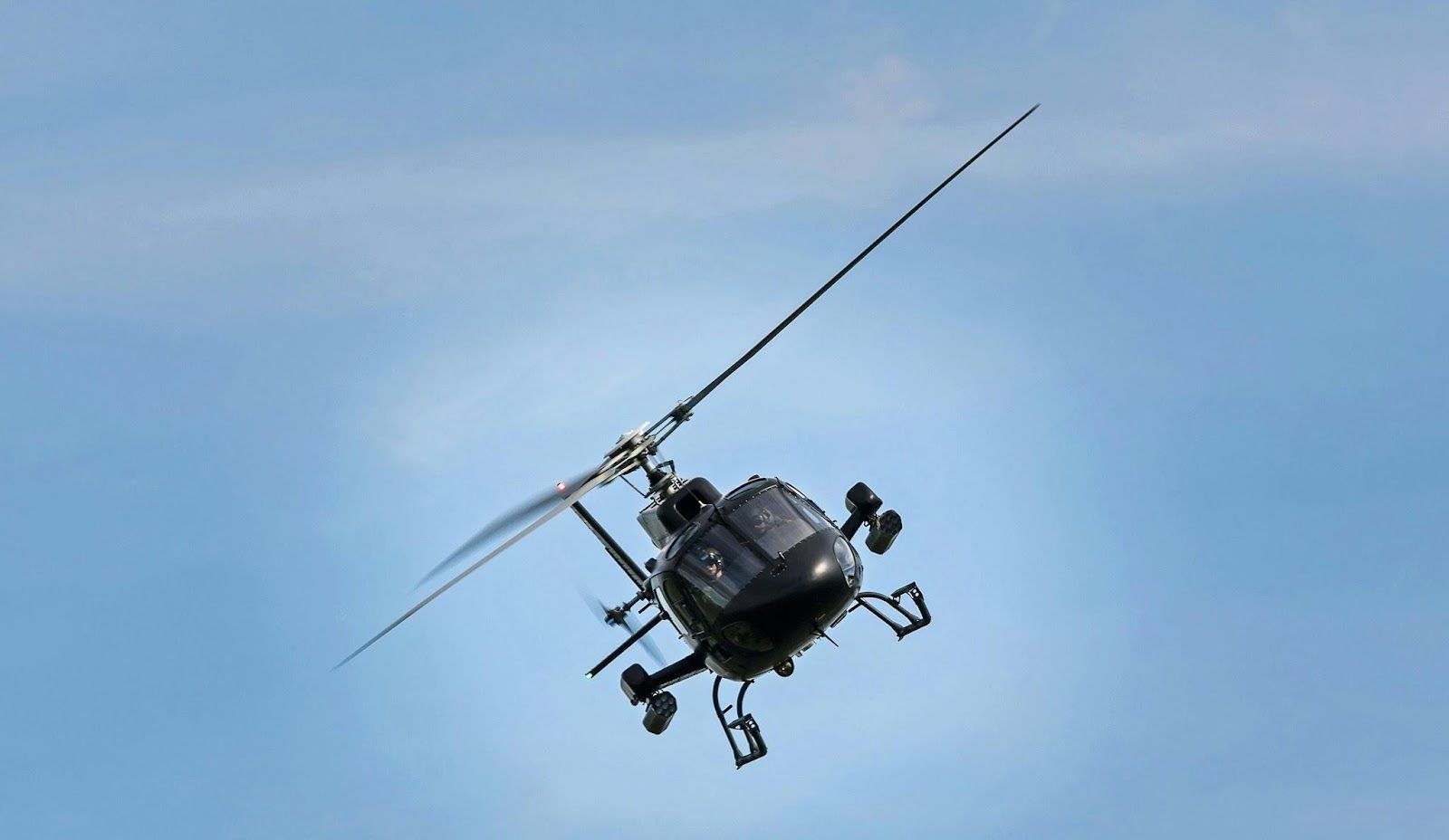
The letters have been helicoptered off before. In 1978, when the new sign was being installed, the old, rusted letters had to go. But since you can’t exactly wheel 50-foot steel slabs down a hiking trail, helicopters came to the rescue.

One by one, the original letters were airlifted off the mountain in a strange, sky-high farewell. It was quite an event, and crowds gathered to watch.

Explore more American facts

Choose your favorite category!

General
General

As American as apple pie—the very best America has to offer!

Culture
Culture

Delve into the astounding richness of American lore.

Geography
Geography

Hop in and explore vast and diverse American landscapes.

History
History

Discover the key moments that shaped the United States.