General General 6 min read

Extraordinary winged friends

From Bald Eagles to Mockingbirds: Fun facts about North American birds
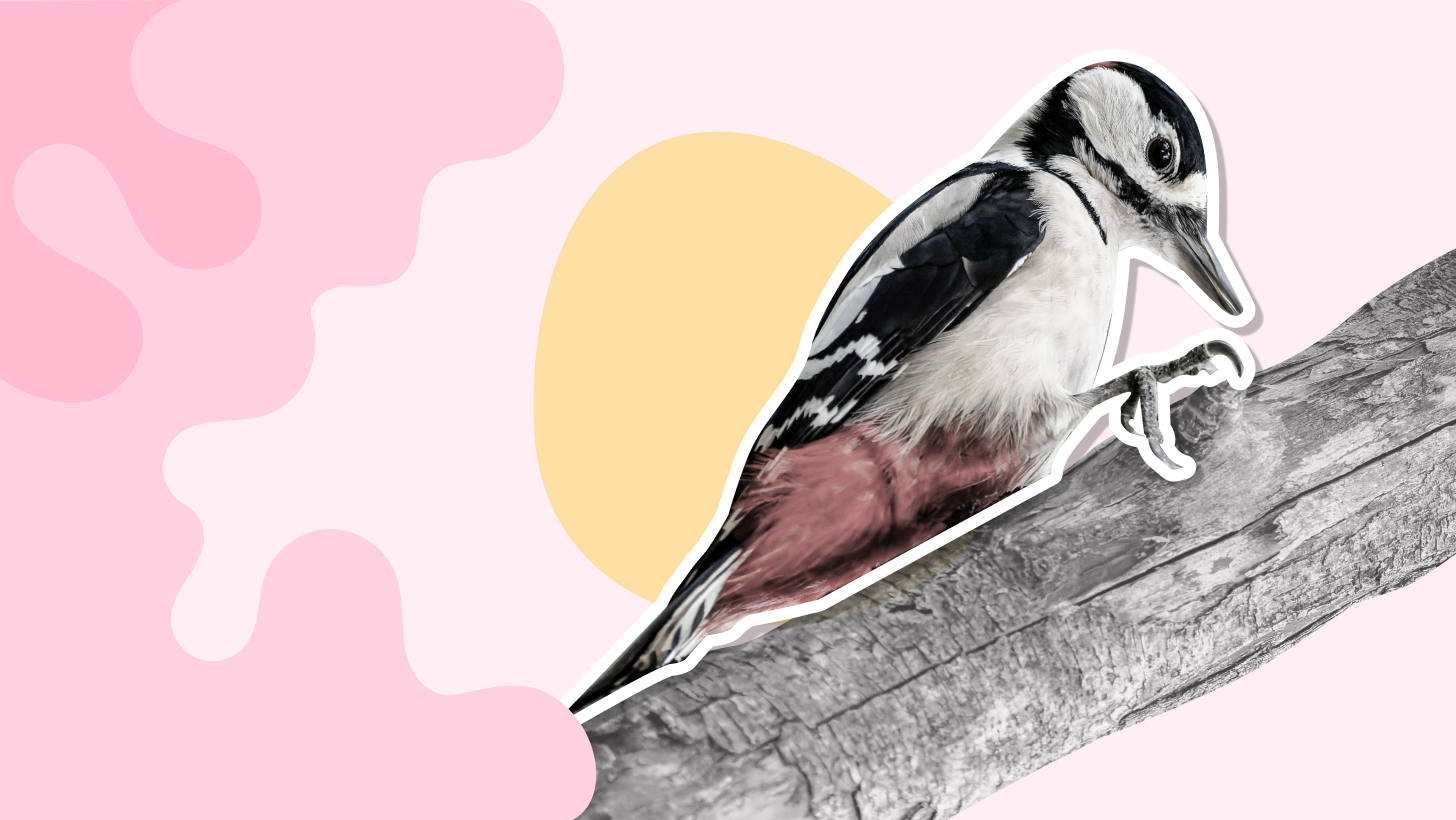
Image: Siegfried Poepperl

The animal kingdom is full of peculiar species, but undoubtedly, birds are one of the most interesting. North America is home to more than 1,100 marvelous bird species that have captured our hearts and minds. From their striking colors and pleasant tunes to their unique behaviors, birds are endlessly fascinating. These cute little flying creatures hold countless curiosities—so many that it would be impossible to gather them all in one article. Nevertheless, here is a small selection of some very interesting facts about 10 of the most compelling North American birds. Are you ready to be amazed?

1
Woodpecker

Image: Jaime Dantas

Surely, we could all recognize Woody Woodpecker's famous laugh anywhere, but have you ever wondered why this type of bird knocks on wood? Woodpeckers have larger and stronger bills than other birds. They use their beaks not only to dig holes in trees for nesting but also to drum on resonant objects like hollow logs and branches to communicate to other woodpeckers, about their territory and their availability to mate.

But is it true that they hammer away at wood at an incredible speed, as seen in the beloved cartoon? Yes! For example, the Red-headed Woodpecker, found in temperate North America, has the highest g-force (force of acceleration) experienced by a bird. When pecking wood, they hit trees with an impact force of 1,200 g’s. By comparison, astronauts on space shuttles experience 3.5 g's during takeoff, while a force of 60-100 g’s can cause a human concussion.

2
Northern Cardinal

Image: Joshua J. Cotten

Did you know most female songbirds in North America usually don't sing? Fortunately, both male and female Northern Cardinals break this trend with their beautiful songs . As a matter of fact, sometimes they even perform duets! Mated pairs usually sing back and forth to each other, sharing information about food sources and nest activity.

Another cool fact about Northern Cardinals is their tendency to fight their own reflections in windows and vehicle mirrors. Experts claim they see their image as a competing bird and attack it to defend their territory. This behavior can go on for days, even months.

Nevertheless, despite this somewhat aggressive attitude, Northern Cardinals are one of America's favorite birds. They hold the distinction of being the state bird of seven states: Illinois, Indiana, Kentucky, North Carolina, Ohio, Virginia, and West Virginia.

3
Brown Thrasher

Image: Joshua J. Cotten

The Brown Thrasher may be an elusive, hard-to-see bird but it certainly doesn't go unnoticed. The state bird of Georgia, found throughout the eastern and central United States and southern and central Canada, is well known for its remarkable songs.

In fact, this big, foxy-red bird is not only a prolific singer but also an expert mimic, with an impressive repertoire of more than 1,100 tunes! And thrashers are so good at keeping the natural world entertained that they will repeat each phrase of a song twice before singing the next one.

4
Northern Mockingbird

Image: Patrice Bouchard

The Northern Mockingbird is another remarkable mimic. This bird listens to the songs of nearby species and learns to replicate their tunes. In fact, a male may learn around 200 songs throughout its life. The mockingbird, however, can be a bit more monotonous than the Brown Thrasher: it repeats phrases up to six times before moving on to the next one. Have you ever had one in your backyard?

Apart from its musical abilities, the Northern Mockingbird, very common in towns and cities, especially in the South, is one of the most influential birds in American culture. It serves as the state bird for five states : Arkansas, Florida, Mississippi, Tennessee, and Texas. It also appears in many books, TV shows, folk songs, and lullabies.

5
Marsh Wren

Image: Alexis LOURS

Marsh Wrens are songbirds too, but in their case, it’s all about impressing the ladies! The Marsh Wren, a tiny brown bird found all around North America, learns songs from other males and sings them nearly identically. With a repertoire of more than 100 melodies, males often engage in musical duels and sing back and forth to each other to impress the females with their musical abilities.

But singing isn’t their only strategy for winning over a mate. Male Marsh Wrens build up to 20 dummy nests made from cattails for prospective females to evaluate. The female then chooses which one she prefers to lay her eggs in. Unused nests are left as is to confuse predators or are used by adult birds to sleep during nonmating seasons.

6
Black-capped Chickadee

Image: Margaret Strickland

The Black-capped Chickadee, the state bird of both Massachusetts and Maine, is a very popular bird across the northern United States. This small black, white, and tan bird, roughly the size of a sparrow, is well known for its vocalizations and for its ability to conserve energy during the winter months.

In extremely cold weather, Black-capped Chickadees enter a state of dormancy known as torpor. At night, the birds seek shelter and become inactive, causing their core body temperature to drop slightly. As they alternate shivering with staying still, the heart rate decreases. When they reach a full state of torpor, they lose consciousness. Toward morning, the birds start shivering again to regain temperature. This way, the Black-capped Chickadee starts the day afresh, using the precious fat it saved during the night as energy.

7
Ruby-throated Hummingbird

Image: Skyler Ewing

They might be tiny but the myth that Ruby-throated Hummingbirds migrate on the backs of Canada Geese is totally false. Ruby-throated Hummingbirds, the most common hummingbirds in eastern North America, migrate south at the end of summer, traveling to temperate climates in Central and South America entirely on their own.

This iridescent red and green bird is so small that it makes the most minuscule nests. The nest of a Ruby-throated Hummingbird is around the size of half of a walnut shell—only 1½ inches wide! Also, the smaller the bird, the fewer the feathers. The Ruby-throated Hummingbird is a record holder for the fewest feathers in a bird, less than 1,000 in total. For reference, a Whistling Swan, the record holder for the most feathers, boasts about 20,000 individual feathers.

8
Owls

Image: Keith Lazarus

Owls are both cherished and mysterious creatures. In North America, there are 19 different species, each with its own curious characteristics. For example, the Elf Owl, found in the Southwestern United States and Mexico, is special because it’s the smallest owl in the world —measuring just 5 inches tall!

Night-hunting owls present in North America, such as Barn Owls, Long-eared Owls, and Boreal Owls, have the best hearing in the bird world. Many of these nocturnal owls have asymmetrical ear openings, one opening higher and one larger. This unique adaptation allows sound to enter their ears at slightly different times, helping them to accurately triangulate the position of their prey. Also, Barn Owls have a specialized middle claw called pectinate claws. This special feature is a serrated edge that serves as a built-in comb to get rid of debris or parasites.

9
Snow Goose

Image: David Dibert

Isn't it great when we get to spot those amazing V-shaped migration formations in the sky? Did you know that most of North America’s small birds don’t fly in formations? They travel alone or alongside other birds that happen to be heading in the same direction. The Snow Goose, however, is an exception, often flying in huge V formations or single-angled lines.

During migration, Snow Geese, native to North America, form some of the largest flocks in the bird world. Flocks of more than 100,000 Snow Geese are a common sight during their northward spring migration. In some areas, such as Nebraska, there are even records of flocks with millions of geese. Flying in formations allows Snow Geese to save energy during flight.

10
Bald Eagle

Image: Pixabay

If you thought that, since it’s the national symbol of the United States of America, you knew all about the Bald Eagle, these facts will probably blow your mind! Did you know that young Bald Eagles are born with brown eyes, which eventually turn yellow? And what about the fact that they have talons that can grow up to 2 inches long , helping them grasp prey tightly for a quick kill?

Furthermore, Bald Eagles make the largest nests of any bird species. The largest Bald Eagle nest ever recorded measured more than 9 feet wide and 20 feet deep and was found in St. Petersburg, Florida. What's even more impressive is that they reuse their nests for many years—sometimes even decades. A Bald Eagle nest in Vermilion, Ohio, was used for 35 years in a row—mortgage-free! Can you imagine?
Geography Geography 5 min read

LIVING HISTORY

Check Out 10 Of The Oldest Houses in America And Their Stories

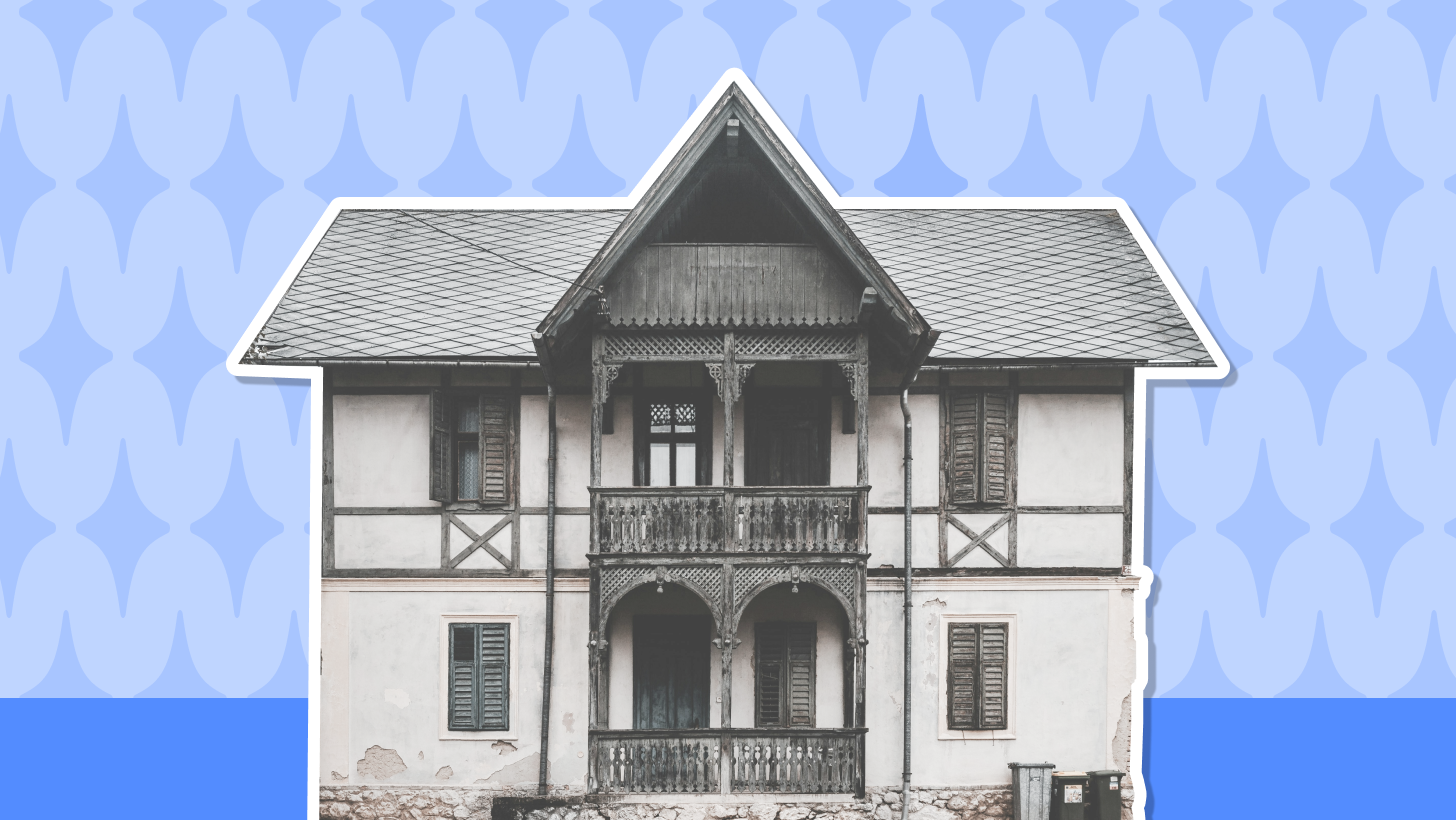
In the U.S. territory, there are some buildings and edifications that have really passed the test of time, standing as witnesses to the strength and durability that human creations can have. Many of them still retain traits of those who built or inhabited them, even after standing for 400 years or more. If you want to discover more about them, join us as we tell you the origin and stories of 10 of the oldest buildings in America!

1
Palace of the Governors (New Mexico, 1610)

Image: Donald Giannatti

This is one of the oldest continuously occupied public buildings in the United States. Built in 1610 , it served as the seat of the Spanish, Mexican, and, finally, American government.

Some experts claim that the key to its longevity is the material of which it is composed. Adobe has always worked very well as a building material in areas that, like New Mexico, have a major thermal amplitude. This is because adobe works as a thermal insulator.

Besides all the historical artifacts this building holds, it also has many stories to tell. In 1862, during the Civil War, Abraham Lincoln gave a famous speech from the Palace's balcony.

2
Fairbanks House (Massachusetts, 1637)

Image: Lampos Aritonang

Built around 1637 by English immigrant Jonathan Fairbanks in what is now Dedham, Massachusetts, many sources claim that the Fairbanks House is the oldest timber-frame house in America.

With so many years of existence and so many people who must have passed through it, can you imagine the stories that could be told from inside those wooden walls? For 8 generations, Jonathan's descendants inhabited this place, and today, it functions as a museum for all of us to visit.

This 380 -year-old house was built with oak wood, straw, animal fur, and other materials of the time. Just imagine how cold it must have been inside during winter!

3
C.A. Nothnagle Log House (New Jersey, 1638-1643)

Image: Joshua Michaels

Can you imagine holding an object from the 1590s in your own hands? Well, that's what you could do at the C. A. Nothnagle Log House in New Jersey.

The Finns and the Swedish left testimonies of their building techniques in our territory with this log cabin built between 1638 and 1643, one of the oldest still extant in the country. The many inhabitants of this house never had to worry about winter; the interior features a large, centrally located stone and brick chimney that provides even heat for the entire place.

With so many years of history, it's not unusual for visitors to experience strange episodes at the C. A. Nothnagle Log House. Some have reported hearing footsteps and soft murmuring, while others affirm to have seen a specter of a woman dressed in colonial-era clothing.

4
Richard Sparrow House (Massachusetts, 1640)

Image: James Kovin

Richard Sparrow, surveyor and early settler of Plymouth, Massachusetts, built this historic house in 1640, making it the oldest surviving house in Plymouth.

With its timber frame, this house is an example of typical colonial architecture, demonstrating the durability of this type of construction. Despite the restorations necessary to keep it standing, the house keeps most of its original materials and still looks much as it did in the 17th century , making it an interesting source of education about the period.

5
House of the Seven Gables (Massachusetts, 1668)

Image: Joseph Corl

The Fairbanks House is not the only historic house in Massachusetts.

Considered a colonial mansion, the Turner-Ingersoll Mansion was built in 1668 for Captain John Turner and stayed with his family for three generations. The place became famous in 1851 for its appearance in Nathaniel Hawthorne's Gothic novel "The House of the Seven Gables," which also gave it its characteristic nickname.

While the dark stories Hawthorne wrote about are fictional, some visitors claim to have felt a scary feeling and strange vibes inside the house. Would you like to visit the museum?

6
Paul Revere House (Massachusetts, 1680)

Image: Timur M

As the name implies, this historic house was the home of patriot Paul Revere.

Built in 1638 , it is not only one of the oldest houses in the country, but it is also the oldest standing building in downtown Boston, and represents a fine example of classic Colonial American architecture.

The building originally belonged to another owner, and Paul Revere acquired it around 1770 . If you visit the house, you can see objects and artifacts that actually belonged to the Revere family! You won't be the first, though, as an estimated 300,000 people visit the house annually.

7
Shirley Plantation (Virginia, 1723)

Image: Belia Koziak

Shirley Plantation is undoubtedly one of the oldest and most famous plantations in America.

While the plantation was founded in 1613, construction of its main house began in 1723, designed in the Georgian architectural style.

Additionally, visitors can find artifacts, tools, and weapons from the Civil War era, making it a truly valuable experience. As another detail, Shirley Plantation also has the oldest known plantation portrait in America: it features Elizabeth Hill and John Carter, whose marriage united the Hill and Carter families. These families have owned the place since 1738 to this day!

8
Wright's Ferry Mansion (Pennsylvania, 1738)

Image: Marie Martin

Susanna Wright was a pioneer Quaker woman from Philadelphia, who decided to live in Wright's Ferry (what is now Columbia) in the early 18th century. Wright was active in poetry, science, and local politics and business.

In 1738, she built Wright's Ferry Mansion, which served not only as her family home but also as a business center. With its classic proportions and elegant style, the mansion is today one of the oldest in the country. It was preserved to keep its original appearance, remaining a fine example of early 18th-century architecture in the country.

Legend has it that the house is haunted by the spirit of its original owner, with several visitors claiming to have seen her, or heard murmurs and loud footsteps inside the house.

9
Mount Vernon (Virginia, 1734-1750s)

Image: Matt Briney

We can't overlook the iconic Mount Vernon. Built in Fairfax County, Virginia, it’s one of the most famous homes in the country. And you know why: it was the home of our first president, George Washington.

The original house was built in 1734 by George Washington's father, Augustine Washington, and then expanded by his son into the building we see today. Washington influenced American architecture with the design of this building. In fact, it is said that the design of the "New Room" in Mount Vernon inspired the White House's Oval Office!

While the exterior is made of wood, it was sanded and beveled to mimic stone for a classic, elegant style. The house also has Martha Washington's famous "Blue Room," one of the most beautiful and best-decorated spaces, which still preserves its appearance. Have you already visited it?

10
Drayton Hall (South Carolina, 1747-1752)

Image: Peter Herrmann

Charleston, South Carolina, was the site where the historic Drayton Hall was built between 1747 and 1752.

This 18th-century plantation is considered to be one of the best-preserved examples of Georgian architecture. In addition, it is also claimed to be the only plantation house on the Ashley River that survived the Revolutionary and Civil Wars, not without some damage.

With nearly 300 years of history, it's undeniable that this house was the scene of many stories and events. Some visitors have claimed that the house is haunted , reporting sightings of apparitions and hearing mysterious noises. Spooky, isn't it?

Geography Geography 5 min read

Special details

Have you heard these fun facts about 10 famous American landmarks?

Image: Joe Richmond

Yes, we all know which cities are home to America's most iconic monuments and attractions, such as the Statue of Liberty, the impressive Gateway Arch, or the unique Hollywood Sign. However, as famous as these landmarks are, there are some hidden details and stories about them that you might have never heard before! If you'd like to surprise your friends in your next conversation, keep reading to discover 10 incredible facts about America's most famous landmarks!

1
A change in plans

Image: Alexey Komissarov

Can a color be a worldwide celebrity? It seems so! This is the case of the famous "international orange" of the Golden Gate Bridge in San Francisco, California.

It's hard to imagine this iconic bridge in any other color. But believe it or not, it was once about to be painted in another hue.

The original idea was to paint the Golden Gate Bridge black with yellow stripes to make it visible to ships and planes. However, the sharp vision of consulting architect Irving Morrow changed the plans. When he saw the reddish color of the primer used on the iron, he realized that this color would work much better and would also give the imposing structure an original touch.

2
Too good to be true?

Image: Hana Oliver

We all know that incredible creatures and breathtaking landscapes await us in Yellowstone. You probably also know that this amazing area that covers more than 3,400 square miles in parts of Wyoming, Montana, and Idaho was the first national park in the United States. Not only that, it was actually the first national park in the entire world!

But, while it's totally famous and celebrated today, there was a time when only a few knew about this place. Early explorers who walked Yellowstone in the 19th century wrote detailed journals about what they saw and experienced there, but when they returned, they found that people didn't believe their stories. We have to admit that those skeptics had a point; such a beautiful place seems out of this world!

3
Capitol's subway

Image: Louis Velazquez

Nobody can deny the metro system is great. Its speed and efficiency allow thousands of people around the world to get to their homes and jobs every day. Did you know that the members of the U.S. Congress have their own subway system right underneath the Capitol building?

That's right! Under the impressive structure that houses U.S. Representatives and Senators lies an entire subway system. This allows workers there to access different parts of the complex in a matter of seconds. It must make things easier on busy days, don't you think?

4
The final detail

Image: MIKE STOLL

But not all of the Capitol's surprises are underground; some are in plain sight. We're talking about the spectacular dome that crowns the famous neoclassical building in Washington, D.C. While the dome is a symbol of our country today, there was a time when the Capitol Building didn't have this gracious final detail.

The construction was considered completed in 1800. However, one last touch was still needed. In 1824, the first and smaller dome arrived, made of wood. Finally, it was replaced in 1866 by the impressive dome we see today, which stands an incredible 288 feet high and is made of cast iron, brick, stone, and copper.

5
A misspelling?

Image: Dan Mall

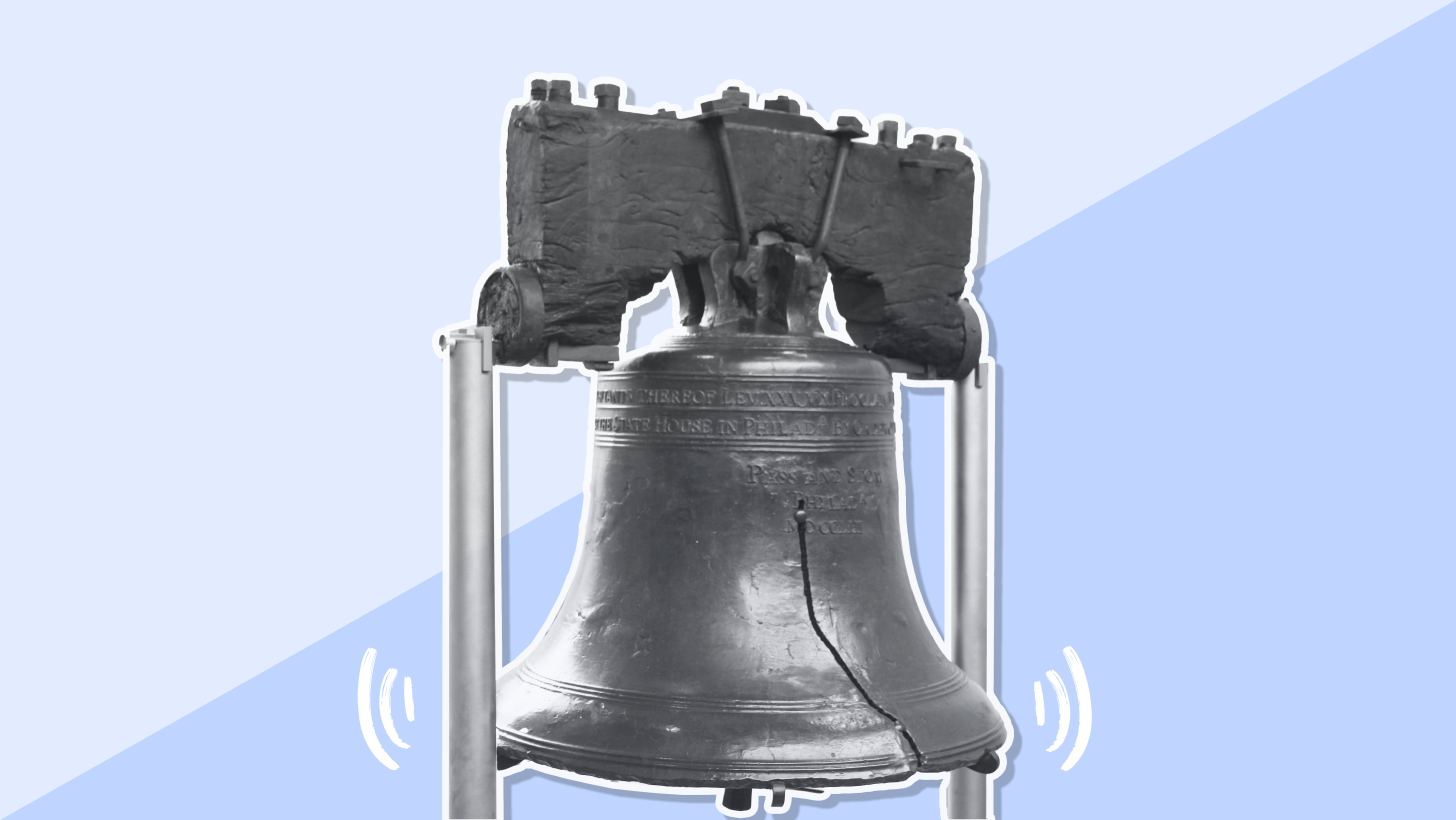
The Liberty Bell must be one of the most recognized icons of the United States. Preserved as a symbol of our Independence, everyone can visit the famous bell at the Independence Hall in Philadelphia, Pennsylvania.

In addition to its well-known history and its famous "crack," this bell has even more hidden details to discover. When you read the inscription on the Liberty Bell, you'll be able to read "Pensylvania" instead of "Pennsylvania." While you could think that those in charge of inscribing the bell weren't paying attention, it wasn't actually a misspelling; it was one of the accepted spellings for Pennsylvania in those days.

6
Hollywood(land)

Image: Justin Aikin

Whether in person or through the screen, we all had the chance to see the legendary Hollywood sign over Mount Lee in Los Angeles, California.

But, while this landmark is recognized around the world today, it didn't always look as we see it now. The Hollywood sign had several changes throughout its history. It was first erected in 1923 as an advertisement for a real estate development. At the time, it read "Hollywoodland" and even had lights, illuminating the entire area at night.

Many things happened in our country before 1949, when the last four letters were removed, leaving just the current "Hollywood."

7
Good things take time

Image: Jeromey Balderrama

As we grow older, we understand one truth: good things often take time. While patience seems to be in short supply these days, it was certainly in abundance for those who built the impressive Mount Rushmore National Memorial, one of our most famous attractions.

The construction of this imposing monument that features the faces of George Washington, Thomas Jefferson, Theodore Roosevelt, and Abraham Lincoln began in 1927 and took 14 years to complete. Carving four 60-foot-tall heads on a granite hill is no easy task. But, on top of that, some budget difficulties slowed down the process even more.

8
Mount Rushmore's secret door

Image: John Bakator

Mount Rushmore National Memorial has more secrets to disclose! Although not visible to the naked eye, there is a particular detail among the heads of Washington, Jefferson, Roosevelt, and Lincoln. Want to know what it is?

If you haven't heard about it, this might surprise you: there is a small door right there on Mount Rushmore. Mysteries everywhere! The door leads to a chamber known as the "Hall of Records." According to the plans of sculptor Gutzon Borglum, this spot would hold important documents and objects of our history.

9
Time capsule

Image: Mark Serafino

Besides being the tallest human-made monument in the United States and also the tallest arch in the world, the famous Gateway Arch in St Louis has much more to offer.

During its construction in the 1960s, a curious detail was placed inside its iconic metal structure. At the base of the monument, you can find nothing less than a time capsule!

The capsule, which contains various artifacts and relics from our country's history and culture, was thought to give future generations an idea of what the world and the United States were like in those days.

10
19th-century graffiti

Image: Dineda Nyepan

At 555 feet tall, the Washington Monument is one of the most imposing in our country. But besides its height, this landmark also possesses a couple of surprising facts.

It might seem that graffiti is a modern artistic expression that has only been around recently, but this isn't the case, and the Washington Monument is proof of that. At the structure's base, there is a series of graffiti made in the 19th century, during the Civil War.

That's right! Many people and soldiers passing by at the time left signatures, dates, and patriotic messages inscribed on the famous obelisk, and some of them are still visible!

Explore more American facts

Choose your favorite category!

General
General

As American as apple pie—the very best America has to offer!

Culture
Culture

Delve into the astounding richness of American lore.

Geography
Geography

Hop in and explore vast and diverse American landscapes.

History
History

Discover the key moments that shaped the United States.