Geography Geography 6 min read

Take note: These 12 US bridges are road trip worth it!

Image: Joseph Corl

Bridges aren’t just structures of stone and steel—they’re storytellers in their own right. Each one holds a legend, whether of a nation’s earliest days or a bold leap in engineering. Some rise like monuments that mark the passage of time, while others capture the imagination with elegance or daring design. From quiet covered spans in New England to soaring marvels out West, every bridge reveals a chapter of America’s journey. Let’s explore 12 structures that stand out for their legacy and grandeur.

1
Frankford Avenue Bridge, Philadelphia, Pennsylvania
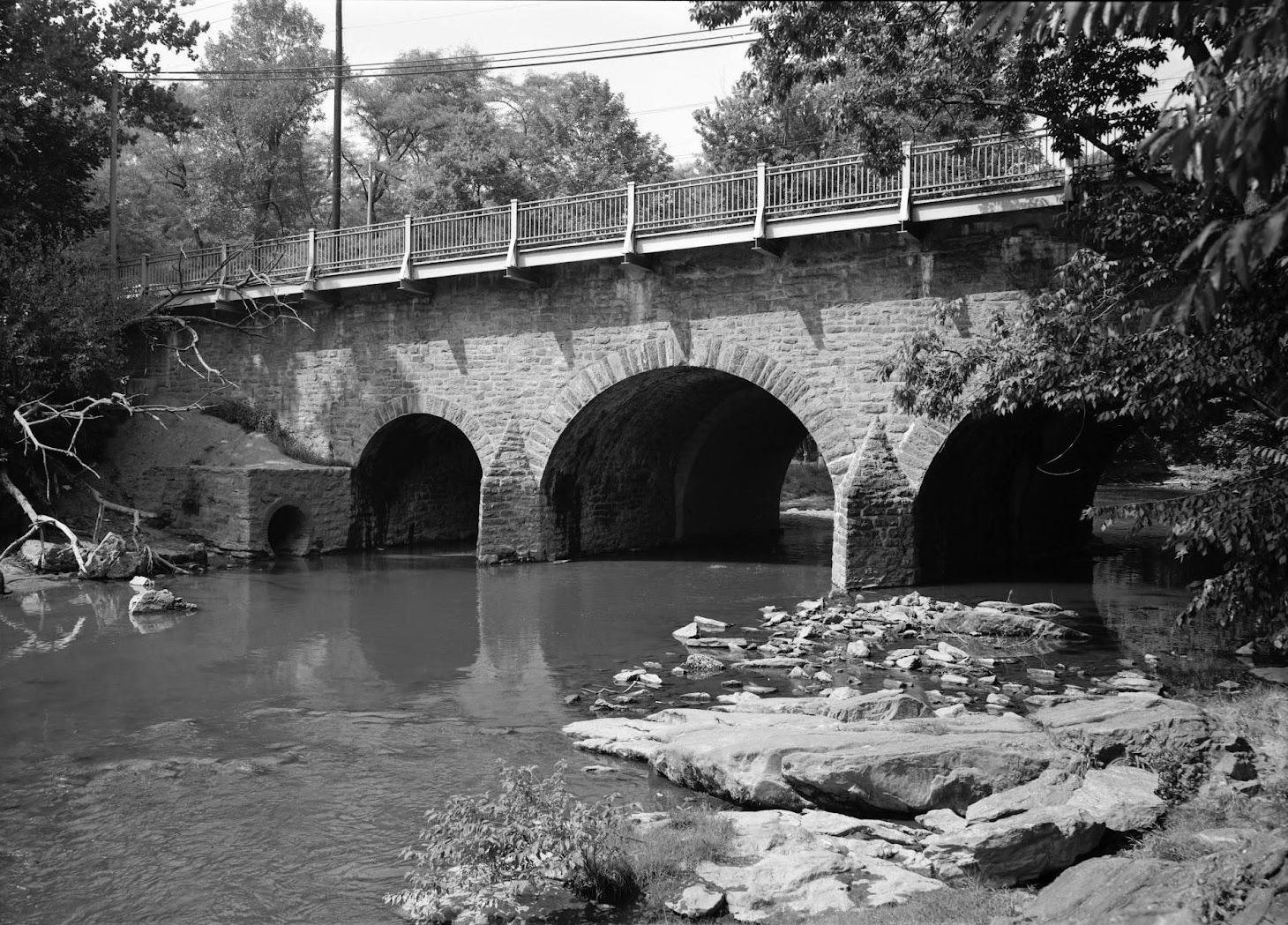
Image: See page for author, Public domain, via Wikimedia Commons

Long before America declared independence, a bridge was already standing strong in Philadelphia. Built in 1697, the Frankford Avenue Bridge holds the title of the oldest bridge still in use in the United States. Picture stagecoaches rattling across its stone arches, carrying passengers between Philadelphia and New York. Today, cars hum across the same path, hardly noticing they’re rolling over a structure that has endured for more than three centuries —a quiet survivor of colonial times still woven into modern city life.

2
Golden Gate Bridge, San Francisco, California
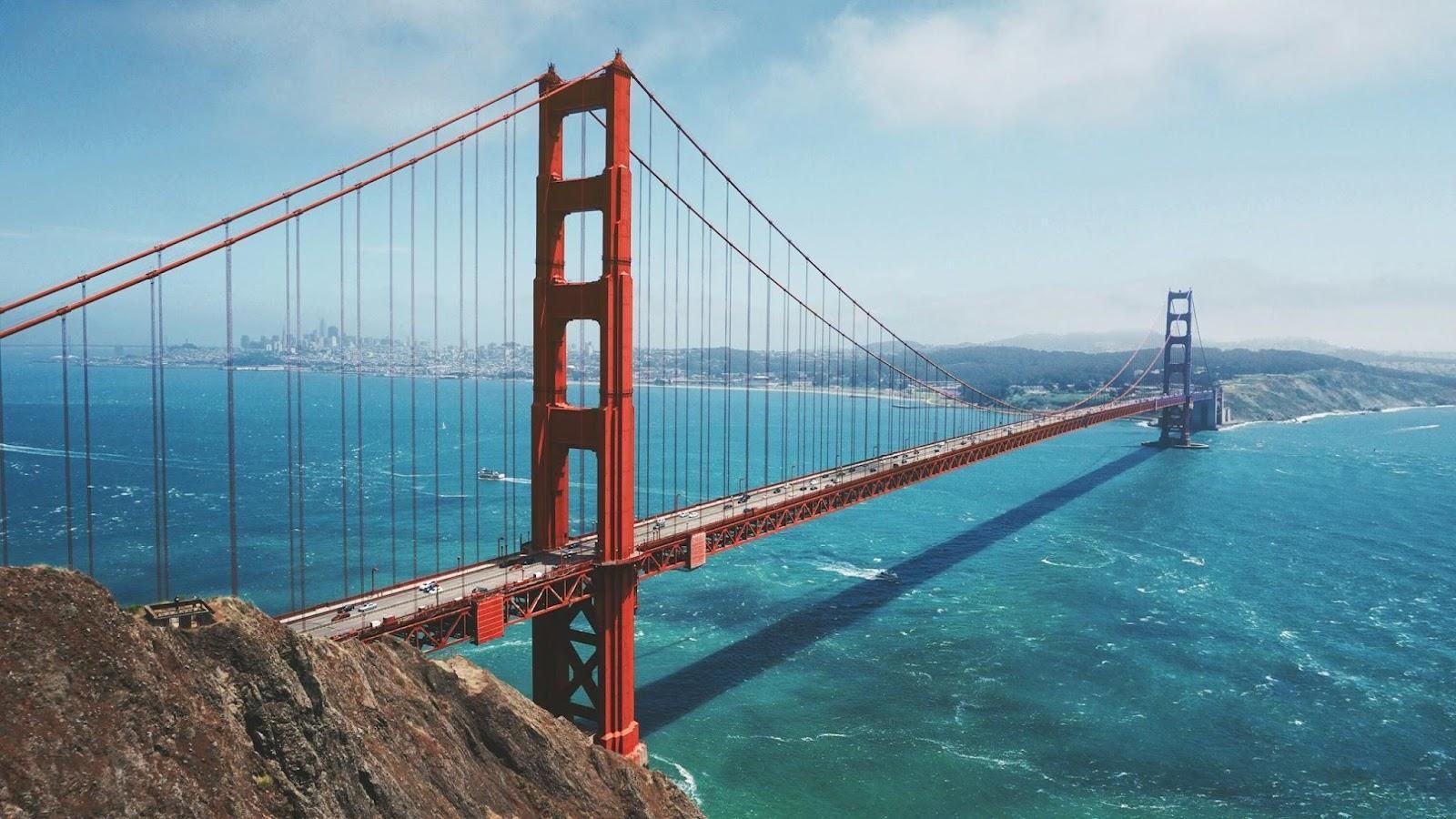
Image: Maarten van den Heuvel

What if we told you that a bridge once called "impossible" now defines an entire city? When it opened in 1937, the Golden Gate spanned an incredible 4,200 feet, a record that stunned engineers across the globe. Its sweeping cables and graceful towers are much more than just steel —it’s poetry over water. Painted in its famous "international orange," this bridge doesn’t just stand tall against the fog, it glows through it, serving as both a practical crossing and a proud emblem of San Francisco’s scenic location.

3
Sunshine Skyway Bridge, Tampa Bay, Florida
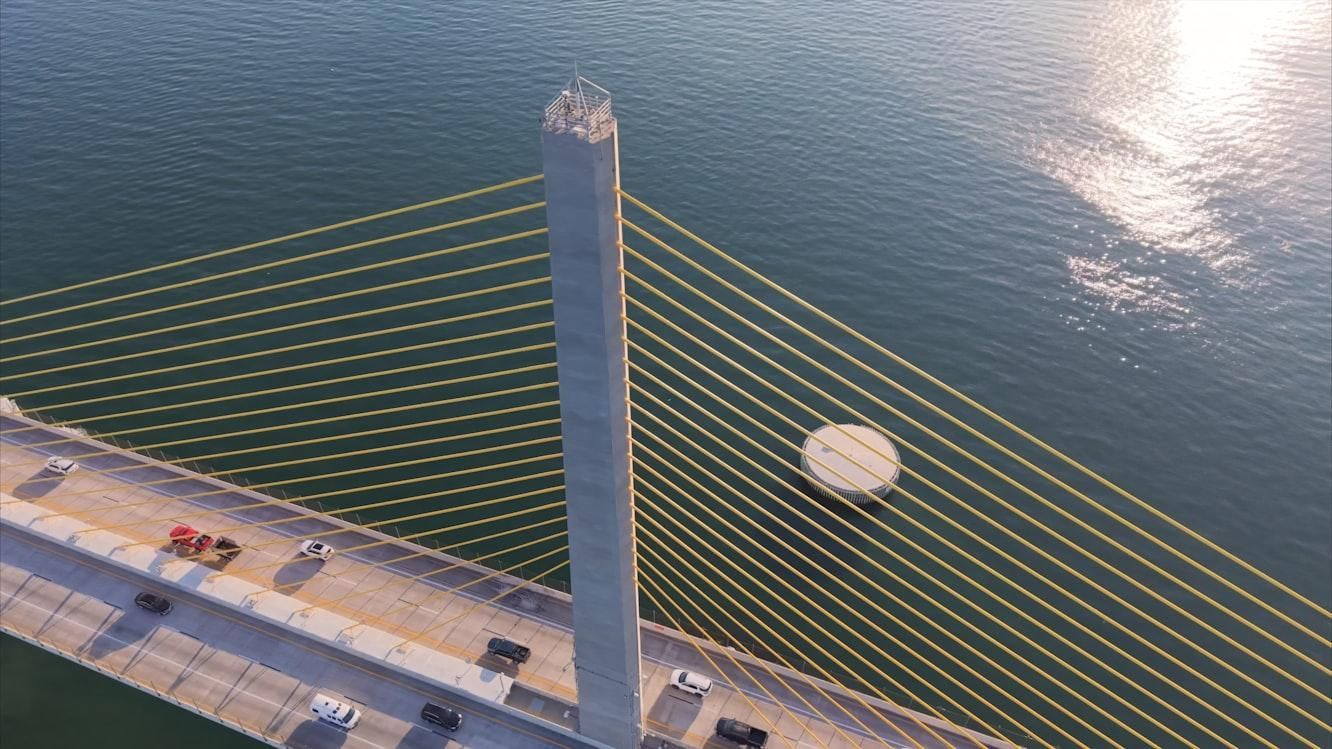
Image: Joseph Corl

Reaching gracefully across 4.1 miles of Tampa Bay, the Sunshine Skyway Bridge rises like a fleet of white sails frozen in motion. Finished in 1987, it was designed to do more than just connect two shores—it was built to inspire. Its towering piers and broad cables give it the look of a ship setting out to sea, a fitting image for Florida’s sunlit coast. On bright days, motorists often describe the drive as more than a commute; it feels like gliding above the Gulf itself, where the horizon stretches endlessly and the water sparkles below like glass.

4
Brooklyn Bridge, New York, New York
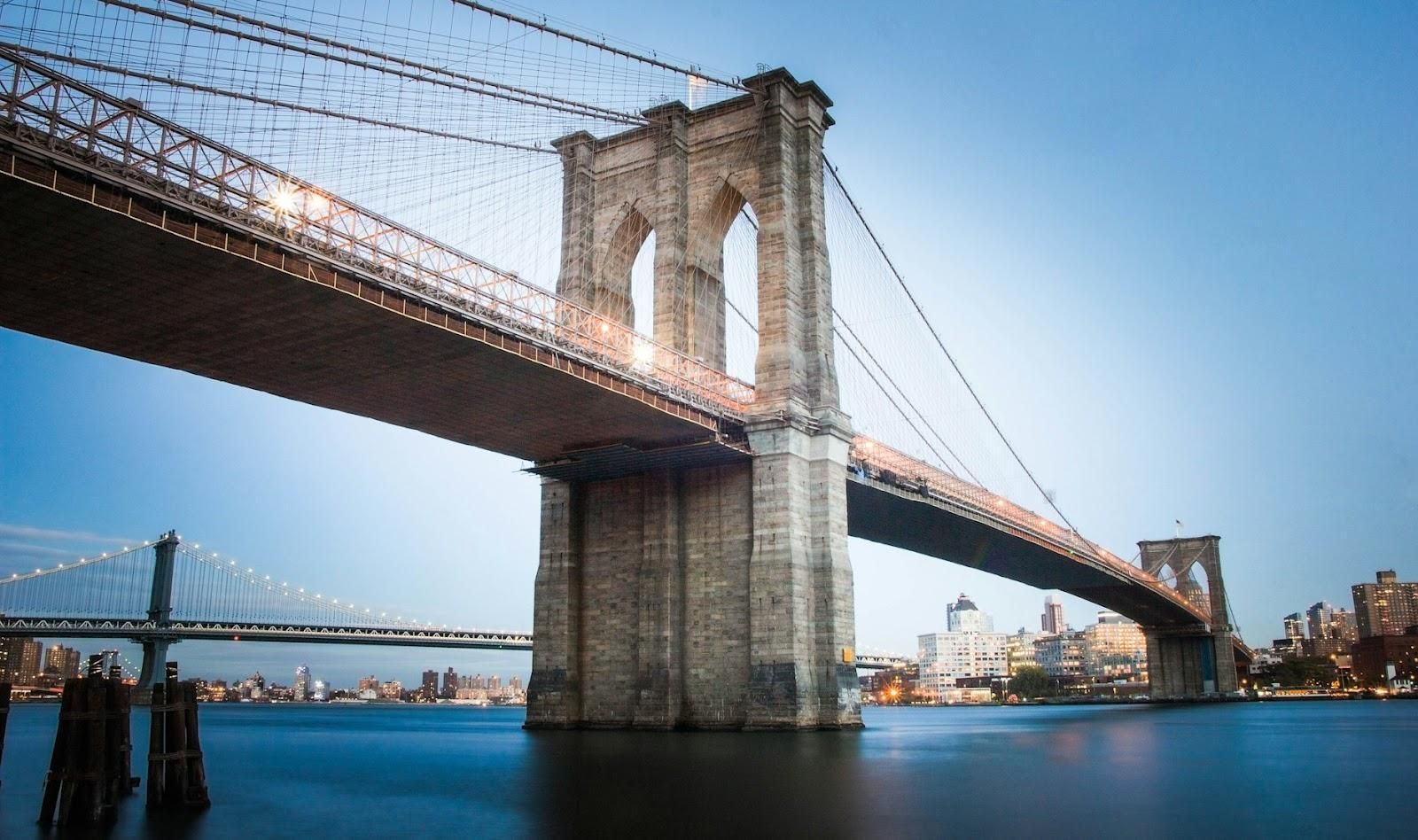
Image: Alexander Rotker

Here’s a tale worth telling: when the Brooklyn Bridge first opened in 1883, many New Yorkers doubted its strength. To calm their fears, showman P. T. Barnum led 21 elephants across the span, proving once and for all that the monumental structure could hold far more than horse-drawn carriages. With its stone Gothic towers rising like cathedrals and its web of cables fanning out in graceful arcs, the Brooklyn Bridge is both an engineering triumph and a work of art. More than a century later, it still stands as a symbol of American ingenuity.

5
Memorial Bridge, Washington, D.C.
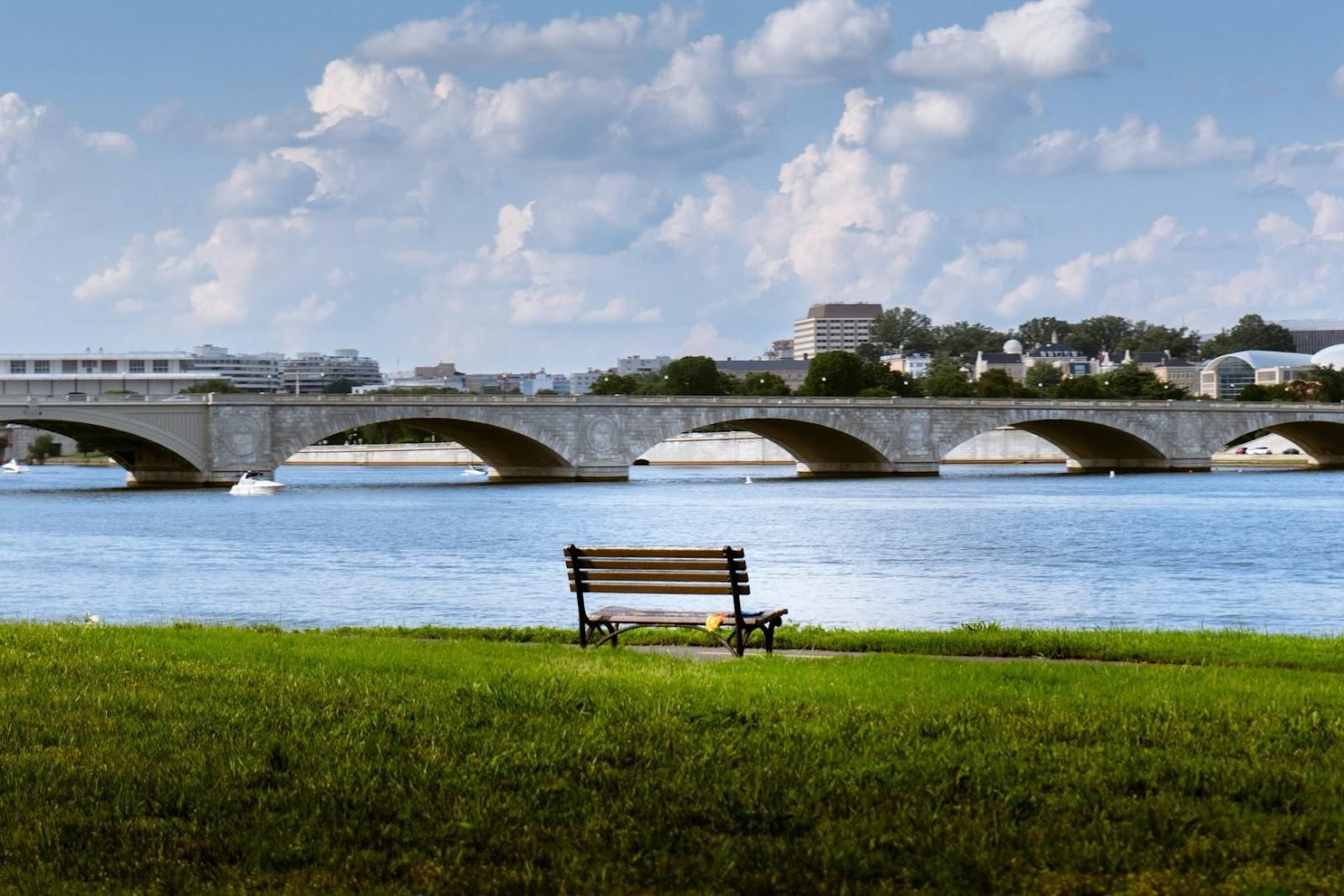
Image: Devansh Bajaj

Picture this: a bridge that doesn’t just link two shores, but two chapters of American history. The Arlington Memorial Bridge, completed in 1932, was designed to align the Lincoln Memorial with Arlington House, symbolizing a nation healing after the Civil War. Its central span works like an enormous see-saw—an elegant bascule that tips upward, heavy as a freight train, to open the way for ships on the Potomac. More than steel and stone, it’s a gesture of reconciliation and remembrance.

6
Tunkhannock Creek Viaduct, Nicholson, Pennsylvania
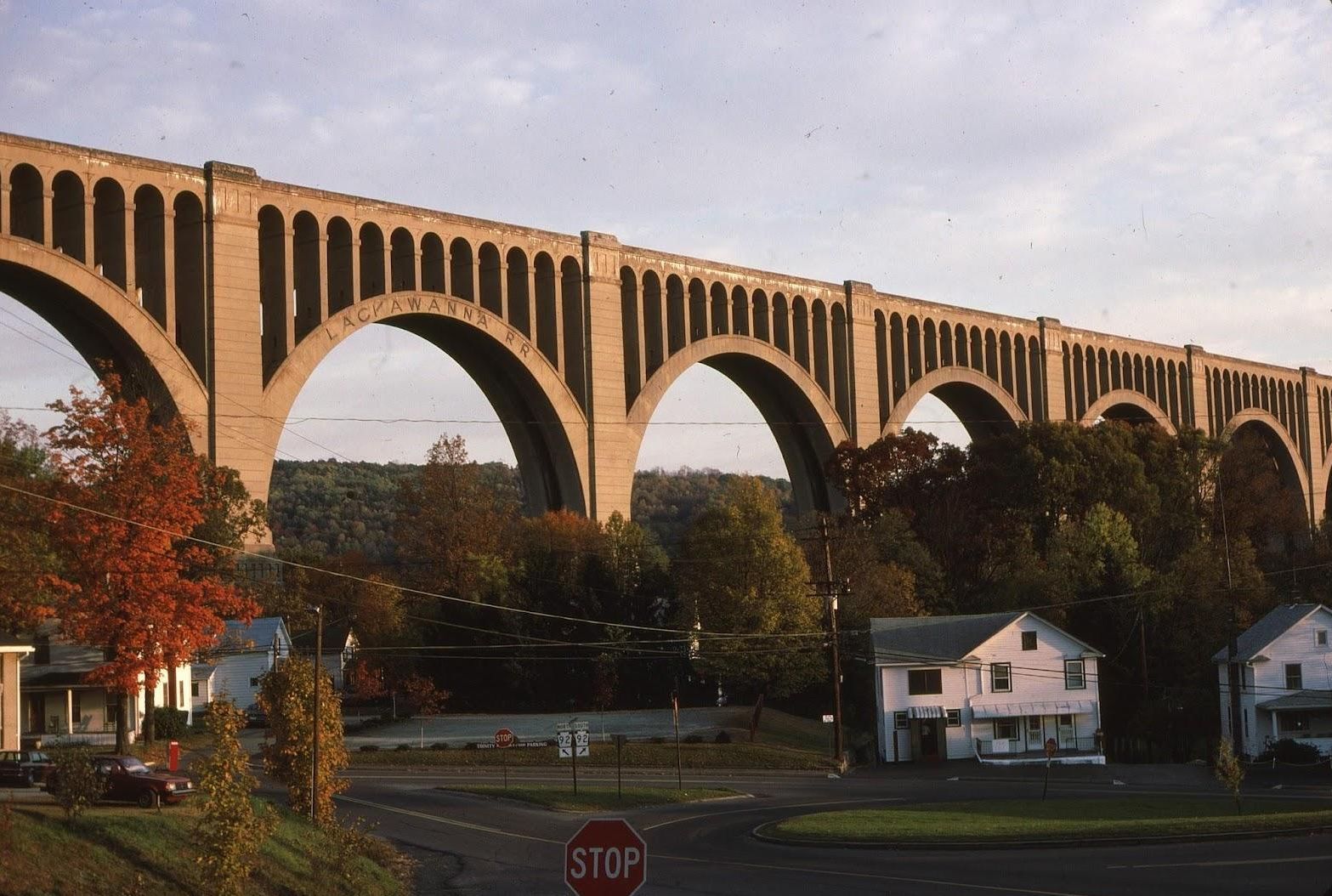
Image: WallyFromColumbia at English Wikipedia, Public domain, via Wikimedia Commons

Imagine standing at the foot of a concrete wall as high as a 20-story tower, stretching farther than the eye expects a bridge could go. That’s what people experienced in 1915 when the Tunkhannock Creek Viaduct—better known as the Nicholson Bridge—first appeared on the Pennsylvania landscape. Spanning 2,375 feet with arches rising 240 feet above the valley, it was the largest concrete bridge in the world at its completion. More than a century later, trains still roll across its 12 arches, looking like miniature toys against the bridge’s sheer immensity.

7
Roebling Suspension Bridge, Cincinnati, Ohio
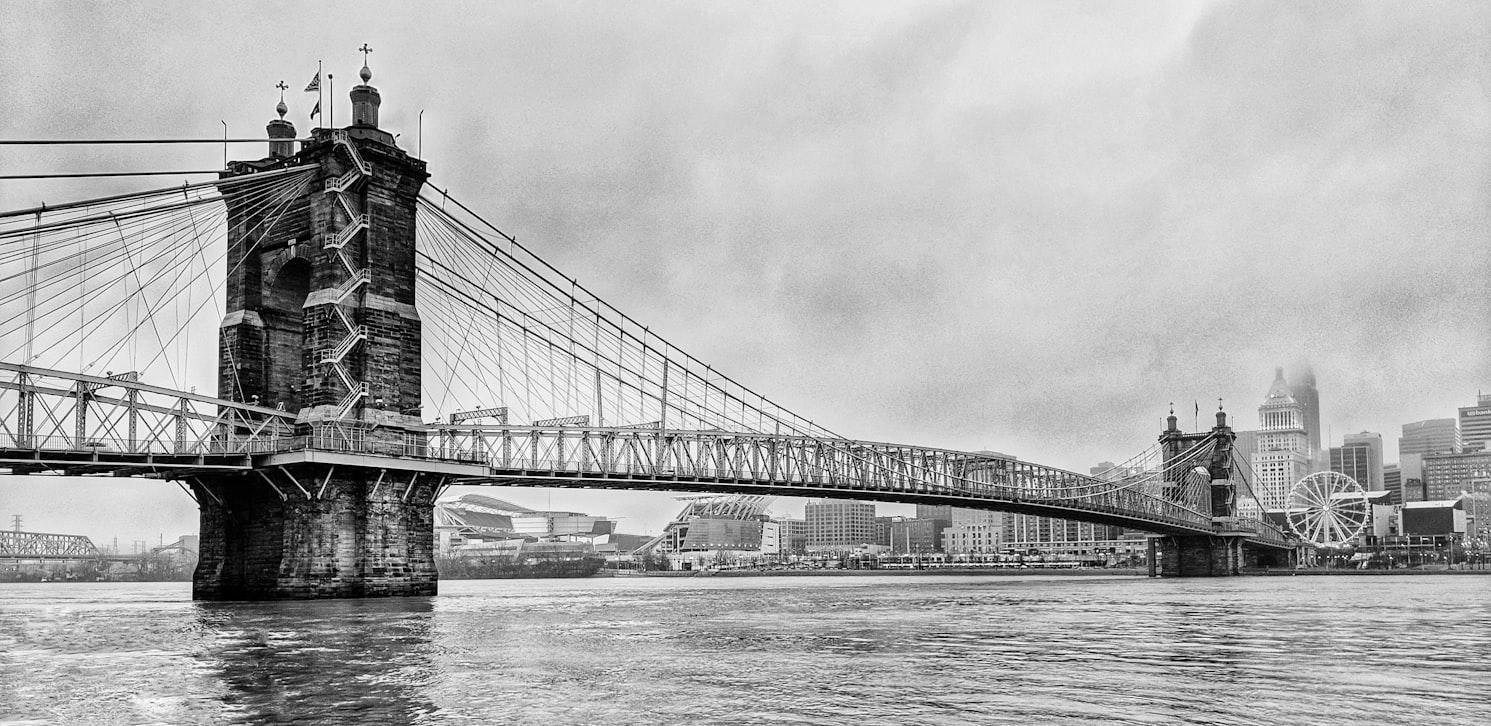
Image: Thomas Rupp

If the Brooklyn Bridge impressed you, the Roebling Suspension Bridge in Ohio will blow your mind, as it was built years earlier by the same man. When it opened in 1867, it set a world record as the longest suspension bridge, stretching an impressive 1,057 feet across the Ohio River. It was John A. Roebling’s first marvel, only overtaken by his own later New York landmark. For the people of Cincinnati, the bridge was proof that American engineering could rival anything in the world, a daring leap that linked two cities and paved the way for future icons.

8
North Bridge, Concord, Massachusetts
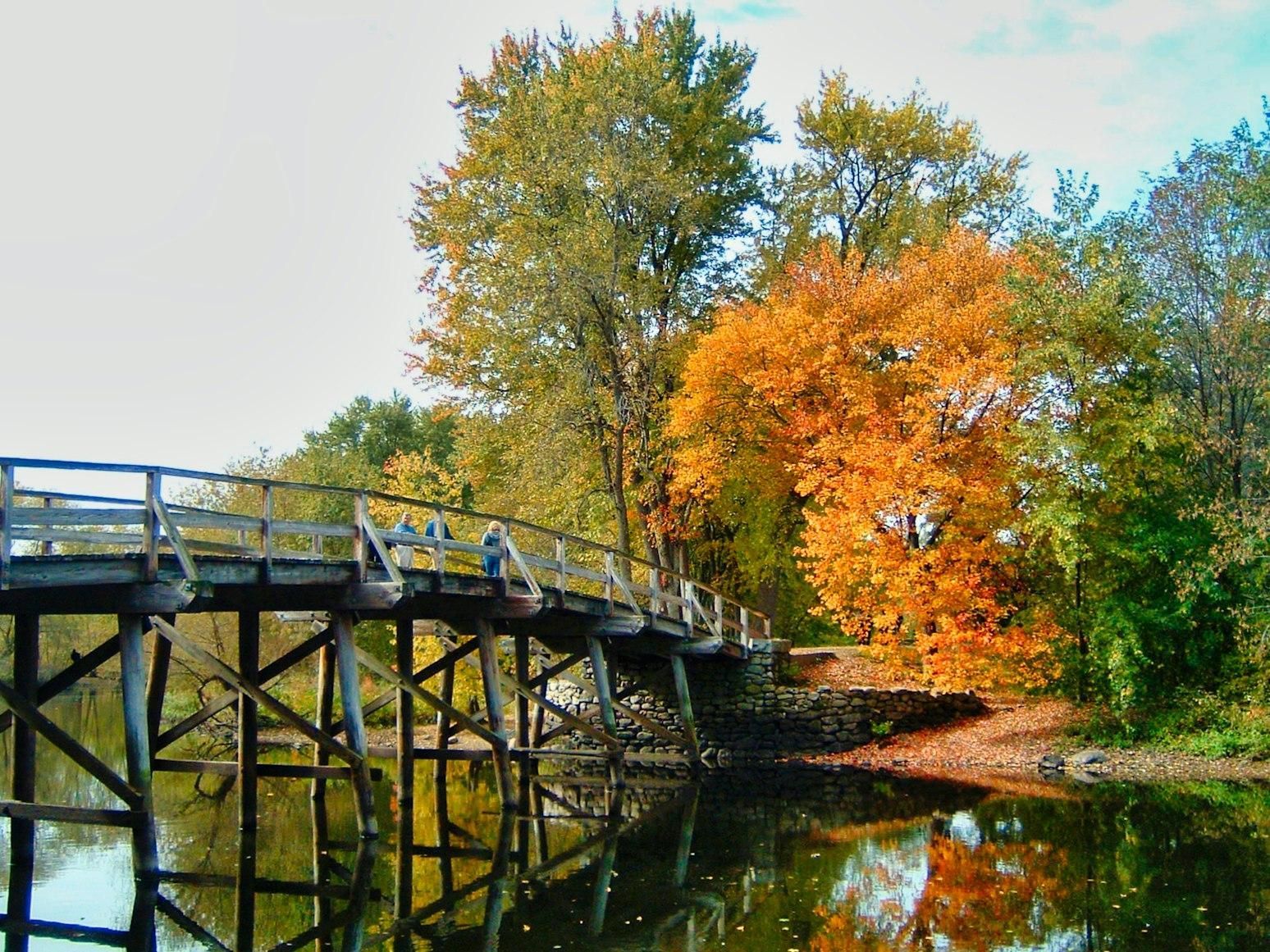
Image: Christopher Ryan

Set foot on the North Bridge in Concord and you’re not just crossing the Concord River—you’re walking into the pages of history. It was in this exact place that, in April 1775, a musket fire rang out, sparking the first battle of the American Revolution and changing the course of a nation forever. The bridge visitors see today is a careful 1956 reconstruction, built to honor the original. Yet, the setting remains almost the same: the quiet river below, the fields beyond, and the sense that this unassuming wooden span still carries the echoes of liberty’s first call.

9
Middle Covered Bridge, Woodstock, Vermont
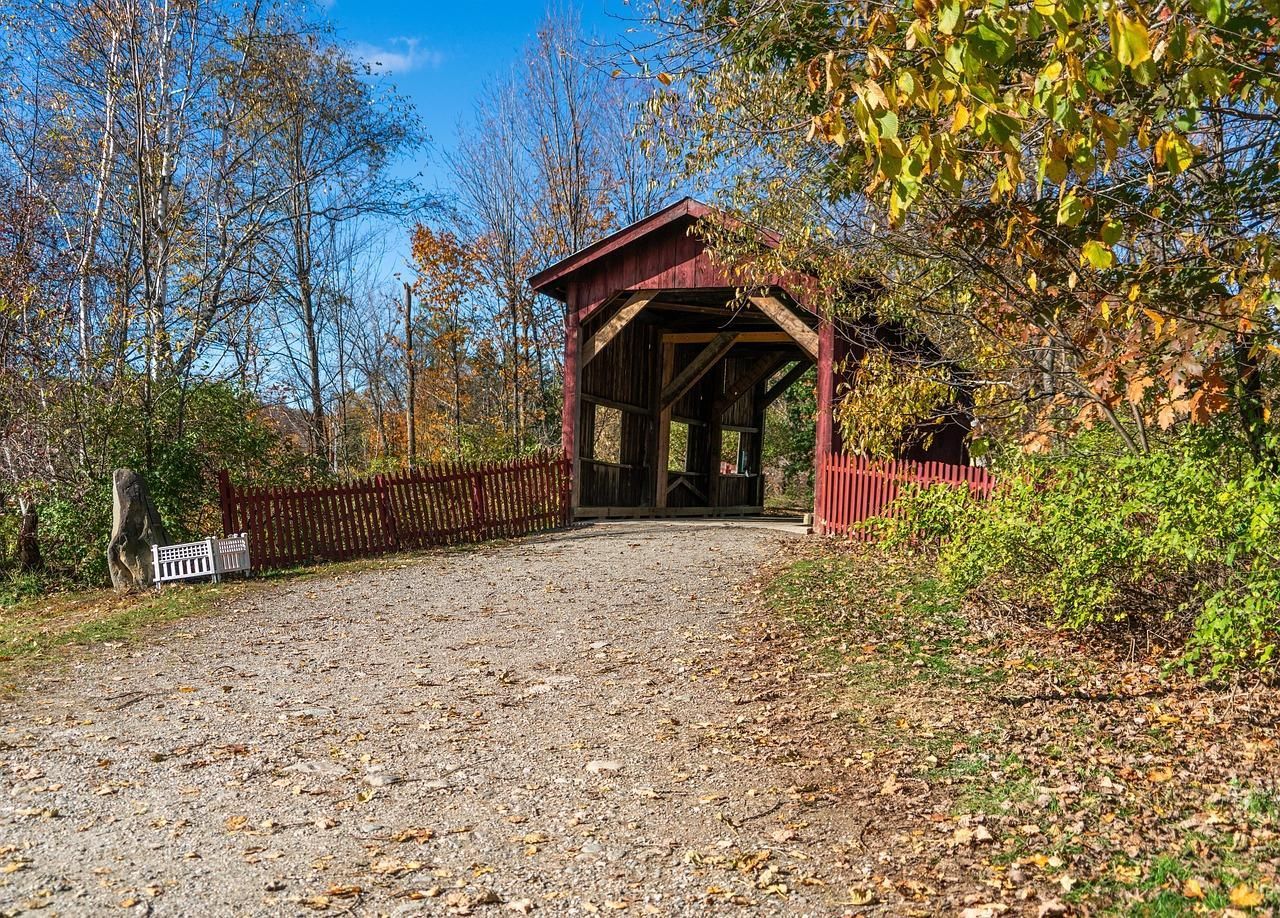
Image: Michelle_Pitzel

There’s a certain mystique about covered bridges, and Woodstock’s Middle Bridge feels like it was lifted straight from a storybook. Though built in 1969, it was crafted with traditional techniques, giving it the spirit of a much older landmark. Stretching 135 feet across the Ottauquechee River, its peaked wooden roof frames a perfect New England scene —red barns, rolling hills, and the steady flow of water beneath. Beyond its whimsical charm, the roof serves a purpose: protecting the bridge’s sturdy timbers from Vermont’s long, snowy winters so it can stand strong for generations.

10
New River Gorge Bridge, Fayetteville, West Virginia
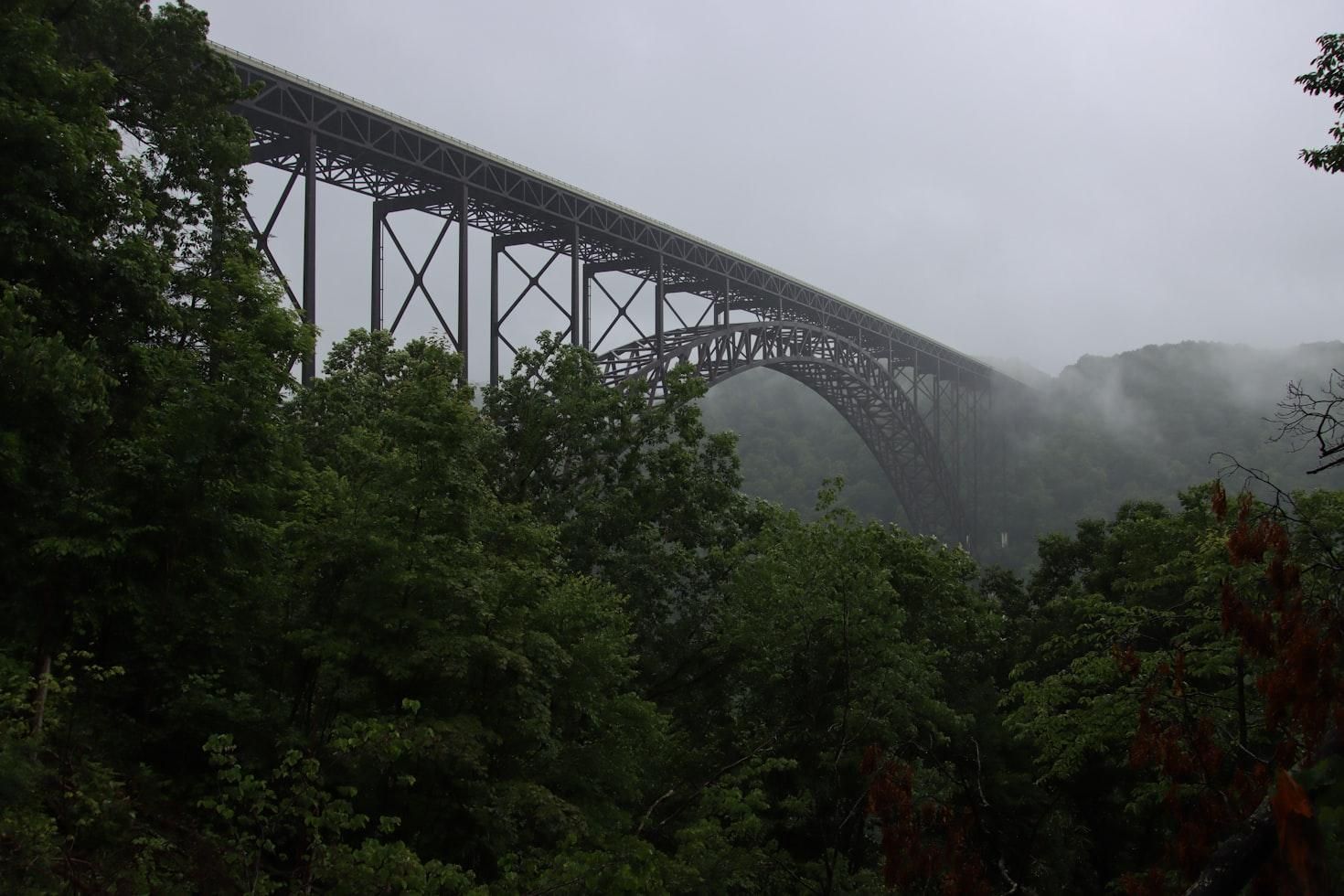
Image: Ian Pearthree

From a distance, the New River Gorge Bridge might seem like any other stretch of highway. But step onto it, and it’s a different story. Opened in 1977, this steel arch rises 876 feet above the rushing waters below—higher than stacking two Statues of Liberty end to end. It is a symbol of West Virginia’s rugged beauty, celebrated each October during "Bridge Day," when traffic halts, and the bridge transforms into a stage for daring jumps, local crafts, and awe-struck visitors soaking in one of the most breathtaking views in America.

11
Bow Bridge, Central Park, New York, New York
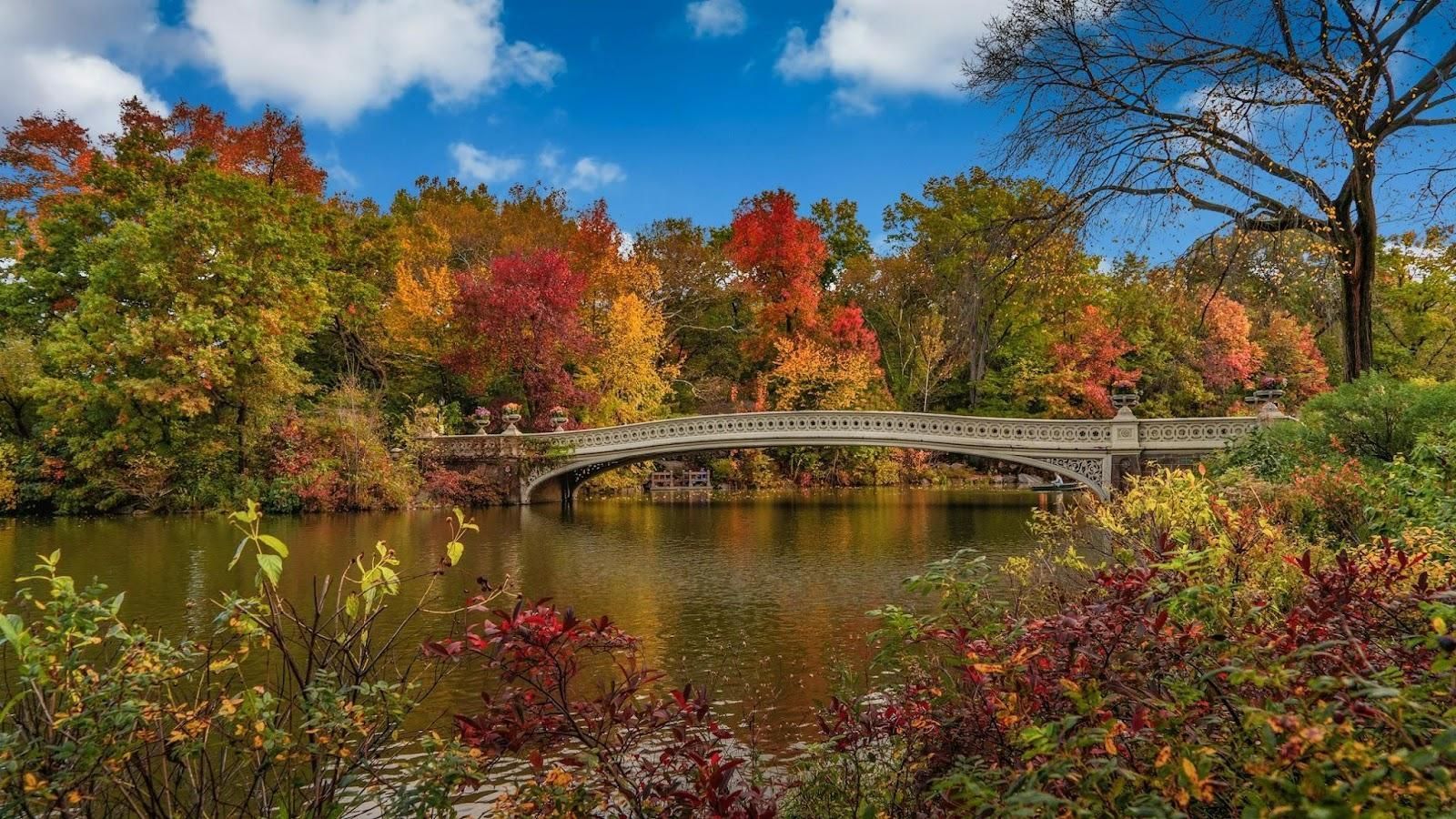
Image: Pierre Blaché

As light as lace yet forged from iron, Bow Bridge sweeps in a gentle curve across Central Park’s shimmering lake. Completed in 1862, it quickly became more than a passage—it turned into a stage for the city’s daily rhythms. Artists set up easels to capture its elegance, photographers frame it against the water, and couples linger at its railings, savoring the view. Street musicians often fill the air with music, while beyond the trees, New York’s skyline stretches high. Amid the steel and stone of the metropolis, Bow Bridge endures as a quiet piece of poetry shaped in metal.

12
Harbor Bridge, Corpus Christi, Texas
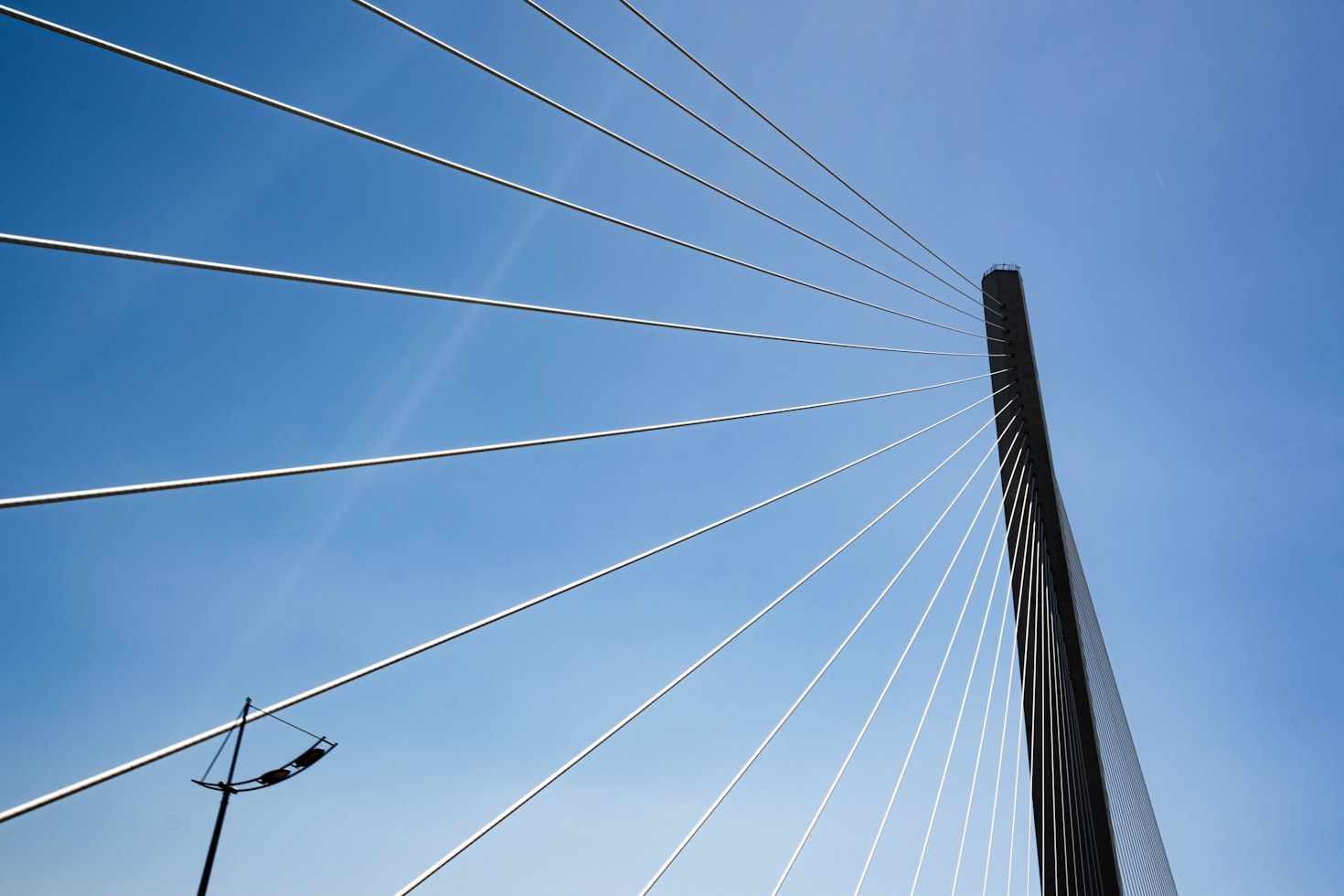
Image: Vladislav Osterman

You now know what the oldest bridge in America is, but what about the newest? Unveiled in 2025, the new Harbor Bridge in Texas was designed to last up to 170 years. Its sleek towers and graceful cables rise 205 feet above the water, high enough for massive cargo ships to glide underneath without pause. By day, it’s a marvel of modern engineering, but when night falls, it completely transforms. A sophisticated computer system of LED lights ripples across its frame, painting Corpus Christi’s shoreline in vivid colors. More than a crossing, it’s a staple of economic growth.
History History 4 min read

AMERICANA FLASHBACKS

From Rock’n Roll to Suburbia: 10 defining moments of 1950s America

Image: Brett Jordan

The 1950s was a turning point in American history. A decade marked by innovation and prosperity, this era witnessed major societal shifts, ranging from technological advancements to the emergence of iconic brands and cultural phenomena like rock 'n' roll. It also saw the rise of the civil rights movement and the beginning of the Cold War, kickstarting a new global era. As Americans dreamed of space exploration and new technologies, they suddenly gained access to unprecedented comforts. Here are 10 hallmarks of this remarkable time.

1
Rock 'n' Roll Revolution

Image: Provincial Archives of Alberta

The 1950s marked the explosive rise of rock 'n' roll, with artists like Elvis Presley, Chuck Berry, and Little Richard leading the charge. This novel genre blended rhythm and blues with country, creating an energetic and rebellious sound that resonated with the youth.

Rock 'n' roll quickly became a cultural phenomenon, challenging traditional norms and promoting a new sense of freedom and expression. But the genre's influence extended way beyond music, as it impacted fashion, dance, and even social attitudes. As a symbol of teenage rebellion, it is now considered a catalyst for the social revolutions of the 1960s.

2
Space Race Begins

Image: Brian McGowan

The Space Race, ignited by the Soviet Union's launch of Sputnik in 1957, became a key aspect of the Cold War rivalry between the United States and the USSR. In response, the U.S. accelerated its space program, leading to the creation of NASA in 1958.

The race to space was not just a technological competition but also an ideological battleground. It captured the American imagination, inspiring dreams of exploration and boundless innovation. This era laid the groundwork for major achievements, including the Apollo moon landing, forever cementing the United States’ place in the history of space exploration.

3
Television Takes Over

Image: Randy Jacob

The 1950s also saw television become the dominant medium of entertainment and information in American households. With the widespread adoption of TV sets, shows like I Love Lucy and The Ed Sullivan Show brought families together and became cultural touchstones, influencing fashion, language, and social norms.

Simultaneously, television's ability to massively broadcast news and live events made it a powerful tool for shaping public opinion. As the number of channels and programs grew, television became a central part of American life, affecting politics, advertising, and culture in general.

4
Fast Food Frenzy

Image: Alora Griffiths

The fast food industry boomed in this decade, revolutionizing the American dining experience. Chains like McDonald's, founded in 1955, popularized the concept of quick and affordable meals. This phenomenon was also closely tied to the emerging car culture, as drive-thru restaurants became commonplace.

This convenience appealed to the growing suburban population and busy families, making fast food synonymous with modernity, speed, and the American lifestyle.

5
Iconic Cars

Image: Photo Person

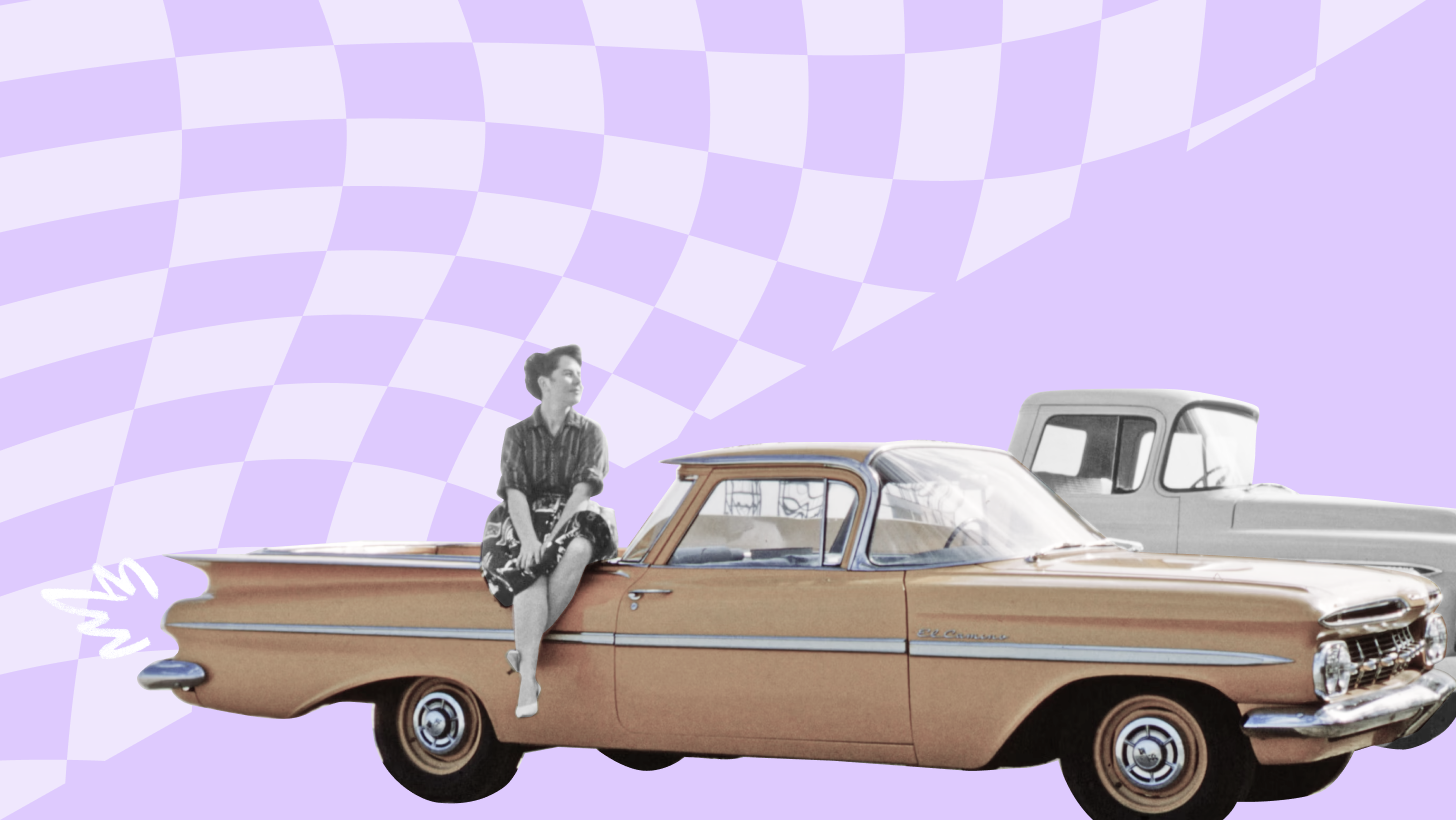
A golden age for American automobiles, the 1950s saw the emergence of iconic models like the Chevrolet Bel Air, Cadillac Eldorado, and Ford Thunderbird . These streamlined machines were not only more affordable than ever but also captured the public's imagination with their enhanced comfort and sophistication.

Cars soon evolved from mere transportation to symbols of status, freedom, and identity. Their innovative designs, characterized by chrome, tailfins, and vibrant colors, reflected the themes of the Space Age and the technological optimism of the era.

6
The Birth of Teenagers

Image: Fern M. Lomibao

While today we think of adolescence as a normal stage of life, the concept of the teenager as a distinct demographic didn’t truly emerge until the 1950s. With increased disposable income, young people soon became a powerful consumer group, influencing fashion, music, and entertainment.

They flocked to new cultural phenomena like rock 'n' roll, drive-ins, and soda fountains. By challenging traditional authority, this generation of teenagers pushed for freedom and independence, in many ways setting the stage for the social changes that would unfold in the subsequent decades.

7
Modern Design

Image: Matt Briney

Characterized by clean lines, organic shapes, and an emphasis on functionality, mid-century modern design was forged during this decade. Designers like Charles and Ray Eames, Eero Saarinen, and George Nelson became iconic figures, creating furniture, architecture, and household items that seamlessly blended form and function.

Technological advancements and the introduction of new materials, such as molded plywood, fiberglass, and plastics, enabled innovative and affordable designs. To this day, futuristic design remains closely associated with mid-century modern aesthetics.

8
Consumer Culture

Image: Jaxon Gee-Dub

This era marked the rise of consumer culture in America, with the proliferation of advertising and the introduction of new products. Brands like Coca-Cola, Pepsi, General Electric, and RCA became household names, and synonymous with the abundance and convenience of modern American life.

Shopping emerged as a popular pastime, with the expansion of department stores and the advent of shopping malls, which consolidated a variety of stores under one roof. As a result, for many, the pursuit of happiness became increasingly intertwined with the acquisition of material goods.

9
The Cold War Era

Image: Marie Rouilly

The Cold War shaped the tense geopolitical landscape of the 1950s, with the United States and the Soviet Union locked in a prolonged ideological struggle. Policies such as the "Marshall Plan" aimed to counter Soviet influence globally, while massive investments in defense and aerospace industries spurred significant technological advancements.

Fears of nuclear conflict and espionage permeated the era, influencing American culture and reflecting in movies and television. Despite these anxieties, the Cold War also fostered a strong sense of unity and patriotism as Americans rallied against a common adversary.

10
Suburban Boom

Image: Nikola Knezevic

The post-World War II era saw a massive migration to the suburbs, spurred by economic prosperity, supportive legislation such as the GI Bill, and a desire for affordable housing. Suburban developments like Levittown offered uniform, mass-produced homes that were accessible to middle-class families.

This suburban expansion reshaped American society, fostering a culture centered around family life, homeownership, and car-centric lifestyles. The move to the suburbs also led to the growth of shopping malls, schools, and community organizations, creating a distinct suburban culture that came to define the American Dream.

General General 3 min read

Do you have a landline?

Can you tell what this was for? 12 items we no longer use!

Image: Luca Onniboni

Little by little, many of the things we used just a few decades ago have been phased out by newer technologies and changing habits. Your relatives no longer invite you over for a family viewing of holiday photos on a slide projector—they share them in the family WhatsApp group. Hardly anyone calls you on a landline anymore—they call your smartphone instead. Take a look at the following 12 things we no longer use. Do you miss any of them?

1
Paper road maps

Image: Sylwia Bartyzel

Paper maps—atlases, or topographic maps—are beautiful and there is always room for those as home decorations or teaching geography in schools. But as far as bulky roadmaps on your back pocket go, smartphones with GPS capabilities have made them obsolete.

2
Bathing machine

Image: Uta Scholl

Back in the day, modesty was far more strictly enforced than it is today. Forget about simply wearing your beach clothes to the shore—the bathing machine was a device, popular from the 18th century to the early 20th century, that allowed beachgoers to change out of their regular clothes , put on swimwear, and wade into the ocean.

3
Public telephones

Image: Pedram Farjam

Before cell phones existed, coin-operated pay phones were the go-to option for contacting someone or leaving a message. Pay phones were everywhere—on street corners, in malls, restaurants, airports, train stations, and hotels, allowing people to make calls in public places.

4
Teleseme

Image: Zoshua Colah

In the late 19th and early 20th centuries, luxury hotels featured an electric signaling device in each room , allowing guests to request goods or services from over 100 options. An attendant in the hotel office would receive the request via a corresponding teleseme and ensure the order was fulfilled.

These devices were eventually replaced by private branch exchange (PBX) telephone systems.

5
Slide projectors

Image: Nathan Anderson

As mentioned earlier, slide projectors were once a common household appliance in many homes and a popular form of entertainment . However, they became obsolete as video projectors became more affordable and accessible.

6
Phonebooks

Image: Brittany Colette

Imagine a book containing the home phone numbers of everyone in your city . It once existed and was delivered annually to every household with a landline by the telephone company. These hefty directories became obsolete with the rise of online listings and the death of landlines in favor of cell phones.

7
Typewriters

Image: Bernard Hermant

Imagine not being able to revise what you’re writing without scrapping the whole page . While that situation was a great exercise for your focusing abilities, it was phased out by home computers and word processors, which allowed for infinite rewrites in no time.

8
Photo Album

Image: Laura Fuhrman

Smartphones have made photography more accessible than ever, yet we print fewer photos than before. When photography wasn’t digital, people took their film rolls to be developed , returning with 36 crisp pictures—some of which, if deemed worthy, were carefully placed in photo albums .

9
Cassette tape players

Image: Dave Weatherall

If you're over 40, you’ve probably owned a cassette player—whether a Walkman, a boombox, or any other model. Cassettes were sturdy, reliable, and easy to use . However, with the arrival of CDs, which offered superior sound quality and the ability to skip tracks at the press of a button, cassettes and their players quickly faded into obscurity.

10
Encyclopedias

Image: James

Before the internet, encyclopedias were the primary source of knowledge. These extensive book collections adorned bookshelves in homes and public libraries, offering detailed descriptions of almost any subject imaginable , all listed in alphabetical order .

11
Fax machines

Image: alecale35

By today’s standards, sending and receiving faxes wasn’t particularly fast, but at the time, it was a game-changer. The fax machine digitized documents with a scanner and transmitted printed pages over telephone lines . However, it became obsolete with the rise of email, scanners, and smartphones.

12
VHS tapes and VCRs

Image: Leonard Reese

Being able to see any movie you want at home feels ordinary today, but, in the early 80s, it was a dream come true. And this dream was made possible by VCRs and VHS tapes. These bulky devices were eventually replaced by DVD players, which offered superior image quality and eliminated the need to rewind the tape.

Explore more American facts

Choose your favorite category!

General
General

As American as apple pie—the very best America has to offer!

Culture
Culture

Delve into the astounding richness of American lore.

Geography
Geography

Hop in and explore vast and diverse American landscapes.

History
History

Discover the key moments that shaped the United States.