Geography Geography 5 min read

American landmarks

The sky is the limit: Do you know these 10 breathtaking skyscrapers?
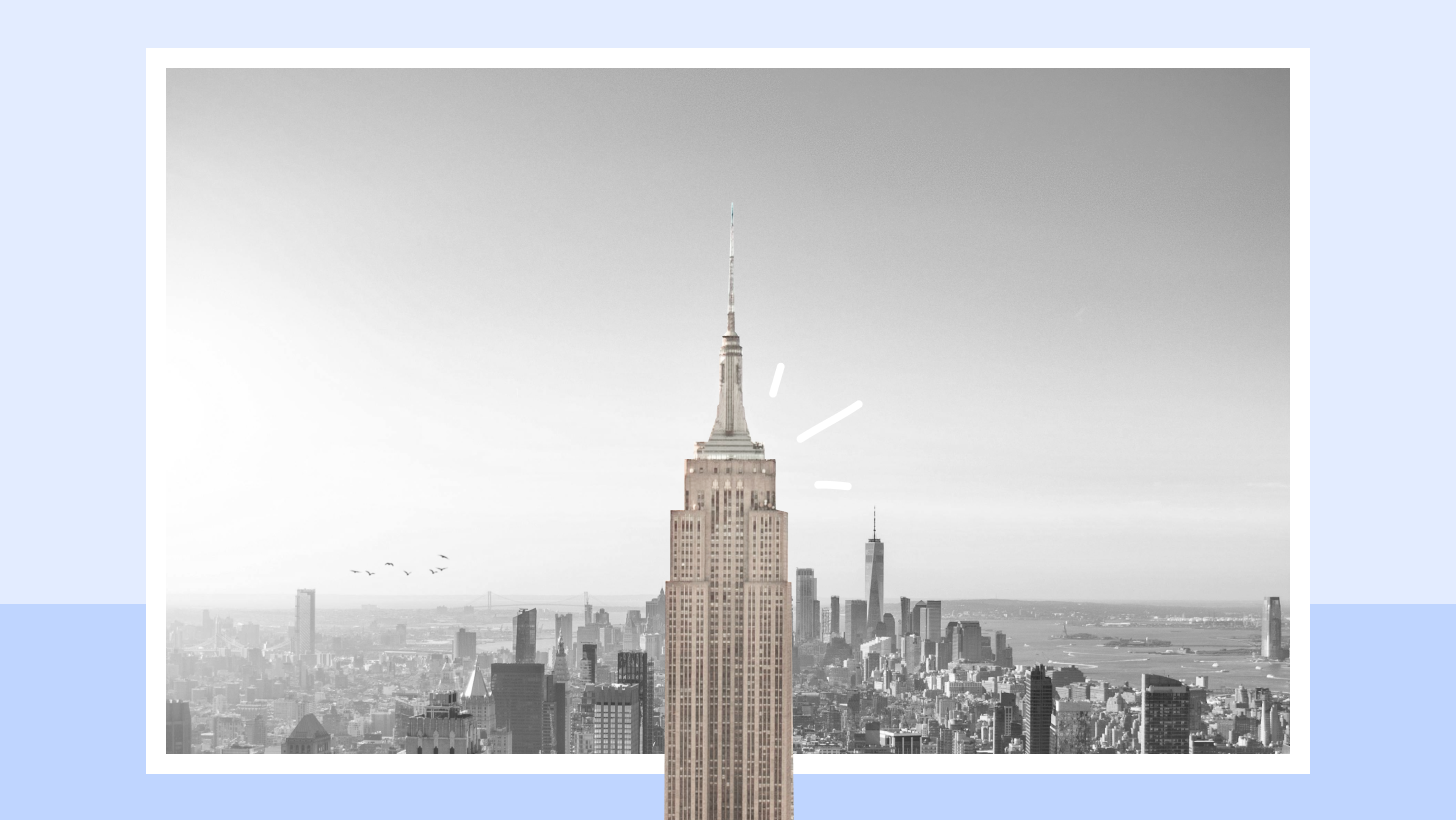
Image: Frederik Sørensen

The noun "skyscraper" has a fantastical side to it, doesn’t it? It directly speaks to mankind’s eternal dream to touch the sky, to be able to reach previously insurmountable heights. Ever since the first skyscraper was built in Chicago, America has been synonymous with these breathtaking and humongous buildings. With that in mind, we have selected 10 of the most iconic buildings in American history. Celebrate these architectural wonders and how they represent everything that makes us so proud to be American. Enjoy!

1
Empire State Building

Image: Afif Ramdhasuma

We’ll begin with what’s perhaps the most famous skyscraper in "The City That Never Sleeps". The Empire State Building speaks to the magnificence and grandeur of New York City: After all, it is named after the State of New York’s official nickname, "The Empire State".

At the time of its construction, the Empire State Building was the tallest building in the world, a title held for almost 40 years. Its exquisite Art Deco design and innovative architecture have turned it into an instantly recognizable icon. Perhaps more famously, it has been featured in unforgettable pictures like "Sleepless in Seattle" and "King Kong". Be honest: Whenever you see a picture of this building, can’t you almost see a humongous ape perched atop its antenna?

2
Flatiron Building

Image: Vidar Nordli-Mathisen

For many, the most remarkable feature of this iconic building is its unusual name, which comes from its also rather unusual shape. The Flatiron is considered a New York City institution, and its history is almost as inspiring as its groundbreaking design.

In its early years, the Flatiron was known by the derisive nickname "Burnham's Folly", since detractors believed that architect Daniel Burnham’s design was a laughable idea. History would prove Burnham right though, since the Flatiron is still one of the most instantly recognizable skyscrapers in the world.

3
Willis Tower

Image: Gardhy Granados

For any Chicagoan who might be reading this, we know that you probably still call this building the "Sears Tower", but we thought it would be appropriate to include the official new name of this iconic skyscraper. Located in the heart of the "Loop", the Willis Tower is a 110-story, 1,451-foot building that has truly earned its place in Chicago’s skyline.

Since its opening in 1973, Willis Tower has proudly held the title of the world’s tallest building for close to 25 years. Regardless, this juggernaut is still an American landmark and one of Chicago’s most visited tourist attractions.

4
Transamerica Pyramid

Image: Chris Leipelt

While most pictures of San Francisco’s skyline are usually dominated by the Golden Gate Bridge, visitors of "The City by the Bay" are frequently dazzled by this unusual yet breathtaking building. Completed in 1972, the Transamerica Pyramid was San Francisco’s tallest building until 2018, when it was surpassed by the Salesforce Tower.

Without a doubt, the most striking aspect of this building is its groundbreaking design: Just like San Francisco’s carefree spirit of independence, this building seems effortlessly innovative. It has been compared to other revolutionary designs, most notably to "the Shard" building in London.

5
Columbia Center

Image: Anthony Alexander

Formerly known as "the Bank of America Tower" (or BOAT for short), the Columbia Center was constructed in downtown Seattle in the early ‘80s: At the time, this imposing black skyscraper was the highest building on the West Coast. While most of this skyscraper is leased for private usage, it does house the highest public viewing area west of the Mississippi River.

The Columbia Center’s design produces a rather interesting effect: Since the building is composed of 3 separate segments joined by 2 setbacks, viewers from the street might believe the Columbia Center is made from 3 different towers set side to side.

6
The Chrysler Building

Image: Anthony Fomin

As you probably expected, many iconic skyscrapers from "The City That Never Sleeps" will be featured in this article. The Chrysler Building is an art-deco masterpiece located at the intersection of 42nd Street and Lexington Avenue, which holds the distinction of being the world’s very first supertall skyscraper.

This building was commissioned by (and named after) Walter Chrysler, head of the Chrysler Corporation, and its construction was marked by a friendly competition with the Empire State Building for the title of the world’s tallest building. In that sense, the Chrysler Building’s remarkable 1,046 feet height gave it this impressive title, albeit only for 11 months.

7
Wells Fargo Plaza

Image: Franky Magana

If you ever find yourself taking a stroll through Downtown Houston, you’ll definitely come across a gorgeous all-glass skyscraper. You can’t miss it: After all, the Wells Fargo Plaza is the tallest all-glass building in the entire Western Hemisphere, standing at an impressive 992 feet.

This skyscraper was formerly known as the Allied Bank Plaza and in, 1988, it was renamed to the First Interstate Bank Plaza. However, when in 1996 First Interstate Bancorp was bought by Wells Fargo, this skyscraper changed its name once again to the Wells Fargo Plaza we all know.

8
John Hancock Center

Image: Jonathan J. Castellon

Founding Father John Hancock truly deserves all the praise it can receive from the American people, so it stands to reason that he should have his name honored by a 1,128-foot supertall skyscraper. Located in the iconic "Magnificent Mile", the John Hancock Center was for a while the tallest building in Chicago, surpassed by the previously mentioned Willis Tower.

This skyscraper was completed in 1969 and it has remained a Chicago staple ever since. It houses several restaurants and offices, as well as approximately 700 condominiums. Interestingly, the John Hancock Center is the background on which the 1988 horror film "Poltergeist III" takes place: Posters for this film featured this skyscraper, with a menacing lighting bolt crossing the night sky behind it.

9
Bank of America Plaza

Image: Luis Negron

Just like the Empire State and the Chrysler buildings, the Bank of America Plaza is another wonderful example of Art Deco architecture located between Midtown and Downtown Atlanta. This gorgeous skyscraper is instantly recognizable thanks to its unusual color palette, and it holds the distinction of being the tallest building of any U.S. state capital.

If you are lucky enough to visit "the City in a Forest", try to visit the Bank of America Plaza at night. You’ll quickly notice that the stunning golden spire at the top of the building (which is actually shaped like the Plaza itself) glows alongside a gorgeous pyramid of girders, in a lovely orange hue that tries to resemble old street lights.

10
Home Insurance Building

Image: Александр Македонский

We’ll end this article by honoring an iconic skyscraper that, while it is not still standing, lives on in the proud history of our country. Standing at 138 feet, the Home Insurance Building might not seem remarkably tall by today's standards but, at the time of its construction in 1885, this Chicago historical landmark became the world’s very first skyscraper.

Due to a decrease in its occupancy, the Home Insurance Building was demolished in 1931, alongside 5 other buildings, to make way for the site on which the Field Building now stands. However, this landmark’s legacy still stands, earning its well-deserved place in history as the father of the skyscraper.

History History 6 min read

LEADING THE WAY

Let's Remember 10 Iconic American Firsts in History

Throughout the history of the United States , many historical facts and events have taken place. But there's always a first time for everything , right? While things like space travel may seem normal today, it is important to remember that there was a time when it had never been done and was also unimaginable.

If you want to remember the American pioneers who changed history, read on! Today, we will commemorate 10 of the most iconic "firsts" that shaped our nation . Maybe you witnessed one of them!

1
The Everest

Image: Martin Jernberg

James Whittaker made history as the first American to achieve one of the most difficult things in the world.

In 1963 , Whittaker, then 34 years old , became the first American to reach the summit of the highest mountain on the planet, Mount Everest , as part of the American Mount Everest Expedition led by Norman Dyhrenfurth.

Facing challenging weather and low temperatures, Seattle-born Whittaker conquered the summit of the Himalayan giant, which stands at 29,035 feet high! Can you picture yourself on such an expedition?

2
The astronauts

Image: NASA

The 1960s definitely transformed history, marking a period when humanity first traveled into outer space. The first American to reach space was Alan Shepard on May 5, 1961 . After a successful flight of 15 minutes and 22 seconds, Shepard's spacecraft splashed down safely in the Atlantic Ocean. Shepard didn’t complete an orbit of Earth on that trip, but John Glenn arrived and became the first American to orbit our planet on February 20, 1962 .

Of course, these amazing achievements were necessary for Neil Armstrong to take his historic step onto the lunar surface on July 20, 1969 , becoming the first American -and the very first human- to do so.

Want to know who was the first American woman in space ? The title went to Sally Ride , who reached outer space in 1983 .

3
The Skyscraper

Image: Pedro Lastra

Yes, skyscrapers dominate the skyline of many cities in our country today. However, there was a time when there were none. And the title of America's first skyscraper went to the Home Insurance Building in Chicago.

Designed by architect William Le Baron Jenney and completed in 1885 , it was the first to use a structural steel frame. Although iconic and unique in its time, it was demolished in 1931 to build what is now the Bank of America Building.

4
The Nobel

Image: caleb weiner

You'll be happy to know that the first Nobel Prize won by an American was in the Peace category. It was awarded to none other than Theodore Roosevelt in 1906 for his role and contribution to ending the Russo-Japanese War.

Roosevelt stood out precisely for inviting representatives from Russia and Japan to a peace conference in Portsmouth, New Hampshire, in 1905. Of course, the task was not an easy one, but Teddy was determined. His efforts ended in a historic peace agreement known worldwide as The Treaty of Portsmouth.

5
The flight

Image: History in HD

The Wright brothers ' story is one of the most famous. Coming from Dayton, Ohio , these two brothers are credited with inventing the first powered airplane and making the world's first successful flight with it.

But which of them was the first American to fly? Well, it seems Wilbur Wright, the older of the two, gave the honor to his younger brother. So, it was Orville who made history as the first to pilot the successful aircraft.

Orville piloted the first sustained flight of a powered aircraft in December 1903 near Kitty Hawk, North Carolina . His flight lasted 12 seconds and flew a distance of 120 feet. True pioneers!

6
The University

Image: Somesh Kesarla Suresh

388 years is a really long time, right? Well, that's the amount of time that has passed since the first university was founded in the territory of what would eventually become the United States of America.

We are talking about the prestigious Harvard University , born in 1636 in what was then the Massachusetts Bay Colony , with the aim of training clergy. Originally called "New College," the institution was later renamed Harvard College in honor of John Harvard , its first major benefactor.

7
The baseball team

Image: Caitlin Conner

Whether you prefer football, ice hockey, baseball, or basketball, it's undeniable that these four sports best represent our nation.

But only one has earned the title of "America's pastime." Of course, we're talking about baseball . One of the most popular sports today, it was also the earliest to establish a professional team.

The Cincinnati Red Stockings , established in 1869 , were the first professional baseball team in our country. When all the teams were still amateur, the Red Stockings became the first team with paid players, leading the way for the rest of the teams and for the eventual establishment of the National Association of Professional Base Ball Players in 1871.

8
The Flag

Image: Samuel Branch

Every independent country needs a flag to symbolize its identity and ideals. The US flag , in particular, has gone through a series of changes that show the nation's journey through history. First hoisted by George Washington on January 1, 1776 , at Prospect Hill in Somerville, Massachusetts , our first National Flag was born during the years of the Revolution .

Known as the "Continental Colors," this unofficial flag was adopted in 1775 as a symbol of the Continental Army . Its design had 13 red and white stripes , symbolizing the 13 original colonies, and the Union Jack in the upper left corner.

As the Revolutionary War progressed, the Continental Congress considered a series of changes to our flag to better represent the united colonies and their desire for independence. Thus came the "Stars and Stripes" new design on June 14, 1777 , which replaced the Union Jack with 13 white stars, initially often arranged in a circle.

9
The Oscar

Image: Mirko Fabian

If you are a movie enthusiast , this fact is probably already in your memory. And if you're not, it's still a good fact worth knowing.

The first Academy Awards ceremony was held on May 16, 1929 , and featured nominations for classic films like The Racket and Seventh Heaven , both released in 1927.

But the movie that stole the show was Wings , also from 1927 , directed by William A. Wellman and starring Clara Bow, Charles Rogers, and Richard Arlen. This silent film about WWI was the very first to win the category then known as "Outstanding Picture," which today we call "Best Picture." It was notable for its realistic aerial battles and special effects of excellent quality for its time. If you haven't seen it yet, this is your cue to do so!

10
The National Park

Image: Austin Farrington

From expansive deserts to dense forests, and from delightful beaches to impressive mountains, our country's landscapes and biodiversity are truly amazing.

Many of these natural sites have earned the title of National Parks , which guarantees their protection and conservation for the joy of locals and tourists. And while today we have many national parks to visit, there was once a first.

The very first was the great Yellowstone National Park , designated by President Ulysses S. Grant on March 1, 1872 . Located in the states of Wyoming, Montana, and Idaho, this natural site set a precedent for the conservation of our land's natural areas. Have you already visited it?

Culture Culture 3 min read

Necessary troublemakers

Meet 10 of the least favorite characters on American TV: Do you agree?

Image: Piotr Cichosz

We naturally cheer for the heroes in our favorite shows, but every great story needs a villain, a schemer, a troublemaker, or just a truly hateful character. Some of these are so cunning or exasperating that they become impossible to forget. Let’s take a look back at 10 iconic TV characters we love to hate.

1
J.R. Ewing (Dallas)

Image: Toglenn, CC BY-SA 3.0 <https://creativecommons.org/licenses/by-sa/3.0>, via Wikimedia Commons

If ambition had a face, it would probably be J.R. Ewing, the slick oil tycoon from the TV show Dallas . Manipulative, calculating, cold, incredibly greedy, and even treacherous, he checks all the boxes for one of TV’s most hated—and most memorable—villains.

2
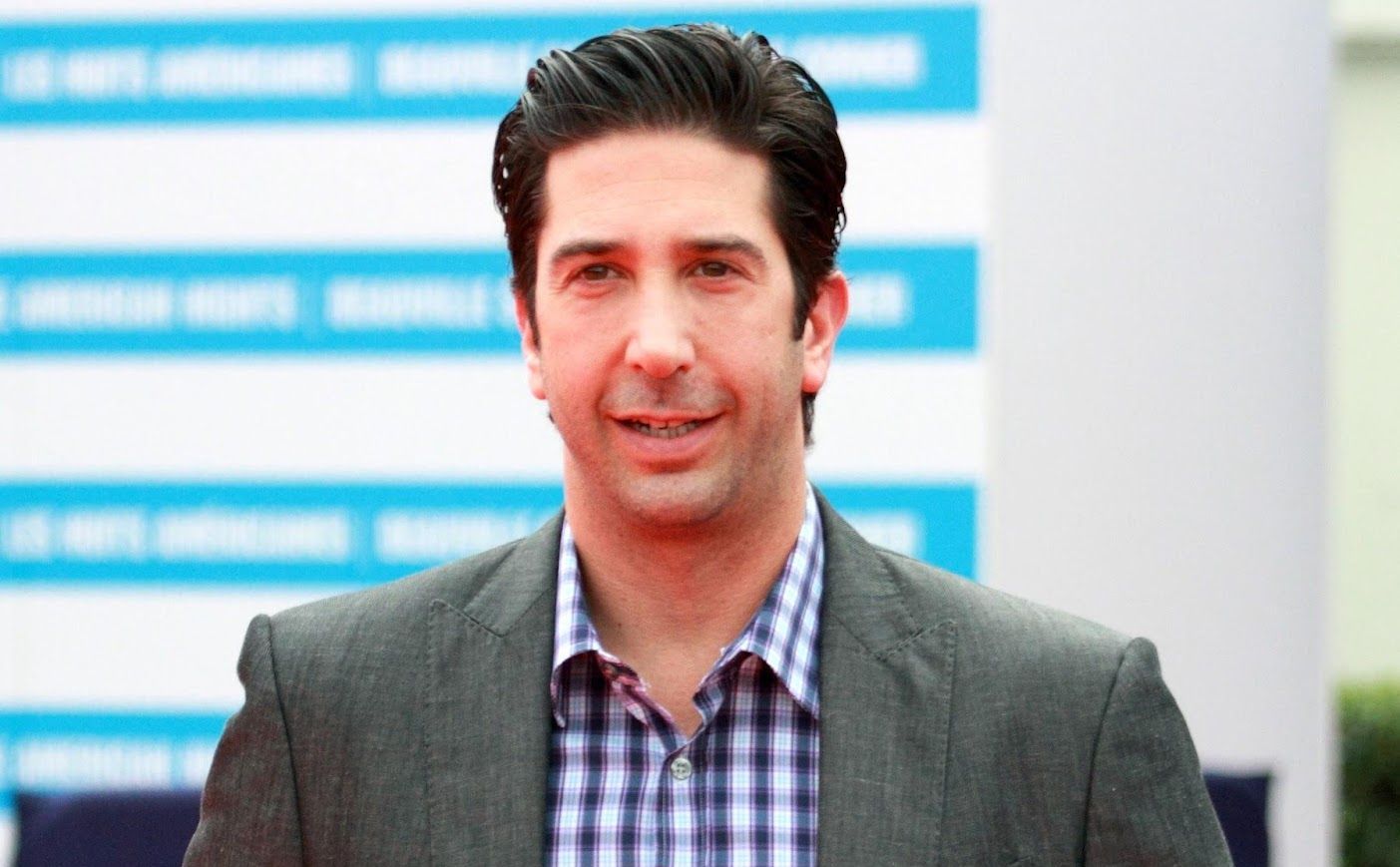
Ross Geller (Friends)

Image: Philippe Berdalle, CC BY-SA 2.0 <https://creativecommons.org/licenses/by-sa/2.0>, via Wikimedia Commons

David Schwimmer brought to life one of the most memorable characters in American sitcoms. We’re talking about Ross Geller from Friends , a character who could easily land on both the "most beloved" and "most hated" lists. And that’s the charm of Ross: fans who adore him point to his generosity and intelligence, while those who can’t stand him blame his jealousy and tendency toward constant drama. Which side are you on?

3
Mr. Burns (The Simpsons)

Image: Erik Mclean

The millionaire Mr. Burns is the perfect example of a cartoon villain. And maybe it's not just his cold, calculating, and greedy nature that makes him so unlikable, but also his total inability to relate to or understand the problems of ordinary people. While it's hard to truly "hate" any character from The Simpsons , we can safely say he does not exactly inspire affection.

4
Kimmy Gibbler (Full House)

Image: Jason Leung

Kimmy Gibbler, played by Andrea Barber on Full House , is one of those characters who sparks mixed feelings. Some viewers find her loud, quirky, and intrusive behavior charming. However, for others, those same traits can be a bit too irritating. Whether you adore her or can’t stand her, no one could imagine the show without Kimmy.

5
Janice (Friends)

Image: Chester from Toronto, Canada, CC BY 2.0 <https://creativecommons.org/licenses/by/2.0>, via Wikimedia Commons

Those of us who watched Friends need just three words to remember this character: "Oh. My. God!" That’s Janice's trademark line, repeated almost every time she appears on the show. It’s not malice that gets under our skin, but her shrill voice, endless energy, and constant drama. And of course, she won’t leave Chandler alone, who does everything but be upfront about his feelings.

6
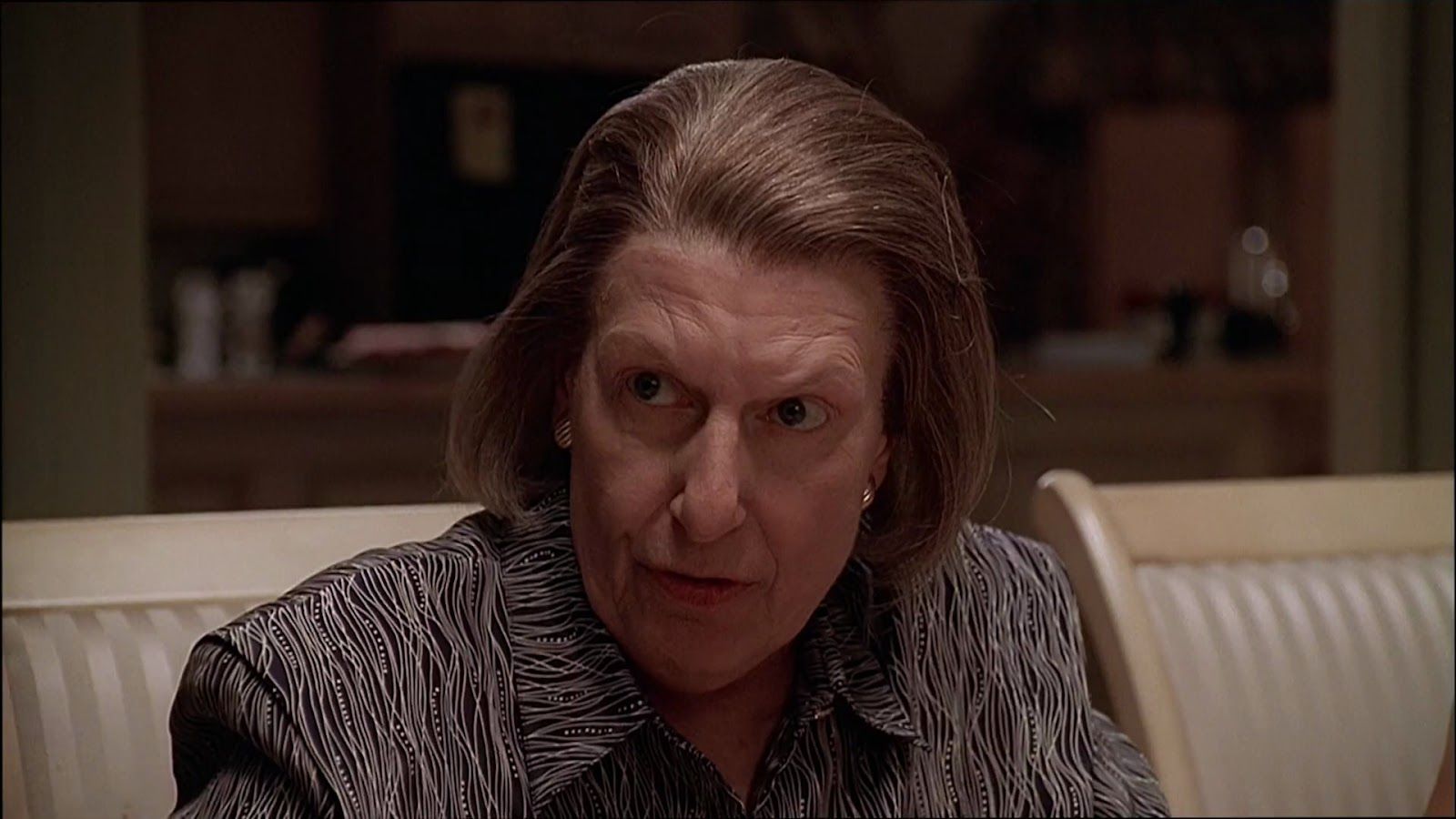
Livia Soprano (The Sopranos)

Image: HBO, CC BY 3.0 <https://creativecommons.org/licenses/by/3.0>, via Wikimedia Commons

Livia Soprano, mother of none other than Tony Soprano, manages to make us hate her from the very first season, and that’s part of what makes her such a compelling character. Bitter, cold, distrustful, manipulative, and calculating, Livia helps explain much of the protagonist’s behavior; through her, we glimpse the roots of Tony’s twisted mind.

7
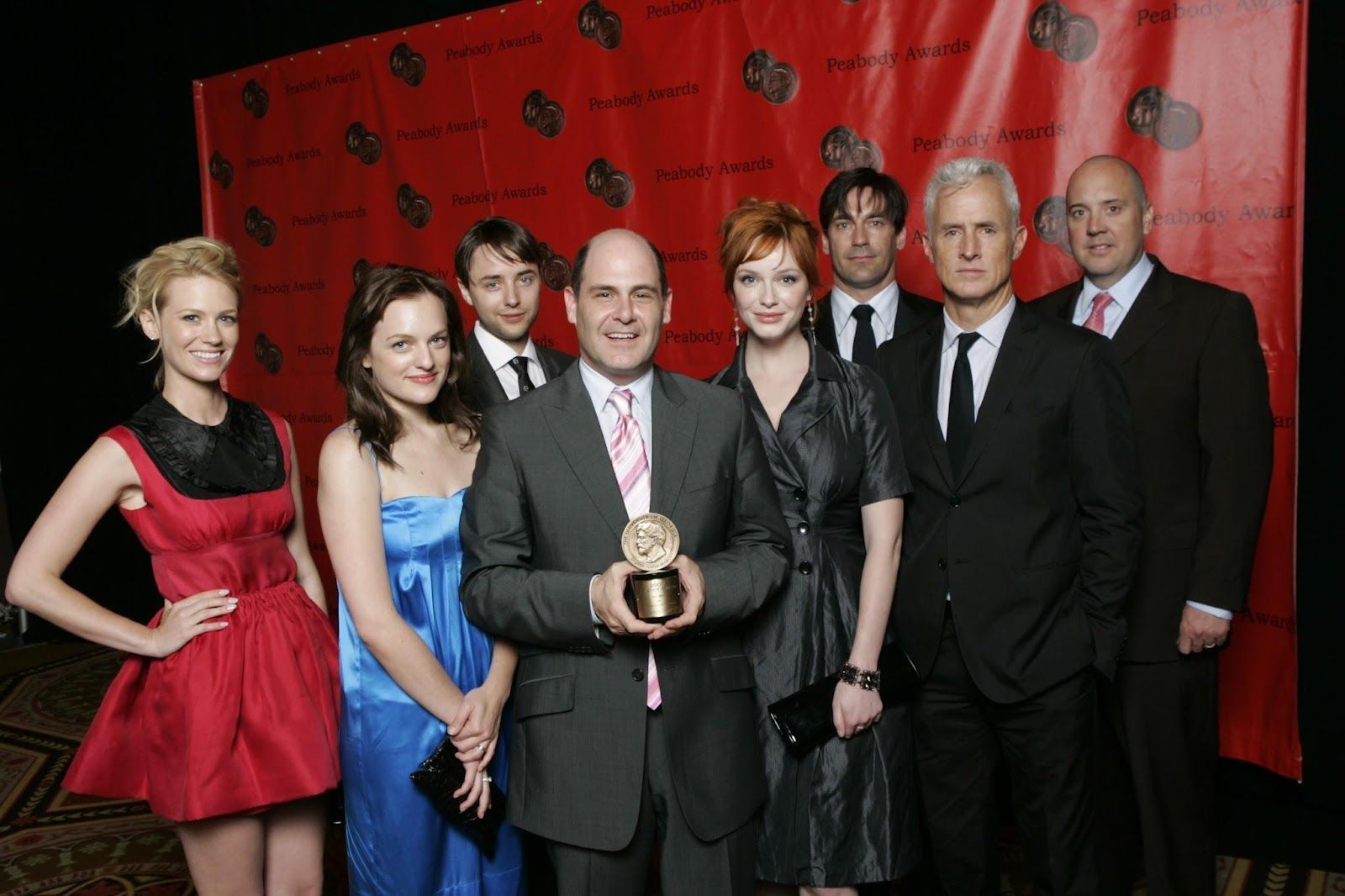
Pete Campbell (Mad Men)

Image: Peabody Awards, CC BY 2.0 <https://creativecommons.org/licenses/by/2.0>, via Wikimedia Commons

Arrogant, manipulative, and always chasing status, these traits make Pete Campbell, played by Vincent Kartheiser, one of the least favorite characters on the iconic Mad Men . His hypocrisy and relentless ambition often lead him to overlook ethics and empathy, which is exactly why he earns a spot on this list.

8
Negan (The Walking Dead)

Image: Gage Skidmore from Peoria, AZ, United States of America, CC BY-SA 2.0 <https://creativecommons.org/licenses/by-sa/2.0>, via Wikimedia Commons

A villain so terrifying that he earns the hatred of viewers definitely deserves a spot on this list. We’re talking about Negan, the ruthless leader played by Jeffrey Dean Morgan on The Walking Dead . His brutality, arrogance, and need to control everything make him one of the show’s most frightening and unforgettable antagonists.

9
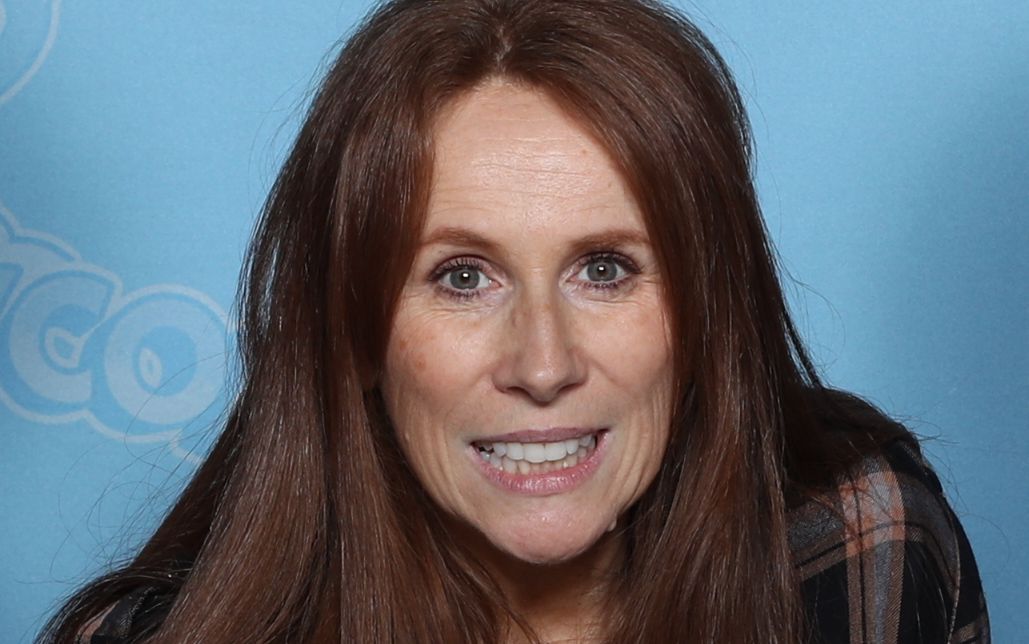
Nellie Bertram (The Office)

Image: Super Festivals, CC BY 2.0 <https://creativecommons.org/licenses/by/2.0>, via Wikimedia Commons

Played by the iconic Catherine Tate, Nellie Bertram joins The Office in the finale of the seventh season, and her excessive arrogance and pushy personality quickly make her one of the most irritating characters on the show. However, we have to admit it: on The Office , even the characters who get on our nerves often manage to make us laugh out loud.

10
Connor Roy (Succession)

Image: Super Festivals, CC BY 2.0 <https://creativecommons.org/licenses/by/2.0>, via Wikimedia Commons

A mix of wealth, eccentricity, vanity, greed, and a misplaced sense of power make Connor, the eldest Roy sibling in Succession , one of the least favorite characters in the series. His habit of taking advantage of others and expecting rewards he hasn’t earned is one of the key reasons he lands on this list.

Explore more American facts

Choose your favorite category!

General
General

As American as apple pie—the very best America has to offer!

Culture
Culture

Delve into the astounding richness of American lore.

Geography
Geography

Hop in and explore vast and diverse American landscapes.

History
History

Discover the key moments that shaped the United States.